Could you both deliver more
Are you getting all you need
What’s the best way to achieve more, what actions could you take
Remember: its a 2-way process
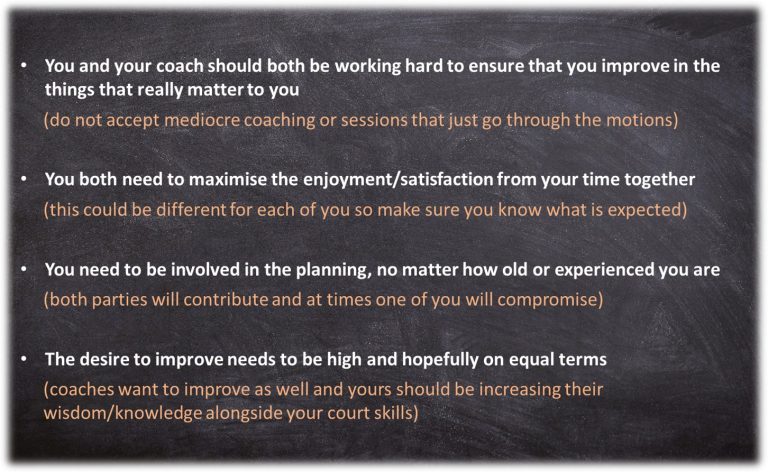
There is no guarantee that this advice will work
You may have to take the initiative to move things along
Remember, coaches are human too,
they have good and bad days, just like you do
Make it specific to you
It does not matter if the Coach is your squad coach or your own personal paid coach; they should be coaching you and the things that apply to you.
It could be improving existing strokes and movements, learning new ones, helping with tactical ideas and of course helping you grow as a person.
If you feel that this isn’t happening and that you are just being put through the motions, it’s time to consider what action to take.
You need to feel that every time they interact with you, it is with the intention of developing you.
When did you last learn somethimg new?
Do you always seem to do the same practices, the same drills, the same routines.
Be aware
Some coaches may only be coaching you using practices that they like. Practices that worked for them when they were a player.
You need to ensure that they are working to improve you.
How do you start : by answering these questions
-
Consider how specific the sessions are to you
- How often does your coach ask you what you would like to work on? It needs to be in advance of the session so that you can think and they can plan.
- Is everyone in the group always doing exactly the same practice? Maybe it’s the multishuttle Monday programme or the mid-week fast feet session
- Are you getting the same advice during every session…. “Move faster, try harder, no mistakes, etc”
- How often are you asked to review your the last 3 months training and development?
- Do you feel that they know why you are playing and what you want from badminton?
Communicate
If you don’t try and communicate with your coach it’s going to be very difficult to get the maximum from them.
Do you feel that you can ask your coach a question, that you will get a response and then be able to make progress?
If your answer is “No” then you need to assess if you are really getting all you want from your coach.
Of course, you could be perfectly happy right now.
I’m not suggesting that you need to start having 1hr long weekly meetings.
However, I promise that within the next year, you will need to talk with them about something.
Start with a simple conversation that explores what you are currently doing in training
It may not be easy sometimes talking with someone who your parents are paying, or if it’s the first time you have asked an adult a question. An adult that’s not your parent!
If you feel nervous or uncomfortable asking your coach these questions, then look out for my future post, “6 ways to ask your coach a question”
It’s time to start talking with your Coach
Try these opening lines to your conversations
- “Please can we do more of ........"
- “Can you help me with what I should do when ......"
- “Please can we practice that in another way?"
Imagine that they are sitting in front of you
Spend some time thinking about what you would say
- Write down now what you would like to improve
- Why you enjoy their coaching
- What you would like them to do, change, include, etc
Observations
How often does your coach watch you in competition?
Your coach must watch you in competitions.
I don’t just mean in practice routines/drills, that’s the least effective method.
Competition play is the true test
All your development areas that need attention will be on show.
Practice matches against your coach are not the same.
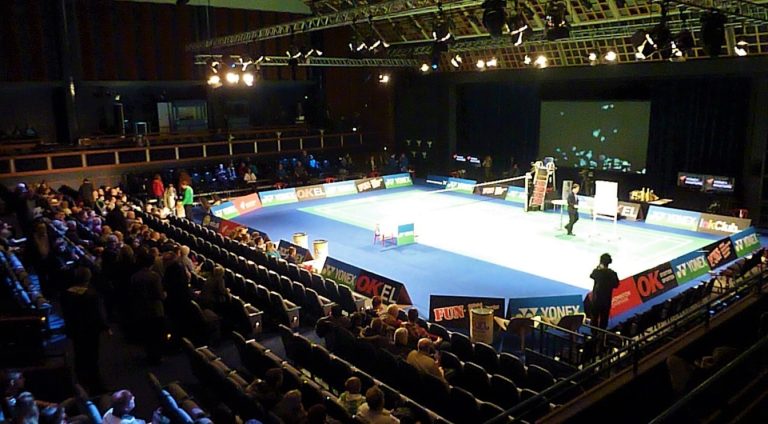
In competition, you will be required to control your emotions, decide your own tactics, and try to find ways of exploiting your opponents’ weaknesses.
That’s just the start of the things you will do. Your Coach needs to see how you handle these.
I’ve spoken to Coaches who have been surprised (sometimes speechless) at the observations that jump out when watching their players in a real competition.
It certainly took me years to understand the value, despite being told this on many occasions by my mentor.
It is often the case that you will play differently in competition than in practice. Your mental state will certainly be different.
In order to get the maximum from your coach they must see you play in a competition
Do both have the same goals?
How many of you have asked your coach
“what are we trying to achieve over the next few weeks?”
Are you both in agreement?
It’s important that they are at least similar and that both of you are aware of each other.
To get the most from your Coach, they must know your goals. They don’t necessarily need to agree with them, just be aware of them!
You may have set some ultimate dream goals such as to win a National Title, play as No. 1 in your Team. Don’t feel embarrassed at having big goals.
It could also be something on the court such as the ability to play a great crosscourt slice that lands before the service line
All these stances are ‘anticipatory’
They are adopted before the shuttle is struck by the opponent.
Either as a timed transition between movements or as ‘early preparation’ at
Your Task
- Write down three goals and email them to your coach - do it now
- Goal 1 .. something to achieve or learn in the next month
- Goal 2 .. a desire you have for the next season
- Goal 3 .. the dream you hold and maybe your coach doesn’t know
Now that you have shared your goals with your coach
next time you see them, ask them what they think
Honesty & openness with your coach
How honest are you with your coach?
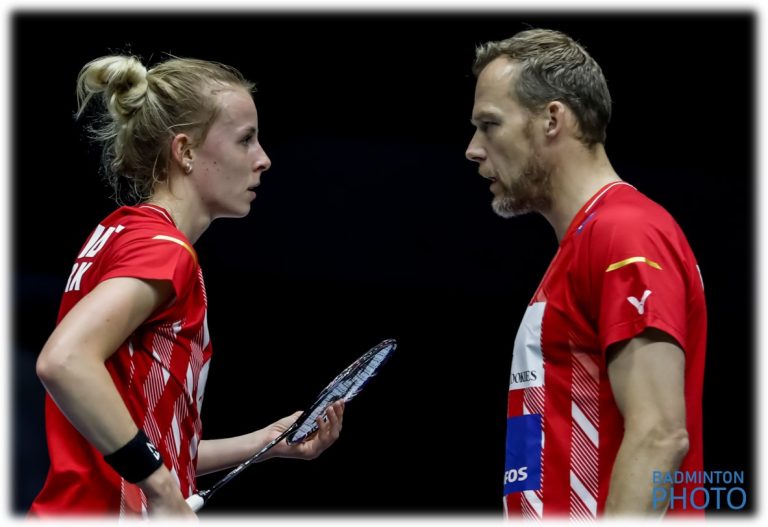
To maximise how your Coach works with you, my advice is to try to develop an open and honest working relationship with your coach.
To achieve this, you will need to be open-minded.
Listen to what each other say, and try to react until you have considered what they say and why they have said it.
This applies to both players and coaches!
-
There will be times when .....
- You misunderstand what they say or ask from you, then you start a conversation in your head rather than asking them for more information.
- They set a target that is too high and you get upset when don't achieve it. However, they didn’t expect you to reach it, they thought it would be a good challenge.
- Something has happened at home or school and it changes how one of you behaves but neither of you tells the other. Maybe your Coach will have you explain to you that they are human and have tough days as well.
- You want to do your favourite practice and they want to work on something else. Who then decides what to do?
-
Think about these statements and consider how you would react if your Coach said ….
- That movement is good, but it needs to be much faster, much faster!
- You need to get fitter before I will teach you any new skills.
- You need to give me more feedback if I am to help you.
- Can you send me some ideas that we should work on this season.
- I know that you don’t like this practice, but it’s important because it works.
- If you don't concentrate in this drill, we will not be playing games at the end.
How would you react to these statements,
what emotions do they create in you?
Show your thanks
Communicate your gratitude, always
Saying thank you can be done in many ways. Showing your appreciation can work wonders and may motivate your coach to work that little bit more enthusiastically than normal.
A smile 🙂 and a high 5 is as good as a present.
Saying thank you can be done in many ways.
-
Why your Badminton Coach needs your thanks (or any Coach)
- They will always be interested in your thoughts, especially if you include some targets or expectations for the next season or session
- It will motivate them
- They need to know if they have helped you not just on the court but in life. You may be surprised how coaches have this as an aim.
I recommend sending them an end of season “thank you” note
It’s also important to thank your coach when you leave them and go to another
Even if you have split because of different aims and viewpoints, I’d still recommend sending a note if you think they developed you.
Think of all the good times, the progress you made while on court with them, the experiences they created. Often the good times are forgotten at the end of a coach-player relationship.
You never know when you may need their help in the future. Often your coach can help with references, help with advice or just a friendly chat.
Send me a Question
I’m always grateful if you have read this far.
If there is anything that you have read that has helped, or that you disagree with, then please send me an email.
It would be great to hear from you contact@badmintonandy.com


![Keep your racket up - Duplicate - [#38056]](https://badmintonandy.com/wp-content/uploads/2026/09/keep-your-racket-up-scaled.webp)