What are the challenges and misunderstandings
Good playing skills will give an advantage but for how long
What advice would you give someone who was a good player
and is now starting to coach
Thanks to my friends
The advice given here is based on real experiences. All the suggestions here have come from talking to those who made the change from Player to Coach.
I’m thankful for all their advice and tips as many are about failures that happened to them.
Often they managed to overcome each but sometimes it took years, a change of circumstances, or an explosive moment with players, coaches or an organisation.
The struggles and surprises that happened to them could happen to you!
My aim isn’t to be negative
I have written and re-written part of this post several times. Each time it’s to ensure that it doesn’t sound too negative.
I’ve struggled to write because the journey of becoming a coach can be full of experiences: positive and negative.
It’s a process that takes time and one that will be full of mistakes (learning opportunities). Much of this post may sound obvious, and you could decide to just skip parts, even just stop reading.
You may also have an opinion that blogs such as this overcomplicate coaching. How can it be that difficult, especially if you have some good playing and feeding skills?
Can I suggest that playing and coaching, once mastered, are very different.
How you hear this advice is up to you
How you act is in your control
Misguided or misunderstood expectations
Expecting everyone to have a performance mindset
Not all the players and coaches you work with will have the same view of badminton and performance as you do.
It may come as a surprise to you that others don’t value development, results, and commitment as much as you.
They may place enjoyment, both on and off the court and value social aspects above performance and development.
If you are working with a range of players, be ready for this and either adapt or change who you work with.
Do not belittle or dismiss their aims and goals if you believe them to be too low or inappropriate.
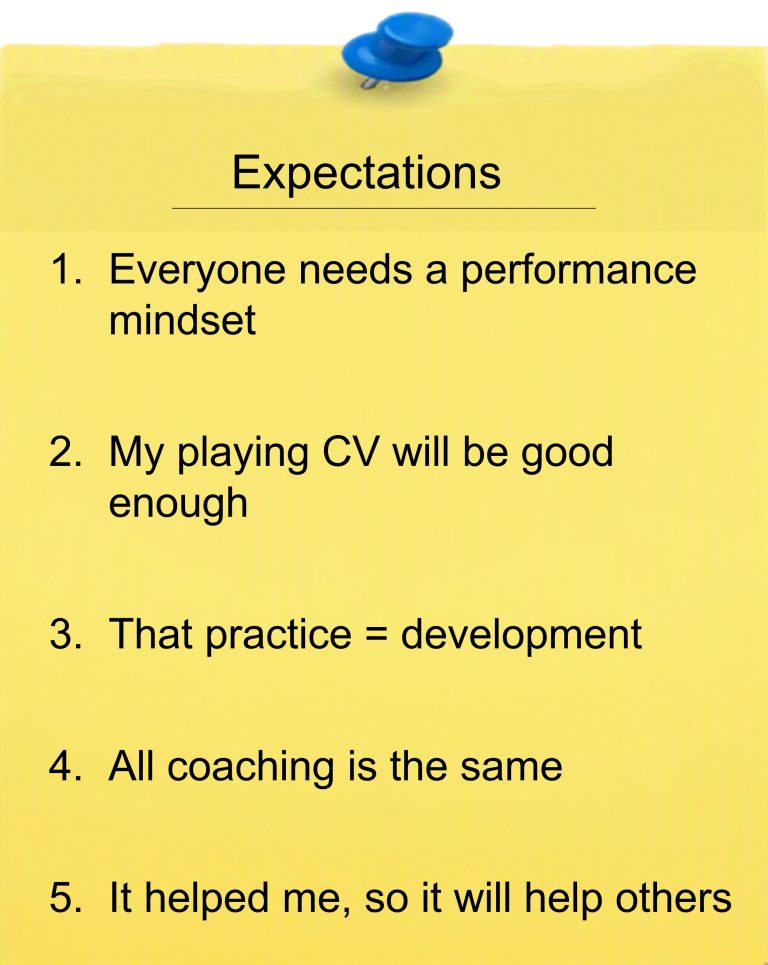
Expecting your CV to give you an advantage
If you are applying for a coaching position, especially with Governing Bodies, you will be expected to have a coaching award.
Often it’s a minimum of a BWFL2, maybe soon to be a BWFL3. Be careful, other coaching qualifications may not be recognised, especially if they are local to your own country.
Even if you believe that you have the knowledge to share that you’ve gained as a player, others may see it differently.
Most organisations, even if they value you as a player, have insurance and governance levels to meet and will therefore only employ coaches with proven qualifications. If you want to coach in Europe, you will need BWF qualifications.
Believing that ‘Practice = Development’
Lots of practice hours do not guarantee that your players will improve.
Spending many hours on the court “practicing” is no guarantee for tournament success. Yes, players will improve, but the definition of improvement is variable and complex.
You will need to learn how to design and adapt your work with players to create effective development. Be aware that they may get better at the practice, but not improve in competition.
Think back to some of the players you practised with who arrived early, stayed late, and did extra sessions. Was that a guarantee that their efforts always translate into competition success?
You need to establish processes and systems that are flexible, long-term, and specific to each player’s needs. Often it’s easier said than done!
Just ‘putting work in’ does not guarantee competitive development
You will need to structure the practice sessions and environments so that it’s more than just hitting shuttles to keep them busy.
Assuming that there is one way to coach
If you coach everyone the way you were coached, trouble lies ahead!
Similarly, coaching everyone with the same practices also eventually causes problems. Pay attention to your players’ current level, motivation, needs, wants, and requirements.
Be aware that it’s very easy to do the same routines, drills, and multi-session’s with everyone.
Unfortunately, it’s an easy habit to fall into when you start out. You will have a limited understanding of different methods, especially if you have no formal coach education. Therefore, repeating the same with all players will be very tempting, but it’s not coaching.
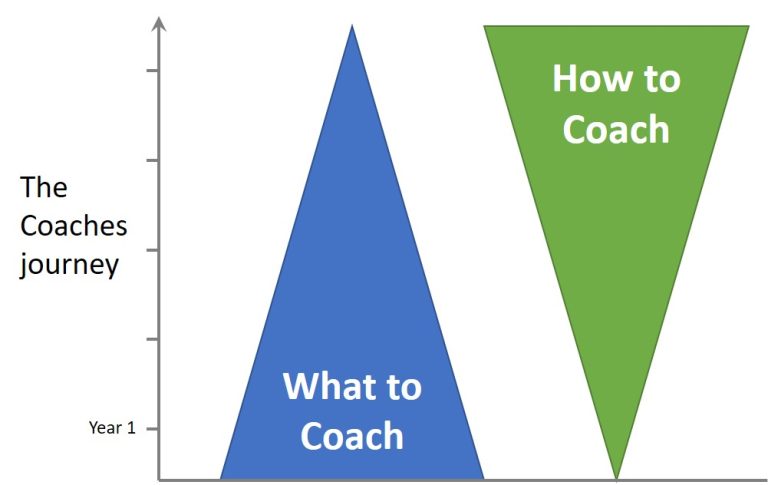
Exploring ‘How to Coach’ is the area that will provide you and your players with a never-ending interest and hopefully positive development.
You will need to adapt and find ways of coaching the same skill. I recommend that you read this post 6 Ways to coach the same thing.
Identify those aspects that are unique to different stages of development and playing style, the physical differences as players grow, mental changes etc. Those important skills that an U13 MS player needs that they will not use when they are U19.
Think about how many years it took you to become a good player and master the sport. Even if it takes you half that time to become a great coach, I’m guessing that will be 6-7 years worth of learning!
“If it worked for me, it will work for you”
Another tempting habit and one that may seem obvious to you. Repeating the things that you thought worked for you, believing it will help others
You may feel that all you have to do is repeat those practices that you remember.
However, not everyone develops as you did and, crucially, can you really remember all those mini prcatices, prompts, layers, experiences?
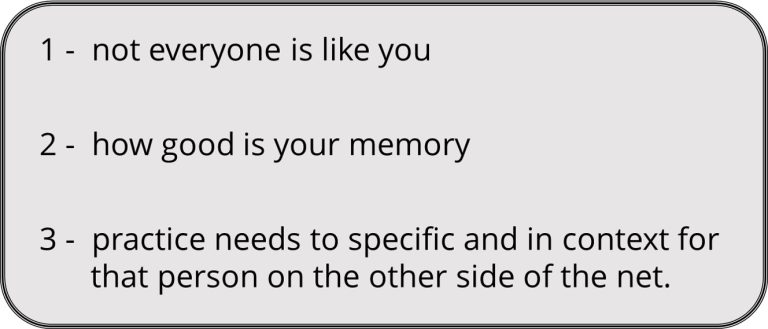
Become aware of your expectations and beliefs when you first start coaching
Unconsciously biased views and prefferences
Are you formulating your coaching on what you liked and didn’t like when you were a player
Referencing the things you did as a player isn’t a problem; in fact, it’s essential as your experiences can help you.
However, referencing how you felt as a player, how you reacted, your emotional response is not always helpful.
Sentences that should alert you !
Have you ever said or had thoughts about these statements?
Do you recognise any?
“I would not have enjoyed that as a player”
“We did that years ago in our sessions, it didn’t help me”
“That just wouldn’t be enjoyable (to me)”
“I preferred straight-talking when I was given feedback, it never upset me”
“I’ve done that before and I know how I felt!”
Are you using your emotional reactions or viewpoints that you had as a player
and applying them to the coaching of others?
The danger: not everyone thinks like you
It is not acceptable to design practices based solely on your emotional reaction to it?
Do you ever ask yourself: ” Would I enjoy that, would it work for me?”.
Be aware of judging how you believe others will react; you could be making instantaneous emotional decisions based on your emotions.
Are you being objective?
Identify the practice outcome that you are trying to achieve. Then plan at least 3 different ways of achieving it.
Use your coaching skills to help the player and deliver what they need, what you would like to do.
Reflect (check) on how you are making decisions.
Consult with others, the coaches you work with or the players themselves and ask them : “What do they think?”
- Who are you designing this session for? – certainly not you as a player!
- Realise that not everyone has the same emotional reaction and thinks as you do, or how you did when you were a player
- If you find yourself deciding if the practice is worthwhile based on your emotional reaction to it, stop, take a moment and be objective.
- Do you really believe that everyone has the same definition of enjoyment as you do and will react the same opinion as you did all those years ago?
Be aware that your immediate decision-making may be influenced
by your past emotions (like/dislikes) as a player
Parts 2 and 3
.. The challenges of coach education
.. CPD, how you can use it to progress
.. how people asking for your advice can be a problem
.. you may not value discussion with other coaches and avoid it!
.. the struggle to know your coaching self

Send me a question
I’m always grateful if you have read this far.
If there is anything that you have read that has helped or that you disagree with, then please send me an email.
I promise to read all your comments
It would be great to hear from you contact@badmintonandy.com


![Keep your racket up - Duplicate - [#38056]](https://badmintonandy.com/wp-content/uploads/2026/09/keep-your-racket-up-scaled.webp)