
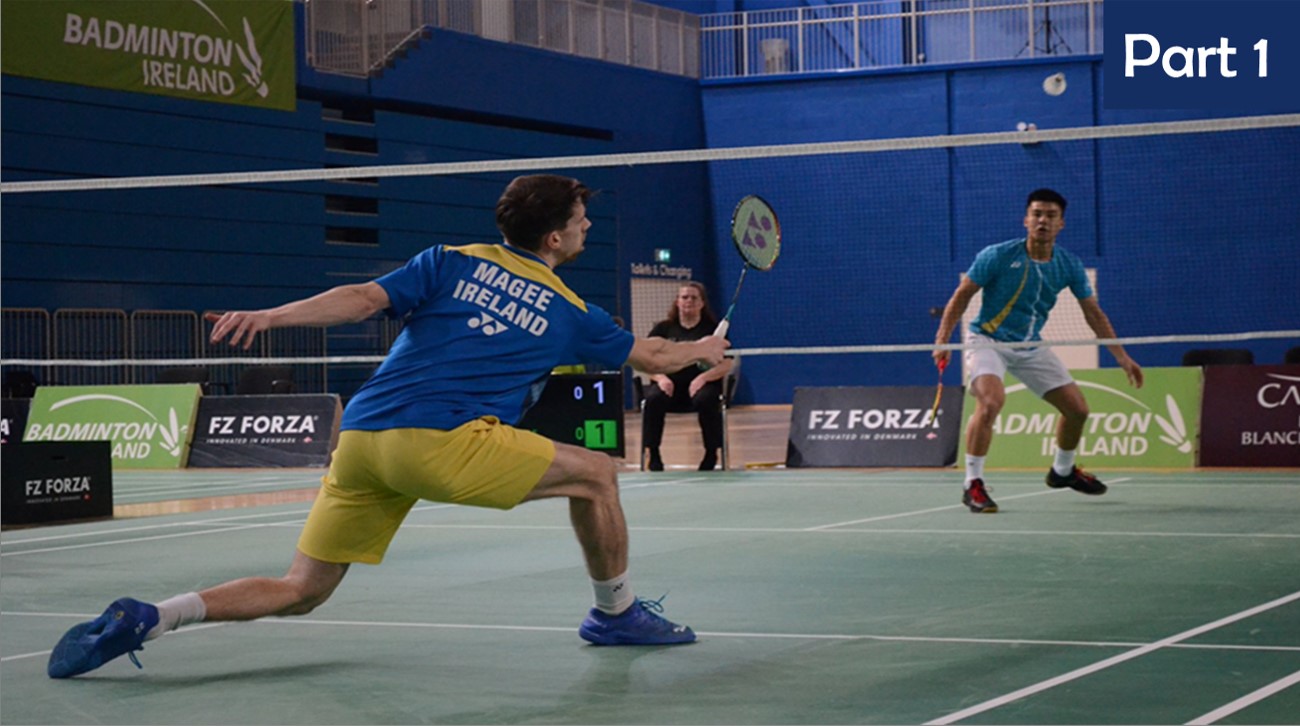
What happens between strokes is important
As important as the shots being played
I was shocked, they were right in front of my eyes,
but I had never realised it
Badminton stances are an essential element of movement skills
and are often misunderstood
They are the anticipatory movements made by players
before the opponent’s stroke
My introduction to stances
I’d been coaching movement skills (in singles) but never thought about stances and certainly didn’t include them in my work.
I thought that starting and moving from one stroke to another was only about using a split-step (pretension) loading of the legs.
But I was wrong, it was far more than that.
Badminton stances were unknown to me before I met Roger Mills, my mentor, some 30 years ago.
It was very exciting when I learned that there are 3 Stances that players use during their movements around the court. Not always, but a large majority of the time.
Each of them has a purpose, depending on a tactical thought/decision by the player. Some of the purposes are very obvious (when I was shown what to look for), and others are more subtle. They are all anticipatory and taken up before the opponent strikes the shuttle.
Warning!
I discovered that it wasn’t all about standing and starting in a square position!
Roger expertly explained all I needed to know about the stances. Immediately, I started to see these ready positions, not only at the start of rallies but many times within the rallies.
Now I knew what to look for, started to become clear.
Once you start to see the stances, you will see them everywhere!
However, I still had no idea about how to introduce these to players. It all seemed so complex.
I didn’t know what the players were anticipating.
Why were they adopting these different positions
Over the next few years, I started to understand
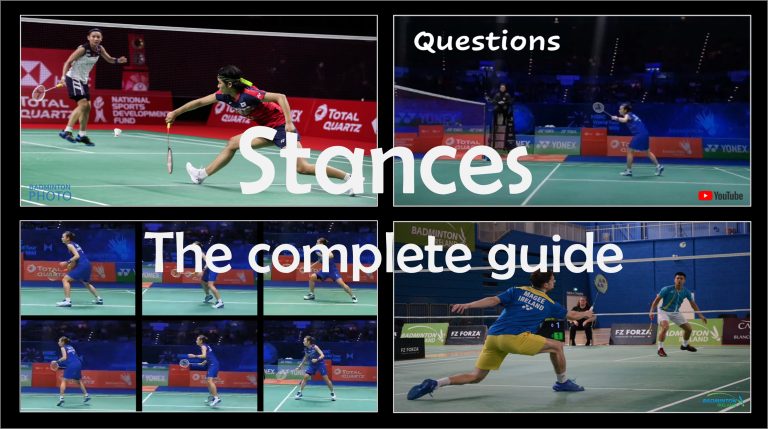
- It took me a while to realise how much I’d been missing and the length of time I’d not been helping my players with these stances
- I then struggled with how and when to introduce stances to the players
- Then I struggled to stop talking about the ‘Technical’ aspects with players and decided I needed to know how to introduce and develop them tactically
- It was easier coaching singles (rather than doubles) stances, as the time between strokes and the fact that there are only 2 players on court made for fewer variations and more ‘repeatable’ movements
- I’m still working on how to help players from ‘knowing’ to ’ doing ’!
If you have had a similar journey discovering Badminton Stances,
please call me and let’s start talking
Why use Stances?

They have a Tactical underpinning
(aid and add to anticipatory thoughts)
Stances offer an opportunity in the rally when the player can move/prepare before the opponent strikes the shuttle.
This is based on a tactical choice
There is often (not always) a moment between strokes when a player can, after striking the shuttle, take up a stance with the intent of affecting what happens next.
This is the tactical choice and could be described as anticipatory. Look for these moments in the videos.
I hope that after reading, you will agree that the tactical elements of stances are far more important than the technical components. My wish is that coaches introduce, set up practices and encourage development through a tactical bias, not just repeat or #hashtag the technical points.
Yes, it is important that coaches understand the technical side but in any interactions with players, these should be secondary to the thoughts the player has based on what is happening in the rally.
Do you have the skills to coach stances through a tactical bias (lens) in practice?
Can you reduce the amount of technical advice you give in favour of setting great practices
Warning
Stances are taken up before the opponent strikes the shuttle so that players can seek an advantage.
However, the opponent may not play the stroke that the player prepared for.
Therefore, it may look as if the player prepared for or anticipated the ‘wrong’ shot, but this is not the judgment to make.
No error or mistake has been made. I believe that early anticipation using stances is a critical element in seeking efficient movements.
When you initially introduce stances to players, I prefer to use the phrase “prepare to cover the opponent’s shot that will hit your court first”.
This statement will not explain all the stances suggested here, but will act as a simple introduction to the more complex tactical and anticipatory thoughts later.
If you agree and believe that these intentional movements (by adopting one of several stances) can affect a rally, then consider the following question.
How do you allow/encourage for these intentional movements in your coaching?
What practices/situations are you creating?
There are 4 Stances
Forward attacking
Racket foot forward, body in a sideways stance, racket height and position is variable.
Backward attacking
Non-racket leg forward, body in a sideways stance, similar to the receive of serve stance, racket height and position is variable.
Defensive
Body facing square to the net, legs wider than shoulders, racket height is lower.
Receive of service
Non-racket leg forwards in a sideways stance. Racket height is generally around shoulder to head height.

Forward attacking
Used when the shuttle is at or below tape level, the opponent is unable to hit downwards.
If you have watched the video, hopefully, you will agree that this stance is easy to see and is used often in rallies.
Look for situations when a defensive block or net shot has been played.
t can also be used when the shuttle is pushed deep into the opponents rear court, behind them and the player believes that the opponent is unable to hurt them.
It provides a position for quick forward movement, allows for tactical anticipations, reducing the opponents weapons.
Sometimes players will take up this stance in recovery from a net shot and then it could be argued that it’s just part of the recovery.
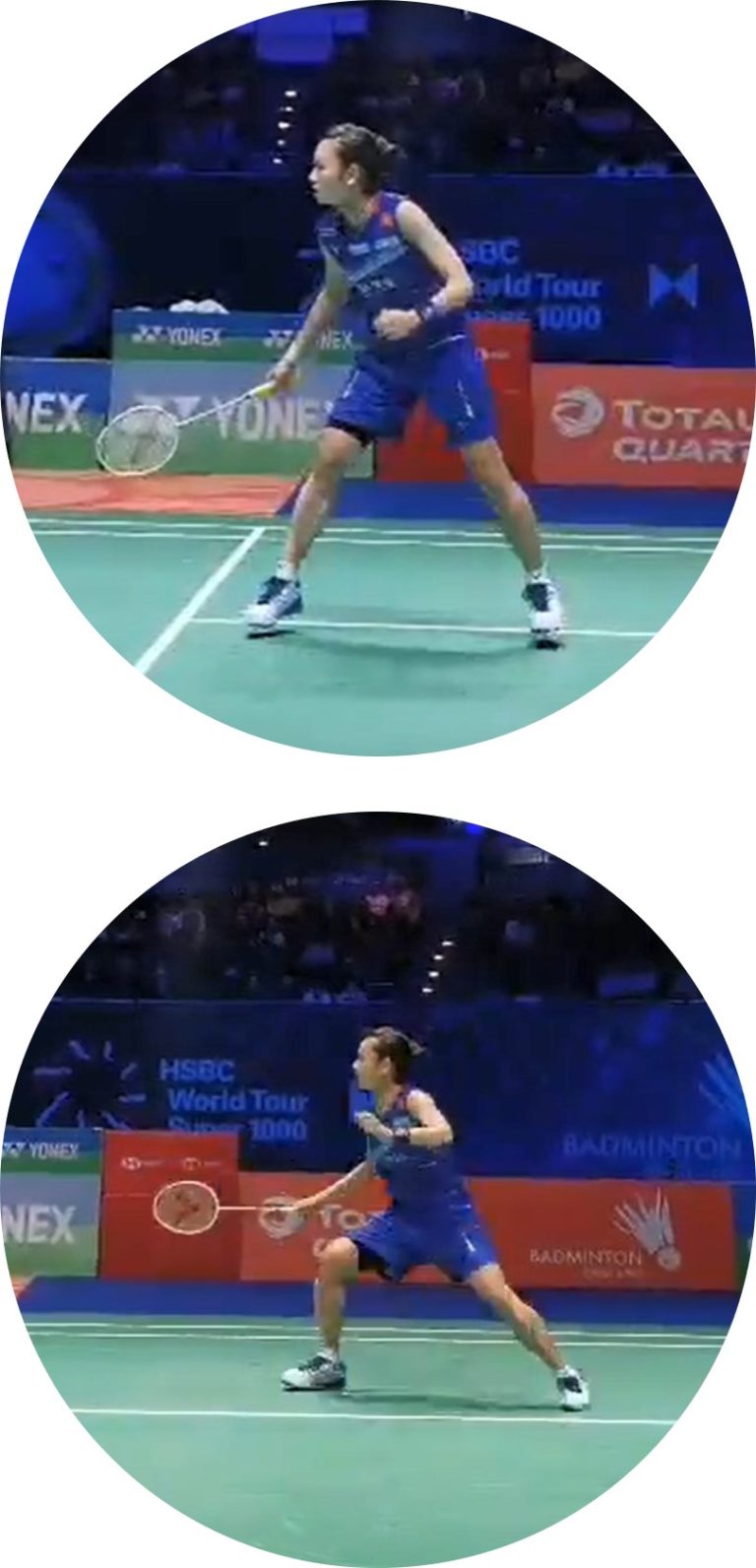
- Stance is with the racket leg forward, pointing towards where the shuttle will be struck by the opponent
- Legs wide apart, with knees flexed
- Racket position ‘on alert’, hand cocked
- You could think of it as recovery from one shot or Early Preparation for the next as it’s often a seamless transition
- I like the coaching cue of ‘look like a fencer waiting to attack’
- It can be introduced during early ‘Wallwork’ practices
Backward attacking
Used when the shuttle is at or below tape level, the opponent is unable to hit downwards, and the player is anticipating a stroke into their rear court.
Fast, attack-minded players who are anticipating a lift and the chance to attack should think about using this stance.
It is most often used as a stance in your backhand frontcourt as an alternative to a forward attaching stance. Again, this is often after playing a defensive block or net shot.
It will provide for quick backward movement. As this stance is not as commonly used as the forward attacking stance, it may cause your opponent to reconsider their shot if they intended to play a lift.
The backward attacking stance is very similar in appearance to the receive of serve, although it happens within the rally. Not all players will feel comfortable in using this stance as it exposes possible weakness. However, for some players, it’s a great way of exploiting their strengths and causing the opponent tactical difficulties.
Most often seen in the backhand side of the court, the stance will allow faster movements in the around-the-head court. Be aware that your crosscourt net area is now ‘exposed’.
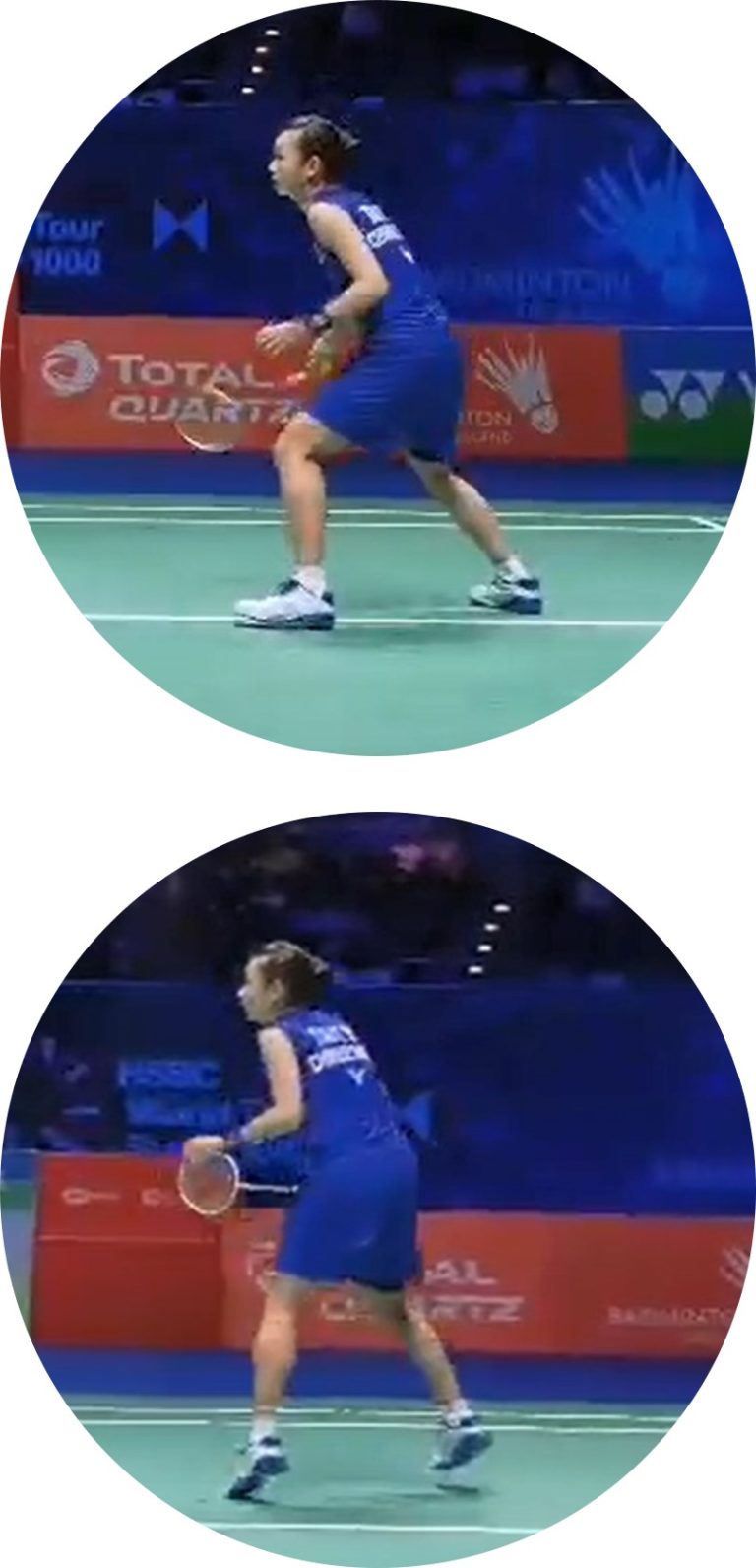
- Stance is with the non-racket leg forward, pointing towards where the shuttle will be struck by the opponent
- Legs wide apart, with knees flexed
- Racket position ‘on alert’, hand cocked
- You could think of it as recovery from one shot or Early Preparation for the next as its often a seamless transition
Defensive Square
Used when the shuttle is above the tape, and the opponent is easily able to hit downwards.
It’s probably the easiest of all the stances to see as it certainly appears after a high service and after lifts or clears to the opponent’s rear court.
All players should be comfortable in adopting this stance. Whenever it’s likely that the opponent will hit down hard, adopt this square defensive stance.
It’s preparation to cover the shuttle that will hit the court first, i.e. the one with the least amount of time to move to it.
The position enables quick easy sideways movement.
The exact position may vary depending on how wide the opponent is in the rear court and you may have one leg slightly in front of the other. These are subtle (but essential) variations.

- Square is a square-on position, shuttle above the net and could be struck downwards by an opponent
- Racket position ‘on alert’ in front of the body, hand cocked around knee height
- Wide legs, wider than shoulder-width, with knees flexed
- Use imagery to help players: goalkeeper in football, tennis receiver, cricket slip fielder
Unfortunately, it seems that this is the only stance
that coaches is coaches
Receive of Serve Stance
Used as the name suggests, the stance is taken up at the start of a rally, just before your opponent serves. It is very similar to the backward attacking stance described above.
You may not consider it to be part of the movement as the stances are only used at the start of a rally. However, it’s an important part of a movement.
How players ‘start’ is critical. The stance and all its components (Technical, tactical/mental) ensure that the rally starts in a way that the player can maximise their opportunities. There is an art to preparing to receive serve in all the different games (singles, doubles and mixed)
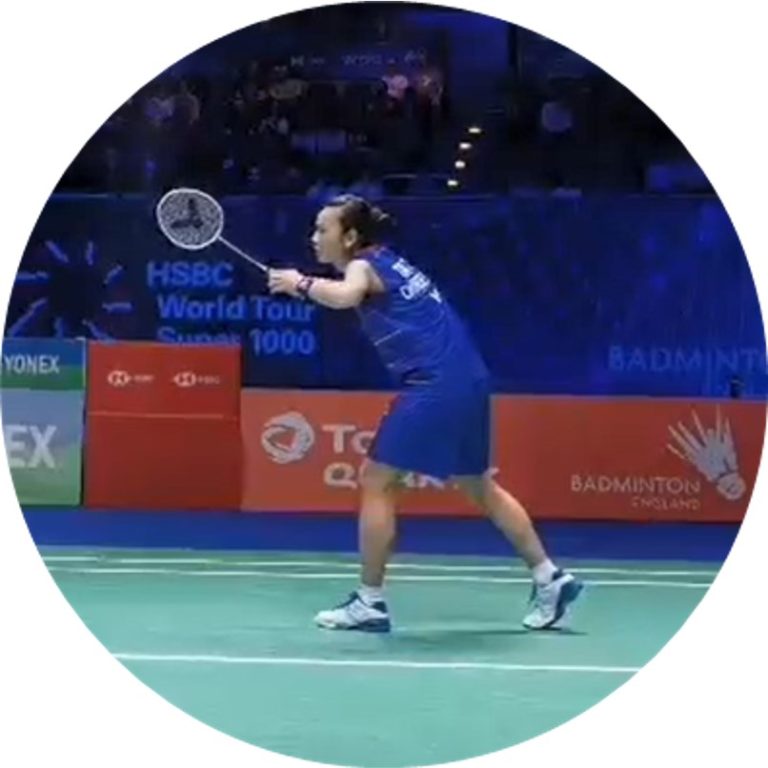
The day I was introduced to badminton stances
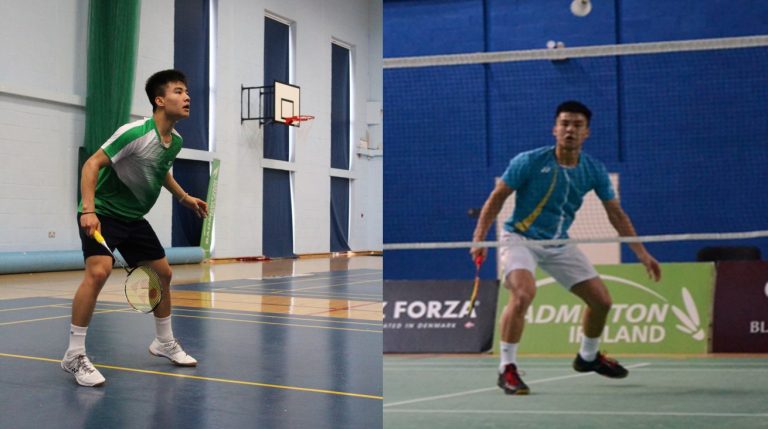
Click to read more
In part 2 you can read about …
Stances – when are they used. This will include the Forward vs Backwards attacking stance debate
Discuss why nearly all stances are anticipatory
How to encourage autonomous movements and how to avoid the danger of over-emphasising the technical elements
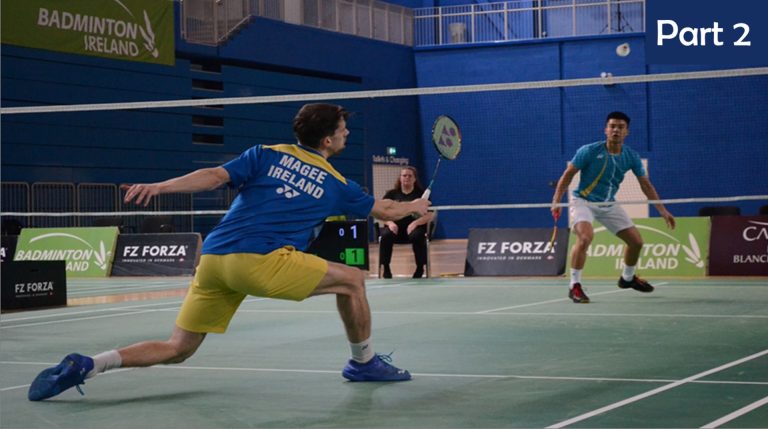
Send me a question
I’m always grateful if you have read this far.
If there is anything that you have read that has helped or that you disagree with, then please send me an email.
I promise to read all your comments
It would be great to hear from you contact@badmintonandy.com

![Introducing the badminton overhead – Challenge No.3 - Duplicate - [#36874]](https://badmintonandy.com/wp-content/uploads/2023/05/Badminton-Forehand-Overhead-3-scaled-1.jpg)
![Introducing the badminton overhead – Challenge No.2 - Duplicate - [#36821]](https://badmintonandy.com/wp-content/uploads/2023/05/Badminton-Forehand-Overhead-2-scaled-1.jpg)
