

These 4 preparation stances will help a players movement
They are easy to master and the improvements will be immediate
Everything depends on the tactical choice a player makes
before their opponent strikes the shuttle
They are the anticipatory movements made by players
before the opponent’s stroke
Have you read Part 1
I’d been coaching movement skills (in singles) but never thought about stances and certainly didn’t include them in my work.
I thought that starting and moving from one stroke to another was only about using a split-step (pretension) loading of the legs.
But I was wrong, it was far more than that.
Read more about the 4 stances.
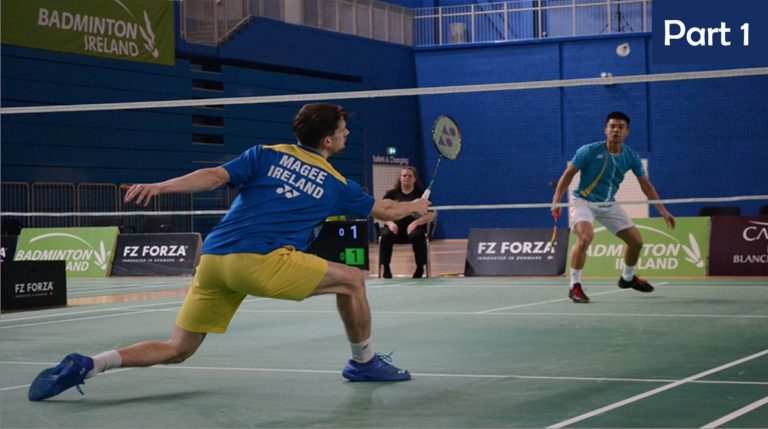
When are they used?
Considerations, not rules
The aim of the players should be that many of these movements in and out of stances are ‘automatic’ and ‘without thought’.
As with nearly all aspects of playing and coaching there are very few certainties or absolutes. This is the same with stances.
- The height of the shuttle on the opponents’ side of the net
- What your opponent can do, or maybe can’t do and their intentions
- Your intentions: you must have some

Sometimes no stance is required!
Not every stroke/movement will end in a preparation stance before moving again.
The vast percentage of rallies are full of many occasions when an Early Preparation stance will be required as the opponent may have several options. Players will have to select the appropriate stance.
But, there are some rally situations where the variable options to the opponent are limited, almost no alternative could be played.
Can you think of a rally situation when your opponent will be constrained
in their choice of replies, having almost none or very few?
Stance or No stance?
You smash from the midcourt at or wide of your opponent – do you wait or start to move (run) towards the net?
Having played a great slow/stop drop, your opponent is struggling to get it – do you wait or start to move (run) towards the net?
The opponent has cross-courted you after your Round The around-the-head (RTH) straight slice, and it’s going to be tough to get it: do you take up a midcourt stance or just ‘get there’?
What would you do in these 3 scenarios?
Would you take up a preparatory stance and wait for the opponent’s reply?
Forward vs Backward attacking stances debate
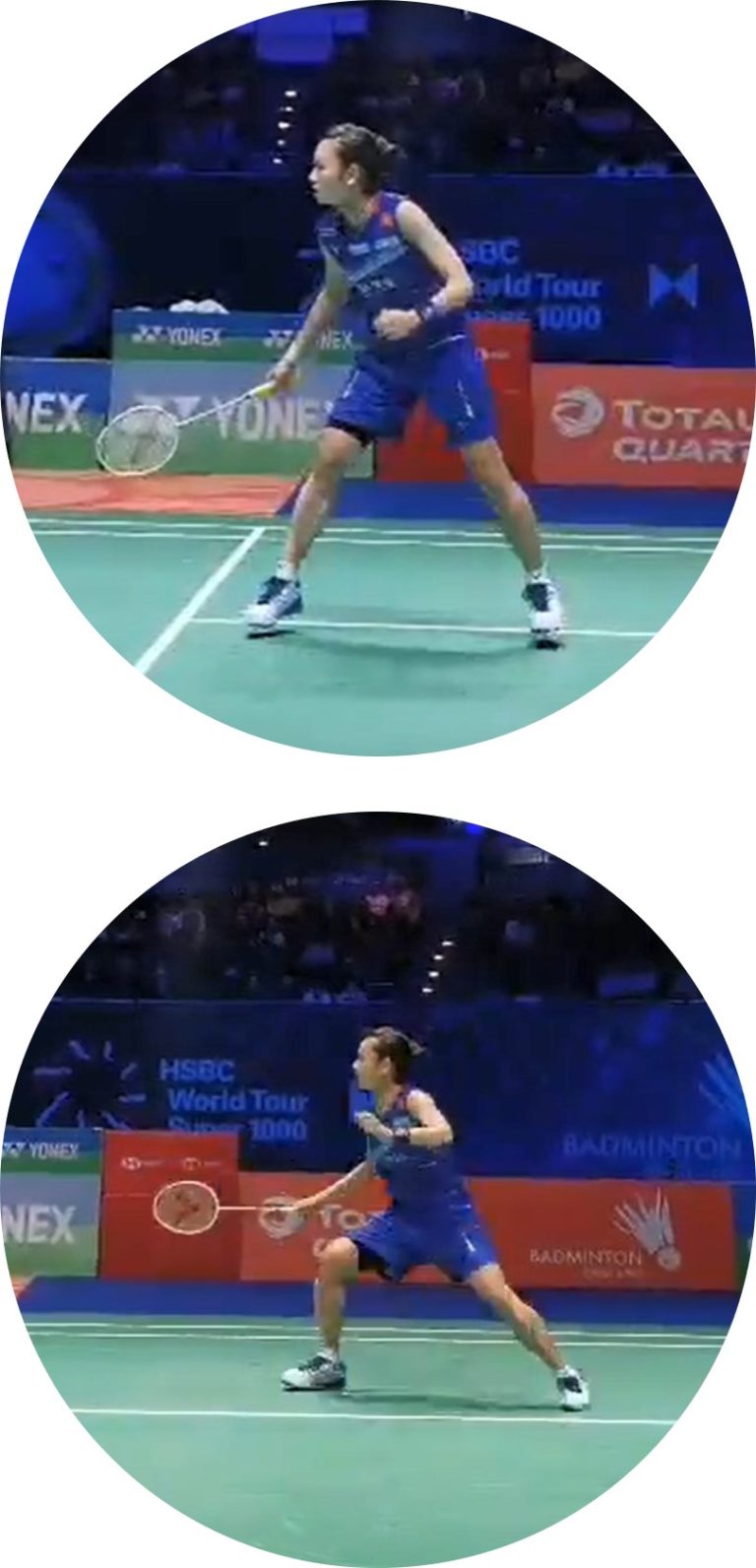
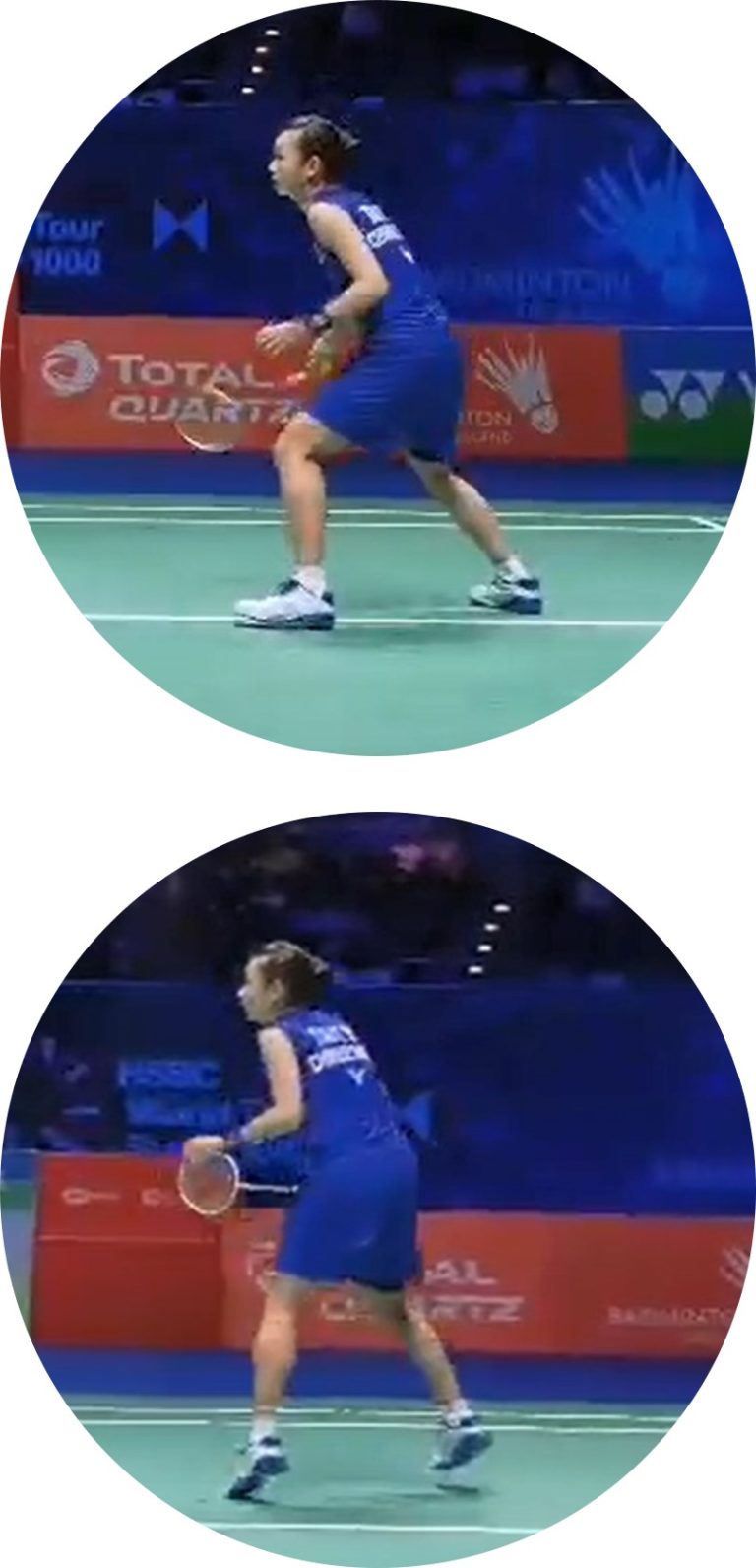

You will have a choice as to which is the most appropriate (best) stance to use.
Often, the debate is about what happens (the stance to use) after the player has played a shuttle to the net from their backhand side.
It’s easiest to see after a player’s defensive block/push to their backhand net side. However, the debate can also happen in the forehand forecourt.

They are anticipatory
Selected before the opponent strikes the shuttle, not afterwards.
There are exceptions to this as outlined in this post. These happen when there is limited time to prepare or when there is an overwhelming desire to move from one stroke to another.
Often, the desire is born from feeling under pressure and having to ‘just get there’ or a desire to quickly get there to make the most of situations.
Confused? … go back and imagine the 3 examples of the Stance or no Stance.
What would you decide?
The anticipation is a tactical choice before the opponent strikes the shuttle
- The movement is ‘timed’ so that the player is in the stance as the opponent prepares for their stroke.
- The general rules of “Is the shuttle above or below the net?” should be followed in the majority of situations. However, there are some ‘it depends’.
- Stances are anticipatory based on what you believe the opponent may play or similarly, something you want to be ready for. Both are tactical choices.
- Apart from a few situations, the opponent has free will and a choice of strokes to play. Therefore the stance adopted is to prepare for either the most likely opponent’s reply, the one that will strike the court first, or the one tactically the player wishes to prepare for.
- Development of any new learning and especially stances that mix technical and tactical, require game-like decision-making and conditions at their core. Examine your practice and decide what percentage % includes game-like decisions. Are you being allowed and encouraged to make choices as you would in a real match?
Learning, Development and Warnings
Development of any new learning and especially stances that mix technical and tactical, requires game-like decision-making and conditions at their core.
Examine your practice and decide what percentage % includes game-like decisions.
Are you being allowed and encouraged to make choices as you would in a real match?
Warning
Be careful – if the feeder (or coach) is not returning the shuttle as in a match, the effectiveness of the stance taken cannot be assessed.
Note
The effectiveness of a stance cannot always be measured by the outcome, as the opponent may choose to play a different stroke to that anticipated.
Therefore, there may be a coach’s desire to focus on ‘perfection using stances rather than the players’ anticipatory choice. (i.e. you can not always “split in the direction you move”).
Players will and should be making mistakes, but are they really mistakes?
Note:
Stances are part technical and part tactical.
They have critical technical elements (positioning on the court, leg width, racket positions, etc.) BUT they are also heavily tactical (which to adopt, what to prepare for, when to use or not use)
Do not judge the slection of the stance by the final movment direction.
It is anticipatory so a ‘best guess’ (an expert type guess)
Can you coach Anticipation?
When considering the use of these stances in response to an opponent’s likely reply, it is in part developing anticipation.
It may not be the type of anticipation that you were expecting.
However, the use of stances is a crucial element in assisting players to develop anticipatory skills.
If you want to know more about starting to develop anticipatory skills in practice, then click on this image to read more

Be careful of insisting that a stance is taken up in the direction you always move in
This is NOT correct, as if it’s anticipatory, there will be times when this isn’t true
Developing fluid movements
Acting with what seems no thought
I believe it’s vital that players are aware of the movement they choose, yet to the observer it may seem automatic without thought.
All these movements (choices) are triggered by what they see and desire tactically.
It is essential that during the development of badminton stances (and possibly many other technical/tactical aspects) that players move from conscious (forced, deliberate, aware) towards an automatic (yet in part conscious ) movement.
It could be argued that many of these stances are just an early preparation (E.P.) after playing one stroke. While this is true, it is the tactical underpinning that is most important, not the technical aspects of the movements.
It is important that the thoughts they have regarding these stances do not cause slow movements and reactions.
Therefore the role and task of the coach is how to develop stances from an early age such that they are based on tactical choices and the players ‘forget’ the technical underpinning elements.
It is this awareness of the opponent and a tactical choices that is the conscious part,
not the mechanics of moving
Be wary of over-emphasising technical elements
- The amount of knee bend, the exact width of the legs, the grip, etc. (technical elements) are ultimately not the thoughts we want players to be having during execution. Certainly not during a match.
- Some instructional ‘elements of technique’ specified by the coach should only be apparent in early development. Even during this stage, the coach should be striving to change the balance between technical aspects that are uppermost and instructional towards increasing the amount of automated (but still ‘acceptable’) elements.
- Coaches should, over time, reduce the verbal ‘instructional’ prompts but, crucially, still ensure that game-like visual cues are plentiful.
- How do you design your practices to encourage the use and development of stances yet reducing your coach instructions and certainly reducing (or having zero) coach instructions mid rally?
Developing players
- When working with players the ideas presented here may challenge your practice design. One quick tip is to try to incorporate more practices that utilise ‘player start’ type scenarios.
- I recommend more emphasis on rally-type work with decision-making as an integral theme. The decision-making should be based on tactical choices and/or which opponent shot would strike the players’ court first. Ask feeders (the coach) to act as an opponent.
- Encouraging players to start the practice will allow for a transition between stances even before you (the coach) has hit your first shot.
- During developmental stages, the movement into and between stances may be miss-timed or inappropriate for the rally situation. Do not worry as this ‘mis-timing’ is often caused by the visual stimulus and the player’s inexperience in understanding the visual and tactical clues.
- Please remember that it is not the aim that the player adopts the ‘correct stance’ for the direction in which they then move. The aim is to adopt a stance that either prepares to move to the shuttle that will hit the court first or to prepare to move to the shuttle that will give the player a tactical advantage.
- Be aware that the direction the player eventually moves in is based on the stroke played by the opponent. Of course, this could be influenced by the stance taken by the player in anticipation of that stroke.
- How the coach translates all the points above into a series of practices over time is a measure of the value of that coach!
Especially with stances, the aspect of ‘training to forget ‘
and encouraging automatic unconscious movements should be uppermost
In part 3 you can read about …
How to allow for and include in practice, plus the dangers of certain practices
The early introduction of these stances with novice players
The importance of ensuring choices are tactical and helping players ‘forget’ the technical elements
Send me a question
I’m always grateful if you have read this far.
If there is anything that you have read that has helped or that you disagree with, then please send me an email.
I promise to read all your comments
It would be great to hear from you contact@badmintonandy.com

![Introducing the badminton overhead – Challenge No.3 - Duplicate - [#36874]](https://badmintonandy.com/wp-content/uploads/2023/05/Badminton-Forehand-Overhead-3-scaled-1.jpg)
![Introducing the badminton overhead – Challenge No.2 - Duplicate - [#36821]](https://badmintonandy.com/wp-content/uploads/2023/05/Badminton-Forehand-Overhead-2-scaled-1.jpg)
