What are the different uses of multi-shuttle practice
How effective are each of them
How much thought have you given this question?
It’s not just about feeding lots and lots of shuttles
Please reflect on the information here
Only you can decide When, Why and What type of practices to do
The 7 uses
Click on each for a quick summary
What the definition of Multi-shuttle
Multi-shuttle practice has feeders continuously feeding many shuttles continuously until the feeder chooses to stop.
Often, they do this whilst not attempting to return the hitter’s strokes throughout the multi-shuttle practice.
The interval between shuttles, the speed (pace), and the trajectory of feeds from the feeder can be varied.
*multi-shuttle practices can have more than one feeder and more than one hitter.
NB. The above attempts to define multi-shuttle and explain the definition, not to discuss the merits or demerits of multi-shuttle.
The role of the feeder is crucial
in the effectiveness or otherwise of the multi shuttle practice
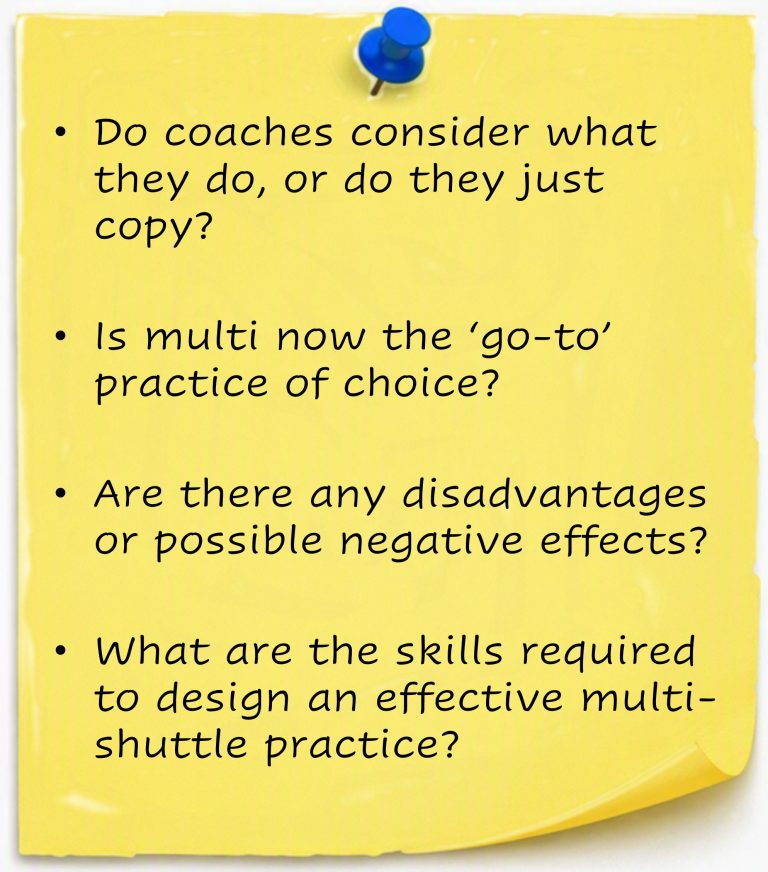
Why is it important to question its use
Do coaches consider the benefits or possible disadvantages of multi
Are there advantages, disadvantages, and limitations to using this type of practice?
What do you think?
If the evidence is the amount we see on social media and the practice courts, then coaches must believe that it’s useful and effective. Presumably, coaches only post videos on Instagram and YouTube that they think will help others.
Where is the considered thinking
Within coaching manuals, there is very little information when compared to other components of coaching and player development.
Why is that?
There are certainly some benefits to using this practice type, and I recommend that coaches consider using it.
Without consideration, how will you gain more coaching knowledge?
However, there are also some reasons not to use it as your preferred practice type. Especially for tactical, anticipation and even technique skill areas.
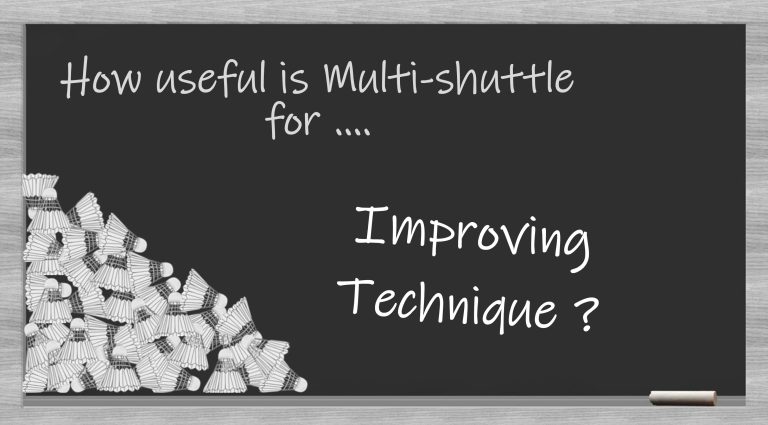
There is an argument (held by many coaches) that multi‑shuttle can help establish basic technical elements because it’s controllable, repeatable and confidence‑building.
Coaches can isolate key components, give precise feeds and reduce physical load.
However, once a technique is partly learned, multi‑shuttle offers limited transfer to real match skills: there’s no context, no opponent cues, no rally influence and no way to judge effectiveness, especially under game stesses.
The advice is to use multi‑shuttle sparingly—mainly for early technical foundations—then shift quickly to practices with variability, player‑initiated starts and returned shuttles to build robust game skills.
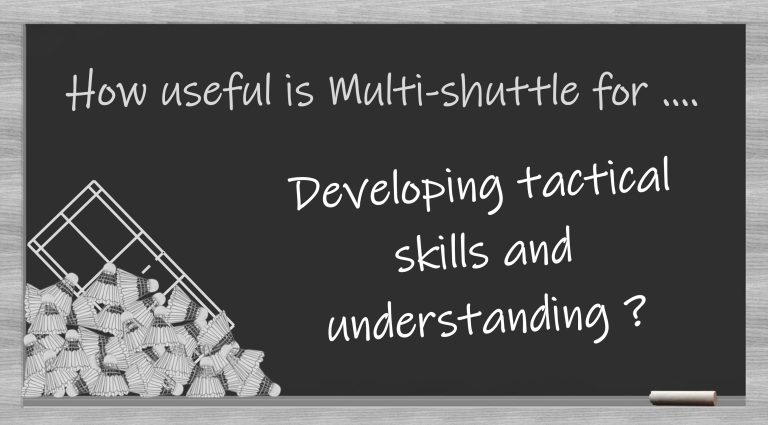
Some literature suggests that there may not be many benefits and even harm to your tactical skills from unopposed isolated practices. Those where the feeder is stationary, uses only one shuttle and is not returned by the feeder.
All these aspects (and more) are to develop tactical skills. They are all found in a competitive game.
The assumption that TACTICAL development can come from a single shuttle (not returned), in a multi-shuttle type practice must be examined by the coach and their assistants.
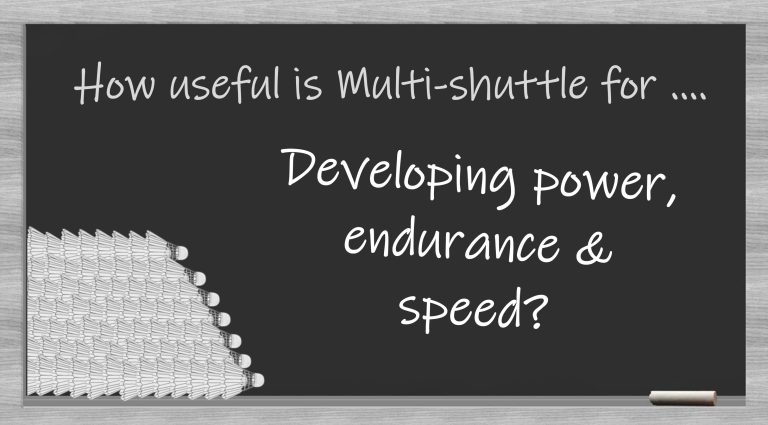
Multi‑shuttle can develop endurance, explosive power and movement speed, but only when coaches design sessions with clear aims, correct work–rest ratios and progressive overload.
Simply “feeding until exhaustion” is not effective.
Physical gains require planned programming, individualisation and measurable intensity (RPE or heart‑rate).
Multi‑shuttle is useful for extending rally duration, isolating explosive movements and creating overspeed conditions, but be in game‑specific patterns.
Multi‑shuttle can be used for ‘overspeed’ training espcially in doubles.
The confidence and progression (technically) will be obvious if present. This benefit should not be underestimated.
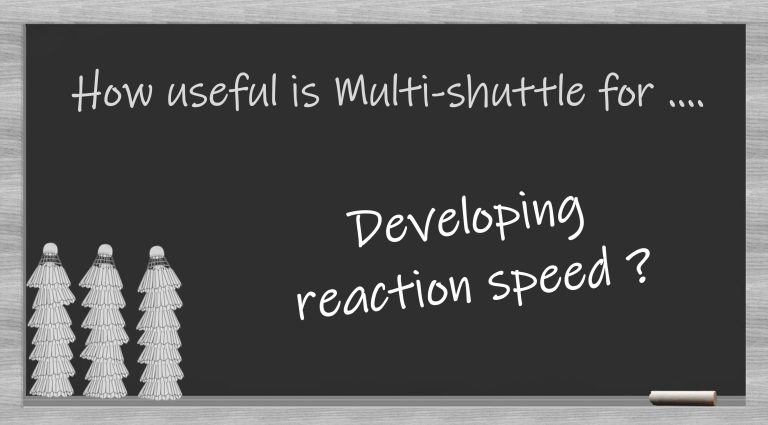
However, are human reaction times being developed or something else? I’m not sure.
Also, reaction and anticipation are very different, and coaches need to be aware of the goal and aims of this work.
Consider anticipation is a competitive game and how (if at all) multi-shuttle can replicate that.
In games, opponents can be seen moving, preparing, plus know of previous opponent decisions. The state of the rally, match, and tactical thought also add to the art of anticipation.
Players must be developed in ‘looking over the net’ to see what information they can use. Merely seeing a feeder who is often stationary is not enough.
This aspect should not be underestimated and can be valuable at different times in a player’s development
Often, prior to an important event, players wish to experience a sense of effectiveness or success. This can come from many situations, but often multi-shuttle can provide this easily.
Recovering from injury or on a ‘light’ training day, players can use multi to hit shuttles and still develop some elements of technique plus confidence.
One of the main reasons coaches use multi-practice often without the realisation. There are positives and other reasons why coaches do this.
Not being able or play of parctice in mini-rallies due to diferences in playing level is the main reason.
Being able to ‘speed-feed’ in a more accomplished way than the other players is another. Both in terms of speed and accuracy, plus an element of empathy.
However, coaches also use this practice to verbalise information almost at every stage of the multi. Some believe that they can ‘control’ what the player experiences and hears and that this is beneficial.
The big multi-shuttle survey
Would you like to contribute to the survey?
How would you score the usefulness of developing a technique solely using a multi shuttle practice?
It would be great if you could complete the short survey below, it will take you about 4 minutes, that’s all ????
Once we have around 50 people completing it I’ll send out the results or publish them here.
Have you completed the survey in Part 1 – click here if you want to do it now.
The information I revive will be reported in each post.
Why not share your thoughts
Do you want to read more?
Click here if you want to explore more about the effectiveness or otherwise of the use of the practices.
Send me a question
I’m always grateful if you have read this far.
If there is anything that you have read that has helped or that you disagree with, then please send me an email.
I promise to read all your comments
It would be great to hear from you contact@badmintonandy.com


![Early Preparation always - Duplicate - [#38141]](https://badmintonandy.com/wp-content/uploads/2026/09/early-preparation-always-scaled.webp)
![Keep your racket up - Duplicate - [#38056]](https://badmintonandy.com/wp-content/uploads/2026/09/keep-your-racket-up-scaled.webp)