
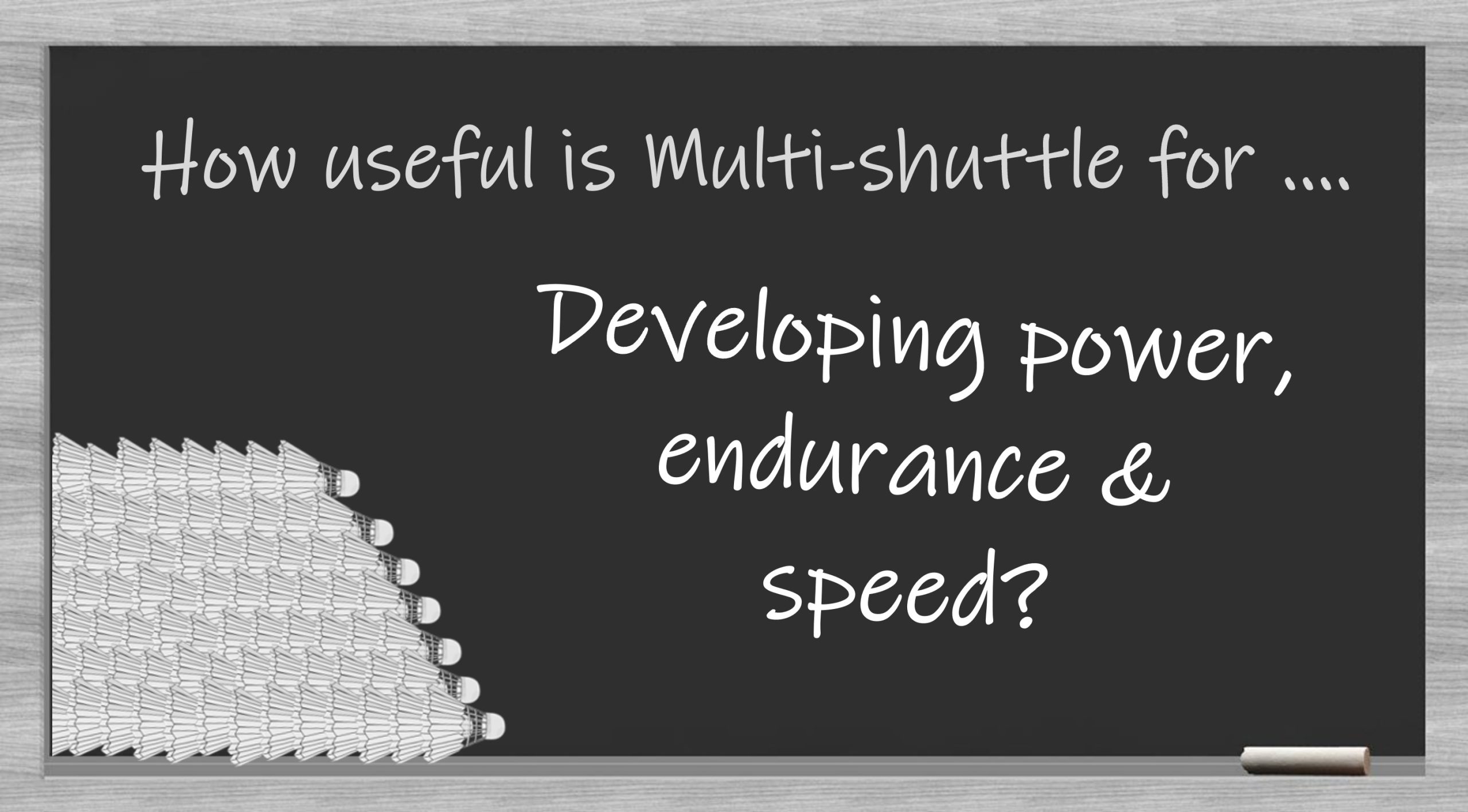
Its not feeding untill players fall over with exhaustion!
You need to have a plan and consider all the options
Power, Endurance, Speed : they all all different
Multi-shuttle is ideal for improving the endurance and speed elements
Although be aware of the different practice aims
What did over 100 coaches say
Multi-shuttle allows for more ‘control’ of practice than other practice types. This happens both in design and execution.
The feeder (often the coach, but not always) decides exactly where to direct the next shuttle, its speed, the timing of the delivery and if they desire, out of context from the previous stroke.
That is unlike any other situation in a game, a rally.
[wpdatachart id=17]
Is this one of the reasons they use multi-shuttle:
because they want to direct exactly what happens, reduce variability, and be in charge
Multi-shuttle practice has many uses : some more effcetive than others
This post is part of a mini-series looking at the uses of multi-shuttle.
My initial thoughts
How many do you agree with?
- Multi-shuttle is ideal for improving the endurance and speed elements Although be aware of the different practice aims
- Rally durations (time) can be extended to improve endurance
- The distance covered can be targeted
- The time required to move to the shuttle can be adjusted
- Its possible to focus of spcific power movements

Identify and understand your aims
- When designing a multi-program do you think that coaches could refer to those considerations that are used in the gym i.e. when creating Strength and Conditioning training (S&C) programmes? Aspects such as overload, adaptation, work/rest etc. are all important.
- It’s not just a case of sorting out lots of shuttles into rows of 8, 15 or 20 and then speed feeding them until the player falls over with exhaustion!
- Unfortunately, exhaustion seems to be one of the main criteria used by coaches and players! How do you judge a successful physical multi-session?
- Have you tried measuring physical aspects using: RPE ( Rate of Perceived Exertion), or HR BPM monitoring (heart rate recording and working in target HR zones)
Don’t just copy others
Design your sessions, review and adapt
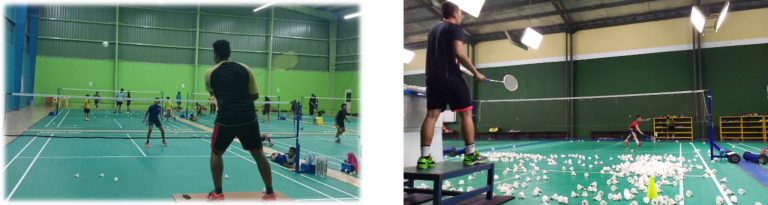
Endurance, Speed and Explosive movements
Positives and advantages
How many do you agree with?
- Multi feeding is very controllable and it’s possible to extend rallies beyond that experienced in a match for both time and distance covered.
- Sessions can be designed, recorded, and analysed. If feeders are sensitive to the practice performance, fatigue is easier to observe than in free play matches.
- All players can be stressed, whatever their playing level. Player fatigue will happen, in fact, it’s either the goal or one of the desired factors.
- It allows the coach to watch multiple attempts, preparing feedback whilst the player is performing the repeatable actions.

It’s an opportunity to talk with your S&C trainer friends to ensure that sessions allow power to always be ‘available’ to the player.
Can they help by referring and comparing your on-court program to that in the gym using a barbell and plyometric work?
There should be similarities in protocols and programmes.
How do you decide which endurance elements to extend beyond what happens in a game?
Time in a rally or distance covered
Negatives and disadvantages
How many do you agree with?
- It’s very easy to give everyone the same program (sets and reps). Is that good coaching and effective practice, but how would you individualise a program?
- Don’t just work to exhaustion; it’s very easy to do that. There are dangers in doing that. Do we use enough specific measures to ensure that endurance is being trained?
- Coaches, do you care enough about your players to design progressive ‘overload’ multi practices? How would you do that?
- Be careful, you can easily overload players using these power situations. It’s very easy to just do one more set. Waking the next day and being unable to move is not a sign of a great session.

- Too often situations are created that require players to move at maximum speed to areas of the court that could not happen in response to the strokes played by the player.
- The work rest intervals for ‘maximum speed’ multi sessions are different to that for movement endurance goals. Be specific in the programming and ensure that the timings (work/rest) are actually followed during the session. Consider how much time players take between rallies in a competition
Why aren’t more scientific studies done to understand the training parameters?
Do you think this information would be useful to you?
Recommendations for developing endurance
- Consider how you design the programme to develop Endurance. Consider what type of endurance you are targeting.
- Write it down, make it player specific, understand overload, and review and adjust if required.
- Decide how you want to measure the effort within the sessions: HR monitors, R.P.E player assessments. Use this information to adjust loads and rest periods.
- Work critically to determine the length of ‘rally’ that is appropriate to the player. Make more adjustments in the sets, more than the reps (shuttles fed). Just using lines 10, 16, and 20 isn’t designing a programme.

It is easy to place demands that go beyond what happens in a game
Do you have confidence in your programme and its specificity?
Recommendations for improving movement speed
- The patterns of feeding allow for players to fully commit to movements to and from the shuttle. Any uncertainty (as in a real game) is taken away allowing players to move with only speed as an aim.
- Select specific movement patterns that replicate fast movements of court, often with limited need for decision-making: eg smash net kills backcourt to the net
- Ensure that players are aware of the need for maximum speed. Emphasise that an adequate rest periods will then happen.

What does the difference look like between …
players just chasing shuttles compared to real game-like movements
Are there other reasons why you choose to multi-shuttle?
I’m sure you must have your reasons for using this practice. Especially if it’s your ‘go-to’ practice type.
How you coach the practices you create will always be your choice
All I ask is that you consider why you do what you do and how effective it is
Send me a question
I’m always grateful if you have read this far.
If there is anything that you have read that has helped or that you disagree with, then please send me an email.
I promise to read all your comments
It would be great to hear from you contact@badmintonandy.com


![Early Preparation always - Duplicate - [#38141]](https://badmintonandy.com/wp-content/uploads/2026/09/early-preparation-always-scaled.webp)
![Keep your racket up - Duplicate - [#38056]](https://badmintonandy.com/wp-content/uploads/2026/09/keep-your-racket-up-scaled.webp)