
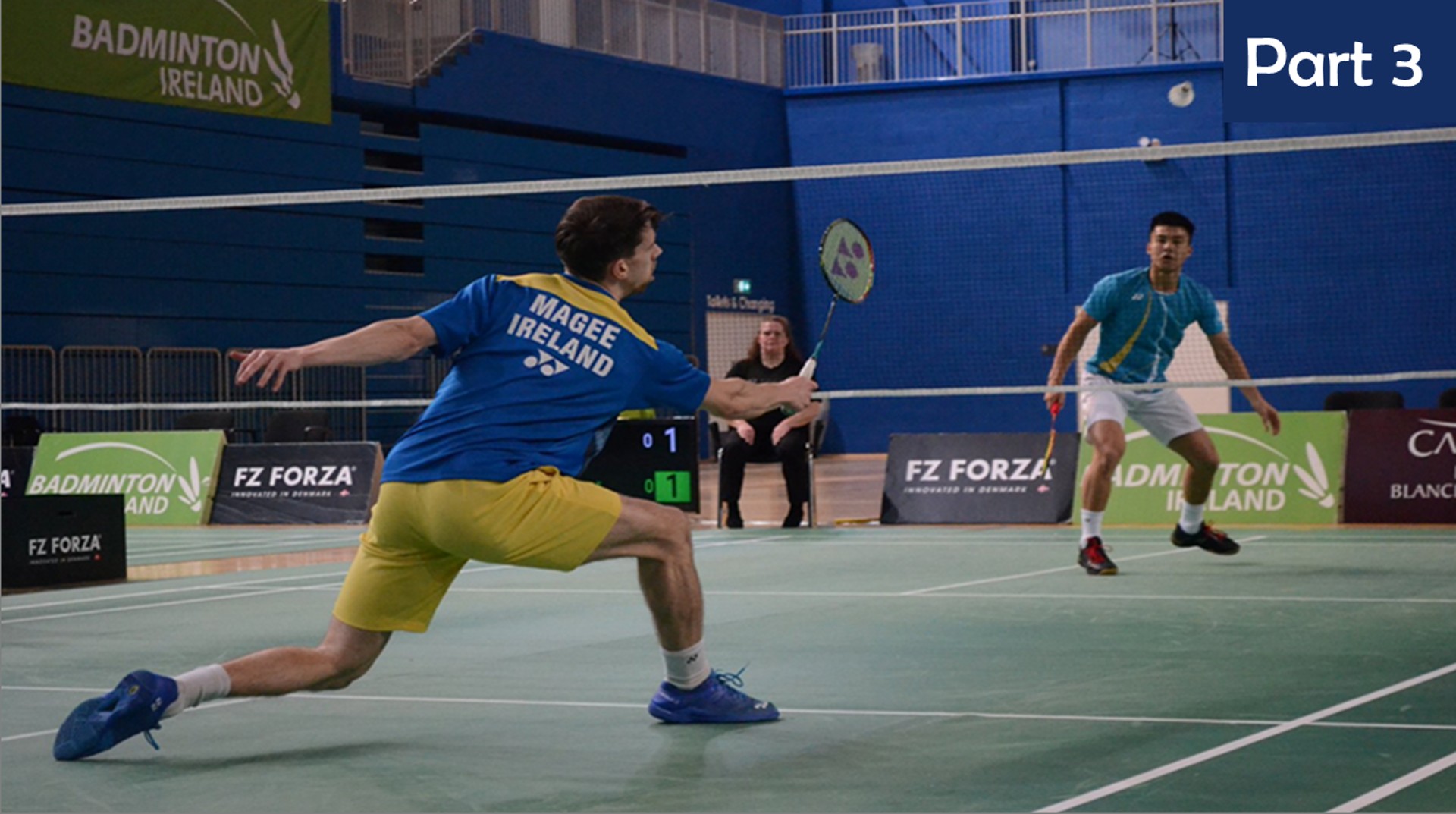
Stances are much more than a technical movement
Where is the information about how and when to introduce them?
Do you think that your players would benefit from knowing
the tactical choices about stances ?
They are the anticipatory movements made by players
before the opponent’s stroke
Have you read Parts 1 and 2
I’d been coaching movement skills (in singles) but never thought about stances and certainly didn’t include them in my work.
I thought that starting and moving from one stroke to another was only about using a split-step (pretension) loading of the legs.
But I was wrong, it was far more than that.
Read more about the 4 stances.
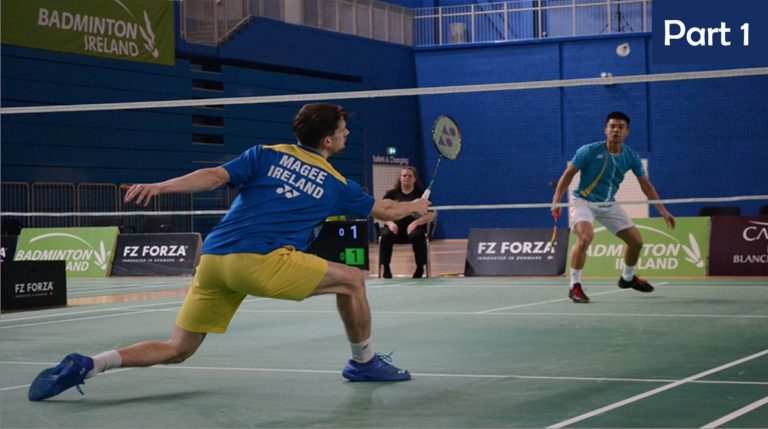
3 Ways to allow for and include in practice
Try these ideas when introducing and developing the use of Badminton stances in practice.
Some of these may be new to you, and I encourage you to consider and work through the ideas here.
… Wallwork
… Include and allow for, in all rally work
How do you create practices that introduce stances with conscious game-like engagement?
Player-start practices
Coaches should be sensitive to who ‘starts’ the majority of practices, especially with individual 1 to 1 sessions.
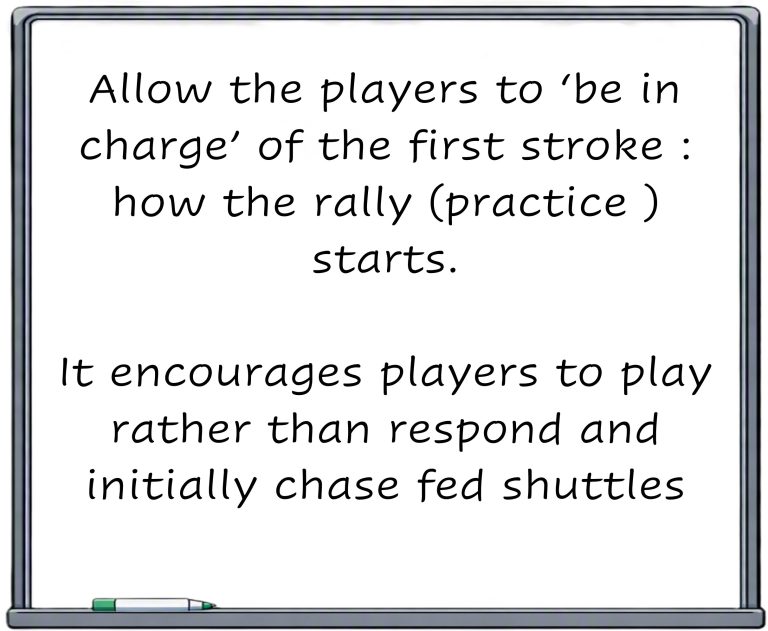
Simply, the player starts the practice rally (whatever it is) by either starting in a racket foot forward or a square stance, and crucially, they are holding the shuttle.
They play the 1st stroke.
I am not insisting that players start all practices
However, in the development of stances and other aspects, I encourage coaches to experiment and give the shuttle to the player at the start of every practice rally.
Coaches may feel a loss of control over the practice, as I did when I first tried this.
Having the player start the practice rally (rather than the coach) is a key element and introduction to the process of striking and then using a ‘timed’ movement to adopt the required stance.
Without this type of rally start, the stimuli to initiate the pretension (split step) and movement into the stance will be reduced.
It is this transition between stance or just pre-tensioning within the same stance (using a small jump) that gives multiple opportunities that otherwise would be missing.
I had been coaching about 6 years before I was introduced to this concept, and it made a noticeable difference in how my players progressed 🙂
I have yet to see it explained in Coach Education programs 🙁 My hope is that one day this simple concept will be known to all.
Have you thought about changing your multishuttle practices
for player-start single shuttle rallies?
Player-start benefits (for stances)
Game likeness from the start
The initial stance will be appropriate to the first stroke from the player (the stance and feed will make sense 🙂 )
Anticipation skills
It starts from before the player strikes the shuttle, “What type of stroke ‘feed will I do?”.
Hopefully, the player will already be having anticipatory thoughts based on their own feed, partner/coach approach, ability.
Motivational
The player has initial ‘control’ of the practice (very important) based on the initial ‘feed’ (i.e. direction, length, speed, flight) and the subsequent stance adopted. All these are in the player’s control.
Repetition without Repetition
The initial movements involving stances are repeated at the start, subsequent movements are variable and are based on the opponent’s shot choice, plus the players’ initial stance movement.
This is repeated in every practice repetition: starting stance, (known), feed (varied), opponents’ reply (variable)
Player choices
An increased amount of practice ‘ownership’ and opportunities to experiment based on their own tactical choices i.e. the feed types and initial stance. The coach no longer decides everything.
Be aware
This concept will require an understanding of game-like practice design from the coach. All work will involve rackets and single shuttle work. Both parties will, to a varying extent, be working.
Therefore, attention to physical and mental requirements (load) must be included within the practice parameters.
My advice is to work and rest as you would in a real game.
The key is that players have high motivation to affect (control) the start of the rally and that they use stances to anticipate and prepare throughout.
Celebrate elements of the rally where the player deliberately tries to affect what happens next.
This type of practice is not a split-step practice, it is far more than that. The split-step movement is part of the greater use of stances.
Practices to develop stances will, over time reinforce the split-step less (possibly not at all), but will reinforce the tactical choice made by the player.
On court during rally work
To maximise the use and development of stances, rallies must be played.
Shuttles must be returned, hopefully with an intention of trying to win or trying to minimise any opponent advantages.
To be clear, a rally is not a multishuttle exercise.
Players should then be encouraged to anticipate the choices made by their opponents/feeders and adopt an appropriate stance.
During developmental stages, the movement into and between stances may be mis-timed or inappropriate for the rally situation. Do not worry as this ‘mis-timing’ is often caused by the visual stimulus and the player’s inexperience in understanding the visual and tactical clues.
Please remember that it is not the aim that the player adopts the ‘correct stance’ for the direction in which they then move. The aim is to adopt a stance that either prepares to move to the shuttle that will hit the court 1st or to prepare to move to the shuttle that will give the player a tactical advantage.
The direction the player eventually moves is based on the stroke played by the opponent. Of course, this could be influenced by the stance taken by the player in anticipation of that stroke.
How the coach translates all the points above into a series of practices
is the challenge for the coach
Why do we need rallies?
Stances are anticipatory based on what you believe the opponent may play or similarly, something you want to be ready for. Both are tactical choices.
However, a rally, without the shuttle being returned as in a match, the effectiveness of the stance taken cannot be assessed.
Development of any new learning and especially stances that mix technical and tactical requires testing / development / refining in a game situation, using rallies.
To try and practice stances in a single shot multi-shuttle practice is at best, limiting
and at worse only practising known movements
Single rally practice
2 questions will help you start
“is the shuttle likely to be hit upwards or downwards towards me?”
and
“which shot do I want to prepare for?”
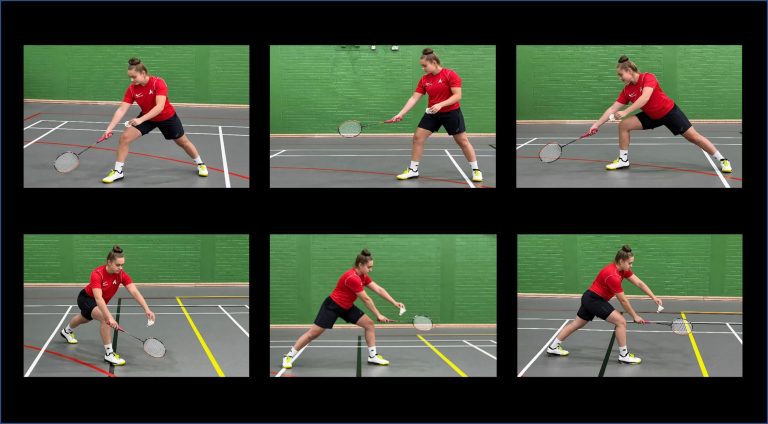
This is a simple yet very effective way to allow players to become accustomed to standing in one of the 3 main ‘in-game stances’.
At the start of any practice, the player adopts an appropriate ‘starting stance’. They choose the stance depending on the shuttle position over the net on the opponent’s side.
Examples
Feeder starts with a High Serve
Start in a receive of serve stance (the simplest of decisions)
Feeder starts with block/push to your front court
Start in a forward-attacking stance, anticipating either a shot to your front court of a flick to the back, but covering the shot that will hit your court first: the one that lands in the front court.
You start with a High Serve
After striking, move into a square stance, anticipating and preparing for a fast down shot.
You play a tight F/h block (tight) from a square stance
After it’s struck, then ‘jump turn’ into a forward attacking stance. To anticipate and cover the shot that will hit your court first – a straight net.
You play a long push slightly above the net level from a square stance:
Staying in a square stance, anticipating a flat push down.

You play a BH block feed straight, tight to the net
Either jump turn into either a forward or backward attacking stance, depending on the stance and subsequent movement/stroke to be practiced.
(a straight net = forward attacking stance, lift towards the rear court = backwards attacking stance)
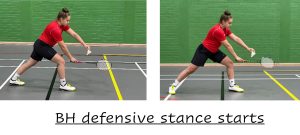
You start in a forward attacking stance
If you ‘feed’ to the net area (straight or cross court) : start in a forward attacking stance. If it’s a crosscourt push, then adjust the stance position by moving over to the other side of the court.
If you flick or lift to the opponents’ rear court (straight or crosscourt), change to a square defensive stance, anicipating/covering a straight down shot from the opponent.

The aim is to adopt a stance that either prepares to move to the shuttle that will hit
the court first or to prepare to move to the shuttle that will give the a tactical advantage
The direction the player eventually moves is based on the stroke played by the opponent
Early introduction
Shuttle time practices
Wallwork
These are the 2 methods that you can use to initially introduce the use of Badminton stances to players.
I encourage you to find many more ideas, but to ensure that they follow the principles that are repeated throughout these 3 posts.
Shuttle time
The introduction of stances need not be a complex set of teaching/coaching cues.
There are many elements in the BWF Shuttletime program that encourage racket foot positions.
- Shuttle Time Lesson Plans are available to download in 21 languages. Click the image for more information.
- Bouncing the shuttle with a timed racket foot forward stances/postions
- Being ready for the likely reply (included in many elements)
Wallwork
I have found many positives of striking against the wall, especially with young players.
It’s the movement between these stances initiated by the shuttle striking the wall that will help players and coaches introduce and progress.
Players can become accustomed to starting all 3 stances, then striking with a variety of strokes.
There are many developmental progressions from this initial simple practice. Players should be encouraged to start in a variety of stances (square defensive or forward attack stances), then strike in a ‘block’ style or ‘soft flick’ towards the wall.
As the shuttle strikes the wall the stance can be changed with timed movements.
Examples
Defensive square stances can represent a block to the net in singles. The player strikes an imaginary block, then ‘jump turns’ into a racket foot forwards stance before moving forward to play a net or flick against the wall for their 2nd shot.
Racket foot forward stances represent times when the shuttle is below the net and the opponent could play to the forecourt. The player strikes an imaginary push to the opponent’s forecourt, then stays in this position but preloads (by flexing or a small jump) their legs. Then moving quickly forwards to play their 2nd stroke.
In both these situations, the strokes played against the wall can be straight or crosscourt, hard or soft, loopy, or directly into the wall. All these variations will require a slightly different timing of changing stance and the loading through the legs.
Wallwork benefits (for stances)
- Creates opportunities for imaginary play; is the wall a tough player
- Variability (although not always game-like)
- Practice success is through simple progressive tasks leading to improved self-confidence and enjoyment
- Working without a partner allowing self-correction, self-organisation (coaching)
- Repetitious work in a small space
- Coach observations from various angles and away from the player
- Very quickly the technical elements can be performed without or reduced conscious engagement
I believe that all novice players should be introduced to Wallwork practices
It’s certainly a ‘go to tool’ in my opinion
Reduce the Technical information, replace withTactical
This has been difficult to write, and I struggled to know exactly what to say here
The advice I will give may seem contradictory:
Help them forget the technical information, instead, encourage players to make a decision on which stance to adopt (the tactical)
Coaches need to move carefully and skilfully from the initial coach introduction of all technical elements towards a more tactically based player decision-based approach.
My fear is that coaches will keep reinforcing the technical elements of stances rather than allowing the player to make tactical choices based on their previous learning.
Coaches should praise the tactical choice for developing players (even if initially incorrect) rather than reinforcing any technical points.
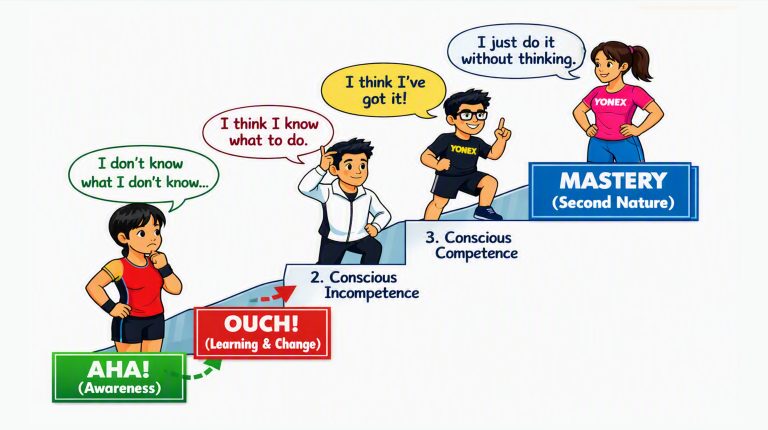
The benefits of not reinforcing the Technical elements should not be underestimated
However, the Tactical choices and opportunities should never be reduced
What do you believe?
If you have read parts 1 and 2, I hope that you now agree that there are benefits to adopting stances.
Also, the choice of stance is anticipatory (i.e. before the opponent strikes the shuttle) and is based on a tactical thought.
More reading and a quiz


I’m grateful if you have read this far.
If you think that I’ve missed any important points it would be great to hear from you
I appreciate all your comments and suggestions, why not send me an email
It would be great to hear from you contact@badmintonandy.com


![Early Preparation always - Duplicate - [#38141]](https://badmintonandy.com/wp-content/uploads/2026/09/early-preparation-always-scaled.webp)