
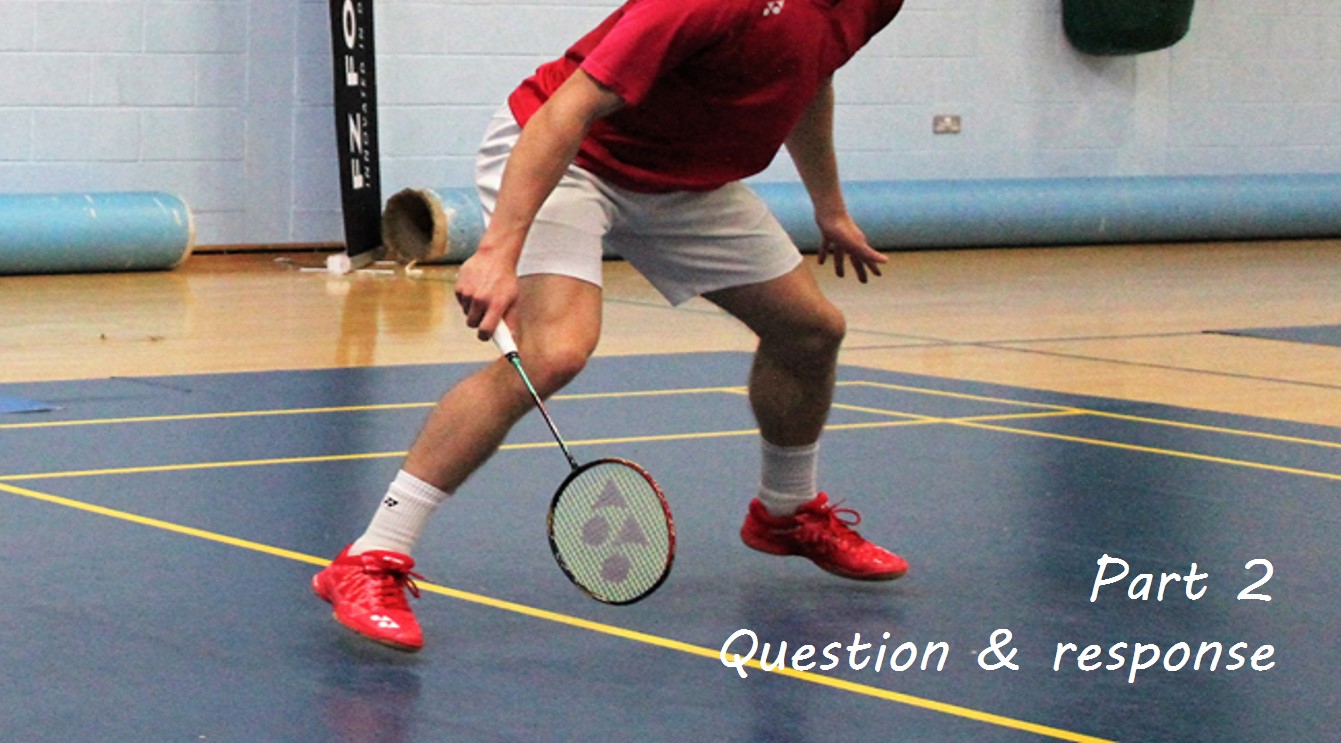
I’ve taken the ‘Split step’ challenge
Compare you answers to mine
If you want to go back and review the questions, click here
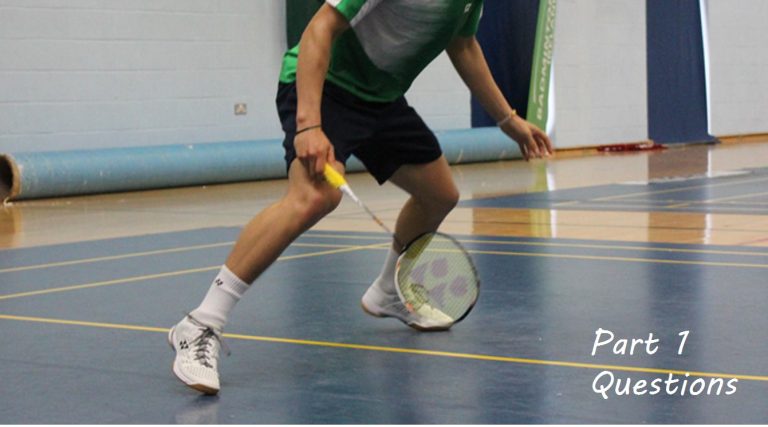
I wonder if you will agree with me,
or maybe we will agree to disagree 🙂
What was I looking at
I had been watching good players, observing but not realising what they did and when they did it.
When I was first asked these questions over 20 years ago, it took me a few minutes to answer. Afterwards, I realised how wrong I was.
I needed to change my coaching of this movement.
I hadn’t been coaching in an effective/ efficient way
Before I was asked these questions, I’d been coaching the movement using methods that seemed appropriate (to me as a coach) but didn’t assist the players in automating the movement.
Certainly, my coaching didn’t relate to real game stimuli, the things players see, the replies that they anticipate.
I created practices that included verbal coach cues (clapping, shouting), and I used shadow practices where the player decided when and how to prepare and move. The players seemed to be successful at the practice.
However, I had no idea what to say to Questions 4 and 5, they soon became the most impactful on my coaching
Have you watched this video
If you are like me, then maybe you want to look at good players first before considering any reply. I’ve included some video here for you to do that.
I recommend that you initially just look at the player and their movements. The movements they make before the opponent strikes the shuttle and then what happens after the opponent strikes the shuttle.
The Questions & Bonus Information
Q1- Is the split-step an anticipatory or reflective movement?
The split step should be thought of as an anticipatory movement
prior to the opponent striking the shuttle
Players split and adopt a Stance (choose any of 3) just before the shuttle is struck.
The direction (the stances adopted) is outlined in Question 2.
Performing the movement once the direction of movement is known requires the shuttle to have been struck; this will result in a slower movement to the shuttle if you reach it.
Q2 – In which direction would a person generally split-step?
“Prepare to ‘cover’ the shuttle that ….”
… Is thought to be the opponent’s most likely reply
… will hit your court floor first
This does mean that the position after the split may be seen as ‘wrong’ (an error) if the shuttle is then struck in another direction to that anticipated.
This is not an error, and in fact, it happens far more than you may think with players, including World Class players.
It is not an error; it was an anticipatory move that prepared for the most likely reply.
Therefore you cannot practice splitting in the direction you wish to move and then always move in that direction
What did you see in this short video?
Look at all the movements between striking the shuttle.
TTY always ‘prepares for something’ by adopting a stance.
However, the movement afterwards is not always as she ‘anticipated’
This is not an issue as the stance was ‘correct’ when taken up; the opponent just played to a different part of the court.
The initial movement was her choice and completely correct, even though she didn’t split and move in that final direction
Q3 – What initiates the timing of the movement?
The timing is defined by the players and their perception of the opponent,
the situation, and their expectations
Watch the spectacular movement skills of Tai Tzu Ying in this video.
The movement will be just before the opponent strikes the shuttle.
Look how she takes up a stance in the gap between striking the shuttle and the opponent striking the shuttle.
TZY uses Stances to anticipate her next movements. She does all this before the opponents strike the shuttle
Q4 – What other court movements should the split-step be linked (very closely) with?
The split step is a critical element when using stances
It’s the timing of the transition between movement and a stance
There are 3 Stances used throughout all preparation positions
square (defensive) stance
racket foot forward (attacking)
non-racket foot forward (attacking) stance
These stances should be thought of as Anticipatory – selected before the opponent strikes the shuttle, not afterwards.
The adoption, ie movement into the stance, is combined with a ‘split-step pretension’ movement.
The general rules of “shuttle above or below the net” should be followed in the majority of situations.
Read these posts to find out more

Developing ‘Stances’ with players is more effective than just coaching a ‘split-step’
Q5 – What are the elements a coach can use in practice that introduce & develop the movement?
Here are 7 points that you could consider
If you prefer a checklist to choose from then look at the bottom of this post under the heading Extra Bits
- Set up practices that require a change of stances followed by court movements
- Practice this movement without any verbal cues from the coach
- Shadow practice is only part of the practice (if at all) as it misses the stimuli of the opponent’s preparation and striking of the shuttle
- Create practices that allow for the movement as if was ‘timed’ as in a real match, hit uses, anticipate, move
- Do not demand that players split in the direction of the eventual movement, it cannot happen ‘correctly’ all the time!
- Do not remind players of their Split Movements once they are partly established. Please don’t shout “Split !”
- Coach players in a style so that players forget they were ever coached to do the Split! 🙂 (why do you think this is important?)
Q6 – Have these questions/discussions changed your split step opinions?
If so by now much?
When I was first introduced to the Badminton Split Step, it was called a Pretension movement then.
It was through the use of Stances combined with movements and strokes and not as an individual movement.
I was encouraged to first ‘teach’ it through Wallwork practices.
Subsequently, I was introduced to Player Start practices that nearly always allowed for (demanded) the use of stances and a ‘timed’ split-step movement.
It would be fair to say that my view and thoughts completely changed during the time I learnt more about Stances and the split-Step
These ideas radically changed my view on this unique movement
Extra bits
Split Step Practice Problems
Many other moments / strokes have several steps or layers of development. A good example is an overhead Backhand Clear. This stroke is made up of several complex movements that are required to be sequenced and timed.
There are also several key technical aspects for a BH Clear that need to be mastered. Many of these key skills can be developed as a progression.
A. What are the layered steps to coaching a perfect badminton split-step?
B. How can the ‘Split Step’ be ‘taught’ without the players’ focus of attention being on it?
C. How to avoid- Paralysis By Analysis and ‘Movement freeze/lumpy/late’.
The Practice checklist
Include as mnay of these in your parctices
.. Shuttles being hit
.. On court within lines
.. Opponent striking
.. Rackets in hands
.. Player self timings
.. Player decisions when starting with the shuttle
.. Opponent choices when receiving the feed
.. Short 3 -5 shot rallies
.. Game-like choices
.. Certainty to reduce stress
.. Uncertainty that increases stress
.. Predefined simple movements in the direction of the split
Send me a question
I’m always grateful if you have read this far.
If there is anything that you have read that has helped or that you disagree with, then please send me an email.
I promise to read all your comments
It would be great to hear from you contact@badmintonandy.com


![Early Preparation always - Duplicate - [#38141]](https://badmintonandy.com/wp-content/uploads/2026/09/early-preparation-always-scaled.webp)
![Keep your racket up - Duplicate - [#38056]](https://badmintonandy.com/wp-content/uploads/2026/09/keep-your-racket-up-scaled.webp)