
What would you like from coach education
The stimulus, the experiences, the information
Here are my selfish thoughts
They may not suit you
But they are my honest thoughts at this time
I decided to write this after posting a question in the ‘Courtside Conversations’ part of this website.
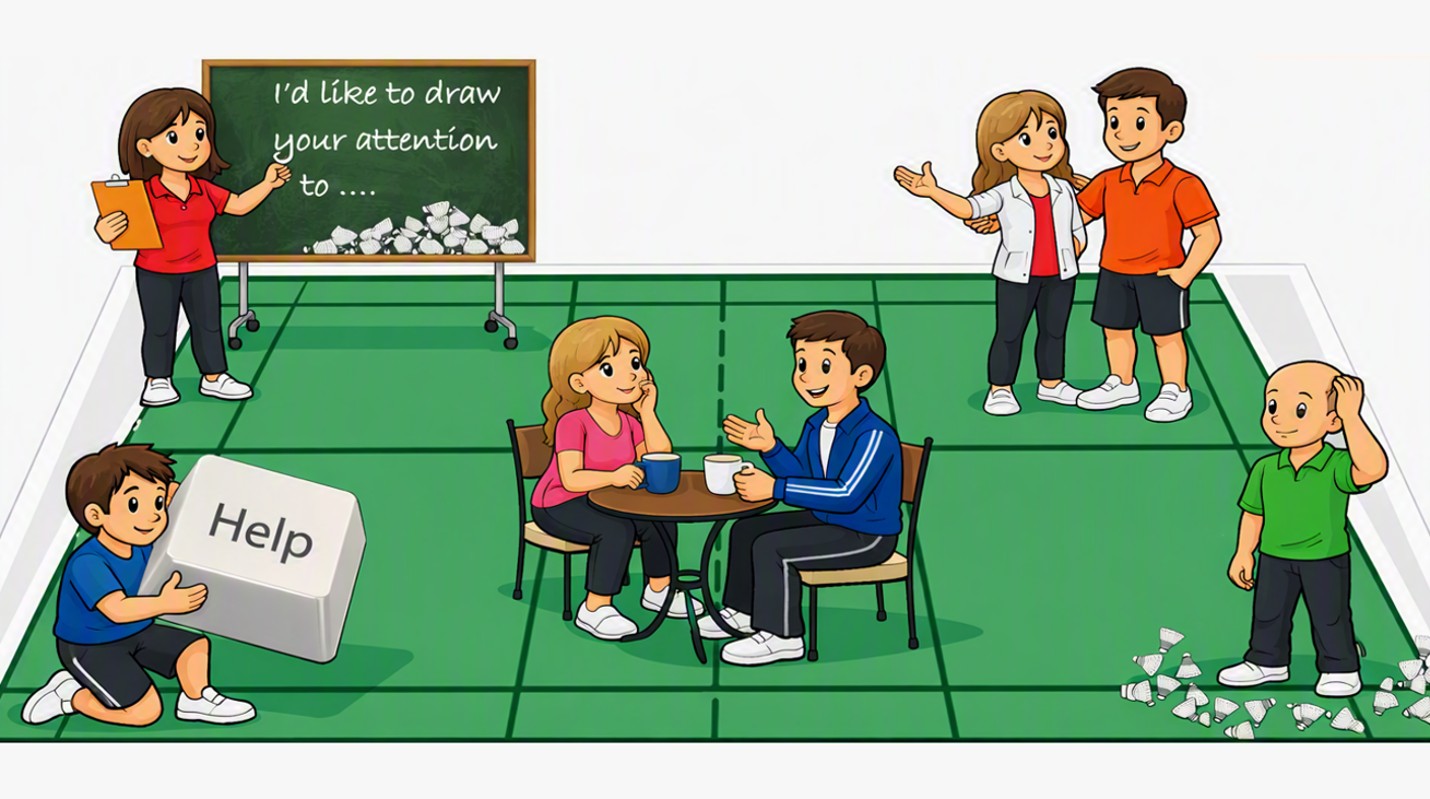
If you want to challenge yourself or discuss with a group of friends, click on this image.
It will give you some questions, challenges and ideas to talk about.
Send it to a friend who is always criticising and moaning about coach education systems.

Do these suggestions suit your needs?
Provide inspiration
When and How
When I’ve run out of motivation, I need stimulus, inspiration, and yes, that happens every so often. Do you ever feel the same?
Looking back, I’d say every 2-3 years I feel disillusioned with either my progress as a coach, the lack of opportunities to develop (often I’m just not looking hard enough), or I’m struggling with a coaching problem.
I’ve certainly found that I need some outside stimulus, a coaching spark to get me energised again. This can come in many forms, some of which I hope would be provided by an association or governing body.
I don’t mind where they come from; here are some that certainly have worked.
Does your Association or NGB share these ideas or links with you?
Places I find stimulus and motivation
- Being invited to help or watch another coach work – then having a coffee and a chat
- Attending a Coaches Conference or watching an online webinar –here are some links
- Badminton Insight – watching the weekly videos
- UKCoaching Coach Development Conversations – monthly, discussing everyday challenges faced by coaches
- Podcasts - here are my current favourites
Rather than just providing information,
could a system be designed around motivating and stimulating coaches
Challenge and test me
My ideal badminton coach education would certainly include some challenges
The closer they are in application and context to my sport or the delivery of effective coaching the better.
I’m not a fan of random challenges without there being a usable learning outcome.
That can be difficult in CE courses and often information is presented in a generic one-size-fits-all approach. Plus there is often no discussion of alternative methods and techniques.
Workshop-style learning run by a great facilitator, that would be the goal.

My favourite conversations often include questions such as :
- “What would you do if …..” (state the specific situation)
- “Does that work in this situation …..” (describe the situation that you see in your mind)
- “But what happens when the player starts to do ..…” (try to remember the specific situation on the court in the game)
- “What would you do to encourage ……” (ask after offering your initial thoughts)
Could a Badminton education be designed to allow open exploration of ‘Practice’?
Would you like an opportunity to ask more?
Examinations and assessments
I do recognise that they are needed - but what type
Have the assessments you’ve seen really provided a check on understanding, or is it just a ‘shaped snapshot’
How often do coaches put on an act during the assessment, ensuring they deliver what they believe the assessor wants?
If a qualification needs an assessment, I would prefer that to be done via several different methods: observed coaching, written logbook (including evaluations and reflections), presentation of ideas, and an interview. All would have feedback from the assessor.
If I was assessing or if I was being assessed, I’d want questions of: Why (tell me), What, When did you decide to do “X”.
To be clear, I’d want to ask the assessor some of these questions in response to their observations. I’d like a 2-way discussion in the assessment!
Even at the 1st award level, I believe there needs to be a part where the coach presents their thoughts and has a discussion with the assessor.
The problem, I guess, is that this takes time and money!!
Could coaches be assessed in the environment they feel most comfortable in
and have an opportunity to explain the rationale for what they do?
Introduce me to people
Increase connections between coaches
How would you feel about that?
Making connections has been influential in my development as a coach.
I believe that if a CE system was in part founded on the belief that the ongoing development of coaches is best served by everyone contributing, it would produce powerful results.
Ok, not everyone will become lifelong friends; that’s not the aim. Collaboration and joint exploration could be an aim.
Coach Education should motivate coaches to make connections, show them what could happen.
It must encourage them to participate in small collaboration projects (buddy coaching). Also, encourage them to be inquisitive (ask questions) and, importantly, to take questions.

Could an aim be the creation of connections between coaches?
Allow me to be part of a network
This is similar to the last suggestion but it’s more structured
I’d like a badminton coach education system to actively encourage coaches to meet and interact with others.
Creating a feeling of professional belonging. People don’t have to share or contribute initially, but feel they can listen and then interact when ready.
This may be tough for some organisations as generally they ‘educate then forget’.
It would have to be a month-to-month accumulation of experiences to enable the coach to feel safe and bring their full collaboration to the group.
I’ve experienced this when organisations have used these 5 pillars to ensure that coaches feel: “welcomed,” “known,” “included,” “supported” and “connected.

Cultivating a community spirit, establishing shared goals,
and fostering open communication?
Encourage me to explore
Provide me with future tools and constraints
Rather than just deliver information, I’d like to experience a system that gives me tools to use in the future.
- How to establish what a player needs right now, and in the future – to work progressively and not overload them or me
- Finding different ways (methodologies) to coach the same thing
- To understand and question the things I see on Social Media – not everything is effective, is it?
- To identify why practice doesn’t seem to be translating into competition
- Select a coaching action from a list of possibilities – understanding that I may many thoughts and options to select from
Help on how to ‘constrain’ my coaching and thoughts
- Encourage me to 'understand and examine' practice before inventing a new solution.
- Finding different ways (methodologies) to coach the same thing
- To balance both participation and performance in sessions
Coach education provide ‘Coach tools’ first
Information 2nd
Nudge me towards solutions – less telling more ‘nudging’
When I started coaching I most often coached the way I’d been coached
Then I moved to delivering the way I’d been shown on my first CD qualification.
I had very little indecision in my actions, I just ‘coached’ the way I thought it had to be done!
It was a few years before I realised that I wasn’t really coaching, I was just delivering practices. However some players did seem to improve, but not all and not as effectively as I liked.
I needed someone to suggest and nudge me towards solutions
Someone to skilfully showing me how it could be, where to direct my coaching attention and what to consider or not consider.
Luckily, I found that person before I got bored and before I started to invent new ways of coaching practice.
He not only nudged me but also expertly demonstrated his suggestions through real-world sessions (practical examples in practice).
All the suggestions he gave were right in front of me; he challenged me to observe and ask questions.
I didn’t see everything, as in the beginning; much of what he did was subtle coaching action. I struggled to see why he was so effective.

However, in time, the discussions and observations allowed me to understand more.
I was encouraged to consider what I was observing and nudged towards different solutions. Less telling, more waiting for me to question or comment.
I was asked …
How do you know and establish that developments are happening?
What is your view on giving direct instructions?
If scaffolding works, what does it look like in practice and why does it work?
What are your factors when setting task/practice level?

How well do current coach education system use mentors,
how effective is the process?
Be full of practical learning opportunities
As many as possible 'in-action' tasks
Do you agree that above all else effective coach development is best provided by the coach ‘doing’, reflecting (sometimes with assistance) and ‘doing again?
It’s a lifelong process, and as a coach develops, it continues,
Level 3 or 4 isn’t the end of your development!
As much as possible. information needs to be presented in a practical environment
As much as possible, information should be shown in a practical setting. Demonstrating how it works, how it can be used on the court, and in what situations it is and isn’t as effective.
Classroom and prior learning are important and required, but that isn’t the end of the learning.
To show how things work in practical situations is vital.

Hopefully, the idea that “everything works somewhere: nothing works everywhere”can be experienced on court under the guidance/assistance of others.
Maybe this would challenge the notion that any practice is worthwhile, especially if ‘World -class players do it’
Helping coaches understand what makes an effective practice and how to reflect and analyse what needs to be at the heart of a CE system. It’s certainly easier to demonstrate all this on court rather than in a classroom.
Presenting concepts/information on court, crucially showing why
“some things work some of the time, but not everything works all of the time”
Designing a Coach Education system isn’t easy.
But would you like one with some of the ideas above?
As always, I’m very grateful if you have read this far 
If you’ve had a conversation with a friend, especially about this topic why not share some and send me an email contact@badmintonandy.com
I’d welcome any ideas for topics and conversation starters.


![Early Preparation always - Duplicate - [#38141]](https://badmintonandy.com/wp-content/uploads/2026/09/early-preparation-always-scaled.webp)
![Keep your racket up - Duplicate - [#38056]](https://badmintonandy.com/wp-content/uploads/2026/09/keep-your-racket-up-scaled.webp)