
Self-discovery techniques are often the problem
Techniques that can severely limit future development
Some issues are easy to see, others not so
What do you see with players who discover their own techniques?
Are you happy with the results?
The mini-series considers if it’s possible to
- identify future limiting badminton techniques
- consider the impact of each one
- establish how they occurred and where to start to effect a change
- consider if ‘prevention’ is possible and the coaching methodologies to use

What do coaches see & how do they react
Seeing (observing) and formulating a reaction to a possible critically limiting badminton technique are 2 different aspects.
You may think that every coach sees the same thing as you and then comes to the same conclusion.
This is not the case!
It’s tough to know exactly what every other coach sees because we all look with different viewpoints based on our knowledge of what a technical fault is.
Maybe you don’t recognise the technique as an issue, or you don’t know where to start a subtle change, a refinement.
Its important when coaching with someone else to be open and detailed in your thoughts, espacially about your observations.
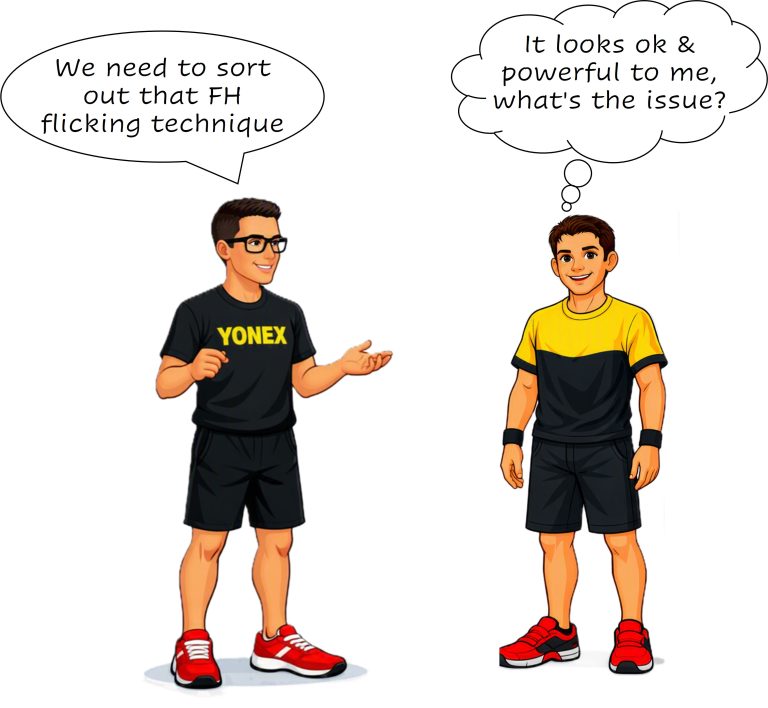
Here are 4 reasons why coaches may struggle to act effectively after observing……
- Seeing something that they don’t recognise (you don’t know what you see)
- Embarrassed at what they see
- Seeing but not acting (deliberately doing nothing)
- Seeing and acting on everything immediately
- Seeing, understanding the importance and creating a plan
Seeing something that they don’t recognise
The issue of experience or lack of experience will always be there.
When you first start on the coaching journey there is so much to see when watching someone perform, you will find it difficult to sort and understand all the observations that you make.
Like me, you may find that you can’t decide what to look at, or what is the cause of something not working as you expected. That’s the reality of watching someone develop.
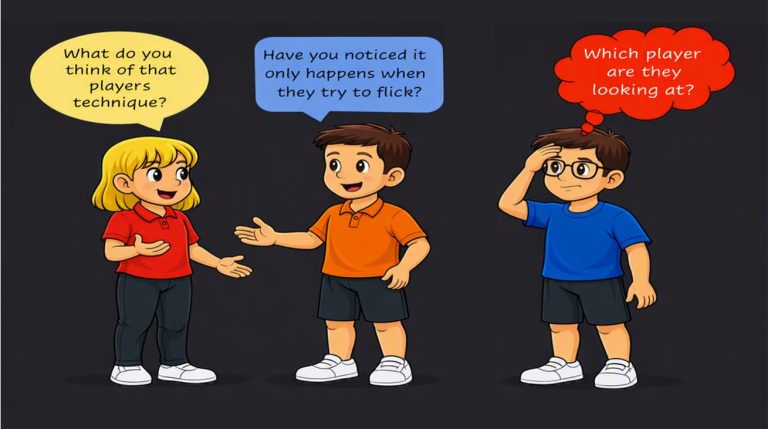
My advice is to make some observations, work out what you expect the outcome to be and what actually happened.
Look at the technique preparation, the moving parts and then the finish (the recovery). This applies to the racket and the body.
Then ask another coach for their thoughts.
However, don’t just assume that they can see more than you or that they have the same opinions as you.
How you talk with other coaches is a skill in itself. Remember, not everyone likes questions 🙂
Embarrassed at what they see
Yes, it’s true.
Some coaches are embarrassed that their players would have badminton techniques that don’t seem effective.
If you feel embarrassed or conscious that you have allowed or possibly created technique problems, my advice is to “forget your own feelings”. It’s time to act not, feel this way!
It’s difficult to know if issues develop because of coaching, the practices set or if it’s just something that happens to some players.
In Part 1, I described the different possibilities for a technical issue to appear, and there may be more than the two suggested.
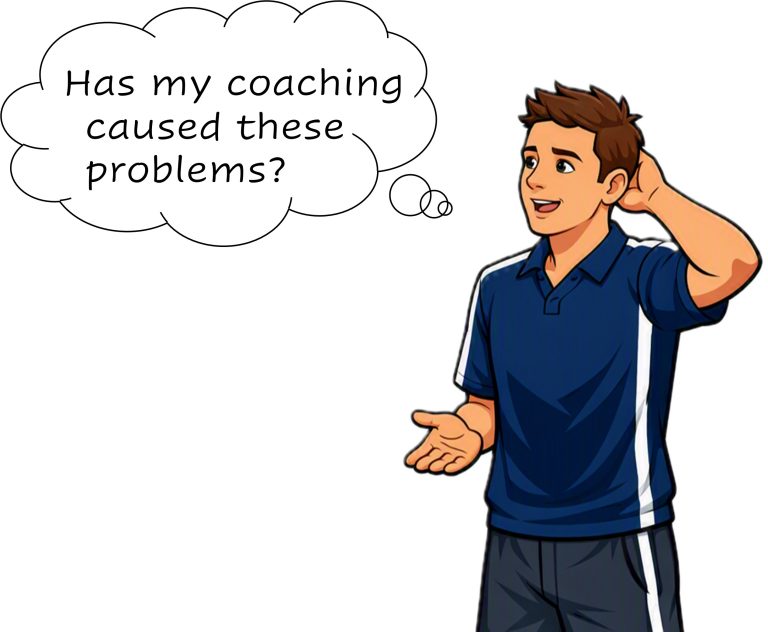
If you don’t review how you coach and make changes, then your players will probably not change either. Worse still they may leave your group to join another or start asking why they can’t perform as well as they like.
If you feel embarrassed that another coach is pointing out critical technique errors in your players then ask them for more advice and help. It’s not the time to let your embarrassment become a ‘wall’ around you.
Seeing but not acting
This may sound strange to you and not something you’d expect from a coach.
Why would a coach see something but not act on it!
This does happen and for different reasons, all of which only the coach would know.
It could be that the coach feels that the effort and workload required to effect a positive change to an inappropriate technique (even if only partly established) is too great.
The player may be part of a larger group and the coach cannot allocate time, they believe is required. Or, the coach may decide that the struggle (and possible frustration) the player will experience is not something that they wish to experience.
In these situations, whatever the reason, the coach sees the limiting technical issue and decides to not try to effect a change in the technique.
How do you feel about this scenario?

Can you think of other reasons why the coach may not try to change the technique?
Seeing and acting immediately (without a plan)
This may sound like the most effective thing to do, to act immediately once you see the issue.
The coach needs to act otherwise they aren’t coaching! 🙂
However, the desire to effect a change immediately must be done with a plan. To act otherwise could lead to problems.
Coaches who immediately draw the players’ attention to the problem or offer verbal instructions are at risk of…
- demotivating players
- causing unnecessary internal focus on a current technique
- making subtle changes much more difficult
Are you observing your players with an intention of gathering information
or are you merely just watching them, or worse still looking without seeing!
Making sense of what is seen
There is no one question to ask yourself when looking at a player’s technique.
I recommend that you use the series below and maybe put pen to paper to capture your thoughts. Reading them back later often provides new insights.
Although sometimes questions may not initially help you, it could be your feelings that guide you, more about that later.
Coaches should ask themselves the following questions:
- What do I see? – can I recognise and name it?
- What was the intended outcome? – this applies to strokes and movements
- Was this achieved? – it doesn’t have to be a perfect outcome so you will have to use your judgement
- How does what I see compare with the known model? (the playing basics) – do you have the knowledge to list the essential elements of the aspect you are considering
- Where do I start to effect a change? – there is no need to answer this immediately, gather your thoughts first
Consider what outcome you expected and then what actually happened
Look at the technique : the preparation, the moving parts and then the finish (the recovery)
Recognition difficulty
How easy is it to identify something that is technically inappropriate?
I know from experience that it’s tough to do this when you first start coaching.
You certainly see some things that don’t look right but often they are the ‘bigger’ technical issues.
Those where players prepare in a different or strange way to what you expect. Those body or racket preparations taken up early are easier to see than something that happens in the middle of a ‘power stroke’.
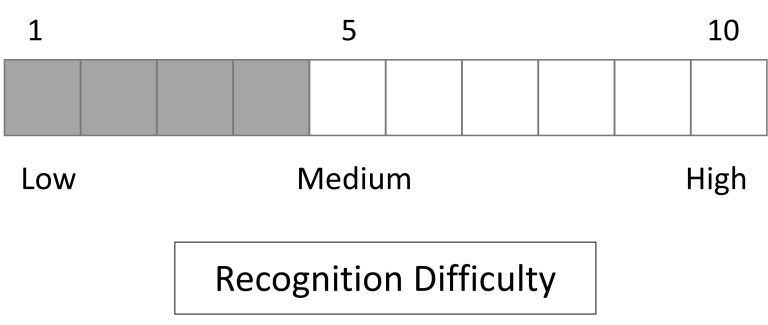
I certainly struggled with the small, subtle issues that often happened within these power strokes and fast movements. I quickly realised that not everything was easy to see!
Soon I did realise that there was no link between how easy or difficult it was to see the ‘fault’ and the severity of it on future development.
But for me, it was one step at a time. The first step was to recognise something and be able to name it!
As you gain more experience and interact with other coaches your ability to see the technical issues will improve but only if you work at it.
If you have a feeling that something isn’t right and looks different to what you see with other players then ask someone or have a discussion.
Working together is always the best way to develop, but you must be open-minded and willing to ask questions or feel challenged.
Issues were right in front of me but I didn’t have the experience until someone helped
Who is helping you, or who are you helping?
Knowing how technically limiting it is?
Identifying it is one thing, but just because it doesn’t fit your technical model or it looks strange doesn’t explain how impactful it could be to future development.
I’ve found (after being told) that some badminton techniques are far more impactful than others in terms of limiting future development. This also applies to the potential to cause injury.

When you first observe a badminton technique issue you may believe that it’s just part of players’ development, and that could be correct.
This is the toughest part of the process for coaches: deciding/knowing when to intervene and how much individual variance is acceptable. Of course not all player techniques will look the same, but some variations will (I promise) limit future development.
My list
Please take a look and tell me how many you see in novice players.
Do you recognise the names and do you agree that they require prevention if possible?
As you consider each one, I wonder what pictures you will create in your mind and if you will pick up a racket to move as if to replicate (or think about) the stroke or movement.
Not all of the badminton techniques listed are as critical as each other, this will vary.
Also, it’s not my aim to prevent every single technical issue from developing, that would be fantastic but completely unrealistic.
My aim is to draw a coach’s attention to observations they may have
Grips
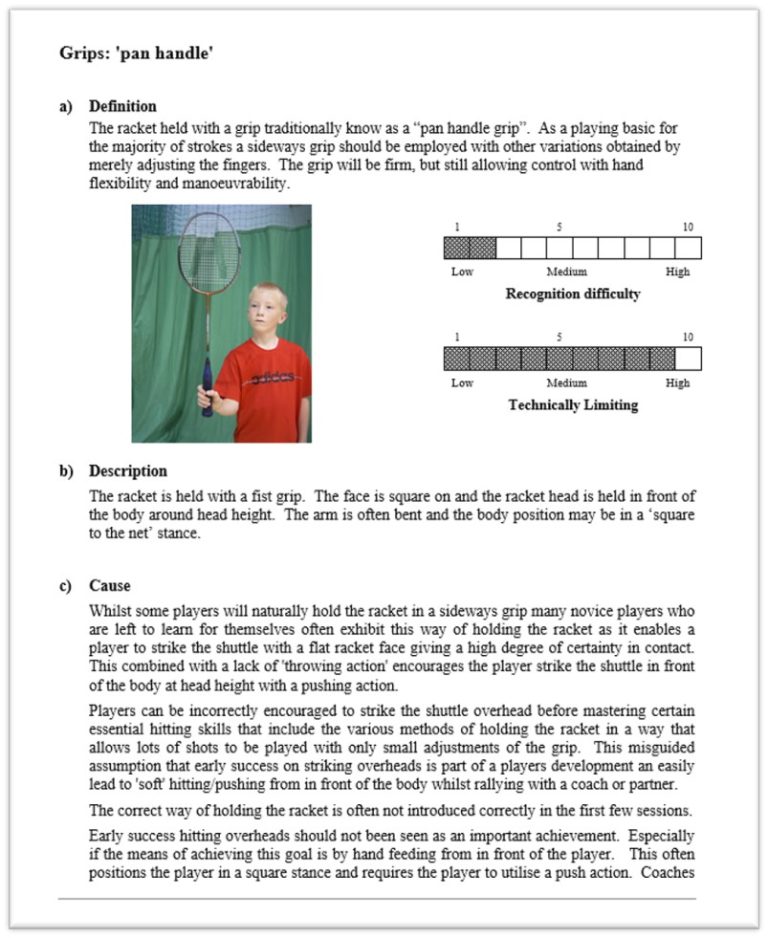
Pan-handle
Holding the racket so all the strings face towards the opponent very early in preparation for an overhead
Shortened
Holding the racket near to the top of the handle at the junction of the shaft & handle
Finger up the shaft
Where a finger is placed pointing up the handle
Overhead forehand hitting action
Square-on
The upper body faces the net during early preparation for an overhead
Front foot hitting
Stepping forward onto the non-racket leg in preparation for an overhead prior to striking
Lack of rotation
The body remains in a sideways position after striking with no turning of the shoulders
Lunging
Falling forward
Overstepping onto the non-racket leg as recovery
Wrong leg
Lunging onto the none racket leg just prior to contact when moving forwards
Bum high
Tipping forwards and downwards when lunging, the rear leg being off the ground
Backhands
Floppy wrist
Presenting the back of the racket hand prior to and during contact
Elbow pointing
Elbow high during the preparation prior to starting overhead backhand
Swinging arm
Excessive use of the shoulder and ‘long’ arm
What’s next
Your challenge is to consider the 12 faults above and determine how many (if any) could be ‘prevented’
This would be done by practice design and selection, not purely instruction.
It would also be an interesting challenge to determine why these techniques emerged.
Maybe a simpler challenge would be to rate every technique by two questions :
… how easy are they to observe
.. how impactful (in a negative way) are they for future development.
Send me a question
I’m always grateful if you have read this far.
If there is anything that you have read that has helped or that you disagree with, then please send me an email.
I promise to read all your comments
It would be great to hear from you contact@badmintonandy.com


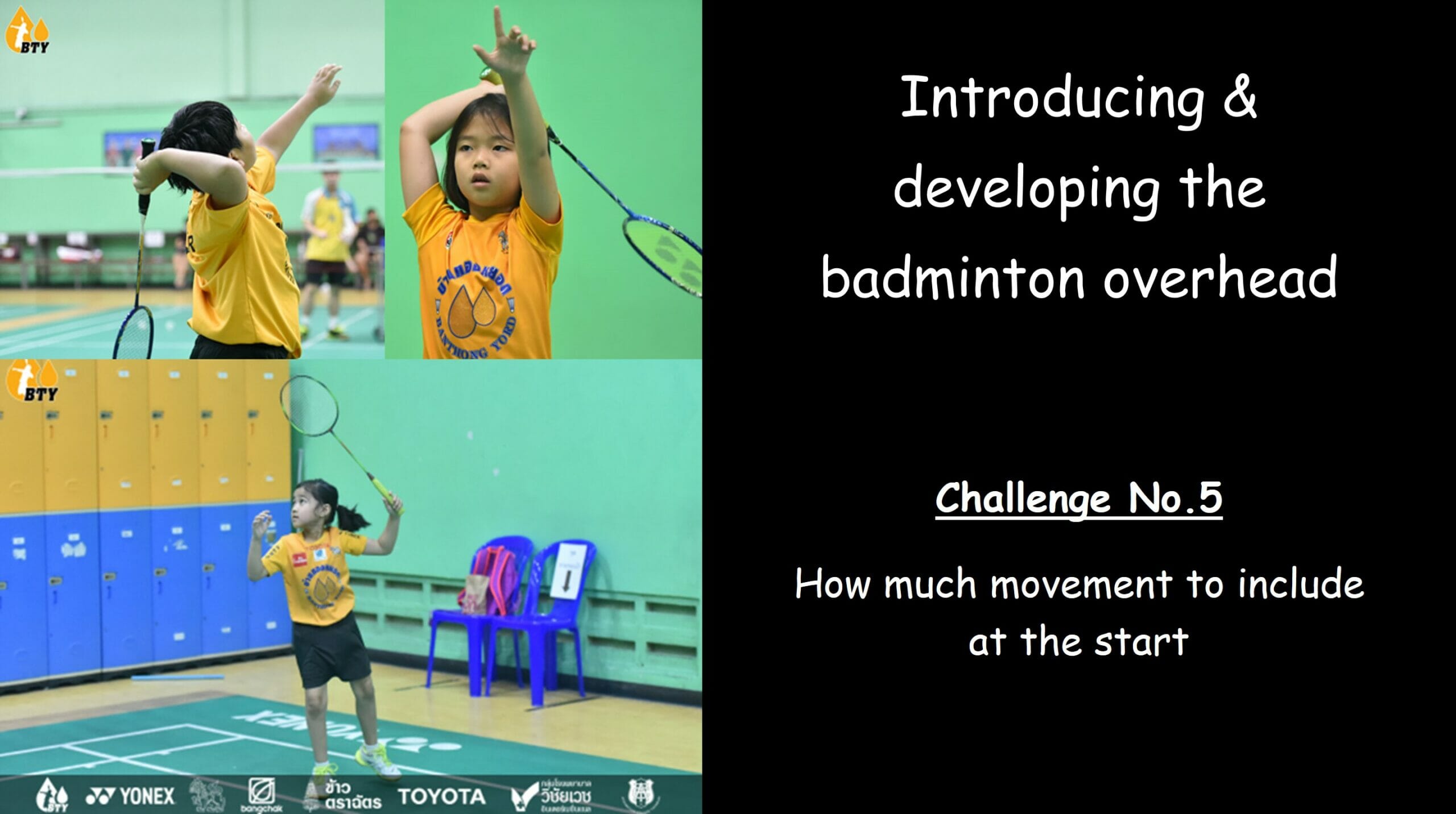
![Early Preparation always - Duplicate - [#38141]](https://badmintonandy.com/wp-content/uploads/2026/09/early-preparation-always-scaled.webp)
![Keep your racket up - Duplicate - [#38056]](https://badmintonandy.com/wp-content/uploads/2026/09/keep-your-racket-up-scaled.webp)