Content and style of your communication really matters
It's not the same between Coaches as it is with Players
I’d never thought about this but yet I’d seen the consequences
I was giving too much information to players, it was too detailed & often overly technical
I needed to realise who I was talking to if I was to be successful
I spoke to everyone (Players & Coaches) in the same way
My mistake was believing that they needed the same information: detail and quantity
These were my assumptions when I started, and I eventually learned that none were true
- Players needed to understand as much as I did 🙁
- The more detail they had, the easier it would be for them to learn 🙁
- The manual I had (after just passing my award) contained all the information players needed to know 🙁
- It was best that they knew everything at the beginning: the reasons why, how all the parts linked, the coaching details, etc 🙁
- Players were interested in knowing as much as possible
I found that very few of my beliefs were true
and to help development, sometimes it was best that players didn’t know
The reality
- Very few players asked for details, sometimes they asked for the ‘why’: “Tell me why that will help me”: they just wanted ideas on how to improve, what tasks to try and games to play.
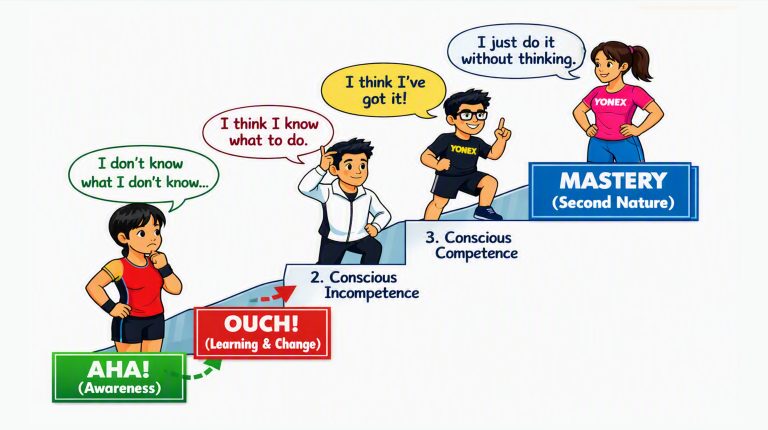
- Players reached mental saturation sooner if I gave information at every stage (read about saturation here), it didn’t help
- Players complained that they would rather ‘do’ than listen
- The next session they couldn’t remember much of the information. Especially the ‘important’ coach type information I’d given
- It is sometimes different with Expert Players … Jump the end of the post to read more.
Coach to Coach communication
Discuss the What, Why and How of what we do
The depth and range of coach-to-coach communication are different. Expect it to be detailed, specific and sometimes lengthy before concenious can be reached. Not always agreement, though.
I recommend that when coaches do talk with each other, it should be full of exploratory questions and conversation. Endeavour to understand as much as you can from the other person.
Without coaches talking, sharing and enquiring, it will be very tough for any form of effective coach development.
You may decide that there is no need to communicate with other coaches about the ‘art of coaching’; that’s your choice, but I believe that will certainly limit you!
Often, I’ve found that other coaches are surprised that I want to talk with them about coaching subjects.
How would you react if someone asked you to discuss badminton practice?
Are you willing to share and exchange?
Coach to Player communication
There is information that players need and plenty that they don’t
There is also information that they need, but sometimes not at that stage in their development
Then there is information they need at one stage, but need to ‘forget’ in later stages

When coaching players, do you think it’s important to …
- Consider how to reduce everything: the things you say, the amount of detail included, and the length of your sentences. If you spoke with another badminton coach, it could take 5 mins of explanation but just 20 seconds with a player.
-
Listen to the words and try to hear when you sound like a Coach giving coaching information rather than information to help the player in front of you. Am I sounding like page 35 of the coaching manual?
(is the test)
- If you are asked a question by a player, consider deciding not to answer with lots of information (even if you have it). Rather, ask them (a carefully crafted question) about what they think or set up a practice situation to explore the different answers/possibilities.
- Sometimes respond with – “I’m not sure about that, it depends“ and then change the practice so that it offers an opportunity for them to try and experience their own question. e.g. “hey coach what’s the best footwork for moving into the backhand net area?“
- Stop reinforcing the technical aspects the player is doing. Praise the outcome rather than the technical methods that achieved it e.g. “Wow, did you hear the sound of that slice“, rather than comment on the grip and the hitting action.
- Accept that sometimes learning takes longer. Often, it really isn’t that much longer when you think about all the hours we are on the court. Plus, the difference in long-term development is huge, players seem to perform without you having to repeat the technical information.
- Certainly don't ask “why did that work” when the player performs something special! What do think are the reasons for not drawing their attention to technical details when they performed something well (successfully)?
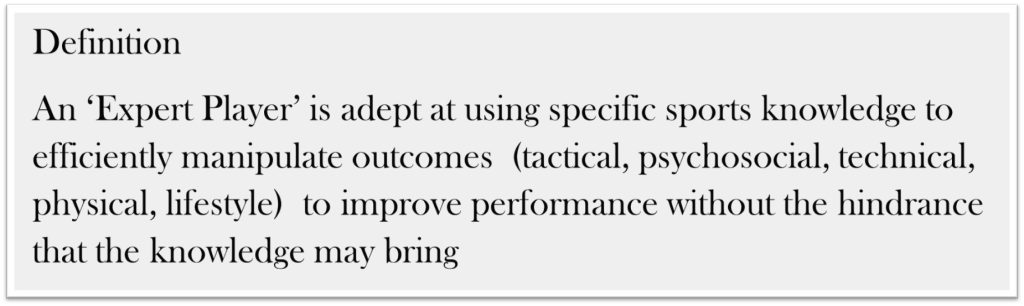
Working with Expert Players
As always in coaching there are times when you need to be prepared to adapt and possibly break the ‘rules’.
Communication with Expert Players is one of these times when you need to possibly adapt.
Whilst it’s true that too much information (quality and detail) can cause problems with a players’ learning and less telling & direction should be replaced with suggestions and well-designed practice.
However, this isn’t always true with some or all expert players.
Simply: some experts can accept specific detailed information, process it, use it, and all without any issues in performance.
Be aware that not all experts will want to know ‘everything’
Some experts may only want hints and tips at that moment
Send me a question
I’m always grateful if you have read this far.
If there is anything that you have read that has helped or that you disagree with, then please send me an email.
I promise to read all your comments
It would be great to hear from you contact@badmintonandy.com