
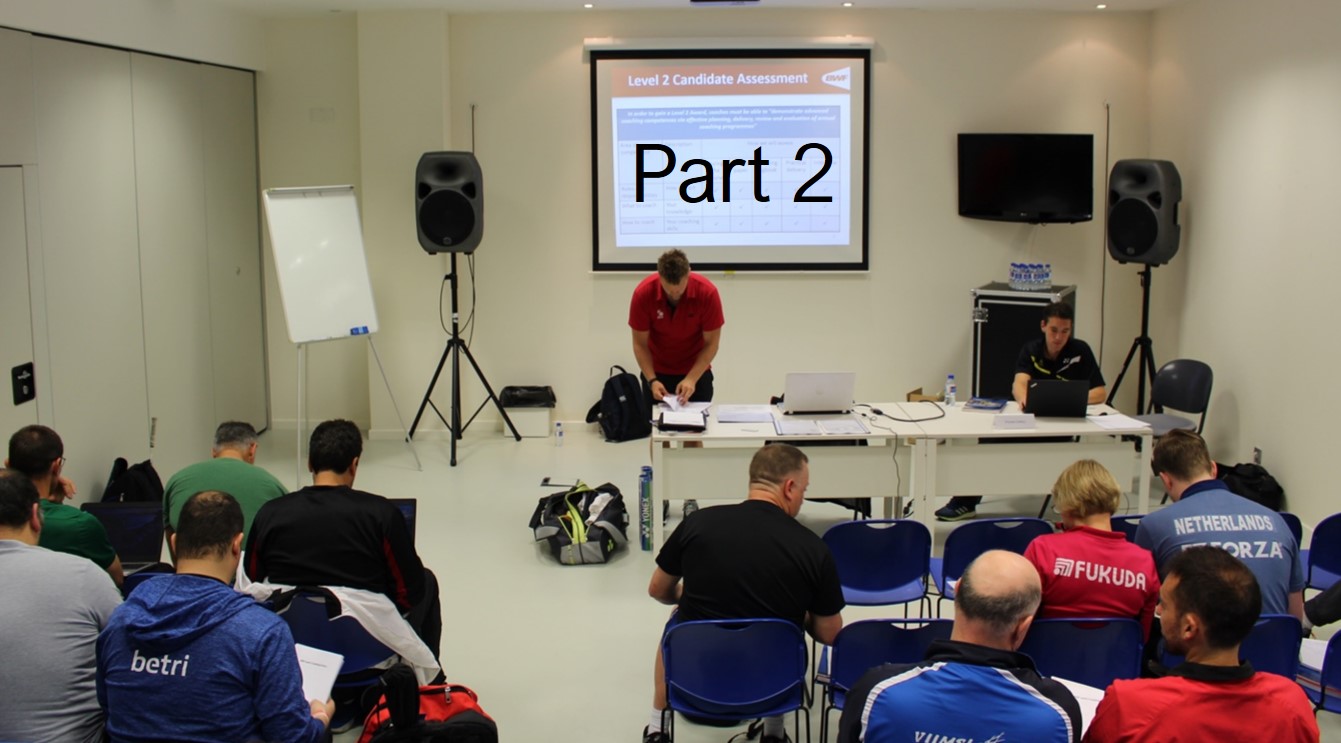
Where does your coaching knowledge come from?
How can you reference the way you were coached
This is part 2 of the advice and ideas to help
Reflect, Enquire, Reflect
A path to satisfaction
Have you thought about what skills /strategies you will use to replace the ‘winning’ feeling you previously had, especially now that you are helping others improve?
What could that coaching feeling be, the one that replaces a tournament trophy?
You must find challenge and satisfaction from your coaching. It’s very important; otherwise, an early form of coach burnout/boredom/frustration will exist.
Consider if the process of coaching could become your driving emotion.
Helping others, watching your skills work, and developing an insight into what works (or doesn’t) will give you the satisfaction you need.
Just delivering the same old lessons, week after week, will, I promise, make you miserable or maybe make your players miserable and lose motivation.
Not being afraid to reflect on what you do, say and think is essential
Reflect
It is very easy for me to suggest that you learn to reflect, but doing it or even learning to do it can be oh so difficult!
Think back to any coaching courses you’ve attended, think back to any education you’ve had, have you ever been taught any processes to help you reflect?
You will need to develop skills and strategies for looking at all you do and how to reflect on all those thoughts you have. Plus strategies on how to cope with the questions you come up with.
You must reflect if you are to move forward quickly
Be aware that you may not want to reflect on what you do. It can be a scary, often disturbing thing to do.
The realisation that you don’t know as much as you want or can’t find that exact practice to help your player can paralyse some coaches.
It’s your coaching and how you go about it is up to you.
But remember, you are there to deliver something to your clients. They want to improve, increase their enjoyment, achieve a target; the list is endless.
Are you prepared to reflect on what you do?
Enquire
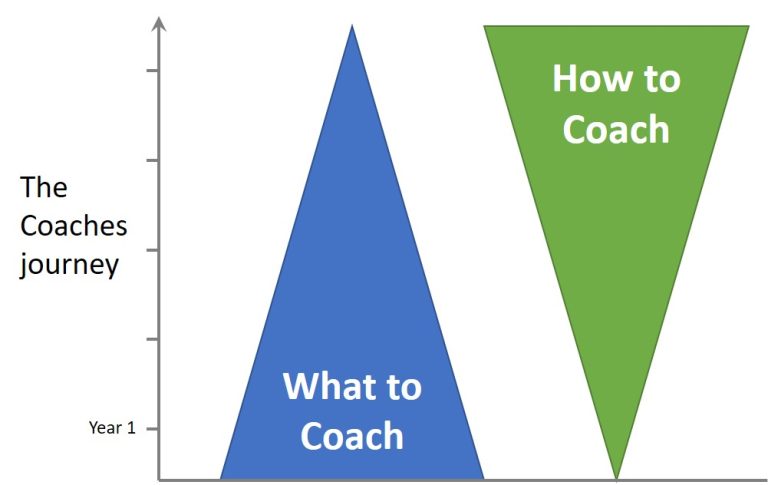
Which is your stronger coaching skill: knowing “What to Coach”, or “How to Coach”
Is it possible to do both at the same time?
Maybe you know far more about what to coach and less on how to coach.
That’s what’s often taught on Coach Education Courses: the “What to Coach”. Often it’s what you remember most: the technical elements
The Danger of an enquiring mind
I’m willing to say that my enquiring mind probably slowed my development as a coach in the early years.
I had too many questions and very few answers. Plus, I didn’t have anyone willing to talk with me; that came later.
I realised after a few years that how to coach was far more important than what to coach. Unfortunately, I wanted to know the answers (the how) before I acted, and it almost stopped me from coaching.
I had no idea how to find answers, shortcuts and processes that would help the players in front of me. The different methods (the how) that I needed. Just repeating the same practices either didn’t get the results we wanted or progress suddenly stopped.
I thought I knew what to coach but I found that my instructions didn’t produce the development I wanted and expected. I needed new ideas and information for the ‘how to coach’.
My desire to find new and more effective, efficient ways to coach became a passion.
I wanted to coach more effectively. Say less but achieve more!
It’s important to have an enquiring mindset but more importantly,
you need to know what to do with the questions, issues, thoughts you create.
Develop a support system that welcomes your enquiries
- Friends – do you have a close ‘bubble’ that will accept your quick questions without initial judgment. Friends, who don’t mind what you ask and can as be honest and say that they don’t know what to advise at times.
- Mentors – you need someone not only to listen to your thoughts but also to plant questions and challenges in your mind. Learn to work with people who know more and are willing to share.
-
YouTube – Everyone looks to this for ideas, but how many of you watch the videos and consider how you would improve on the information provided.
Start with a question, then watch the video, don’t just accept what they deliver
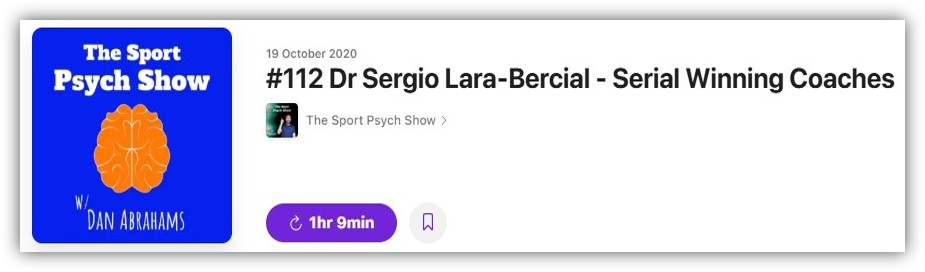
- Podcasts : If you want a quick listen to a podcast directly related to the “how” when Coaching and the different methods, then click on the two below by Dan Abrahams from the Sport Psych Show.

How will you react to challenges from others who question your methods?
Repeat
The cycle of Reflect, Enquire, Reflect, Enquire is lifelong
Part way through your coaching journey you may have more questions than answers. Don’t worry it’s common amongst coaches.
The cycle of reflection never ends!
It probably changes as you become better at understanding the aspects you want to consider. However, the questions just become more specific and relevant to the situation. Please don’t fear this process, learn to enjoy it as it will reward you in the long-term.
If you click on the image above to listen to an interview with Dr Sergio Lara-Bercial from Leeds Beckett University.
He discusses his study into the practices and developmental pathways of professional and Olympic serial winning coaches.
Learn to embrace the process of Reflection — Enquiry — Reflection
Be prepared to ....
A list that should help you
This is a list of all the things I’ve learnt when talking with ex-players who have now become coaches and mastered (mostly) that Player to Coach transition.
They apply to coaches at all levels and maybe even to life 
- Make mistakes and not only recognise them but search for them. Often it’s only after reviewing the progress or lack of it, you realise that all isn’t as good as you wanted from you or your players. You must expect your players to improve!
- Put in the effort as you did when you were playing but now instead of sweat and a high HR, it will be your thinking and reviewing brain that will be working hard. Consider what the equivalent of a high Vo2 would be for a coach? Maybe it’s headaches or moments of being unsure.

- Be comfortable that your best coaching will not come for several years. Just as you developed as a player so you will do the same as a coach. Are you willing to believe that? It would be tough to tell your first employer so maybe it’s the truth you need to keep hidden.
- Create evaluation methods, you probably won’t be taught them on your Coach Education courses 🙁 Identify methods to evaluate the effectiveness of your coaching against the goals of your players. Remember not every player wants to be a champion. Are you prepared to coach to ensure players get maximum enjoyment, not development?
- Work as an assistant; possibly unpaid !!! Do you see this as an advantage or do you feel that your talents are worth paying for?
- Apply yourself with motivation. Mediocre, lacklustre (just delivering without thought) coaching will eventually not give you the satisfaction and enjoyment you found as a player. Ensure that in years 2 and 3 you are still learning and developing.
- Work hard on acquiring the skills of : • Knowing what to coach •The different methods of ‘how’ to coach • Understanding the different ways in which people learn
Getting started as a coach
General tips for becoming a coach whilst still playing
Qualifications
- Take qualifications whilst you are still playing
- Try to get someone else to pay for the course as they can be expensive
- Even if you think they won’t teach you anything, they will be required to get jobs later on. A BWFL2 is a minimum.
- I would recommend that you do extra qualifications such as S&C, PT, Psychology courses.
- Ensure that you have insurance
Income and the Official stuff
- Get on social media and create a personality. Opportunities and income will come from that.
- Pay tax and keep your books in good order
- Be prepared to work for free and assist another coach (don’t forget to learn & reflect). Giving your time freely without expectation will repay you back at a later date. Please believe that.
- Learn to string as it will bring you income and an opportunity to provide a complete service
The Final word
- Build a coaching network, this is very important
- Contact other coaches, even if don’t know them, ask if you can observe them for a while. You will never know who will say yes, who will say no, or who will say yes and ask for your opinion 🙂
- Be prepared to evaluate how much of the information you gained from being a player you can really use in your coaching of that person in front of you
- Be honest with yourself and be super motivated to develop as a coach, not a player who now coaches

Send me a question
I’m always grateful if you have read this far.
If there is anything that you have read that has helped or that you disagree with, then please send me an email.
I promise to read all your comments
It would be great to hear from you contact@badmintonandy.com


![Early Preparation always - Duplicate - [#38141]](https://badmintonandy.com/wp-content/uploads/2026/09/early-preparation-always-scaled.webp)
![Keep your racket up - Duplicate - [#38056]](https://badmintonandy.com/wp-content/uploads/2026/09/keep-your-racket-up-scaled.webp)