9 presentations
Kenneth Larsen presents a modern, game‑centred approach to coaching badminton that shifts focus from isolated technical drills to learning through realistic, decision‑rich situations.
He explains how constraints, challenges and guided discovery help players understand tactics, adapt under pressure and take ownership of their development.
The session shows how this approach builds smarter, more confident athletes who transfer skills effectively into match play.
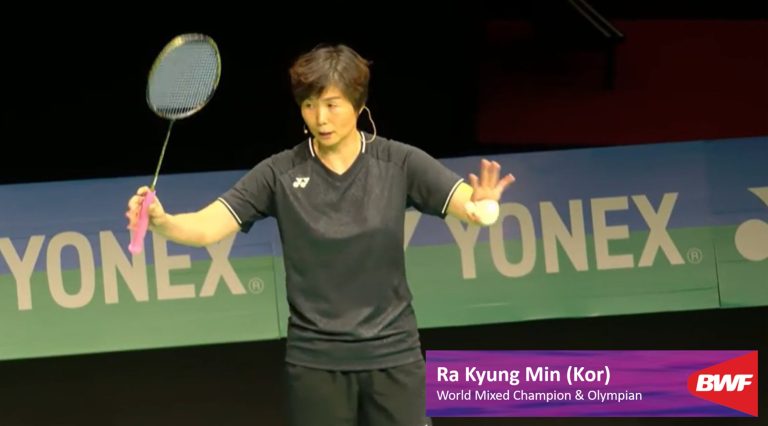
Ra Kyung Min highlights why service and return are the most influential phases in mixed doubles, often deciding who gains the first attacking advantage.
She demonstrates key serving variations, return choices and movement patterns that help the female player control the front court and apply early pressure.
The session emphasises timing, anticipation and coordinated partnership roles, showing how strong execution in these moments leads to more proactive and effective mixed‑doubles play.
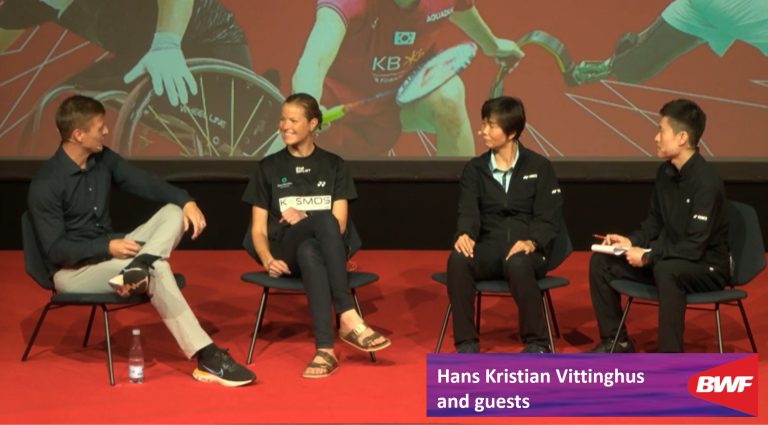
Hans‑Kristian Vittinghus hosts an engaging conversation with Ra Kyung Min and Christinna Pedersen, exploring their experiences as world‑class doubles players.
They discuss partnership dynamics, communication, tactical decision‑making and the evolution of women’s and mixed doubles.
The episode blends personal stories with practical insights, offering coaches and players a deeper understanding of what drives successful high‑level doubles performance.
Ra Kyung Min explains why service and return are the most decisive phases in mixed doubles, shaping who gains the first attacking opportunity.
She demonstrates key serving variations, return choices and movement patterns that allow the female player to control the front court and create pressure early.
The session highlights timing, anticipation, partnership coordination and tactical intent, showing how mastering these moments leads to more dominant and efficient mixed‑doubles play.
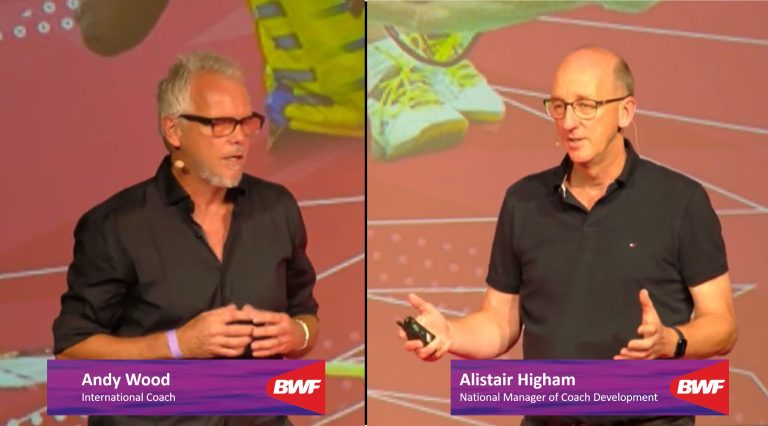
Andy Wood and Alistair Higham explore how momentum and match flow shape competitive badminton.
They break down emotional control, pressure moments, momentum swings and the behaviours that help players regain clarity during tough phases.
Through practical examples, they show how athletes can recognise turning points, manage their responses and compete with greater resilience, intention and tactical awareness.
Yan Kit Chan explains the unique physical, technical and tactical demands of elite wheelchair para‑badminton and how training must be adapted to meet them.
He covers chair movement efficiency, upper‑body power, endurance, racket‑skill development and sport‑specific conditioning.
The session highlights classification considerations, common challenges and practical methods that help athletes maximise mobility, shot quality and performance at the highest level.
Christian outlines the physical‑preparation demands of elite badminton, highlighting strength, power, mobility and endurance qualities needed for high‑intensity play.
He explains how to tailor programmes to different athlete profiles, movement patterns and competition schedules, while addressing injury‑prevention priorities.
The session provides practical insights into testing, monitoring and designing evidence‑based training that supports consistent, world‑class performance.
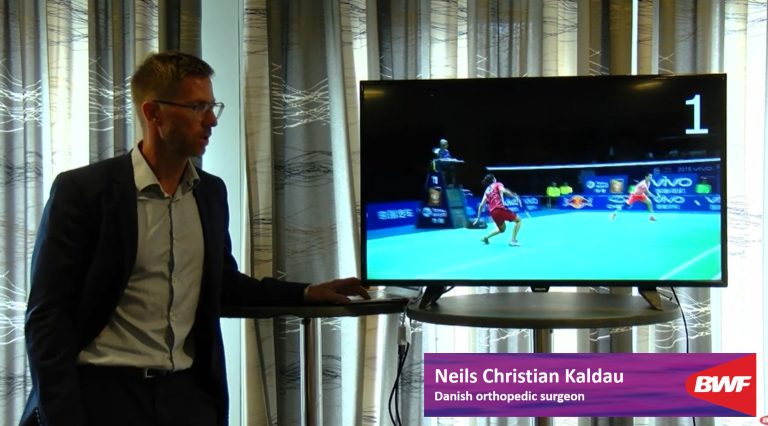
Niels Christian Kaldau examines whether ACL injuries are a growing problem in badminton and what can be done to prevent them.
He explains common mechanisms of injury, key risk factors and the demands of modern movement patterns.
The session highlights evidence‑based prevention strategies, including strength training, landing mechanics, movement control and smarter workload management, giving coaches practical tools to reduce ACL risk and support long‑term athlete health.
Dr Sofie Kent explores the stressors faced by dual‑career badminton players balancing elite sport with education or work.
She highlights common pressures, emotional demands and the coping strategies athletes use to manage workload, expectations and wellbeing.
The session shares research‑based insights into support systems, identity challenges and practical ways coaches and organisations can help players thrive both on court and in their wider lives.
More online presentations
I’ve collected together some great Badminton online YouTube presentations for you.
The key points are all summarised so that you can decide which ones to watch first
All you have to do this click below to watch and listen
Send me a question
I’m always grateful if you have read this far.
If there is anything that you have read that has helped or that you disagree with, then please send me an email.
I promise to read all your comments
It would be great to hear from you contact@badmintonandy.com
![6 Ways to develop effective Badminton grips base info for edit - Duplicate - [#28008]](https://badmintonandy.com/wp-content/uploads/2019/12/Badminton-grips-landscape-1.jpg)