
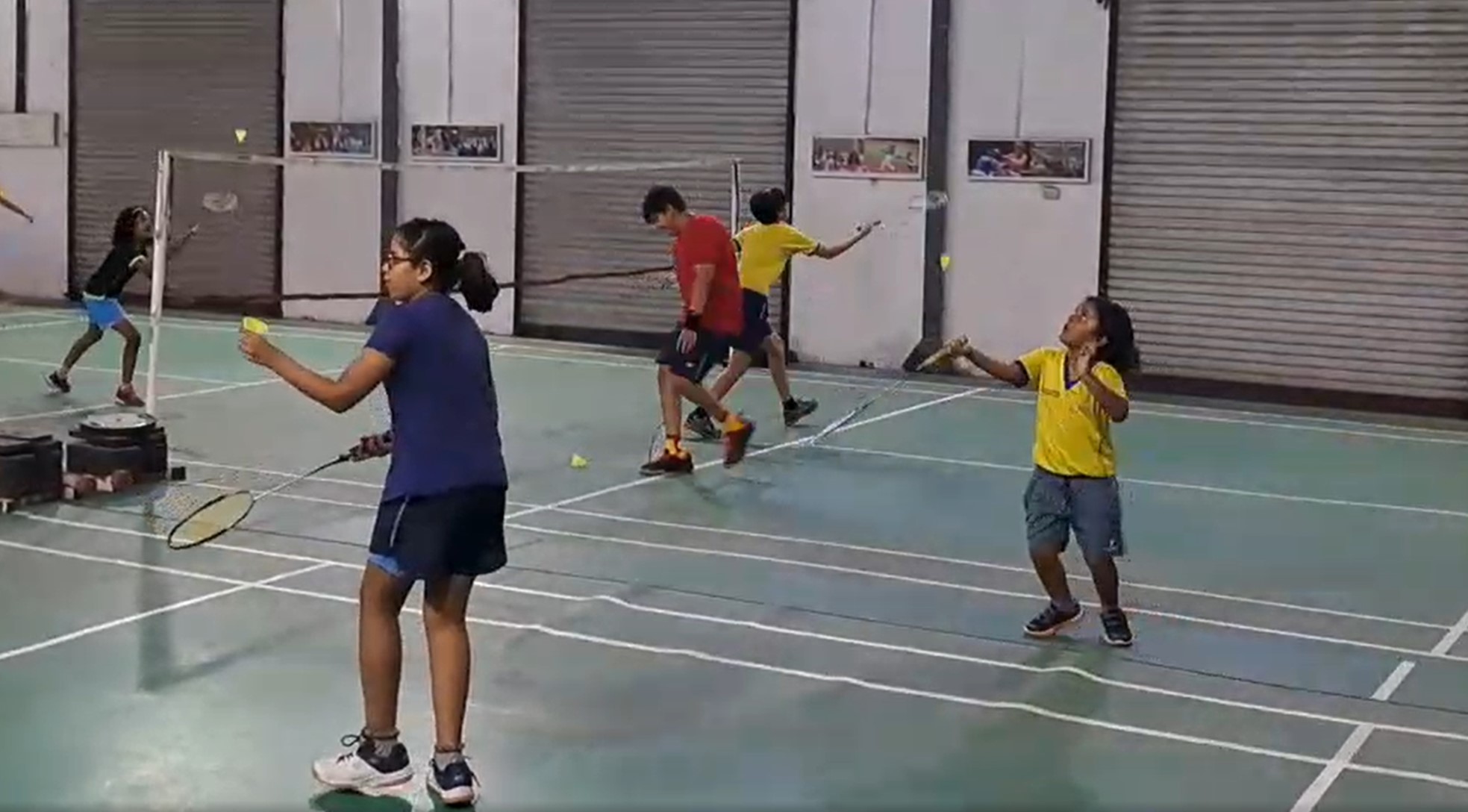
To introduce lots of early foundational techniques
How do you ensure that beginner players get the best start?
‘Bouncing Shuttles’, is much more than just bouncing shuttles
Why use this practice
” What can I do with very young players that will help future skills?”
These ideas came after talking with a coach who wanted to know what early practices they could do with very young players.
Especially in the first 12 weeks of experiencing badminton. They were interested in why I like bouncing shuttles in practice.
The coach wanted something that would not only keep them busy but also start developing traits that would help future development and coaching.
They wanted early practices/tasks/challenges they could do with their players.
It is an essential practice
One of the few important experiences for beginner players to have when they first experience badminton.
Will bouncing shuttles make them a great player, who knows, but that is NOT the aim.
However, will bouncing shuttles allow players to experience some early essential aspects of our sport and how skills develop, yes, certainly it will.
- Players will experience (and hopefully like)
- Enjoyment from task success – motivation and ‘thirst’ for engagement is a priority, mixed with a challenge (success & struggle)
- Progressive challenges – set at a success expectancy level of 70-80% after a short exposure: "I want to try the next task!”
- Frequent interaction with the setting of tasks – players unknowingly talking part in progressive practice design
- Coaches will experience (and hopefully like)
- The setting of progressive practices – having to identify challenge levels and ‘chunking’ of progressions
- Demonstration with reduced technical content – this will should be the primary way of setting practice tasks and require coach thought
- Creating practical easy to understand instructions – challenging coaches to reduce the requirement for complex tasks/instructions
Intentional practice masked as fun tasks & challenges is the aim of this practice
( this could be said to be the aim of many practices 🙂 )
Foundational skills & techniques
It is an opportunity to develop some early technical and psychological skills.
As you read, imagine how easily they can be incorporated into the practice of bouncing shuttles.
Don’t just practice one style and presume that it will be applicable to all court movements.
For example : Some people believe that you should always chasse in the forecourt going to the net.
Running is faster than a chasse technique, especially over a longer distance.
Skills
- The acceptance and desire to have progressive challenging practices – “behind every mountain is another mountain!”
- The ability to master a task using previously learnt techniques
- A desire to take part in the setting of practice and challenge level
- Understanding that errors can be used as an aid to development and are sometimes initially expected
Techniques
- The acceptance and desire to have progressive challenging practices – “behind every mountain is another mountain!”
- The ability to master a task using previously learnt techniques
- A desire to take part in the setting of practice and challenge level
- Understanding that errors can be used as an aid to development and are sometimes initially expected
Engage players in a fun, challenging, progressive practice
ensure that some underpinning skills/techniques are at least partly established
Recommendations
I’ve heard coaches state that the first sessions should be fun and not contain much ‘coaching’.
I’ve also heard coaches say that the first sessions should specifically address certain strokes (BH net shot, BH serve, even FH overheads).
This variation of opinion can be confusing to the new coach. My thoughts are …
My thoughts are …
- Whatever beginner players do, they are about to experience of our sport, so plan what they may experience
- Just because the session is planned does not mean that it has to be ‘traditional’ highly instructional coaching – this type of coaching may not be the most effective anyway
- If the session is carefully planned can there ever be a question of too much coaching – again this points to a lack of knowledge concerning practice design
- Constraining and guiding practice is effective – as a minimum, it can reduce the opportunities for critical ineffective (or limiting) techniques from developing
- Good or near-correct patterns can be developed, but some 'imperfect techniques' may seem to stay around no matter what the coach tries to 'remove' them. Therefore, the coach should not strive for 'perefct technique' but for constrained-expereinces that traget a range of early foundational experiences and techniques.
Coaches should aim to ..
- Have motivation at the heart of all early expereinces. Motivated players and coaches is the key to all developments.
- Vary the context of the practice incorporating a range of challenge and success points
- Ensure that there is a progression in all aspects. The rate of progression is not the aim, however, glimpses of development is.
- Develop a reductive style in the delivery of technical information and task instruction
Reccomndations
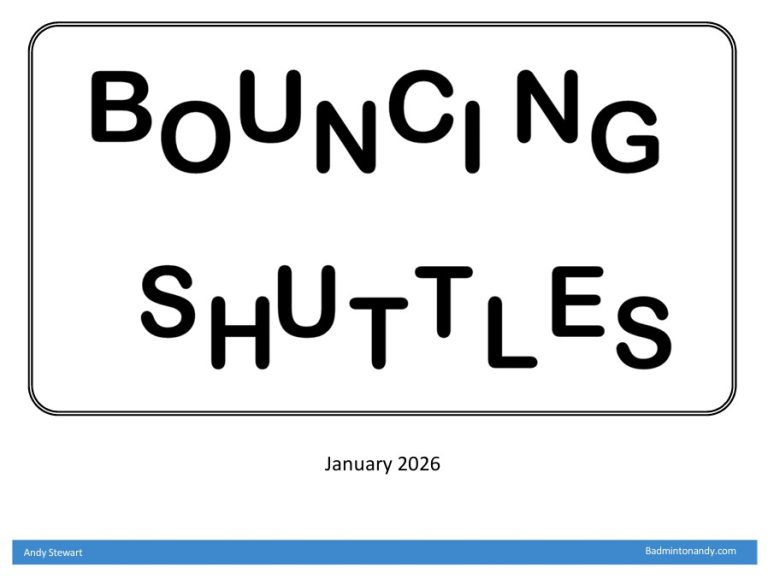
I’ve gathered up a series of different practices for you to use. Click on the image below to download
It’s now your challenge to consider how to introduce each and to create mini variations within each. There is no rush to progress through them, I recommend that you take plenty of time and many lessons.
Please let me know what tips and tricks you use 🙂
Send me a question
I’m always grateful if you have read this far.
If there is anything that you have read that has helped or that you disagree with, then please send me an email.
I promise to read all your comments
It would be great to hear from you contact@badmintonandy.com

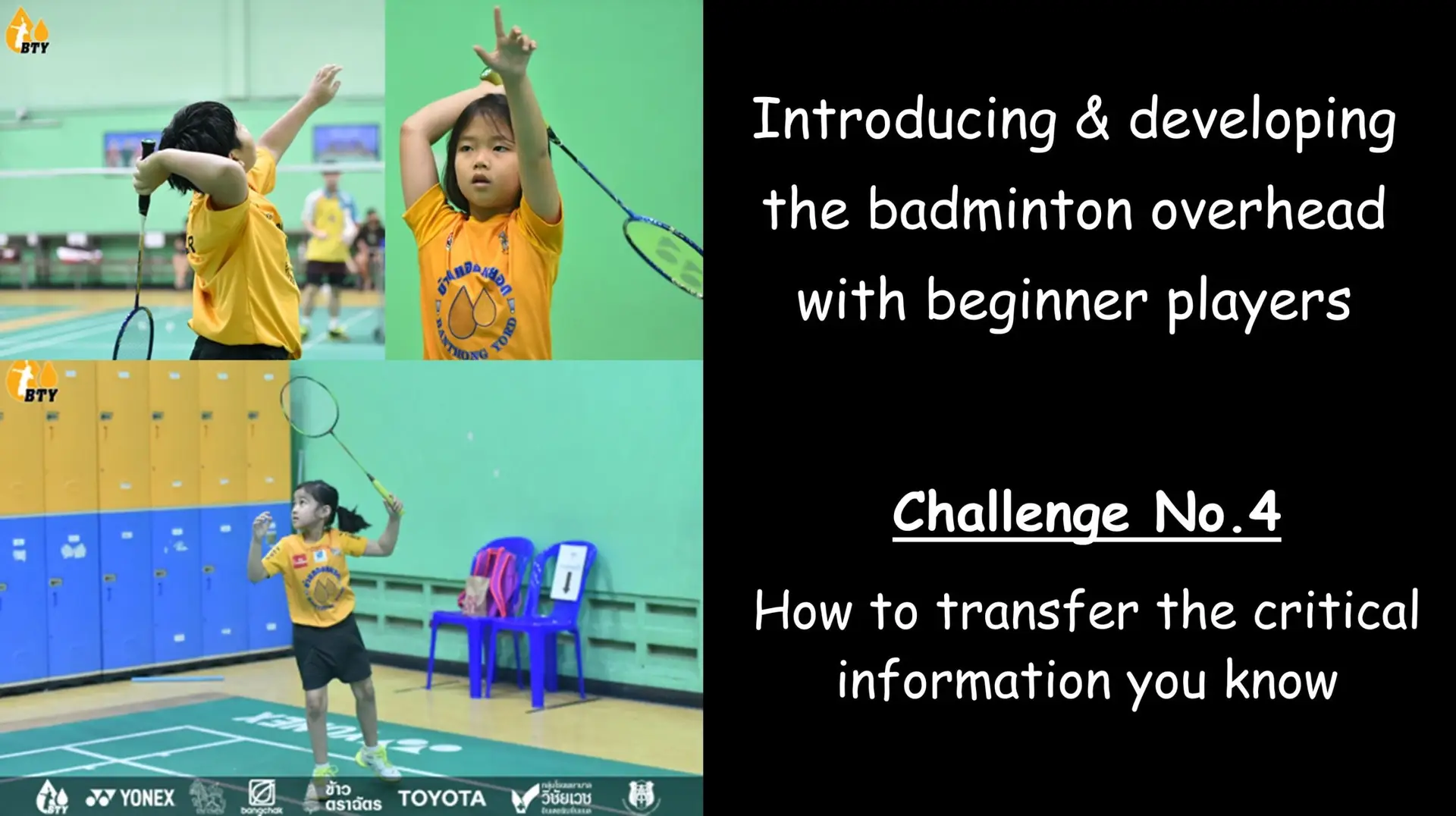
![Introducing the badminton overhead – Challenge No.3 - Duplicate - [#36874]](https://badmintonandy.com/wp-content/uploads/2023/05/Badminton-Forehand-Overhead-3-scaled-1.jpg)
![Introducing the badminton overhead – Challenge No.2 - Duplicate - [#36821]](https://badmintonandy.com/wp-content/uploads/2023/05/Badminton-Forehand-Overhead-2-scaled-1.jpg)
