The early technique ‘must haves’
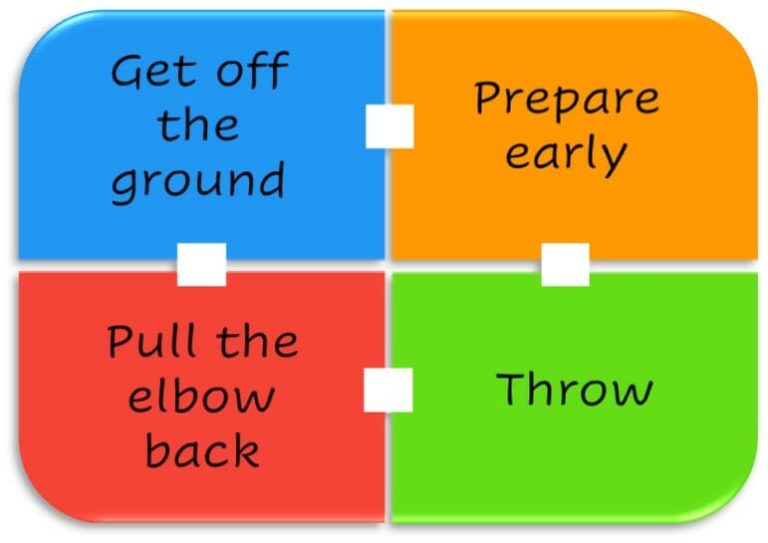
Critical elements that are essential for an efficient, robust badminton overhead
These critical elements will allow for multiple variations of effective techniques
I believe that they are the key for all novice players as part of any overhead forehand.
Ok, they may struggle to perfectly replicate these elements, and perfection isn’t the goal.
These must-haves will constrain, maybe even prevent, those classic overhead faults: pan-handle grip, pushing actions, no rotation, etc.
That is why they are called the ‘core must-haves’ for a badminton overhead. They are NOT how to ‘achieve the perfect overhead!’
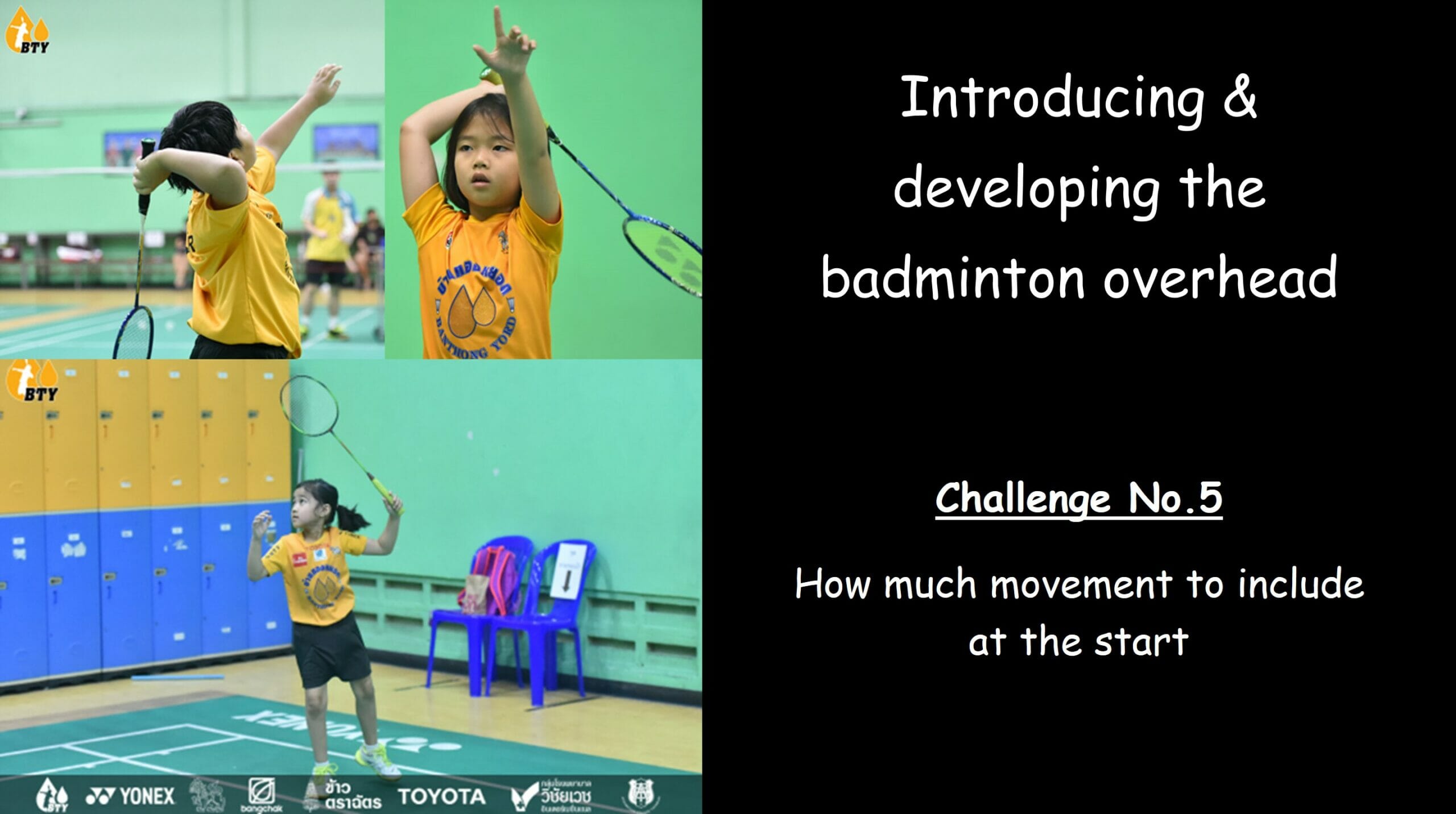
Your coaching challenge is how to introduce these to novice players
Try not to explain the reasons why they are vital; just encourage them!
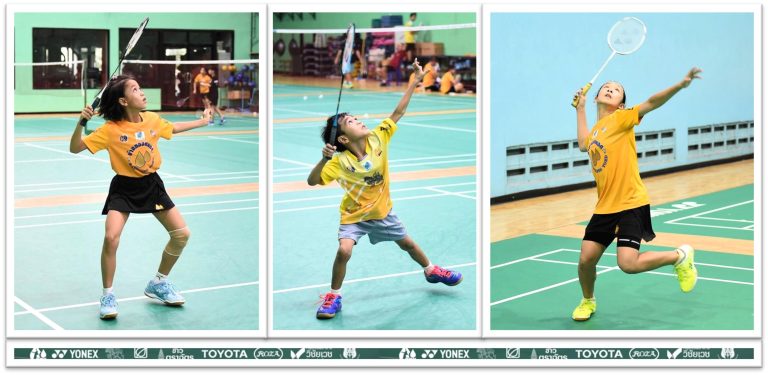
Practice throwing and getting off the ground
Throwing and rotation are essential to future development
This is included in the “The early technique must-haves” above, but for me, it deserves its own category.
Throwing and rotation are essential to future development.
However, they may ‘fight against a young player’s own self-discovery.
This is an important point for coaches to consider. If left alone to learn, how many novice players decide
– not to throw hard (rather, they push at the shuttle)
– to stay on the ground (as jumping & rotating often cause complete miss hits)
Create many opportunities to throw and get off the court by
– Practice throwing the racket (but holding on to it!) rotating and listening for the ‘swish
– Throwing against a wall (preferably a ball rather than a shuttle)
– Jump/throw whilst standing over the side tramlines (try to land on the back leg and the lines)
– Observe and admire others with explosive but stylish overhead actions
– Hitting overhead targets – the basketball net, the coach’s fishing pole
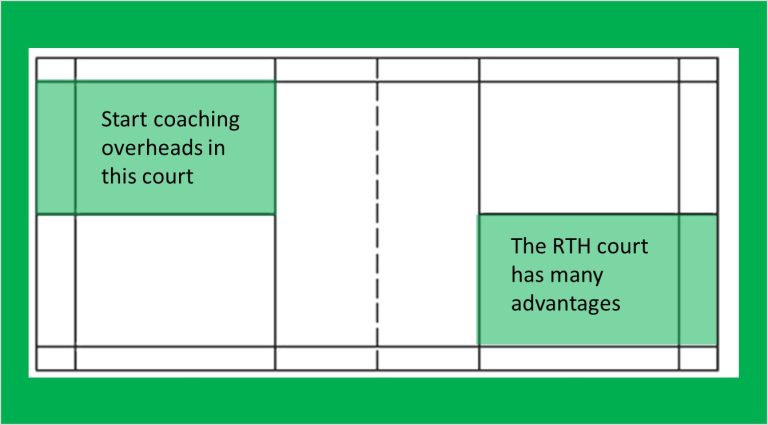
Start by feeding into the RTH/BH court
I wish I’d known the advantages of starting overhead coaching with the player in their Round The Head / Backhand court.
It would have saved me so much time and lessened the chance of inappropriate/limited techniques developing.
It’s a simple choice, and the differences between using either court surprised me.
I consciously make this decision every time now when introducing overhead hitting to a beginner/novice player.
The importance of creating previous expereinces
Start with below shoulder strokes
There are many reasons for this, some of which are outlined below and within these individual posts.
It’s your decision to choose what to focus on and for how long in each session. I can only offer my thoughts based on my experience and after watching others succeed whilst others struggled.
It’s much more than just bouncing a shuttle
Lots of ideas and practices for you to try
Prevent the classic grips and hitting problems
The first ‘overhead’ stroke and full of experiences
Consider incorporating all these before starting on specific badminton overhead forehand strokes during the first 6 – 12 months for players aged 6- 10 years old.
Players will hit some overheads, but these will not be the main theme of any coaching
Why not try these early experiences (practices) and see what happens
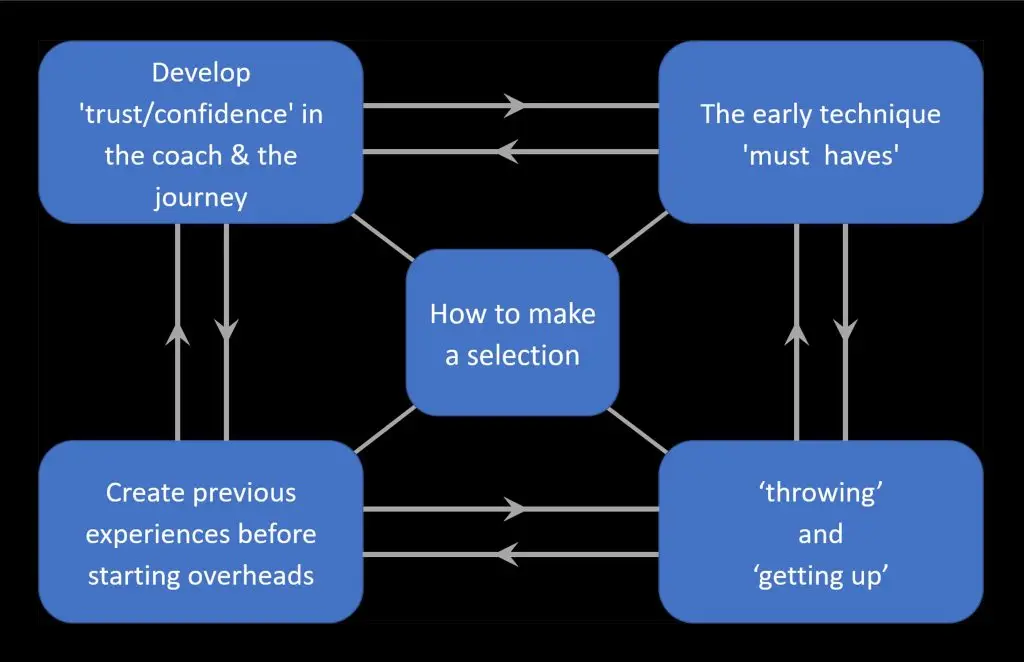
How to make a selection
What to include, when and why
Your task is to consider the 4 categories above and to select which practices and methodologies you want to use. Pick from each and create an effective session.
Consider the reasons WHY you make your selection; maybe that is the most important aspect of your planning.
Your selection could be based on ...
Your role as a coach for novice players is to
Create an environment where learning, development, error prevention and smiles 
all happen within a thought-out progressive plan
However, designing this plan may be your biggest coaching challenge, ask yourself
Am I doing things right?
Am I doing the right things?
How do I decide what is right?



![6 Ways to develop effective Badminton grips base info for edit - Duplicate - [#28008]](https://badmintonandy.com/wp-content/uploads/2019/12/Badminton-grips-landscape-1-300x167.jpg "Beginner badminton overheads: the essential coaching steps")


![Early Preparation always - Duplicate - [#38141]](https://badmintonandy.com/wp-content/uploads/2026/09/early-preparation-always-scaled.webp)
![Keep your racket up - Duplicate - [#38056]](https://badmintonandy.com/wp-content/uploads/2026/09/keep-your-racket-up-scaled.webp)