
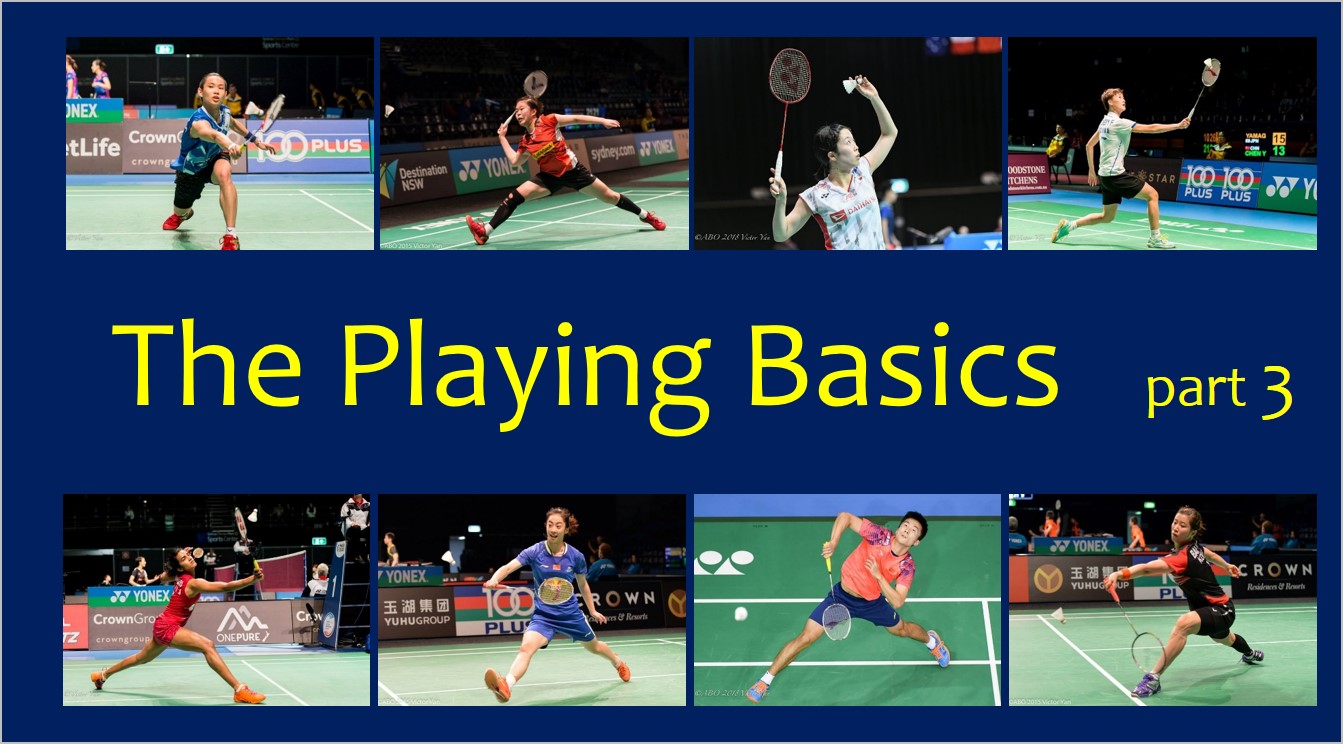
Technical Badminton Playing Basics
Part 3 of the 4 posts
The components underpin all strokes and movements
Technical Basics 5 -7
- Pretension in starting and moving
- Categories of 4 main hitting actions
- Legs and arms wide for balanced movements
Pretension in Starting & Moving, plus Power Strokes
The pre-stretch of muscles for power
Finding a way to cause your muscles to stretch in preparation for movements and strokes is an essential technique.
It’s a Playing Basic because, without this pre-stretch, reactive movements will be slower and some power strokes not quite as powerful.
The question for you now is to try to identify where and when it happens. Then allow and encourage it through simple and easy development work.
Pretension for movements
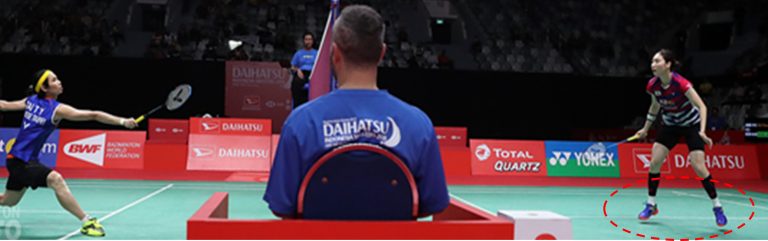
Almost before every shot is struck by the opponent there will be a pretension movement into a wide “ready to move” stance. This quick start stance will vary (see later articles on Stances). The timing is vital “Land as the shuttle is struck” and “Pretension wide !”
The stances are different if the shuttle is above or below the tape (top of the net) on the opponents’ side.
The stance and leg pretension are combined together and are timed to happen just before the opponent is about to strike the shuttle.
It’s not always in a stance
This pretension (loading of the legs) does not just apply to being in a stance.
Often, a player will move quickly from one court position to another without “waiting” in a stance.
The pretension loading movement occurs during the landing phase after the stroke has been played, enabling a quick movement. The easiest example to imagine is a smash and quick direct movement forward towards the net.

Debate
There has been some debate over the ‘height’ of the initial movement, as can be seen in the photographs here. I’ve seen World Class players with very small jumps that look more like just a bending of the legs and others who seem to leave the court by at least 12 cm.
Some coaches believe that when coaching this, the height off the court should be restricted.
The height is unimportant; it’s the timing of the movement and landing that matters.
How do you encourage and develop this timing
so that the anticipatory movement results in a powerful initial movement?
Pretension for strokes
Pre-loading of your muscles is also important for producing power. It’s also important visually to aid deception.
Within complex strokes such as the overhead forehand smash and high backhand clear, pre-loading of muscle groups is vital. The timing and sequences of these actions need to be smooth with no stutters or stops within the action.
The coach should be able to see this smooth progression and the players report that it ‘feels as if the power just flows’.
Categories of Hitting Actions
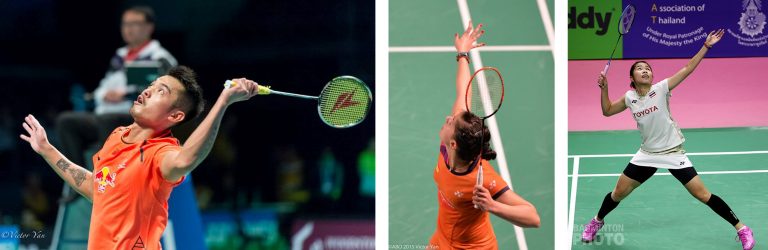
Most strokes fit into 4 main hitting actions
They are descriptive only and are to be used in the teaching of specific strokes.
It is generally accepted that the following words clearly describe these actions – PUSHING , FLICKING , THROWING , TAPPING.
- Throwing : Powerful overhead forehand strokes such as the clear and smash. Deep forehand
- Pushing : Defensive blocks, fast net shots, some deep backhands, some deep forehands
- Tapping : Net kills, some overhead backhands, some crosscourt blocks
- Flicking : quick upward strokes often at the net or in the midcourt
If you are familiar with these hitting actions
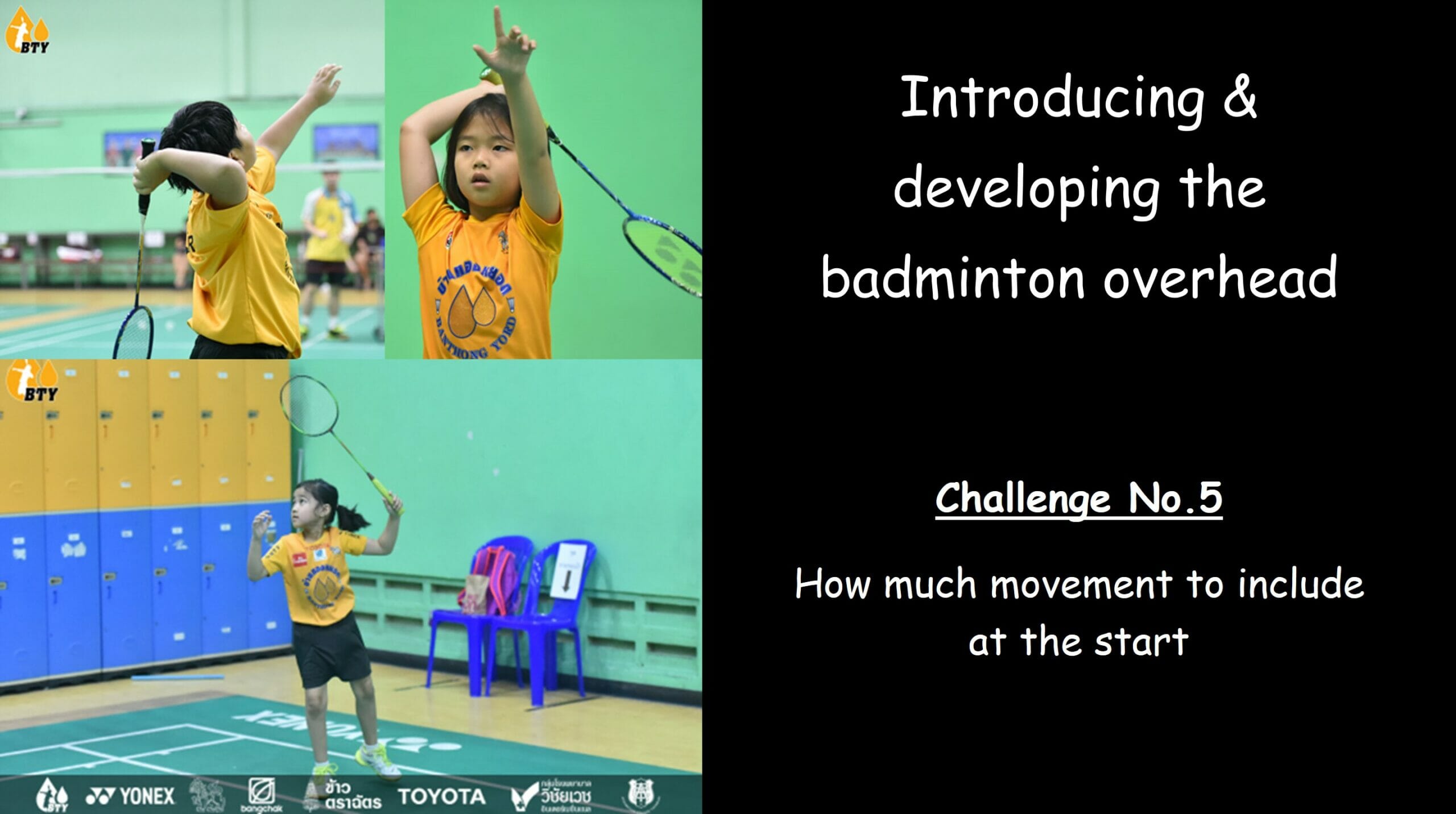
how you incorporate them into the sessions for players aged 7- 10 years old
Legs and Arms Wide for balanced movements
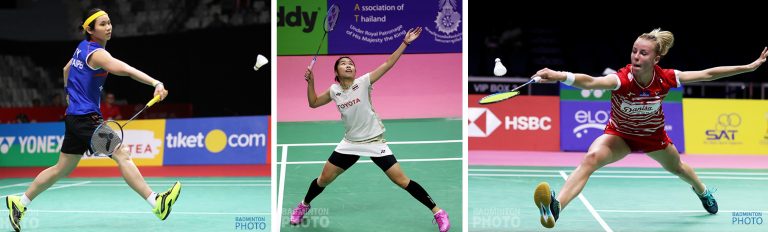
Generally, all court movements should be performed with the legs wide apart
Wider than shoulder width.
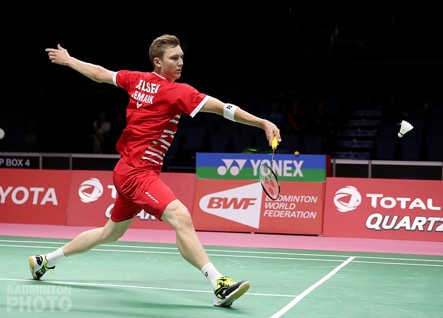
Use is made of both arms for balance, the non-hitting arm acting as a “timed” counterbalance for the racket arm.
Legs Wide
When I was introduced to this concept as a playing badminton basic it took a while to appreciate the benefit.
Especially how important it was to ensure that players become comfortable in having ‘legs wide’. The constant changes in direction requires a lower centre of gravity with knees bent, not just legs wide.
Please be aware that we should not expect all players to move around the court with wide legs for all movements.
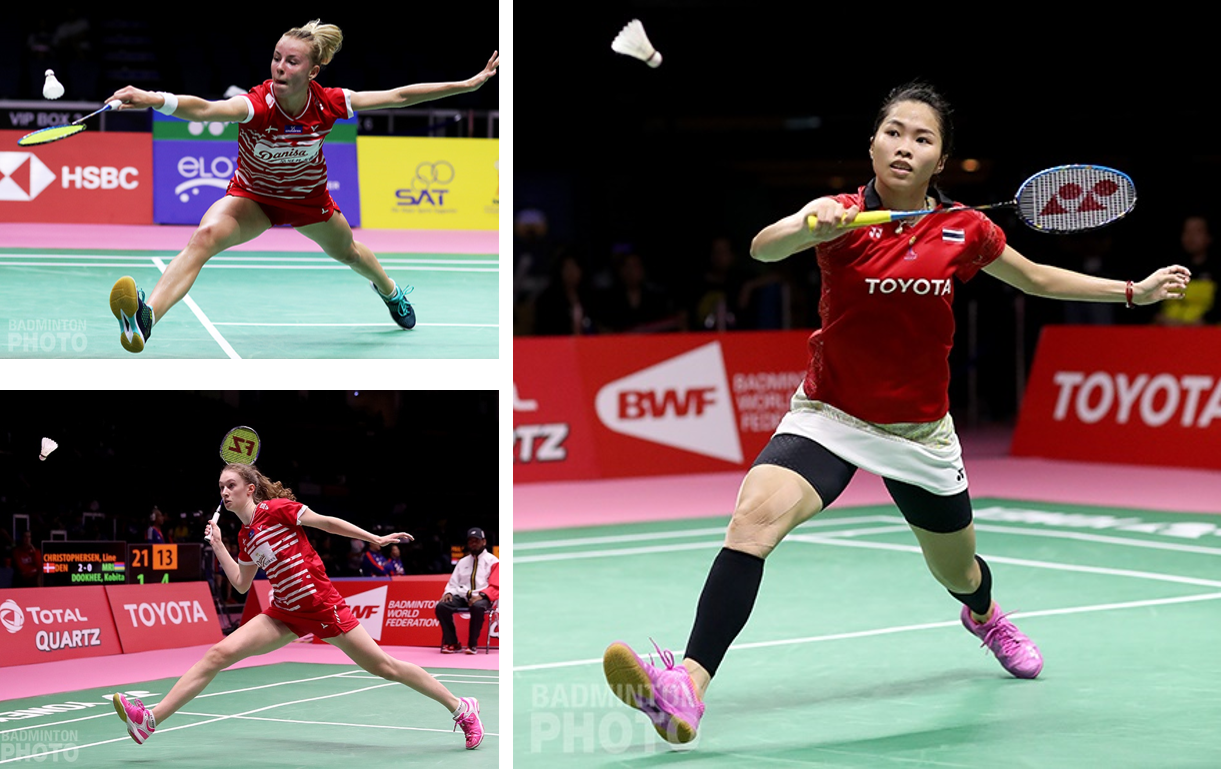
Yes, some players (often male) with well developed length strength can easily move whilst keeping their legs apart in a chasse like movement. However, the aspect of running is also an essential movement skill.
Legs wide applies to most players in aspects such as defensive stances, forward movements and lunges towards the net. It can also often be seen in the Deep Forehand when the shuttle is slightly above and behind the player.
- Encourage players to feel comfortable even when they are in slightly uncomfortable positions
- The aim is not to have perfectly balanced movement
- The goal should be getting the shuttle over and placing the opponent in difficult tactical, mental and physical positions
Arms Wide
Having Arms Wide, especially in wide-lunging situations, is important for balance.
Thinking about ‘counterbalance’ is probably a better way of thinking about Badminton movements.
Often, the game will be played in a state of ‘controlled imbalance, ‘ and to seek perfect balance is not a desirable aim.
Start using this image in very early practices, such as bouncing the shuttle or balloons on the racket. It is also easy to instil this during net shot practices when moving forward.
In part 4 we will explore
8) Lunging timing principles
9) Sideways turning just prior to contact with the shuttle
10) Contact at the highest point
Send me a question
I’m always grateful if you have read this far.
If there is anything that you have read that has helped or that you disagree with, then please send me an email.
I promise to read all your comments
It would be great to hear from you contact@badmintonandy.com


![Early Preparation always - Duplicate - [#38141]](https://badmintonandy.com/wp-content/uploads/2026/09/early-preparation-always-scaled.webp)