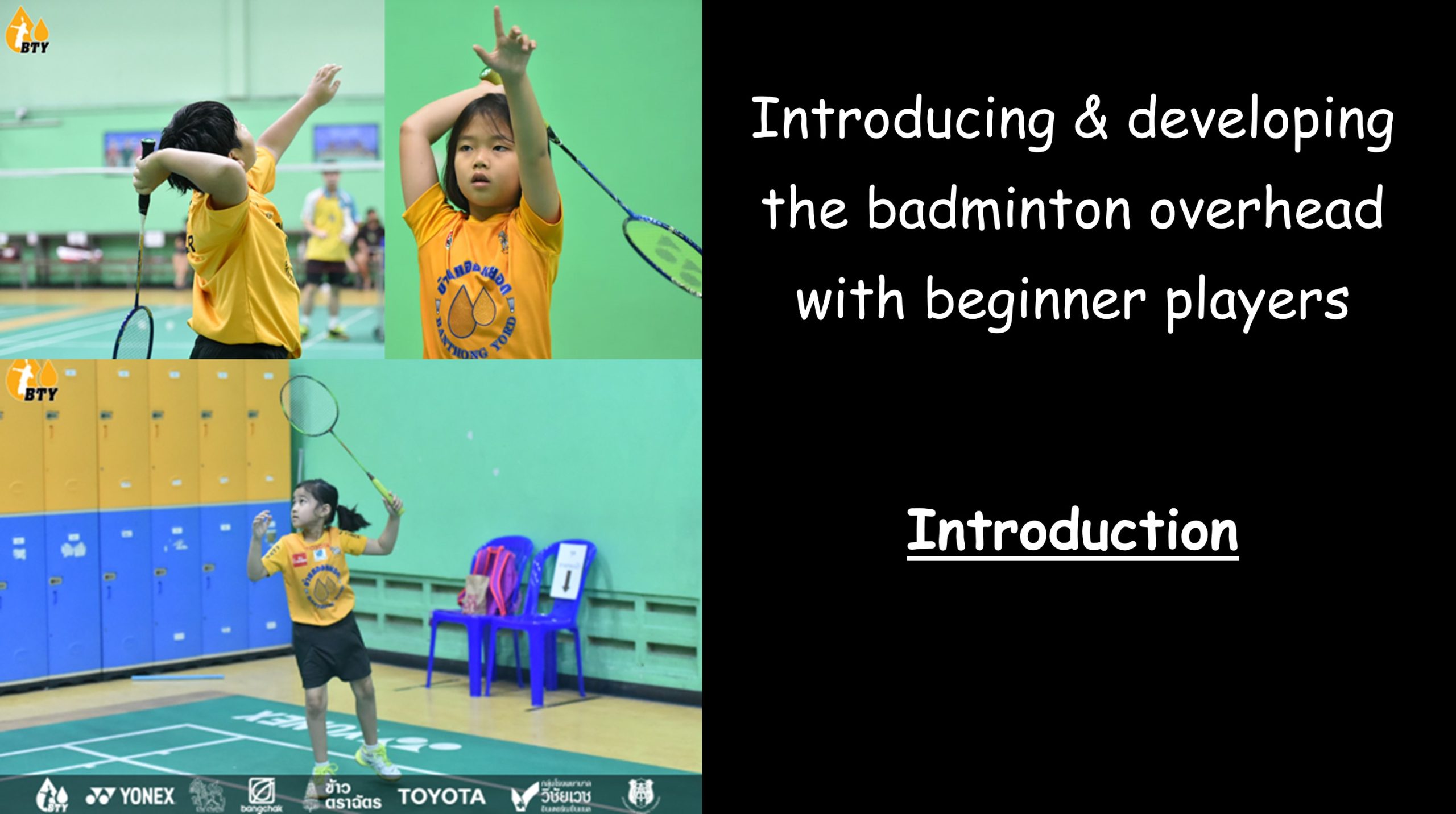

Do you have a plan for developing beginner overheads
That was the question asked of me by an enthusiastic coach
They wanted something to follow step by step!
Is there a step-by-step guide?
Essential aspects that could be arranged into a structured practice plan
I was contacted by a coaching friend
They had read this post all about those critical elements for all overhead striking
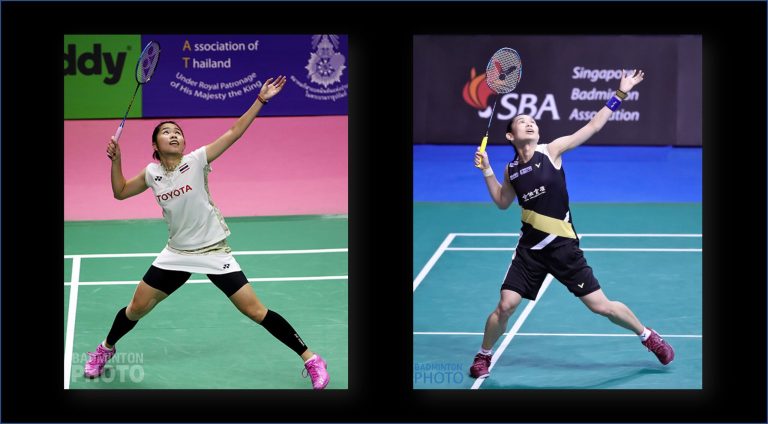
They wanted to talk about the shortlist (only 4 points) that described the technical ‘must-haves’ for badminton overheads.
If you want to read it, click on this image.
It outlines 4 technical aspects that I believe are the foundation for all overheads if power and efficiency (in all forms) are the goals.
They felt that it needed a section on how to plan for the development of the stroke, especially with young novice players.
The discussion
We both agreed that some words about planning were required. However, the tough aspect of planning was that you needed a plan, but you had to remain flexible.
There was a potential conflict: to plan but remain flexible in approach, the delivery
We started to write down all the aspects that we thought were important.
What should be included in any plan and what advice should coaches consider?
- There can never be a firm step-by-step plan to follow as each player has their individual needs. They develop at a different rate and occasionally a ‘mini-expert’ appears in front of you.
- However, you need a ‘plan’ and its must be flexible.
- The coach needs to have a large number of ideas, concepts, and methodologies that they know could work and be prepared to draw upon these.
- Any plan must include technical aspects that consistent and desirable throughout all overhead actions
- The coach must also develop the players’ psychological skills : acceptance of challenges, how to view errors, trust in the coach/process, and more.

The plan will contain both general and specific aspects
It will help in creating sessions and will probably change during them
How to use the information you currently have
Coaches can (over time) acquire lots of information concerning the coaching and introduction of the overhead forehand.
There certainly isn’t a shortage of people stating the technical elements they believe need to be included, me included.
However, I would still encourage you to reflect on what you currently believe, ask other coaches and crucially start to ”experiment’ on your players.
The experiments will not be harmful: consider what you say, when you say it, or decide not to speak but to design, constrain or condition a practice/task.
Only by doing this can you identify various core themes and layered experiences (scaffolded), that all assist in the development of your players.
Often, the timing of the coach’s action is more important than the information presented
Appropriate moment + specific information = 
Ideas to select from
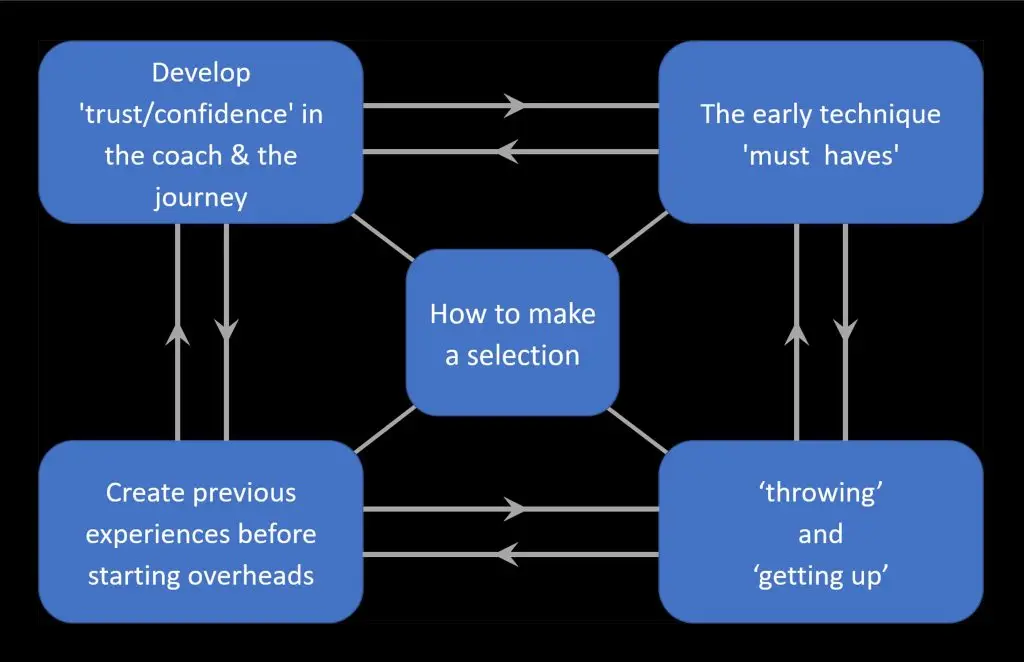
4 categories of information and ideas
Each is explained in more detail below; click on each bullet to read more.
Consider each when creating a plan or outline of potential coaching actions.
- Creating previous experiences
- How to make a selection : what to include, when and why
Develop trust/confidence in the coach and the journey
This is maybe the most important factor, although it can be difficult to create and hard to maintain.
The badminton overhead is a complex, powerful movement with many variables that takes time to become an efficient movement program. Developing trust in the coach and the process is vital.
Players believe in the methods and advice of the coach as they see their own development that there is value in ‘trusting the coach’. The coach’s advice works!
They also believe that development is a journey with ‘bumps’, but it’s always progressing.
How to achieve this
- Create tasks and challenges just above or just below the players’ specific level (do both). Be aware that this will change from session to session. Progression is not always linear or forwards.
- Engage the players in the creation of the task/challenge, especially the difficult level. Ask players if it should be, normal, tough, or super-tough. Create practices that give varied rates of success: 80%, 60%, 40%
- Create ‘memorable moments’ of success in their minds. They must be able to recall these with no or limited promotion by the coach. They are memorable because the player believes that!
- Create an appreciation for how to react to errors and how they form part of the expected development journey.
- Structure/layer the practices and experiences, and decide what to do before something with the intention of part establishing the learning for the next practice challenge. Demonstrate through practice that ‘practice works!’
- Outline to the player how their own thoughts and vision define what could happen. When it does (using the above) reinforce that “they created the opportunity” themselves
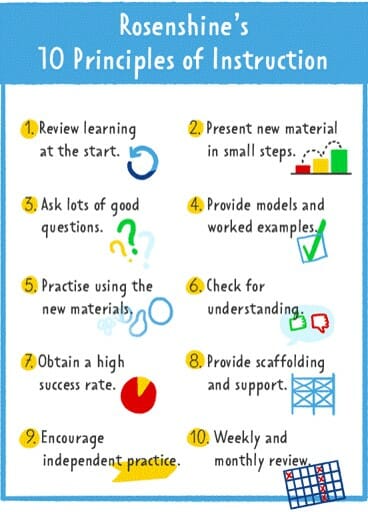
Engage players in their own practice, give them choices
Create these choices intentionally to both progress & challenge players
The early technique ‘must haves’
Critical elements that are essential for an efficient, robust badminton overhead
These critical elements will allow for multiple variations of effective techniques
I believe that they are the key for all novice players as part of any overhead forehand.
Ok, they may struggle to perfectly replicate these elements, and perfection isn’t the goal.
These must-haves will constrain, maybe even prevent, those classic overhead faults: pan-handle grip, pushing actions, no rotation, etc.
That is why they are called the ‘core must-haves’ for a badminton overhead. They are NOT how to ‘achieve the perfect overhead!’
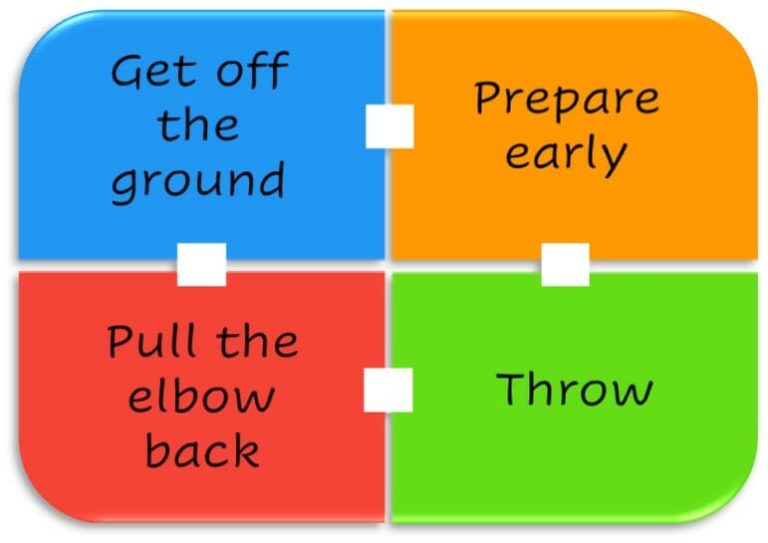
Your coaching challenge is how to introduce these to novice players
Try not to explain the reasons why they are vital; just encourage them!
Practice throwing and getting off the ground
Throwing and rotation are essential to future development
This is included in the “The early technique must-haves” above, but for me, it deserves its own category.
Throwing and rotation are essential to future development.
However, they may ‘fight against a young player’s own self-discovery.
This is an important point for coaches to consider. If left alone to learn, how many novice players decide
– not to throw hard (rather, they push at the shuttle)
– to stay on the ground (as jumping & rotating often cause complete miss hits)
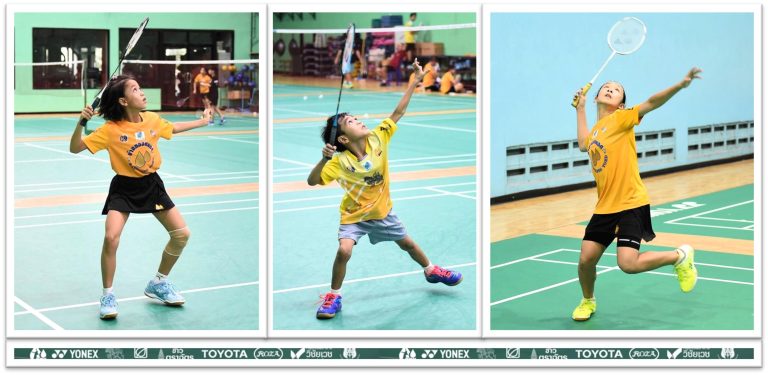
Create many opportunities to throw and get off the court by
– Practice throwing the racket (but holding on to it!) rotating and listening for the ‘swish
– Throwing against a wall (preferably a ball rather than a shuttle)
– Jump/throw whilst standing over the side tramlines (try to land on the back leg and the lines)
– Observe and admire others with explosive but stylish overhead actions
– Hitting overhead targets – the basketball net, the coach’s fishing pole
Start by feeding into the RTH/BH court
I wish I’d known the advantages of starting overhead coaching with the player in their Round The Head / Backhand court.
It would have saved me so much time and lessened the chance of inappropriate/limited techniques developing.
It’s a simple choice, and the differences between using either court surprised me.
I consciously make this decision every time now when introducing overhead hitting to a beginner/novice player.
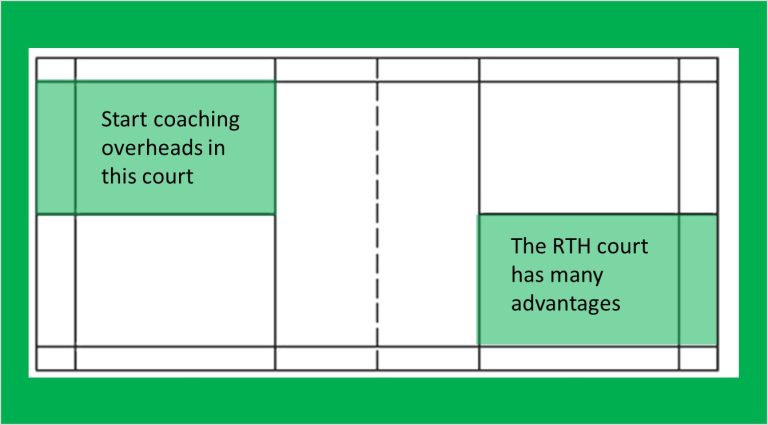
The importance of creating previous expereinces
Start with below shoulder strokes
There are many reasons for this, some of which are outlined below and within these individual posts.
It’s your decision to choose what to focus on and for how long in each session. I can only offer my thoughts based on my experience and after watching others succeed whilst others struggled.
It’s much more than just bouncing a shuttle
![6 Ways to develop effective Badminton grips base info for edit - Duplicate - [#28008]](https://badmintonandy.com/wp-content/uploads/2019/12/Badminton-grips-landscape-1-300x167.jpg "Beginner badminton overheads: the essential coaching steps")
Lots of ideas and practices for you to try
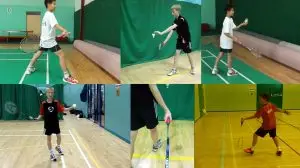
Prevent the classic grips and hitting problems

The first ‘overhead’ stroke and full of experiences
Why not consider incorporating all these before starting on specific badminton overhead forehand strokes during the first 6 – 12 months for players aged from 6-10 years old.
Seek to understand …
.. what prompted the question?
.. have you heard it before (why it keeps getting asked? )
.. does this person have a solution that is new to you?
.. what questions can you ask them to progress the conversation?
Make your collaboration a 2-way process: be both a Student and a Teacher
Unfortunately, in my early years, I couldn’t listen with an open mind
Networks are vital: create your Super Team
Add Your Heading Text Here
Building a great supportive Badminton network is a sure way to improve.
I
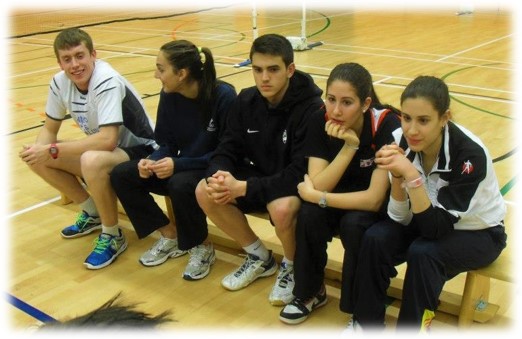
I am very grateful to know the people in my collaboration network.
Build your network by starting with a simple question:
“Please can you help me?”

Send me a question
I’m always grateful if you have read this far.
If there is anything that you have read that has helped or that you disagree with, then please send me an email.
I promise to read all your comments
It would be great to hear from you contact@badmintonandy.com

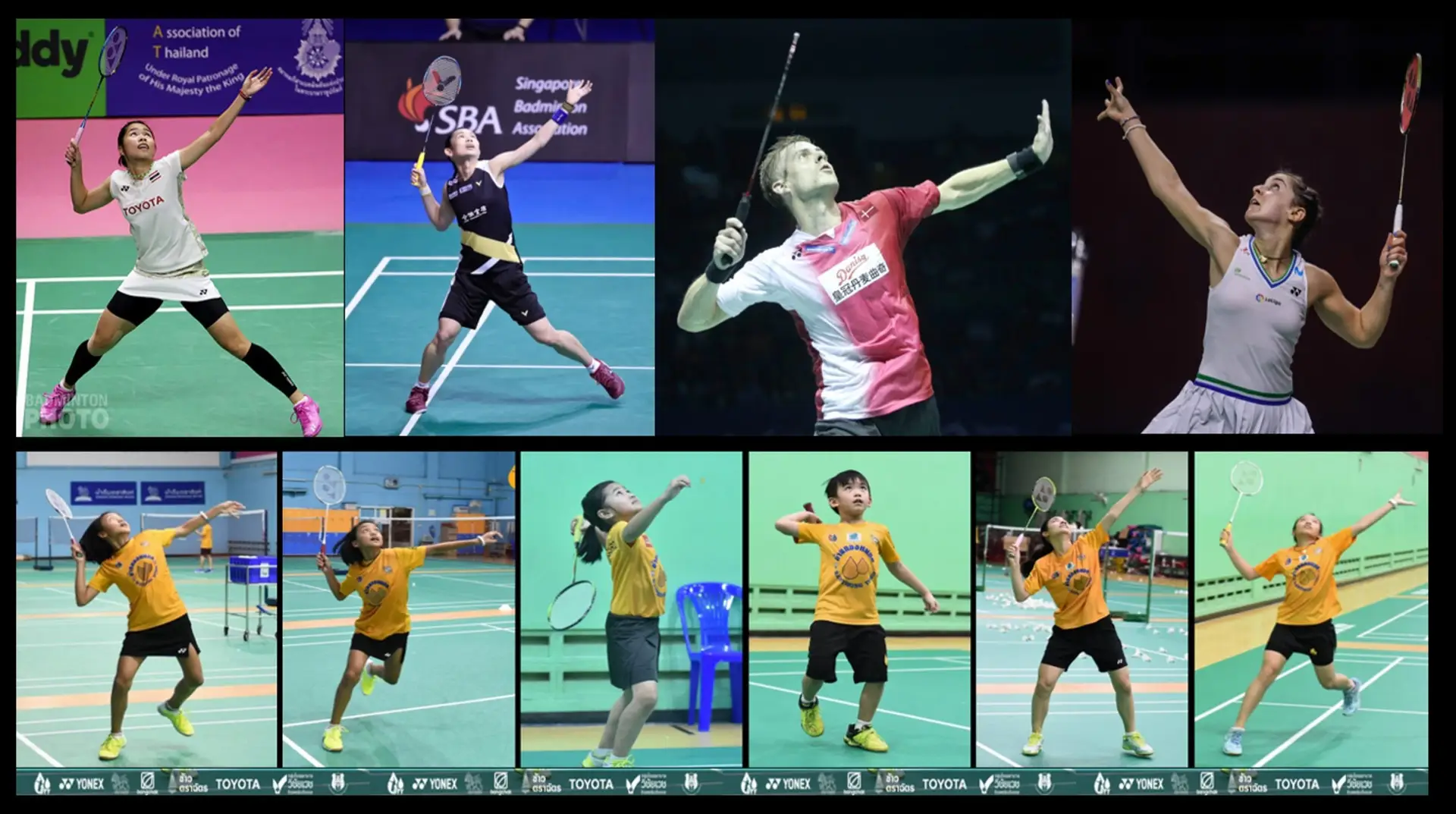
![6 Ways to develop effective Badminton grips base info for edit - Duplicate - [#28008]](https://badmintonandy.com/wp-content/uploads/2019/12/Badminton-grips-landscape-1.jpg)