
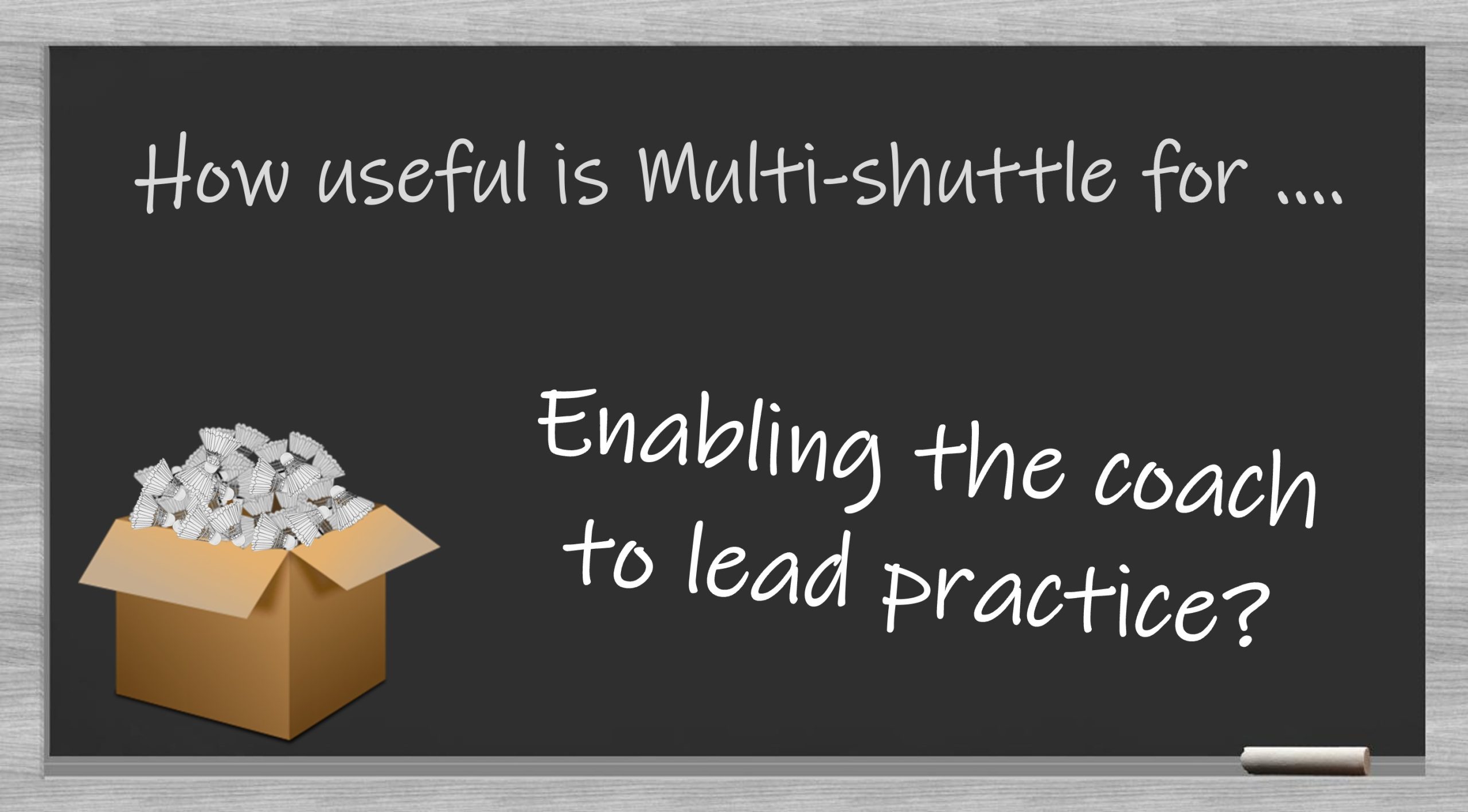
Who ‘controls’ a multi-shuttle practice ?
Is it the player or the feeder (often the coach) ?
Multi-shuttle is different from other practice types,
the feeder decides everything: when, where, why
‘Leading a Practice’
Multi-shuttle allows for more ‘control’ of practice than other practice types. This happens both in design and execution.
The feeder (often the coach, but not always) decides exactly where to direct the next shuttle, its speed, the timing of the delivery and if they desire, out of context from the previous stroke.
That is unlike any other situation in a game, a rally.
Why do coaches want control of practice?
Do coaches favour this practice type because it reduces the variations found in match play?
Is multi-shuttle possibly more controllable than single-shuttle (rally) type practices?
Do coaches want practice ‘certainty’ over situations a player is exposed to.
It could also be that the coaches ‘see’, can picture the rally situations but no longer have the physical abilities to create them in a rally against their player. Plus, the fact that if coaches were to play in every session, they may become injured or fatigued.
Is this one of the reasons they use multi-shuttle:
because they want to direct exactly what happens, reduce variability, and be in charge
Multi-shuttle practice has many uses : some more effcetive than others
This post is part of a mini-series looking at the uses of multi-shuttle.
My initial thoughts
How many do you agree with?
My aim is to explore why many coaches have this as their ‘go-to’ practice type
- Coaches (or feeders) are certainly in charge when they deliver multi-sessions. they control everything: the pace of feed, the type of feed, the program, etc.
- This may be something they want. Especially if they believe that they can deliver an effective learning/development practice using high-quality feeding skills.
- Maybe they believe that their knowledge and feedback are best served if they are the person controlling the practice – the feeder, the controller, the coach.
- Do they stand still because with long working hours on court, it’s the only way to be a part of the practice and protect their body. Especially if there isn't another player available.
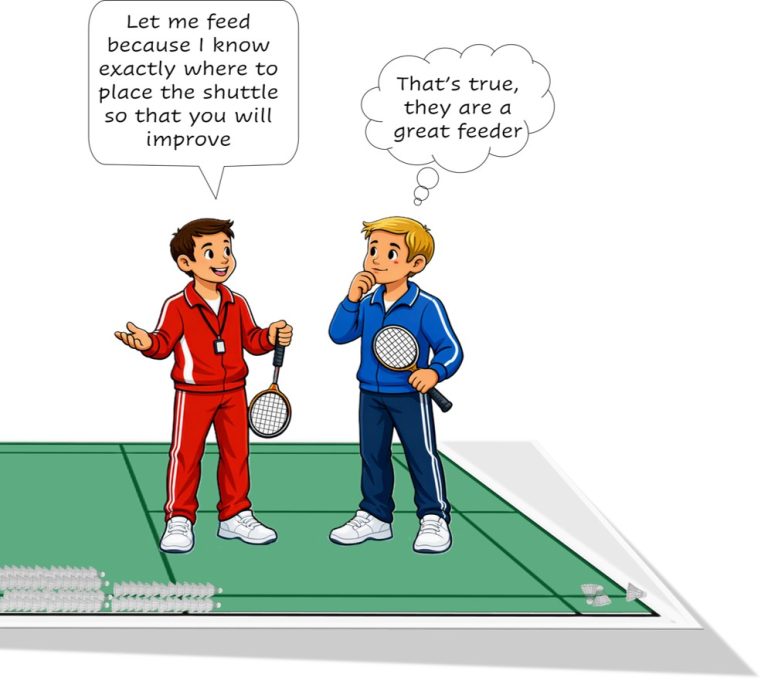
Do you choose to multi because it gives you certain advantages as a coach?
Do coaches want to remove variation?
Is it too harsh to suggest that coaches prefer this type of practice because they can control (adjust if you prefer) the practice?
Do coaches want lots of repetitions in a known (often only to them) pattern or sequence?
Removing the noise of variation found in matches, even in rally practice, can be a tempting desire for coaches.
They can take more control of practice, place the shuttle in areas so that they get to see and do more of what they want.
Taking control in this way certainly improves ‘Practice Performance’. However, will the progress observed be as apparent in a match? Or, if it’s not, does it just mean more multi-coach fed practice is needed?
The power of Social Media
I can understand why coaches would use this practice type as it’s seen everywhere. It’s what top coaches do with World-class players.
Examples can be seen on social media, on YouTube, you are able to purchase written programs, etc.
Maybe coaches just believe that by repeating the practices that their favoured coaches use, it must help their players and improve their knowledge – do you agree?
I do not agree with all the points
I’ve made them in the hope that they will simulate your thoughts: good or bad
10 reasons why you may like using multi shuttle
How many do you agree with?
Do some cause you to take an alternative viewpoint?
- It’s great for lots of repetitions in a controllable practice that removes too much variation found in rallies.
- The design of the practices is easier, plus there are lots of programs that you’ve seen or someone has shown you.
- There is plenty of time to see what the player is doing, and you can give feedback while the players work.
- You (the feeder) don’t have to move as much because the shuttle isn’t returned as it would be in a game. Hopefully, this will make it easier on your body (but possibly not your arm!)
- You believe that it’s easier to introduce indecision into the practice if you are the feeder
- Improvements happen much faster and are visible in multi practices. The alternative rally practices don’t seem to have the impact on performance in practice that you want.
- The players expect to practice his way 🙂
- You believe that your knowledge is easier to transfer to the players if you lead the multi practices while others players rest waiting for their turn.
- When coaching an individual session, you don’t have the hitting skills or endurance to ‘rally’ with your players so you choose a multi-shuttle practice type.
- You believe that it’s important to break a practice down into chunks, parts of a rally, and single-shot multi enables you to do that.
Certainly, it’s great for older, immobile coaches or
coaches with hitting skills that are less than they require for that practice
What do you think?
Are there other reasons why you choose to multi-shuttle?
I’m sure you must have your reasons for using this practice. Especially if it’s your ‘go-to’ practice type.
How you coach the practices you create will always be your choice
All I ask is that you consider why you do what you do and how effective it is
Send me a question
I’m always grateful if you have read this far.
If there is anything that you have read that has helped or that you disagree with, then please send me an email.
I promise to read all your comments
It would be great to hear from you contact@badmintonandy.com

![Introducing the badminton overhead – Challenge No.3 - Duplicate - [#36874]](https://badmintonandy.com/wp-content/uploads/2023/05/Badminton-Forehand-Overhead-3-scaled-1.jpg)
![Introducing the badminton overhead – Challenge No.2 - Duplicate - [#36821]](https://badmintonandy.com/wp-content/uploads/2023/05/Badminton-Forehand-Overhead-2-scaled-1.jpg)
