Have you ever looked at a player and wondered
There seem to be so many things that they need
Or, do you struggle to know exactly what's the next
Deciding what to coach next can sometimes paralyse a coach
These suggestions will give you some prompts and allow you to find the next step
Do you watch your players in competition?
It is essential if you want to really understand what they need
Competition has all the uncertainty, stress and variability that is required for a true test of technique, tactical and mental assessment. Physical elements can be tested off the court if required.
Do not be surprised if what you see isn’t the perfect model, even if it appeared proficient in practice.
This has depressed me often in my early coaching years.
It wasn’t until my mentor pointed out that it was just part of the process, i.e. it often looks better or perfect in practice, then it appears to fall apart in competition.
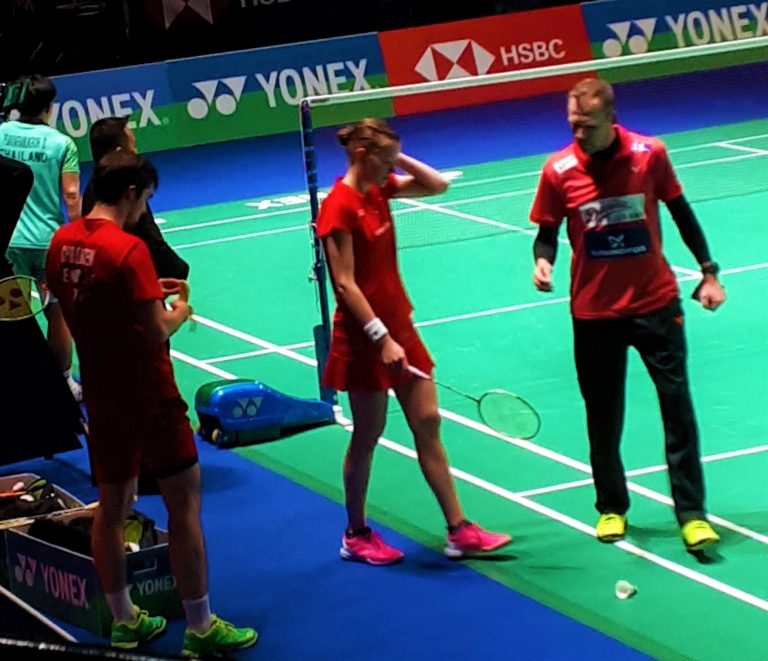
Competition is the ‘True’ test
The stress and uncertainty in competition will cause players to revert to the strongest habits.
To change in practice is certainly not the same as changing in a match, especially when it’s an important match.
Be aware that most of your observations will come from practice sessions. You may be setting up practices that allow the players to perform, allowing you to believe that a change has been established.
Is this because of the practice or the real change?
Observing in a competition is different than watching practice.
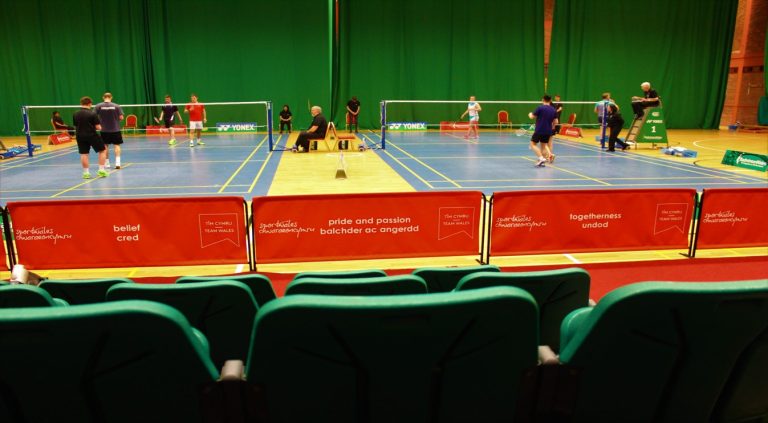
Coaches and parents often comment that players perform to a lesser
standard in competition compared to practice : have you had these thoughts?
Can you break down your observations?
Where to start
If you have identified a weakness, how will you be able to identify where it originates in a technique and how serious it is or isn’t.
This may prove difficult.
Separating those critical issues that need immediate attention from those that will be developed later is not easy.
One method is to break down strokes & movements into their parts. The chronological constituent components parts. HABCARE – this is a method created by Roger Mills.
H. A. B. C. A. R. E.
Using this has transformed how I think about the technical aspects of strokes and movements. In development and in technical fault correction.
Apart from ‘H’ (hold), the rest follows a timed sequence describing what happens on the court from the initial action to the end (the start of the next)
.. Hold
.. Approach
.. Backswing
.. Contact
.. After Stroke
.. Recovery
.. Early preparation
Using this method has proved valuable for me every time I coach.
It enables the coach to target the specific cause of problems. Identifying those elements that prevent the following actions from flowing smoothly.
I recommend starting with issues you see earlier in the HABCARE before addressing those later in the sequence.
Check the grip and early preparation (Approach & Backswing). Be aware that this method does not describe a stroke or movement in isolation.
The last letter E (Early preparation) is both the end of one stroke/movement and immediately the start of the next.
Roger later produced M.A.T.C.H.P.L.A.Y.S., which addressed the tactical elements of badminton
Try creating a HABCARE for a forehand net shot that
starts in the midcourt after a defensive block, back to the opponent’s net
Do you trust instinctive observations?
You don’t see what you don’t know
The skill of observing exactly what happened (positive or negative) in a match or single rally requires practice and needs to be developed.
Initially, all you have are your instinctive thoughts. You will have to trust them at the start.
I recommend that you find an independent coach to confirm your observations. Maybe that’s hard to do, but it’s a great way to progress.
Sit next to someone and compare observations and thoughts. Share your immediate thoughts in a stream of comments. Ask them to listen and then comment back to you.
Then ask them to do the same and see if you are observing similar aspects. Listen to them whilst they verbalise their observations.
Seek out these opportunities and remember to listen! It’s these times I’ve learned the most.
I’ve spent many happy hours at tournaments listening to people
who see things that were right in front of me but that I couldn’t see
their observations gave me a new insight to take into my practice
What is your model for comparison?
These questions have helped me evaluate the things I see
These questions do not just apply to Technique aspects; they can equally apply to Tactical, Emotional, and Courtcraft aspects.
The last question has probably been the hardest learning point for me!
- What just happened?
- What did I expect to happen?
- Where should the shuttle travel and in what way (trajectory & speed)? or, How did the player perform?
- Is my expectation applicable for the players current specific standard?
Many coaches view the model for comparison by observing world-class players.
Whilst this is of interest, does the model really apply directly to your 12-year-old player?
So, what is ‘acceptable’ for your 12 yr old?
Are you striving for 'perfection' in your players?
Can you accept that there will be errors and variability?
If not, then I suggest you are in for a tough coaching journey.
Accepting that things will not be ‘perfect’ will allow you to focus on finding those elements that, once improved, make the biggest impact.
Yes, look for where to improve things, but allow some errors, variability or inconsistencies.
I am not suggesting that you don’t try to help your players. Or that you allow them to perform with techniques that will prevent others from developing. Far from it.
There are certainly ‘gross’ or ‘classical’ errors that need to be eradicated or prevented.
Focus on these and be prepared to accept something less than perfection. You will enjoy your coaching much more.
Ask yourself; when will you be ‘Perfect’ in the art of coaching?

When to effect a change in technique?
It can be very tempting to see an error or inappropriate technique and start correcting immediately.
Have you ever stopped to think –
… Is this what needs changing or is the solution something else?
… How will the player react if I try to make a change?
… Is this an appropriate time of the season to make the change?
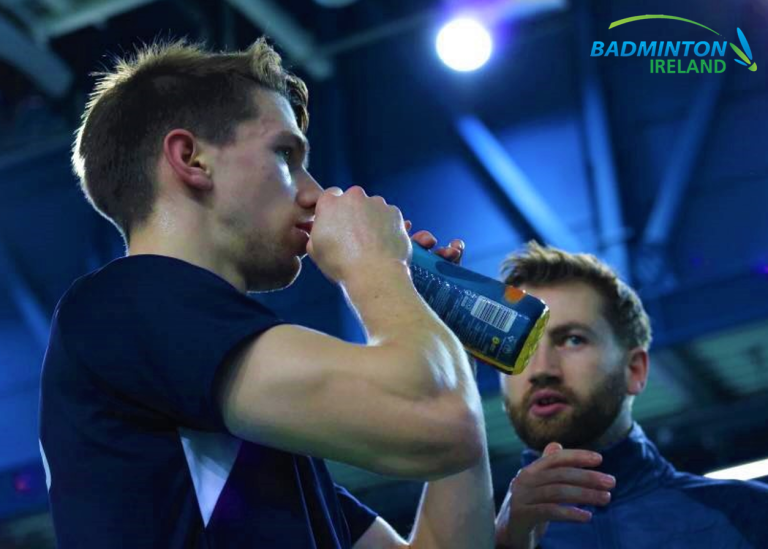
During a competition is not the right time to change a technique
But you may be tempted!
Being aware of the impact of change, the time of the season, the loss of skill, etc. is critical.
How to effect change is another skill for you to develop. Try to use different ways to vary the practice yet still reinforce the new or change in skill.
Look out for a future post “6 ways to change a technique”
Allocate more time to working out how and when to introduce a change
than you do identifying it
Send me a question
I’m always grateful if you have read this far.
If there is anything that you have read that has helped or that you disagree with, then please send me an email.
I promise to read all your comments
It would be great to hear from you contact@badmintonandy.com