
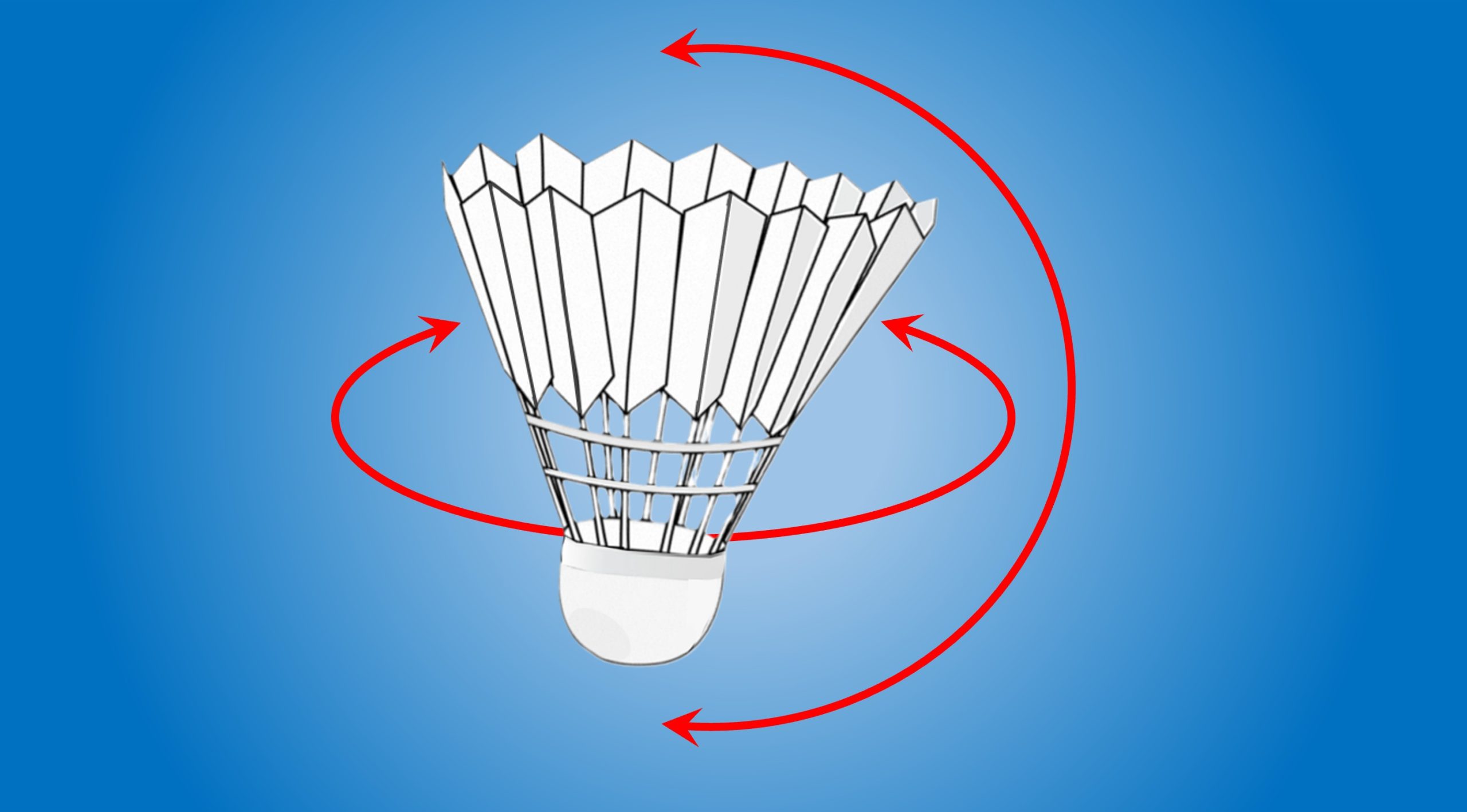
How much do you know about spinning net shots?
The types and how to start
Find the fun and enjoyment in trying to
work out how to make the shuttle spin
Start without a net
Bouncing practice
I like to encourage players to try this as soon as they can bounce the shuttle up and down on the racket in a lunge stance
- It’s important to know that the shuttle can spin – may be obvious to you but not to a beginner
- To know that it can spin in many different ways – how many can you count?
- Finding In the beginning, some spins are unexpected and hard to replicate – there is fun in trying to replicate the same spinthat some spins are really tough to control – trying to catch a spinning shuttle isn’t always easy!
- Experiment with different racket movements (size and shape). Discover what works and what doesn’t!
Be parepared to test your convictions and take into account
maturity, technical skill level, tactical desire, and physical condition
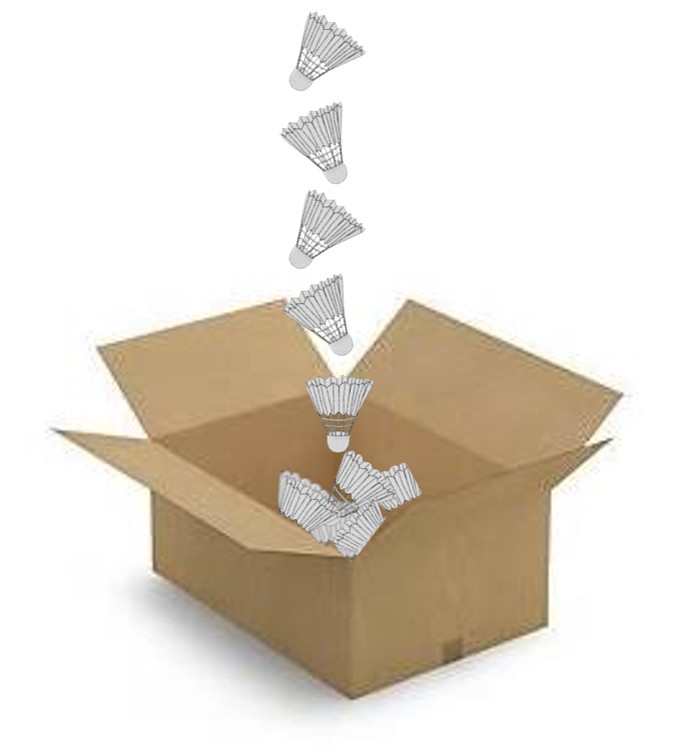
Try spinning into a box
I’ve seen this on a few coaching videos and certainly like the idea
The player stands with the racket out so that it’s above a large box.
The feeder stands on the opposite side of the box. They throw underarm, you step forward with a little step and try to hit the shuttle so that it spins and then falls into the box below.
Don’t worry about the height that you hit the shuttles from, although around your armpit height would be a good starting point.
It’s a great way of hitting lots of shuttles and trying to work out how to hit the to create spins. Plus if you do this at the end of every session for say 20 shuttles if saves collecting them up. Hopefully, they have all landed in the box
Starting on court
Will you start with a Forehand or Backhand?
You will have to decide : I recommend that you start with these 2 net spins
Forehand outside – in
Backhand inside – out
‘Outside-in’ and ‘inside-out’ refer to the movement of the racket head as it makes contact with the shuttle when playing a spinning net shot

Simple ideas to include in your practice
- Stand in the middle of the court (or the half-court) – so all shuttles will land ‘in’, it’s better for confidence
- Feed shuttles underarm (up) first, then throw (downwards) second – the feed type will help you discover more ways of spinning and make you adjust
- Don’t worry about the height the shuttle goes over the net – making it spin is the first aim, controlling the height is tougher than you think
- Play lots net games using these 2 spins – it’s fun and you may find that your partner (opponent) can’t return your shots! 😉
Starting stances
How will you stand at the start of the practice?
Please don’t stand square!
I recommend that you experiment with both racket foot forward (attacking stances) and non-racket foot forward (receiver of serve/backward attacking) stances.
These stances will make a difference, consider why that could be?
Using these 2 different starting stances will allow you to both chasse forwards or pivot/turn your body. Both can help with different spins.
Stepping is not the only method you will use in a game so why would you only do that in practice
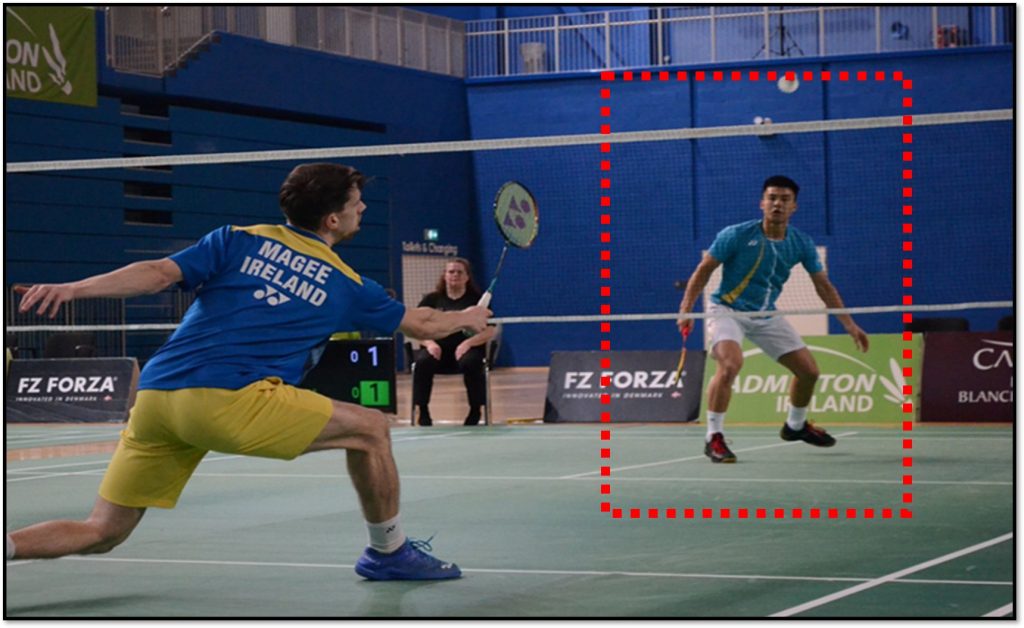
The forward movement is one of the components that will affect the spin
For most spinning net shots, the shuttle should not be struck slightly below the tape
As always there will be different opinions and different viewpoints
I would even contradict my own advice at times. As there are certainly reasons (tactical) and spin types that mean striking at net height is the best thing to do.
However, when first starting I recommend striking the shuttle lower than tape height
This is because it’s tough at the start to control the height of the spins, and you should find that when you first start to spin, the shuttle can ‘jump’ off the strings more than you are used to
Therefore, striking it lower than the tape will mean that it will not sit up too high and be killable (is that even a word?) and the spin will still be strong as it passes over closer to the tape
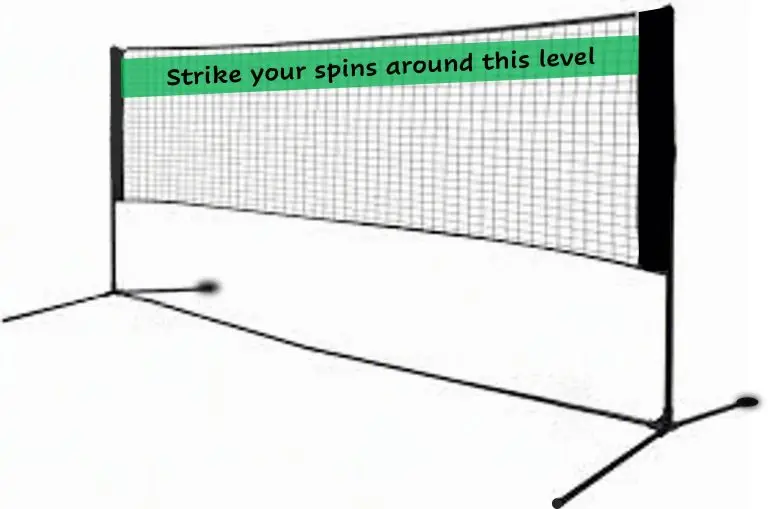
What do you think about the height a spin should be struck?
Does it matter? What are the advantages for the begginer ?
I’ve listed the most common spins and the associated racket head movements
Generally, its best to experiment using the suggestions below and work out for yourself what makes a great spin
There are so many different ones that I can only give you general advice.
It’s all about the movements of the racket head caused by
your fingers, your body movements and your foot
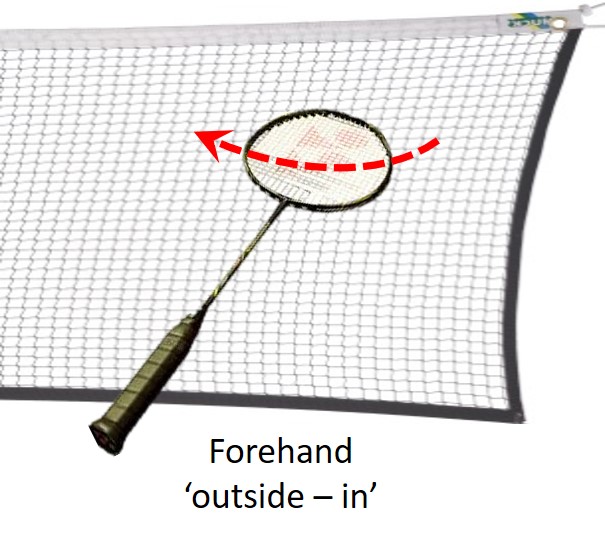
Forehand “Outside – In”
Try to think of different hand and arm combinations. Some coaches talk about actions like ‘turning a doorknob’ or ‘trying to hit the side then the bottom of the shuttle’.
My favourite is to think about the shape of the letter J and draw a J with your strings as you make contact.
This spin can tend to sit up and spin vertically before dropping over the net.
I recommend that you aim to move your body slightly outside of the shuttle so that if you were to miss it, it would travel toward your racket shoulder.
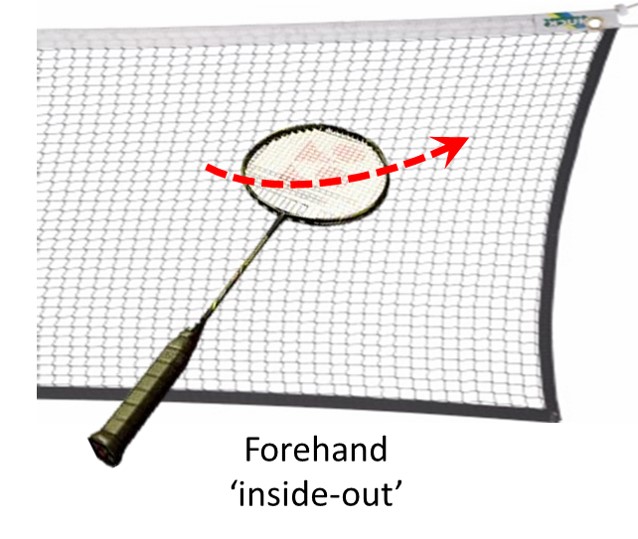
Forehand “Inside – Out”
This can be a tougher spin to master
It’s especially if you want to make the shuttle spin as much as the “outside – in”.
In fact, it’s a completely different spin and tends to make the shuttle flatter, almost rolling over the net, rather sit up and spin vertically.
I’d recommend practising this one from a slightly crosscourt feed and striking it from outside of your racket shoulder
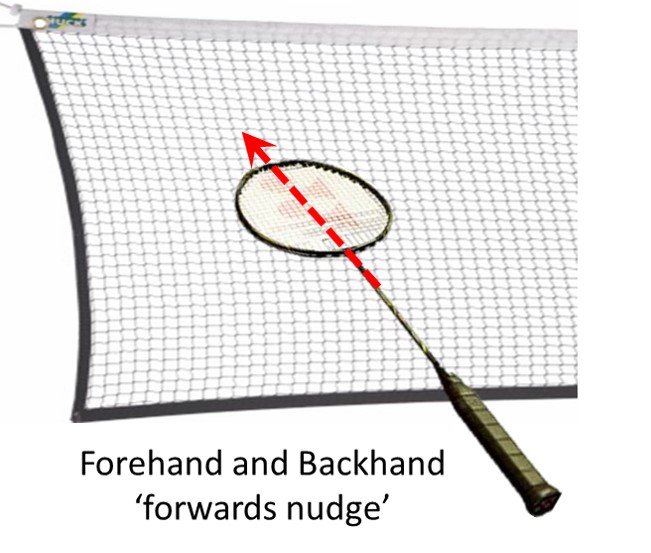
Forehand & Backhand “Forward nudge”
This is often a spin that emerges when first learning straight net shots. As the name suggests its a forward movement with the racket.
Please consider the timing of your foot as it lands (see later) and the angle of your racket strings caused by how high you lift your hand. This applies to both the F/H and the B/H shots.
I’d recommend that you practice this with both upward and downward feeds. Also ensuring that the shuttle flies at different speeds towards you. To only practise with ‘perfect’ feed will limit your ability in the game.
Backhand “Inside – Out”
Another early favourite for discovering how the shuttle spins.
Probably best developed initially from a crosscourt feed and again use both upward and downward feeds.
The action can be a right to left “U” or “J” shape that causes a slight role under and around the shuttle. It is also played as an angled racket face without any role, cutting across the flight of the crosscourt feed.
Try both actions and think about the differences in the 2 spins, especially which is easier to get more spin and which is easier to control if you want a tight net.

Backhand “Outside – In”
This one often looks easy but can be tougher than you think if you want the shuttle to really spin.
It is also tougher to perform as it’s played from wider on your backhand side. You will have to work hard with your movement or use it when you are travelling straight forwards after playing a stroke from your Round The Head area of the court.
It will certainly be easier to master if it’s played from directly in front of you. Try both and see which you prefer.
You will have to prepare early and maybe move your body throughout the action.
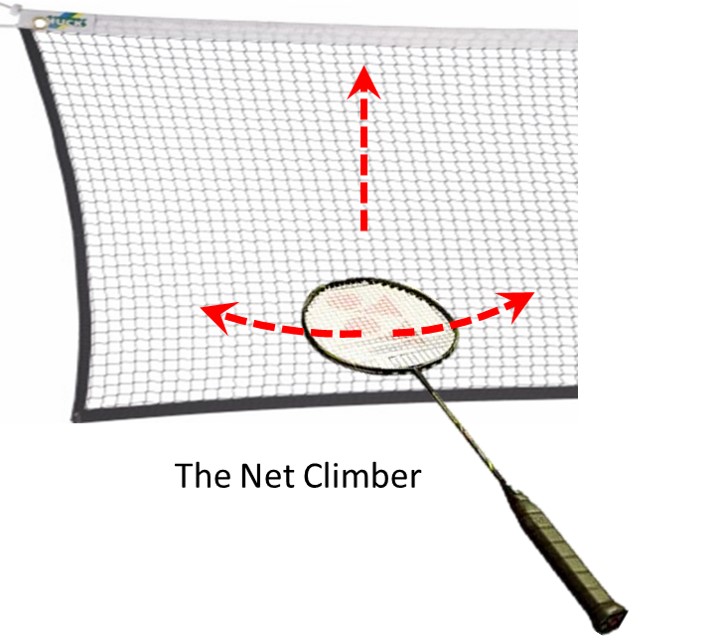
The Net Climber
This spin is played when the shuttle is struck from much lower down the net, even around the bottom of the net.
It may be that you are not fast enough to get to the net or more likely your opponent has played a tight net or spin themselves and you need to let the shuttle drop before attempting a return.
Did you know that you can still spin from the bottom of the net?
There are a few ways to perform this stroke. Some players like to cut sideways underneath the shuttle whilst also hitting it upwards. I’ve also spoken to other players who use a backwards-pulling action.
Foot Actions
This is one of the least spoken about elements, but very important.
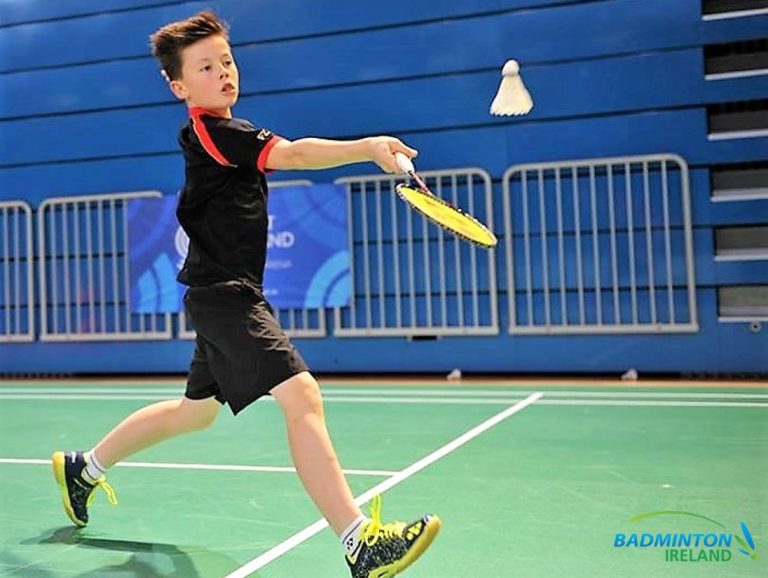
The timing of when you strike the shuttle compared to your foot landing can help your spinning net shots as well as your normal net shots.
I recommend that you practice landing in your lunge and striking in the shuttle at the same time.
Slightly earlier or later doesn’t matter but think of ‘Hit-land’ as being your aim.
It’s also good to practice striking all shots about the net with a ‘foot out!’ action. The tougher your match, the more you will be moving quickly and often striking the shuttle at a comfortable but extreme range from your body.
Errors & mistakes are the key to success
Be prepared to make mistakes when you work on your Spinning net shots, lots of mistakes
The term “error is the price of skill” is a good one to describe how to practice net spins
You need to be brave and not judge your early failures or successes, just enjoy what happens even if you don’t know why it happened

-
Practice to failure
- Keep trying different ways to apply more and more spin to the shuttle
- How much spin can you impact onto the shuttle, so much that it’s difficult or impossible for your partner to return?
- Play net games against other players and your coach. Find the best players and challenge them to net games. Lose to improve.
- Have high expectations but be prepared to learn slowly and learn through experimentation and mistakes
- ‘Perfect Net Spins’ can take a long time to appear, or maybe they never do 🙂
Don’t be afraid to make mistakes
Some of your attempts may be the best spins 🙂
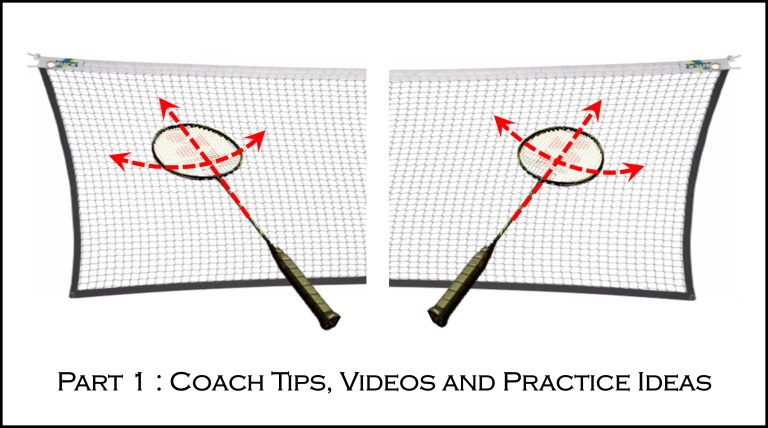
Read More
You can read about more technical points, but more importantly the tactical and practice ideas
More Tips & Suggestions and practices that help
Returning spins or nullifying them. To spin or not to spin
Conditioned games
Send me a question
I’m always grateful if you have read this far.
If there is anything that you have read that has helped or that you disagree with, then please send me an email.
I promise to read all your comments
It would be great to hear from you contact@badmintonandy.com

![Introducing the badminton overhead – Challenge No.3 - Duplicate - [#36874]](https://badmintonandy.com/wp-content/uploads/2023/05/Badminton-Forehand-Overhead-3-scaled-1.jpg)
![Introducing the badminton overhead – Challenge No.2 - Duplicate - [#36821]](https://badmintonandy.com/wp-content/uploads/2023/05/Badminton-Forehand-Overhead-2-scaled-1.jpg)
