

I became obsessed with reducing ‘errors’
The obsession caused me frustration and confusion
I spent far too much time trying to correct mistakes
I didn’t allow players to develop in a positive structure
It wasn’t a healthy approach to coaching
I don’t mind players and coaches being critical. It’s what you do with the information, the feelings, that’s what counts.
This post is based on a paper titled “Taking a Closer Look at Errors” by Dayna Daniels.
I’ve taken its themes and adapted then to Badminton. Plus I’ve added ideas, questions and recommendations for you.
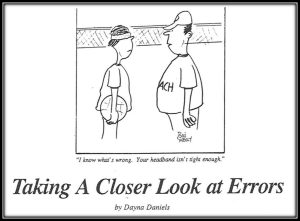
Maybe it’s time to …
… take a different look and find ways to see these ‘errors’ as development opportunities
… find ways to ‘prevent’ these errors from emerging
… realise that errors are an essential part of learning
… consider if some errors are limiting, whilst others are just part of development
… to consider that the ‘perfect’ technical model you are using is not suitable for nearly all the players you coach
My aim is to provide you with a different viewpoint on errors in the hope that
you will accept that errors aren’t just ‘Bad’ or ‘Not acceptable’
What is an error?
We need to agree on a definition
There are many different reasons for mistakes, be prepared to reflect on this before coming to a conclusion.
Here are 4 different reasons or scenarios that could define an ‘error’ … there are others
- those errors that are ‘forced’ by the opponent
- those that are a tactical choice by you the player
- those caused by the situation, the score in the game, the emotions that you feel
- those that are ‘critical technical errors’ and prevent an effective, efficient technique from being executed successfully
Opponent ‘Forced Errors
Is it something you do that causes a mistake or possibly something your opponent does that ‘forces’ you into a mistake?
It took me a while as a new coach to realise that some errors are forced by the opponent.
Your opponent hits a hard well placed smash wide of you and you only just reach it but you return it into the net, an error?
Could you really have hit it back over, or was their smash just a little too good?
… some errors are ‘forced’ by the opponent
An inappropriate tactical choice
During a rally, you decide to attempt a backhand clear when you are deep in your rear court.
It almost reaches their rear court but is above their head. Your opponent takes advantage of the shortish length and hits a winner.
Maybe attempting the stroke was the mistake, not your technique. If you knew your backhand was weak, why did you try it rather than hitting your fast flat backhand drag/pull/long drop
… the ‘error’ was the selection of the stroke rather than your technical ability to play it
Emotions are affected by the situation
It’s getting close to the end of the match, and there are only 3 or 4 points left, and it’s the 3rd game!
The opponent high serves (very high), you decide to play your favourite return, the one that has worked throughout the match, the crosscourt slow slice.
It goes into the net 🙁 you get frustrated or angry and then hit the next return of serve out. The match slips away 🙁
… the ‘error’ was not controlling how your emotions can affect your technical ability
A technique that limits ability
A critical technical issue
There are some critical technical ‘must haves’ – more about this in the next section.
These technical ‘errors’ limit a player’s ability to play certain strokes.
sometimes in all situations (eg.pan handle grips, etc),
sometimes when the situation is time-limited (eg.lunging issues), and
sometimes, only when the intention is highly defined (eg.floppy backhand when flicking)
… the error is a ‘critical technical error’: especially when under pressure
Critical elements
Can you identify these elements that cause the errors described in the final point above (technique limit errors)
It may not be easy to initially observe, as the level and specific ability of the player will have a tremendous bearing on judging how severe an error is for a particular skill.
A beginner will commit many errors, both large and small. Not all of these errors will contain technical deficiencies.
‘Critical errors’ are those components of an action which affect the overall performance of the skill in a fundamental manner.
The coach must be able to sift through and identify the ‘critical features’ whilst
looking at the performance in real time, it’s not an easy task
Consider these, close your eyes and imagine a picture
- A pan-handle grip for overhead hitting
- lack of pretension for starting (a poor split step) may result in not reaching a shot at the end of the movement
- ‘floppy backhand’ preparation (with the back of the hand leading) for a backhand underarm flick will cause the shuttle to travel flat or into the net
- lunging forwards onto the non-racket leg for net shots with limit the players ability to get to that ‘early shuttle’
- not ‘hand cocking’ (preparing the hand/hold for power) will cause the player to use lots of arm when trying to ‘lift’ the shuttle to the rearcourt
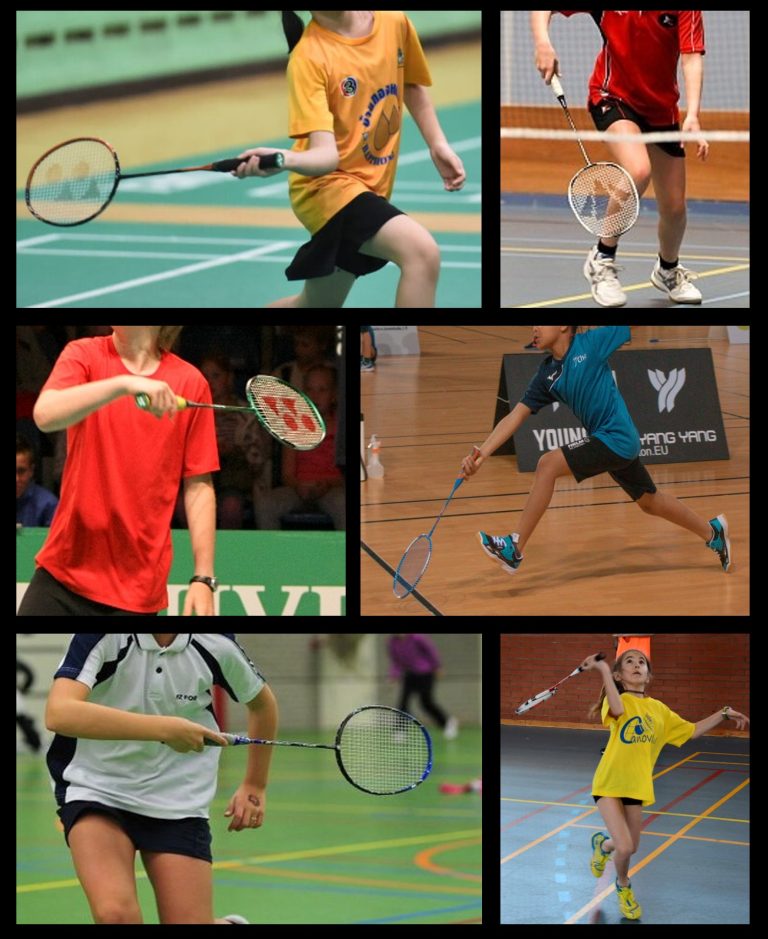
I challenge you to identify what aspects you may consider to be ‘critical errors’
Not every mistake or ‘error’ you see is critical
Growth Spurts
Players experiencing rapid growth spurts or changes in weight might suddenly develop ‘errors’ in skills that were previously performed well.
e.g. net shots that used to go over are no longer as successful.
During these periods the coach must reassure the player, modify performance expectations and wait for the physiological changes to settle down.
Coaches working with these types of players must be very patient and should not expect radical performance changes.
If you want to read, click on the image, it will send you to a post titled “The Growth Spurt in Teens (+13 signs it’s happening)” by JILL CASTLE, MS, RDN or click on this link

Modify practice and discuss how competition performance can be managed
Badminton signs to look out for
- net shots suddenly not going over when previously it was ‘perfect’
- overhead ‘miss-hits’, especially when slicing
- loss of flexibility and pain in joints
- walking into door handles 🙂
Growth spurt errors can be managed.
Reduce the motivation to practice to achieve eradication; rather, use slow, steady progression
Realistic Expectations & Practice Demands
If the objectives set for a player are too precise, too detailed or too ambitious, you will probably see lots more ‘errors’ than you expected
When a new skill is first introduced or a skill is developed/pressurised, the coach is likely to see tremendous variation between what was expected and what was observed.
Is this always an error?
Some of these observed variations are attributable to variations in individual techniques or to the perceived stress of the practice demands.
The errors you see may only be an adaptation to the practice.
Be patient, allow time, check the practice demands (level/constraints)
and set them just above the current specific level
What is important at this stage is that the coach does not focus so much on what the player may be doing wrong but rather on what is being done correctly.
The emphasis should be on the overall pattern involved in the skill rather than the finer movements.
Encourage Errors – ‘Error is the Price of Skill’
Could errors contribute to development?
Errors do inhibit performance and the aim should be to minimise them.
However, the aim should not be ‘Perfect Practice’.
This concept took me a few years to understand. I struggled with how to achieve successful development using errors. I think my aim of perfect play wasn’t realistic and it certainly wasn’t applicable to player development.
A turning point came when I witnessed my mentor coach working on crosscourt slices. He encouraged the player to slice so that the shuttle landed in the tramlines! This didn’t make sense to me!! 🙁
I later realised that it was important to ‘go beyond’ certain limits to establish where they are.
In this case, it was the fact that when slicing, the shuttle may not travel as far crosscourt as you think.
Error Prevention rather than Error Correction
I recommend that you spend time, lots of time, considering how to prevent errors from occurring
This applies to all aspects of skill: Technical / Tactical / Physical and Mental
Take a close look at the following list and consider if there are practices, environments, tasks, or challenges that could have been introduced earlier to ‘prevent’ these ‘errors from occurring
I’d like to hear your ideas
I have thoughts on all of them and believe that the impact of each could be reduced or eradicated IF certain things were introduced early in a player’s badminton journey
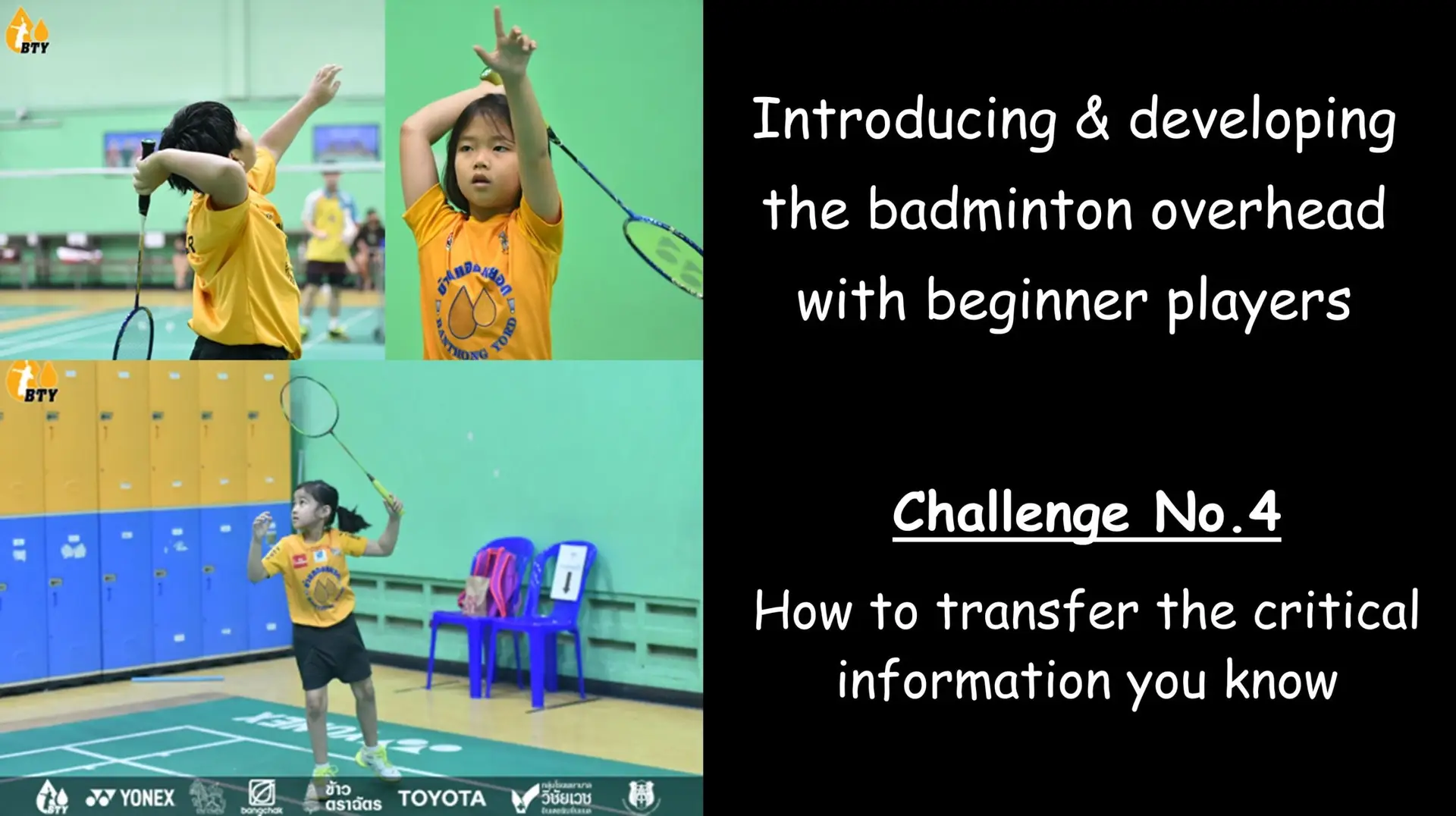
- Overhead striking with a Pan Handle Grip
- Hitting back to an opponent
- Feeling overwhelmed at Critical Points
- Backhand ‘floppy wrist’ (playing backhands (often flicks) when 'leading' with the back of the hand)
- Not feeling ‘comfortable’ in ‘uncomfortable’ situations

A big difference between normal players and Champions
is the way a Champion reacts to an error
You don’t have to play perfect Badminton to win matches.
Just make fewer mistakes than your opponent

Send me a question
I’m always grateful if you have read this far.
If there is anything that you have read that has helped or that you disagree with, then please send me an email.
I promise to read all your comments
It would be great to hear from you contact@badmintonandy.com

![Introducing the badminton overhead – Challenge No.3 - Duplicate - [#36874]](https://badmintonandy.com/wp-content/uploads/2023/05/Badminton-Forehand-Overhead-3-scaled-1.jpg)
![Introducing the badminton overhead – Challenge No.2 - Duplicate - [#36821]](https://badmintonandy.com/wp-content/uploads/2023/05/Badminton-Forehand-Overhead-2-scaled-1.jpg)
