The way you practice will have a huge effect on your ability in a match
Tips from players and coaches
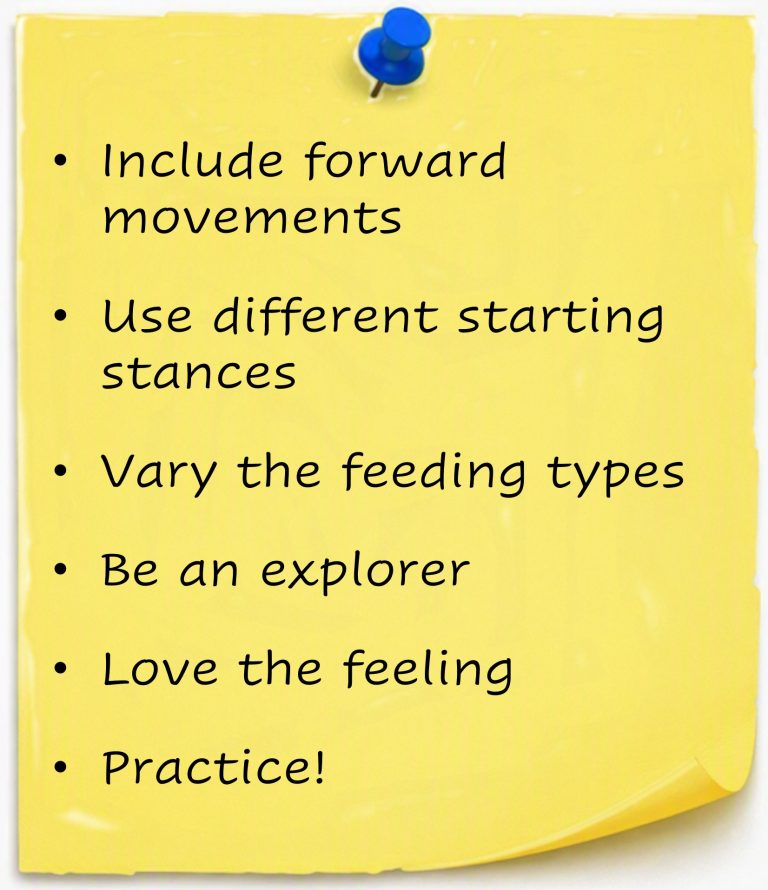
6 things that I learned
I’ve asked my coaching friends and the good players I know for their ideas on how you should practice your spinning net shots.
Their advice could almost be a post on its own, so I’ve summarised the important points for you here.
I can tell you that they all do work because I’ve used most of these ideas and seen results in the players I’ve coached
Include a forward movement
Include different forward movements when you practice
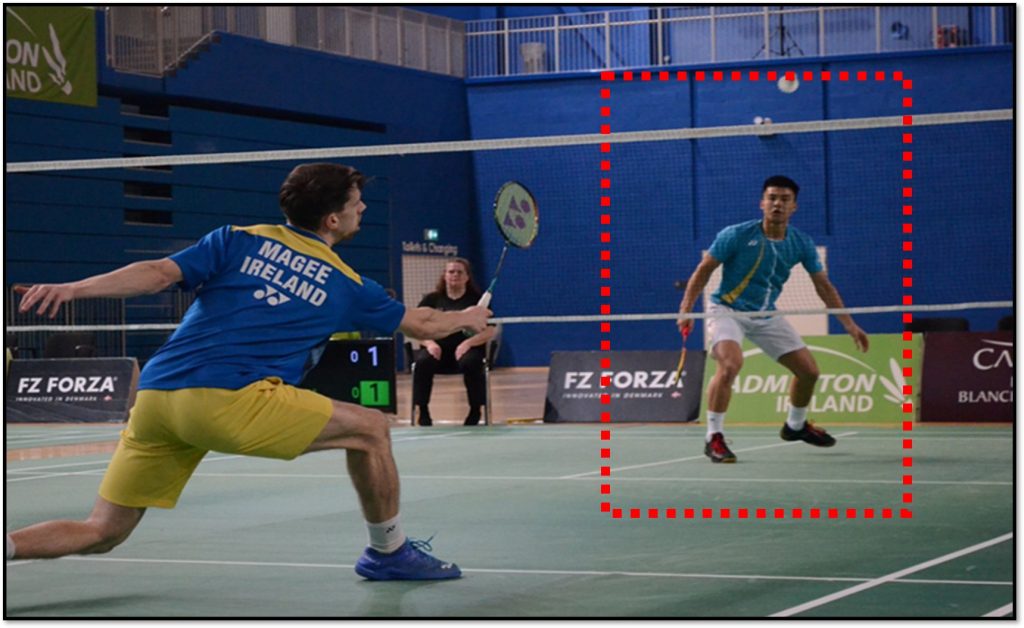
Almost all the spinning net practices I see start with the player around or standing over the service line. They are either a single step forward or worse, the feet stay planted to the ground and only the racket or arm moves
You will get better at spinning using just a single or no step, but to maximise the transfer into a competition, you need to do more.
Be aware that the level of Practice Performance can vary greatly from Performance in a Game
I do recommend that this one-step practice be used in the early stages when experiencing spins.
To maximise your skills, practice as if it was a game
A great quote about moving forward
“When I move quickly to the spin,
I find that I can make it spin more and be intentionaly aggressively.
I feel like I own the spin”
Starting stances
Forward Attacking (racket leg lead) stance or
Backward Attacking Stance (non-racket leg forwards)
Don’t forget to also move directly forward as well as diagonally.
Not all spins are approached from the same direction.
Using different stances will allow you
… to experience the starting stances that you use in a game
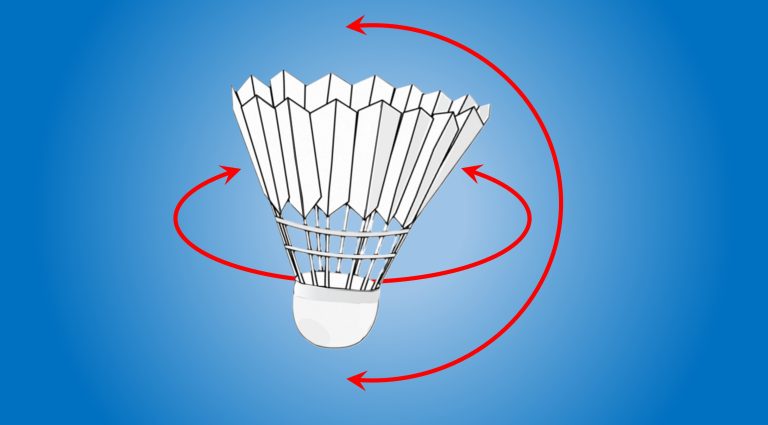
… different starting body positions will affect your rotation
… it will challenge your technique
Feeding types
Vary the feed and feeding situations. It’s that simple.
Your best results will come from experiencing different scenarios: hand feeding for spins isn’t the only way 
Why would you limit your experiences by only using a hand feed
Be an explorer
Everyone I spoke to expressed the view that you need to be adventurous when thinking about and developing your net spins
Don’t be afraid of making some mistakes, push your limits and imagination. Take risks and think how you strike the shuttle, try out different ideas.
Go on the court with a friend and experiment! No coach just you and someone like you.
My friends spoke about how they got these ideas from not only watching other players but also by playing against those with great spins. That motivated them to know how they could learn to spin just like the people they faced over the net
Some spoke about how they would ask others in practice to show them what they did and what tips could help.
Create a desire to find out information and try new ideas,
your net spins will benifit
Love the feeling
The players I know with the best spinning nets talk about them in very descriptive ways, but not necessarily with lots of technical information.
They talk about knowing what to do, but not exactly being able to describe their actions.
Coaches may give you lots of technical information, but surprisingly, top players often feel comfortable showing you their spins rather than explaining how they do them.
It’s common for expert players to ‘know’ a few things but not necessarily everything, or have exact information to help you. Instead, they ‘just do it’.
They allocate time each week to hit spins: spins in simple practices, spins in nets games, spins in matches, they love them all.
My recommendation is to play net games against better players, watch their actions and the spins that come tumbling over
Practice
The final piece of advice was that everyone recommended that you must enjoy your net spin practice.
Once I probed deeper, they all seemed to have 2 or 3 big reasons why they enjoyed working on this part of their game.
Often, it was for a sense of ‘Practice Satisfaction’; however, the better players stated that they judged how good their spins really were only in a real competitive match
They only considered that practice was valiable ….
if they became better in matches.
Each spin in more detail
Watch this 4 minute video from Badminton Family
Titled “3 Tips to get more spin” it’s is full of fantastic visuals and really worth watching.
There are more videos included in this post that I recommend you watch.
Look for similarities in all the advice and go and try it.
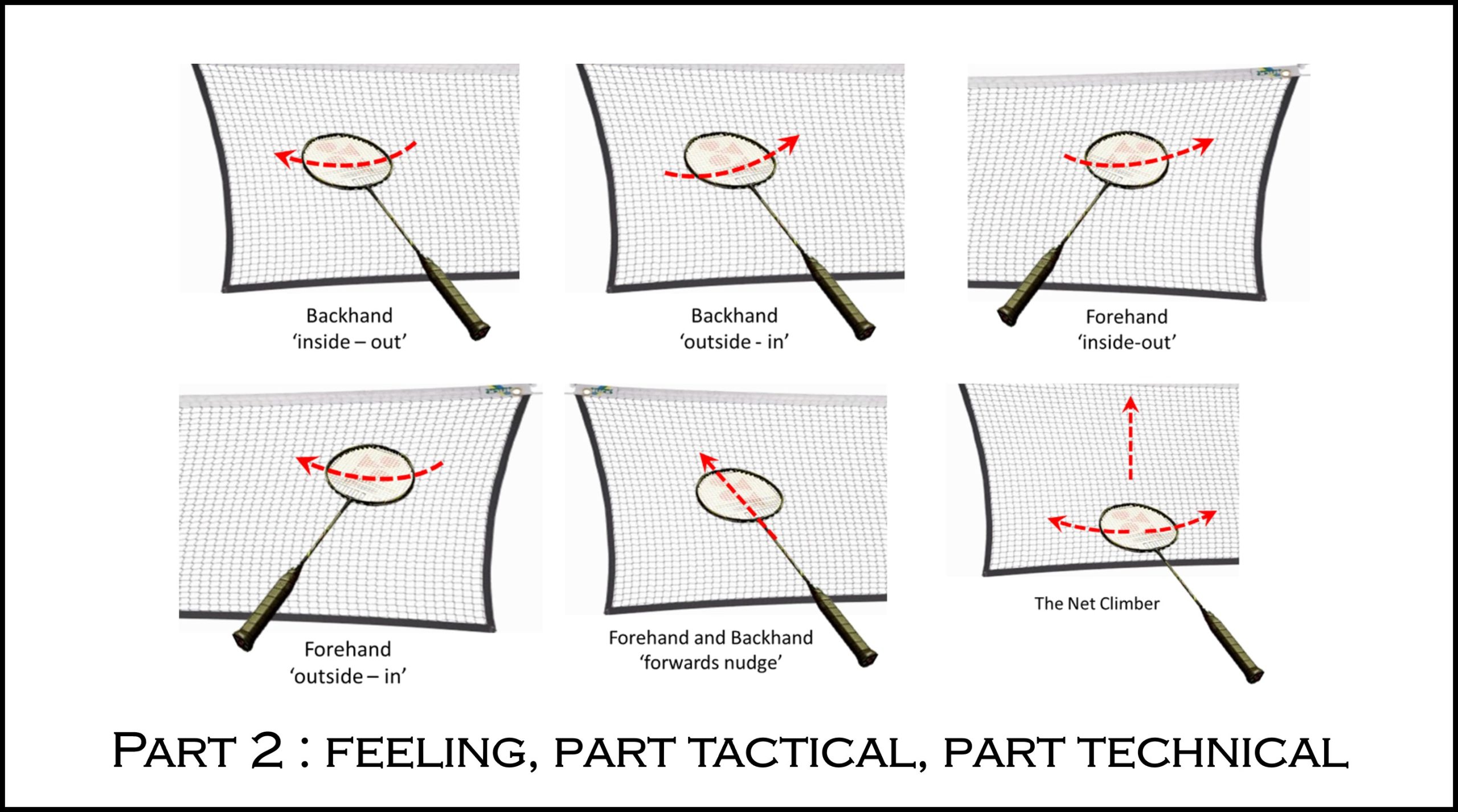
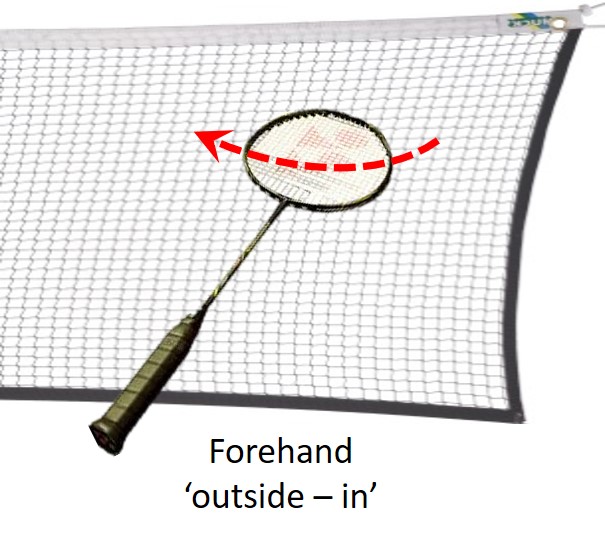
Forehand “Outside – In”
There are several different ways to think about this stroke.
Imagine striking the bottom outside of the shuttle base towards the end of your down stroke
I recommend that you aim to move your body slightly outside of the shuttle so that if you were to miss it, it would travel toward you racket shoulder.
Try to think of different hand and arm combinations. Some coaches talk about actions like ‘turning a doorknob’ or ‘trying to hit the side then the bottom of the shuttle’. My favourite is to think about drawing a the shape of the letter J with your strings as you make contact.
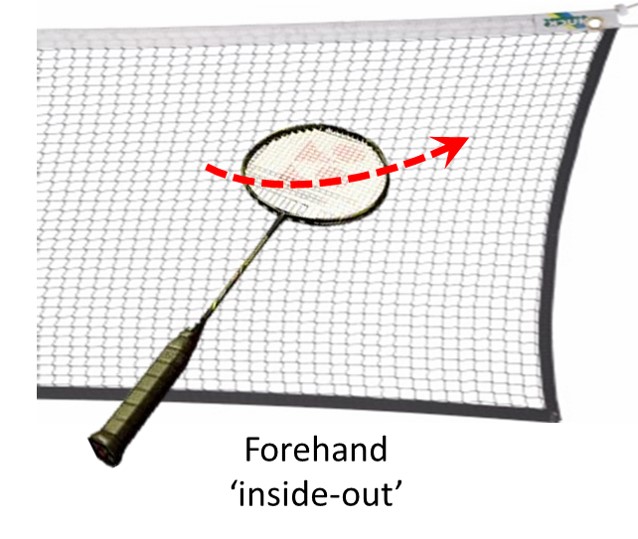
Forehand “Inside – Out”
This can be a tough spin to master. There are 2 different types: flat rolling spins or vertical spins.
It’s best used when the shuttle is flying towards you from cross-court. Some players reported imagining brushing up the back of the shuttle and rolling their hand in a small upward motion.
The advantage of the flatter spin is that it doesn’t sit up. It also travels faster than an upward spin and can be tougher for the opponent to safely return.
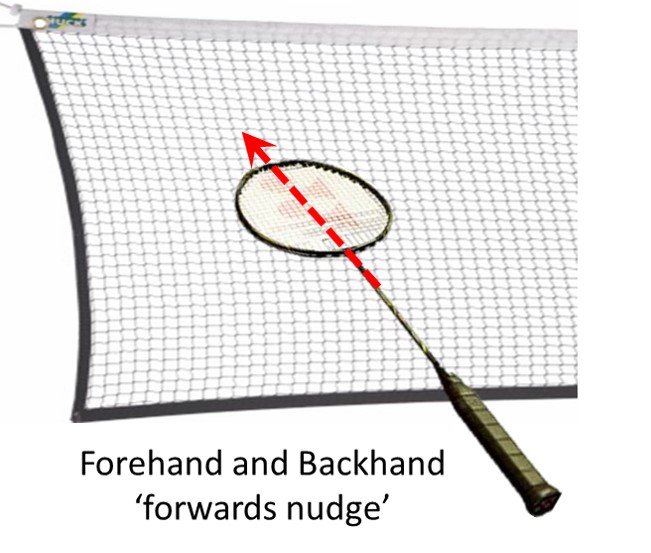
Forward Nudge (Forehand & Backhand)
Some players describe this as ‘push towards & downwards’, almost ‘cutting underneath the shuttle’.
Others talk about another action where the stroke is played with a slight rolling underneath with a small upward finish. You can combine a slight sideways action just on contact if you want.
I’d recommend practising this with both upward and downward feeds. Also, ensuring that the shuttle flies at different speeds towards you. To only practise with ‘perfect’ feed will limit your ability in the game.
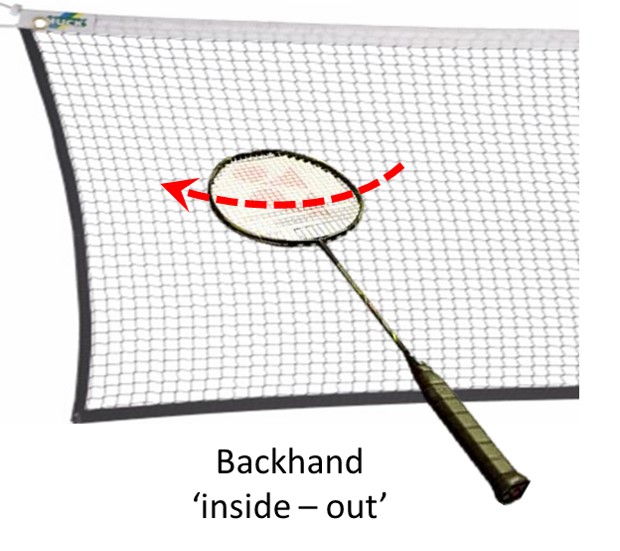
Backhand “Inside – Out”
Another favourite for applying awesome spins to the shuttle. It can be developed from a crosscourt feed and again use both upward and downward feeds.
The action can be a right to left “U” or “J” shape that causes a slight role under and around the shuttle. It is also played as an angled racket face without any role, cutting across the flight of the crosscourt feed.
Try both actions and consider which is easier to get more spin and which is easier to control if you want a tight net.
Backhand “Outside – In”
This one often looks easy but can be tougher than you think if you want the shuttle to really spin. It will certainly be easier to master if it’s played from directly in front of you.
You will have to prepare early (even earlier than your normal E.P.!) and maybe move your body throughout the action. It’s certainly a hand/fingers and shoulder action.
Close your eyes now and imagine this stroke. Does your head start to move?
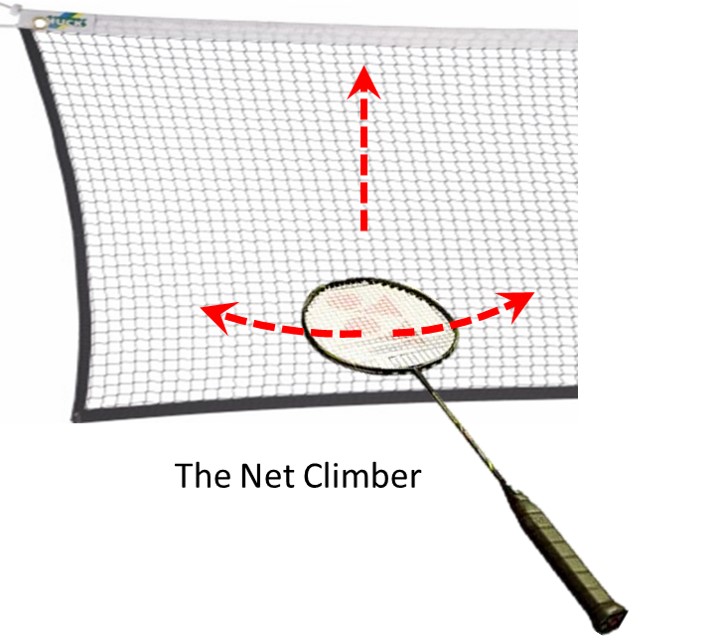
The Net Climber
This spin is played when the shuttle is struck from much lower down the net, even around the bottom of the net.
Did you know that you can still spin from the bottom of the net?
There are a few ways to perform this stroke. Some players like to cut sideways underneath the shuttle whilst also hitting it upwards. I’ve also spoken to other players who use a backwards-pulling action.
Play lots of spin net games, try to make it difficult for your partner
How many ‘unreturnable’ nets spins can you play?
To spin or not to spin
Do you think every net shot you play should be spin?
You need to make a decision in practice and in a match. A decision that will either be a prepared tactic or made in the moment.
Consider the next few points. How many do you agree with?
The downside (disadvantages) of spinning nets are
… They take longer to travel over the net
… They can ‘sit up’ and present opportunities for your opponents to kill
… The error rate is higher than you may believe it to be
The upside (advantages) of spinning nets
… They can be very difficult for your opponent to control and return safely, as they cant easily hit the base of the shuttle
… It’s possible to make them spin close to the net and make it hard for your opponents to lift to the rear of your court
Fast nets rather than spinning nets
It takes longer for your spinning net to go over the net and into your opponent’s court than, one without soin eg a ‘fast net shot.
A fast net shot could also be described as a net push, one that flies fast and flat over the net, landing before the service line. The time difference is small, but at times it can be significant.
I recommend practising both net spins and fast nets in a TACTICAL practice.
Talk with your coach and decide when a fast net could be tactically a better choice than a spin net.
Have you been able to visualise any of these situations whilst reading this post?
Does a spin always give you an advantage?
Or, would it sometimes be better (tactically) to get the shuttle over ‘faster’
Returning spins
How to return spinning nets is important
I’ve seen a few different ways of practising this, some coach-controlled others more game-like.
The question is, which is best to prepare you to play an opponent who has great spins. You need to decide what to do.
You also need to believe that returning isn’t just lifting safely to the backcourt.
It is possible to learn to spin back a shuttle that is already spinning.
This is a skill that you must develop.
Do you practice the art of returning spins
how do you set your practice up?
Hand Feeding
There are lots of videos on social media of people hand-feeding and spinning shuttles with their fingers as they throw.
The theory is that it will help players learn to control and even spin back with a spin of their own.
It is possible to spin from your fingers, and if you stand close to the net, and make it very difficult for a player by speeding up the feeding process. You may know 2 or 3 different ways of spinning using different finger movements and throws.
But are these spins the same as the ones you face in a game?
How representative and effective is hand-feeding for spins
compared to what happens in a game
What are the limitations?
Game like feeds – using a racket
If you want to become really good at returning spinning nets, you must face a real opponent who uses a racket, spins as they would in a game and wants to beat you (most of the time 🙂 )
This means that you need the following (there is no hand-feeding used)
Spinning back : ‘Spin the Spin’
A quick story
I first witnessed the awesome ability to spin back when I watched Richard Vaughan practice with a junior international player.
This player was developing their net spins after striking down to Richard’s midcourt.
Richard blocked back in a controlled way that put the shuttle in the ideal position for the junior player to spin.
The player moved forward to hit the spin they wanted, it was great
Richard then lifted high to the rear court, and they continued. Nothing new here, I thought.
The practice counted with different pace and angle smashes, and different defensive blocks to the net.
** Then suddenly, when the shuttle seemed to spin more than before, instead of lifting, Richard played a spin back to the net.
That spin was even better than the one the player had just done. They tried to return it, but couldn’t, and lifted out of the side of the court.
I sat there with my mouth open………. When I asked how that was possible he replied
“When I see the shuttle spinning like that I know I can spin back like this !!”
What could go wrong, how to cure problems
Growth spurts
When you grow, your control of these types of strokes will be different.
It’s more likely that you will not have good contact with the shuttle, and it may feel that you can’t control the spin anymore.
Mistakes will start to appear where previously your game was near-perfect.
This feeling may surprise you, but wait a while, keep practising, as it will return. Often within 4-6 weeks.
Too far away from the net
Do you know your limits when trying to spin the shuttle from further away from the net?
There is a technique to doing this, and it is worth practising to see how far from the net you can still generate spins. Some players are better than others.
Why not have a competition with your friends to see who is the best as you increase the distance away from the net.
This is an important skill, especially for singles players off the return of a low serve.
Too ambitious – ‘Spinphobia’
You’ve learned how to spin the shuttle and now want to do it every time you are at the net.
Not only do you try to spin everything, but you start to try to apply more and more spin.
I’ve seen players who are determined to show how much they can spin and don’t realise that their error count is increasing. A controlled net or fast net is ignored in favour of a spin, then it goes into the net and the score remains close.
You will have to consider if you spin too much, or maybe there are times in games when you don’t want to take the risk.
Spinning everything may not be the best tactic.
However, you will have to decide for yourself. All I ask you to consider if you you suffer from ‘Spinphobia’ ?
Helpful feeding or motivated opponent
If you want to become really good at returning spinning nets, you must face a real opponent who uses a racket, spins as they would in a game and wants to beat you (most of the time 🙂 )
This means that you may need to reduce the amount of hand feeding, as well as ensure that you use net games, rally practice, and match practice.
The true test is when the opponent (feeder) is playing to the net, and you can gain an advantage with your spins.
Try to become the player that other players want to practice with because you have great spins, and they want to both see how you do it and learn how to return them.
Conditioned game / Practice
If you want to try out a Conditioned game (a modified practice) that will help you practice your spinning net shots, then click on the image.
Conditioned games work best when they feel like a real game, but there are some limitations and rewards within them.
In this game, you should get lots of opportunities to play with spinning nets.
You will also get just as many opportunities to practice returning your opponents’ spinning net shots.
Use this game to answer these questions
All the information in one place
Tobias Wadenka show how to you can play net spin