The 4 preparation badminton stances you need
Easy to master and the improvements will be immediate
All help your badminton movement 🙂
All are tactical choices made before your opponent strikes the shuttle
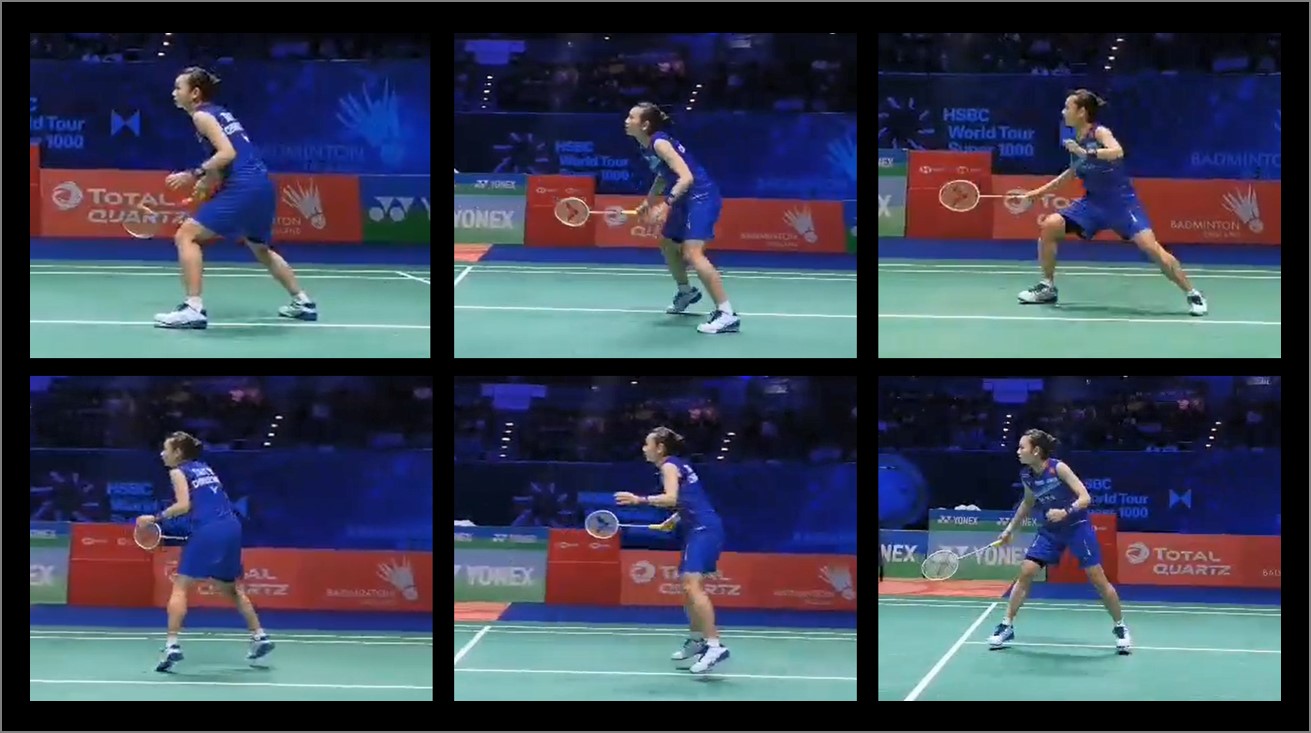
Watch this video and look at all the different stances Tai Tzu-Ying uses
Badminton Stances are sometimes difficult to see
but when you realise that they exist you see them everywhere 
What do the stances look like?
The positions that you deliberately take up before the opponent strikes the shuttle
Often immediately after you hit the shuttle, you ‘wait’ to see what the opponent will play. But, not always!
There are 4 stances (positions of how to stand) and often it’s easier to see them in a singles match.
One happens at the start of every rally (The Receive of Serve Stance) and the other three happen during a rally, often many times in that rally

There are some occasions when you may not take up any stance
and just move directly from one shot to another
Warning
There are lots of ‘it depends’ and ‘hopefully’ used in this post, and for good reason.
Stances are taken up before the opponent strikes the shuttle so that you can seek an advantage (that’s the ‘hopefully’ part).
However, you may not play the stroke that you prepared for (that’s the ‘depends’), and therefore, you may be required to change again to get to the shuttle.
You must be prepared for the shot you anticipate (the most likely)
At times, it may look as if you have prepared for the ‘wrong’ shot because you then move in a different direction
This is absolutely acceptable: as to “Not prepare”, is inefficient and less effective
Why use them?
After every stroke you play, you have 2 choices
In both situations, you must make a choice.
1. Wait (pause) for a moment before your opponent plays their stroke, you have time to do this
2. Move quickly to the shuttle as you have no time to wait
The choice you make depends on the time you have
In both situations, you must make a choice
In scenario 1 : You have time to choose how you want to stand after you play your stroke and before your opponent strikes theirs.
In scenario 2 : You could say that the choice is easy, as it’s made for you by the situation and the opponent’s stroke. Sometimes you have the advantage, sometimes they do: but you need to move FAST !
It’s your choice to seek a tactical advantage that will help your next movement.
There is not one stance that will cover all the replies
Names and descriptions
There are 4 Stances
Forward attacking – Racket foot forward, body in a sideways stance, racket height and position is variable.
Backwards attacking – Non-racket leg forward, body in a sideways stance, similar to the receive of serve stance, racket height and position is variable.
Defensive – Body facing square to the net, legs wider than shoulders, racket height is lower.
Receive of service – Non-racket leg forwards in a sideways stance. Racket height is generally around shoulder to head height.
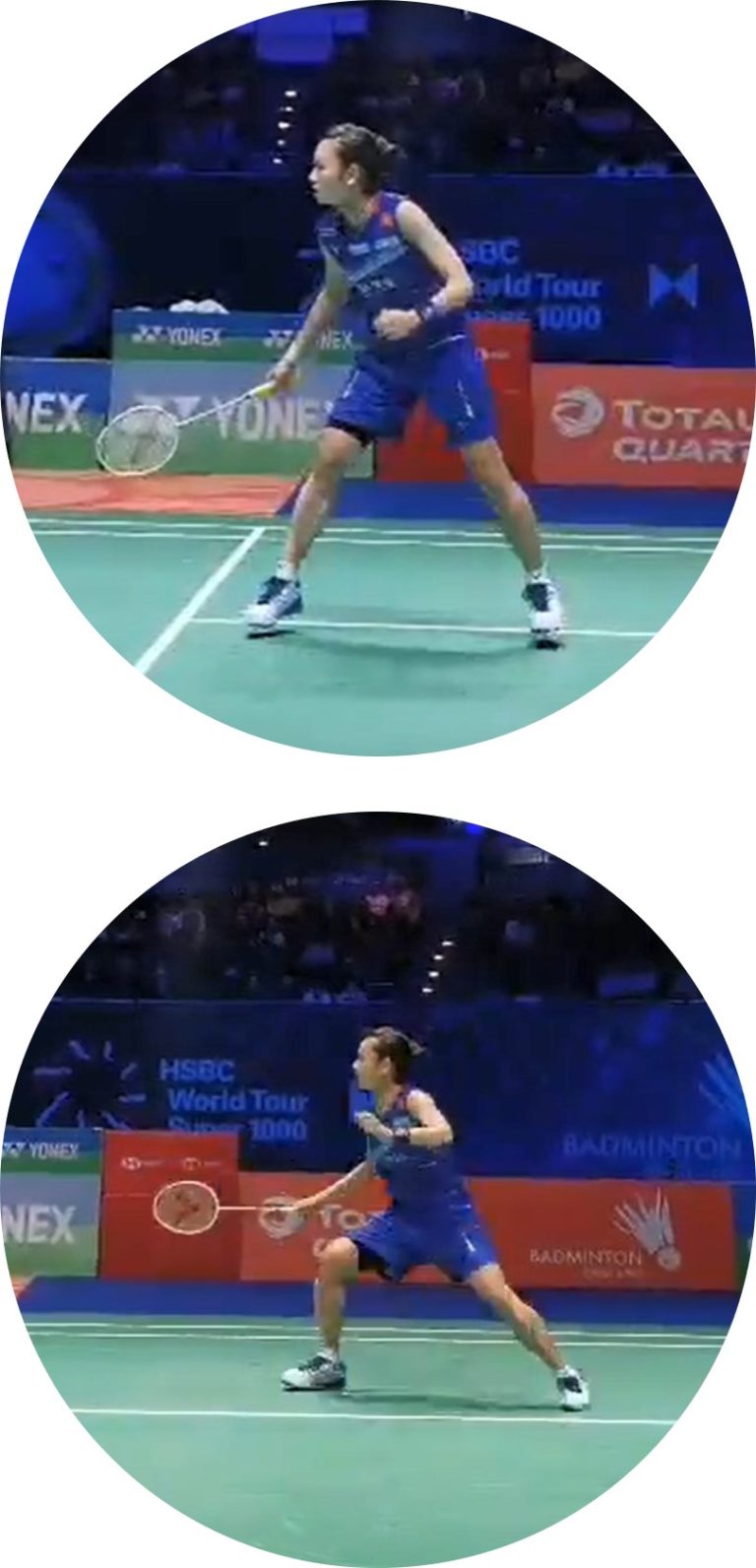
Forward attacking
The shuttle is at or below tape level, and your opponent is unable to hit downwards
If you have watched the video, hopefully, you will agree that this stance is easy to see and is used often in rallies.
Look for situations when your opponent is about to play a defensive block or net shot.
It can also be used when you have put the shuttle deep into your opponents’ rear court, behind them, and you think that they are unable to hurt you.
It provides a position for quick forward movement, and allows for tactical anticipations, reducing your opponent’s weapons
Sometimes you will take up this stance in recovery from a net shot, and then it could be argued that it’s just part of the recovery. I’d agree with that.
- This is a deliberate movement
- Stance is with the racket leg forward, pointing towards where the shuttle will be struck by the opponent
- Legs wide apart, with knees flexed
- Racket position “on alert”, hand cocked
- Movement into the stance is often directly after playing a previous stroke
- You could think of it as recovery from one shot or early preparation for the next as it’s often a seamless transition
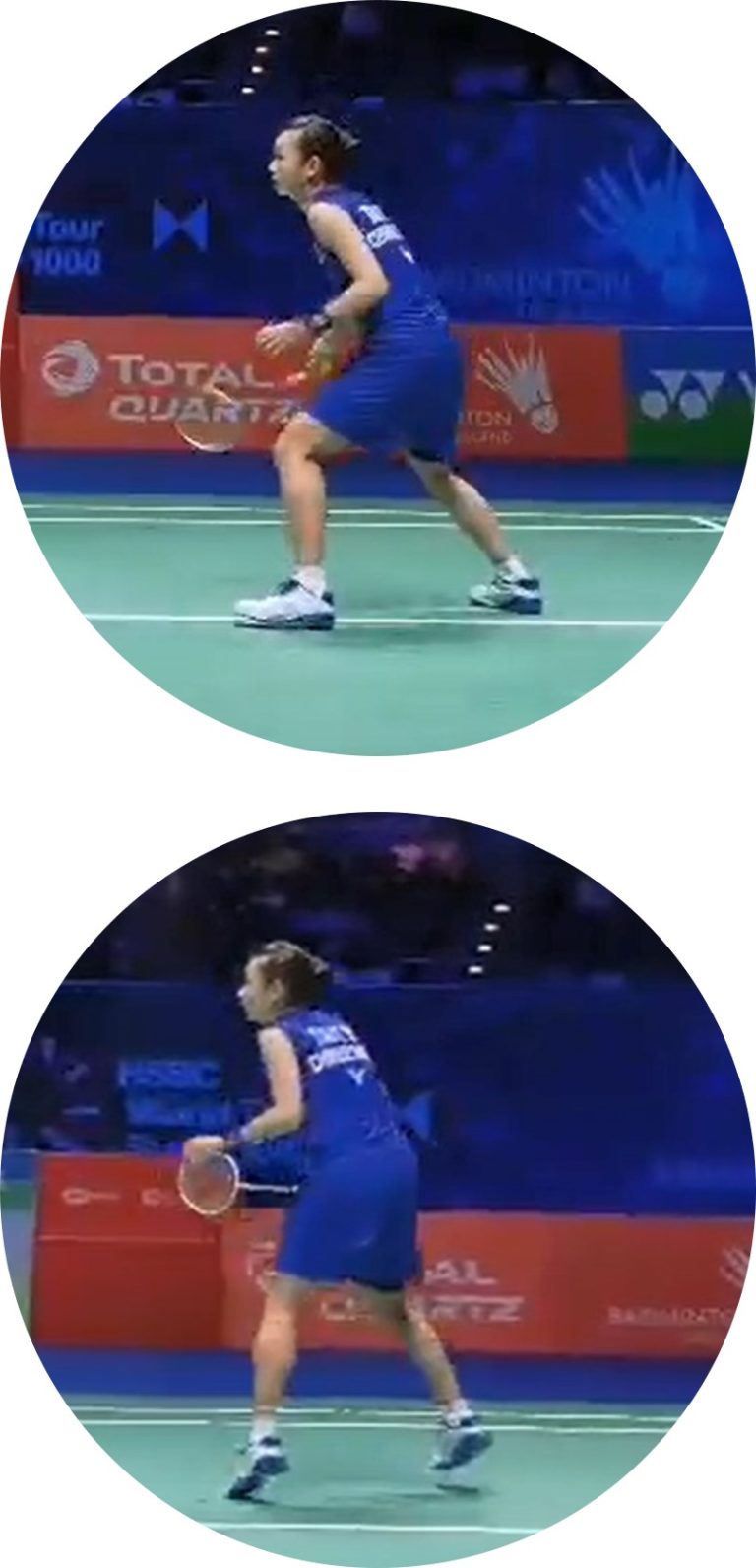
Backward attacking
The shuttle is at or below tape level, your opponent is unable to hit downwards, and you are anticipating a stroke into your rear court.
It’s this anticipation of an opponent’s lift that causes players to take up this stance.
Most often seen in the backhand side of the court, the stance will allow faster movements into your round the head court.
After you have played a defensive block or net shot. It will provide you with the position for quick backwards movement.
As this stance is not as commonly used as the forward attacking stance, it may cause your opponent to reconsider their shot if they intended to play a lift.
The backward attacking stance is very similar in appearance to the receive of serve, although it happens within the rally.
Not all players will feel comfortable in using this stance, as it exposes possible weaknesses. However, for some players, it’s a great way to exploit their strengths and cause the opponent tactical difficulties.
Be aware that your crosscourt net area is now ‘exposed’.
- This is a deliberate movement
- Stance is with the non-racket leg forward, pointing towards where the shuttle will be struck by the opponent
- Legs wide apart, with knees flexed
- Racket position “on alert”, hand cocked
- Movement into the stance is often directly after playing a previous stroke
- You could think of it as recovery from one shot or early preparation for the next as it’s often a seamless transition

Defensive Square
The shuttle is above the tape, and your opponent is able to hit downwards
It’s probably the easiest of all the stances to see, as it certainly appears after a high service and after lifts or clears to your opponent’s rear court.
Whenever you think that your opponent is likely to hit down hard, you’ll adopt this square defensive stance. This position enables quick, easy sideways movement to cover their fast smash.
All players should be comfortable in adopting this stance.
It will aid defensive situations to ‘cover’ the shuttle that will hit their court first i.e. the one with the least amount of time to move to.
The exact position may vary depending on how wide the opponent is in the rear court, and you may have one leg slightly in front of the other. These are subtle (but essential) variations.
- This is a deliberate movement
- Square is a square-on position, shuttle above the net and could be struck downwards by an opponent
- The racket height will vary in different tactical situations, but generally, it is low and not up around the chest height
- Wide legs, wider than shoulder-width with knees flexed

Receive of Serve Stance
A stance that is taken up at the start of a rally, just before your opponent serves
It is very similar to the backward attacking stance described above.
However, in this case, you will have much more time to wait and prepare before moving.
I think the most important aspects of this stance are the thoughts players have just before they stand to receive.
If you want to read advice and recommendations about how to use the gap in between rallies, go and read 6 Ways to use the Rally Break
When they are used?
The use is based on “Considerations”
There are certain ‘considerations’ that apply to the use of these stances. However, these are considerations, not rules.
They are used between most badminton movements.
Often looking like ‘automatic’, ‘without thought’, movements.
The majority of badminton rallies (in singles) are full of many occasions when an Early Preparation stance will be required, as the opponent may have several options.
Players will have to select the appropriate stance. Hopefully, these guidelines will help.
-
Everything depends on
- The height of the shuttle on the opponent’s side of the net
- Which shot they play that will hit your court first
- What your opponent(s) has done previously in the match
- Your intentions (you must have some)

Sometimes no stance is required
As with nearly all aspects of playing there are very few certainties, absolutes.
This is the same with stances.
Not every stroke/movement will end in a preparation stance before moving again.
Often, when you have to move very fast or believe that the opponent’s options are limited.
Your tactical thoughts
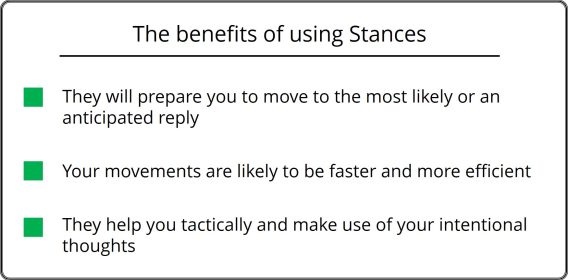
Stances offer you an opportunity to move/prepare before your opponent strikes the shuttle
So why not take up this opportunity?
Take up a stance with the intent of affecting what happens next.
This is your tactical choice and could be described as anticipatory; the more you use them and experiment, the better you will become.
Can you think of these situations?
When I was initially introduced to stances, my coach used the phrase “prepare to cover the opponent’s shot that will hit your court first”.
This statement will not explain all the stances promoted here, but will act as a simple introduction to the more complex tactical and anticipatory thoughts later.
Click on this image to read more information.

Be aware:
There will be some situations when you don’t take up a stance and just move quickly to where the shuttle will be going.
An example would be when a smash has been played, and it seems ‘almost’ certain that the opponent will play back to net as they are either struggling or out of position.
It’s NOT all about always standing square
And certainly NOT all about returning to a central base position
Developing Stances in practice
Single-shot multi-shuttle practice is not the best way to practice your stances
The good news is that you don’t need your coach to feed you in order to develop your stances.
The bad news is that in order to practice them, you must be playing rallies or at least mini rallies.
-
Ideas for you to try
- Always consider which shot your opponent could play that will hit your court first, and prepare for that.
- Use the rule ‘if the shuttle is above/below the tape then...........'
- Remember it’s not just about standing square
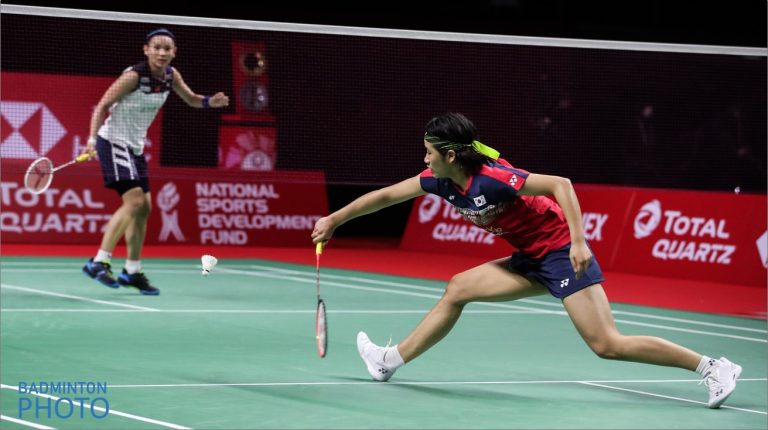
- Why not start the practices with you holding the shuttle and ‘feeding’ your partner (see the post image below)
- Watch as many videos (especially those filmed from the side) as you can. Examine the footwork and look for, even count, the different stances they use.
- Sometimes there is no need for a stance, just move.
- Ask your coach to set up practices that allow you to use different stances when you decide.
Send me a Question
I’m always grateful if you have read this far.
If there is anything that you have read that has helped, or that you disagree with, then please send me an email.
It would be great to hear from you contact@badmintonandy.com