
Its a skill that needs to be developed
What to consider to give yourself an advantage?
How to structure practice to increase its effectiveness?
It’s your first opportunity to win the point, influence how the rally starts,
or influence the server before they serve
You can return serve without a plan if you want to
but why would you do that?
The technical aspects
Please don’t assume that if you master the technical aspects, you will become great at receiving a singles low serve.
The technical aspects are only a small (but essential) part of this skill.
I’ve placed this section as the first part, so we can establish what is required, then concentrate on the skill aspects in the other sections.
The tactical ideas rely on you having established most of these technical elements, so I guess they are important, in part.
As always, there aren’t many (if any) absolute ‘must do’s’
There is plenty of scope for you to do things differently to suit how you play
3 Crucial aspects you need
How and where to stand to receive
Stand wherever you want and in any position you want
My recommendation is to try out different positions and certainly be prepared to adapt as you improve.
If you want to become great at receiving a singles serve, you need to be positioned so that you can ‘pressure’ the server.
Stand close enough to the service line that you can do this. How close, that is the question.
I recommend that you be in a position where, when you lunge (bring your rear leg forward), you are striking the shuttle at least over the service line, if not a little closer to the net.
Don’t have to stand as you would in doubles; beware of the flick!
Prepare to move
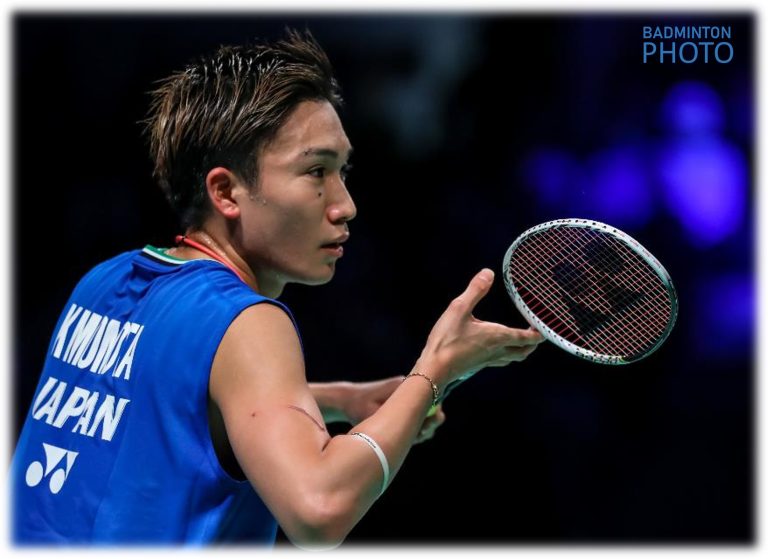
You must “Load Your Legs!”
That is almost all you need to know and do: be prepared to move quickly, fast, with speed. However you describe it, just be prepared to do it.
It’s vital that not only should you load your legs with power, but you should also show that to your opponent.
You could also use your eyes to show the opponent that you are ready to move fast or that you are ready to ‘pounce’ on them!
Hopefully, this is something that you already know and have been doing.
Your racket
Don’t skip this!
This is so obvious that you may skip this section, but it’s a very important element.
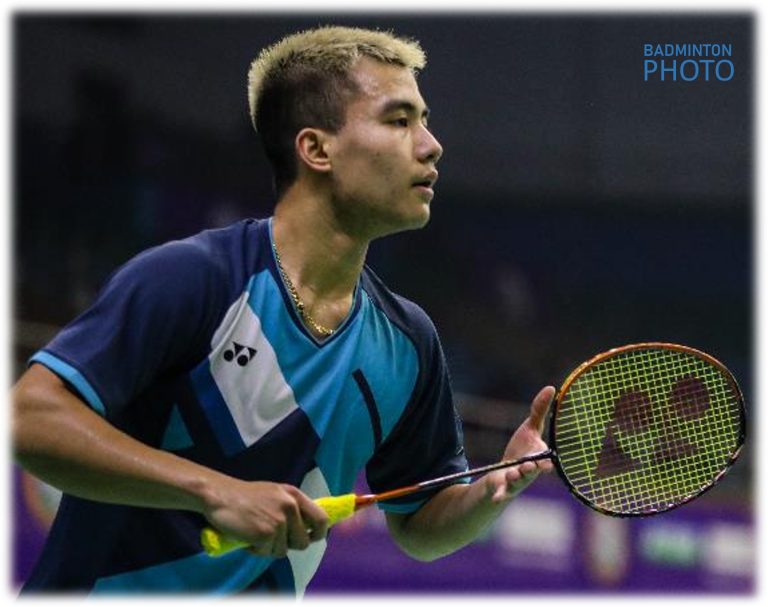
It’s vital that you prepare your racket so that you can use it quickly.
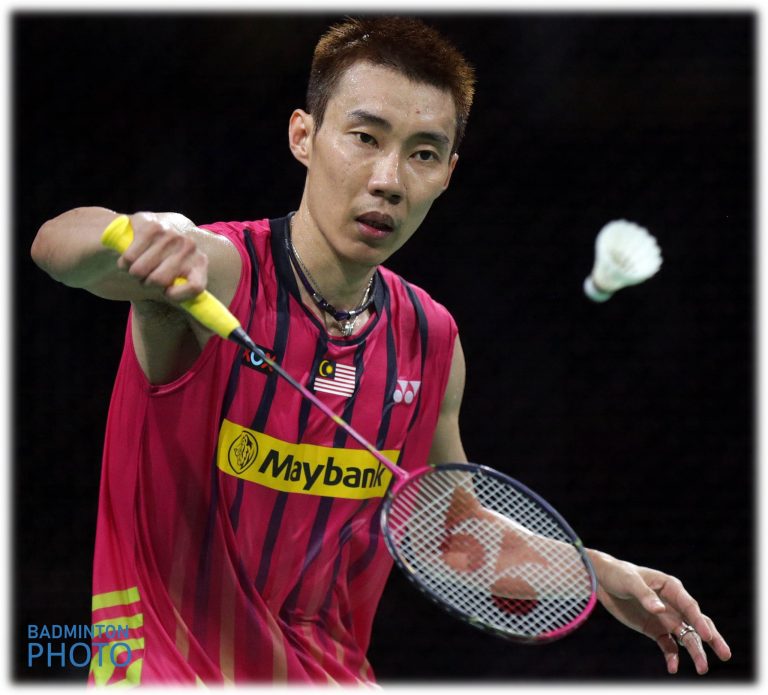
Also, it is important to let your opponent know that you are ready to use it.
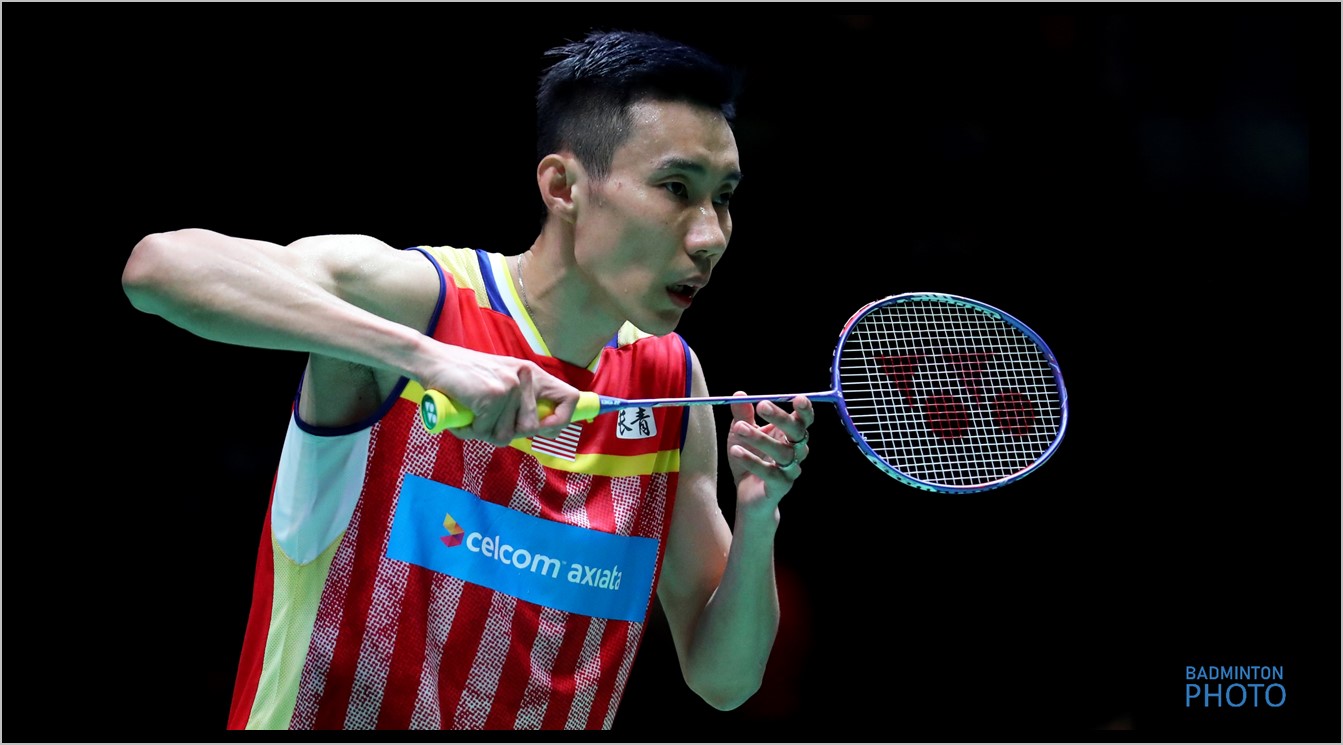
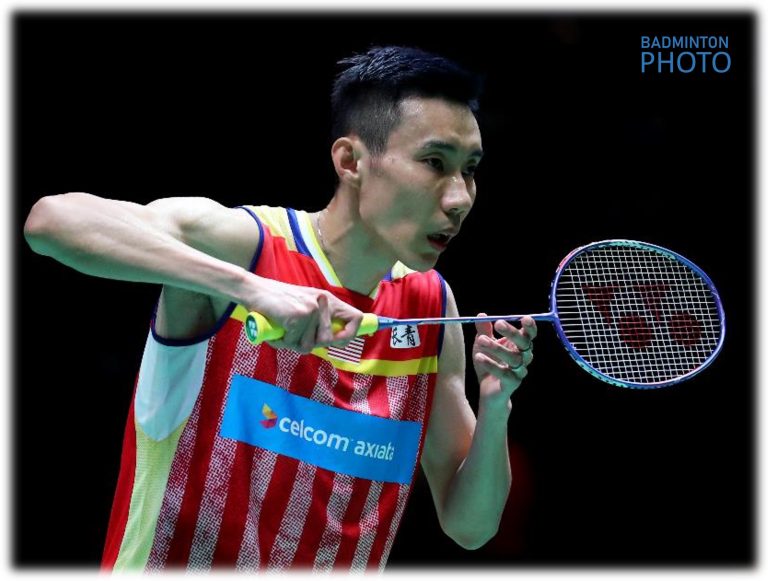
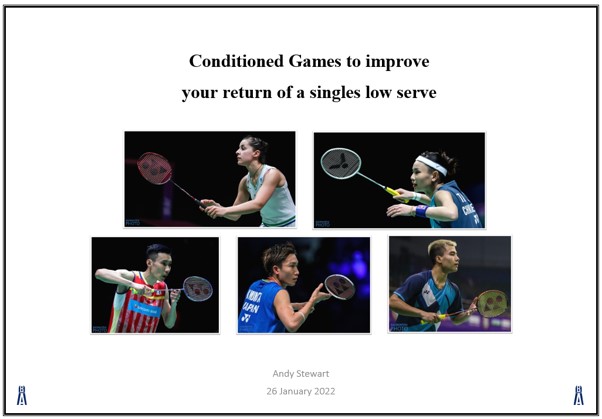
Look at these pictures and think about the impact they would have on you if you had to low serve in singles against these players.
The tactical aspects
What do you think –
how tactical is receiving service in singles?
The return of service is a highly tactical situation
Possibly not everyone will agree with that, as they believe that it’s just the start of a rally.
There are so many choices (options) for the receiver to think about making; these happen in the form of your thoughts.
Hopefully, you have used the previous rally break to start your planning.

Be prepared to consider these points during your ‘preparation’
All these thoughts go through a players mind before returning.
This is the ‘plan’ in your mind. What happens next might differ from your plan, but often uts based on the ‘intent’ of your plan.
- How do I want to appear to my opponent, what would I like them to believe about my intentions?
- Where am I likely to play my first stroke?
- Shall a spin or not – a very important thought!
- What margin for error shall I give myself, or is it an opportunity to gamble?
- How does my opponent look, can I use what I see/feel to my advantage?
- How do I want the next 3 shots to ideally work out?
- What returns have worked positively previously to set up the early part of the rally?
- Is this score a trigger for me to try and do ……. (you decide what)
Prepare with intent
“Help your players to prepare with intent”, was the advice given to me by my mentor coach.
I didn’t realise what he meant or the full impact until years later.
My challenge was how to coach this to my players, not just by talking to them but by creating situations that enabled them to experience, reflect and develop. It certainly was different to helping them improve technically!
I later found that there wasn’t a ‘best way’ to do this, but it worked best if I created a combination of experiences for them (and me): doing, reflecting, listening, questioning.
My best coaching efforts came in finding the ‘prompts’, the questions, and situations to help players.
However, the biggest player improvements came from them seemingly taking charge of what they did on the court when receiving.
The players who seemed great at receiving serve looked like they ‘knew’ what they were doing.
It’s difficult for me to tell you how to ‘prepare with intent‘
I can only reccomend that you explore how to create it, and what it feels like to you

Visualise what will (could) happen
The gap between rallies is there to be used, why wouldn’t you not use it!
Before you take up your stance, are you able to picture what serve you hope your opponent will deliver to you and how you want to return it? It’s important and vital to picture something.
You need to put yourself into a mindset. How do you want to feel?
Here are two simple words that describe two opposite feelings, but both can be positive.
Choose between “Steady” or “Go!”
Put yourself in a “Go” state
You have decided that you are going to be aggressive and will try to dictate what is going to happen in your next 2 strokes.
This may mean being or looking super aggressive (they are not the same), or it may mean that you are prepared to work hard to retrieve all the shuttles that come back.
Possibly taking a few risks, but being comfortable with that.
The score of the game or the criticality of the moment may have influenced your choice of being in a “GO” mindset
Or is this a moment to be “Steady”?
You decide that you need to relax a little, yet still be ‘switched on’ to whatever your opponent may do.
You will be careful over your choice of strokes, and you are determined to keep the shuttle inside the court.
Your mindset is determined not to give your opponent any ‘easy’ points.
If you see this as a defensive mindset, that is up to you. However, it is not a defeatist mindset; there is a big difference!
Visualising what could happen may be mentally tiring
It’s a skill that needs to be developed alongside all your racket skills
How to influence the server
“increase server tension”
This is legal, and I’m not suggesting that you verbally abuse your opponent.
Just let them see that you are ‘ready to play’.
It is important that you realise that the server can be influenced, and you will be part of this.
You may know this already, and if you do, please let me know if you agree with these points.
Are you doing these things?
- Take up a stance that shows you are ready to play: legs loaded with power as if you are ready to pounce.
- Make eye contact: let them see that you are ready and have a play, can you transmit that through your eyes?
- Have your racket ready: it doesn’t have to be like your doubles return of serve racket position, but it’s important that it looks like a threat.
- In every rally approach the shuttle “As If to…” : as if to play a net shot, … as if to play a flick, … as if to rush the attack, (you decide).
- Prepare traps and create doubt: can you use what you have done in previous rallies and lay a trap for the opponent. From the start of the match, ensure the opponent sees and feels how you prepare to receive service, the way you move towards the shuttle, and the strokes you play. Then at crucial scores, you can, decide if you wish to use this as a ‘bluff’ and then do something different. Or, take up a slightly different preparation and let them see this, what will they now be thinking?
- How fast can you move forwards to the shuttle: have you been practising an aggressive approach towards the shuttle. You don’t have to strike from in front (you could) but you can also then delay the moment of striking.
4 examples to try
Be deliberate in thought, preparation and action whenever you practice receiving a low serve.
Always practice with a player who will act as if it were a competitive match. It’s very important that in practice, you are both motivated so that you act as if you are both playing a real game.
Of course, you and they can run through a series of scenarios that you want to explore together first.
However, it is only with both players being committed to the actions and thoughts that you’d have in a real match that you can test if you are developing.
Send me a Question
I’m always grateful if you have read this far.
If there is anything that you have read that has helped, or that you disagree with, then please send me an email.
It would be great to hear from you contact@badmintonandy.com

![Introducing the badminton overhead – Challenge No.3 - Duplicate - [#36874]](https://badmintonandy.com/wp-content/uploads/2023/05/Badminton-Forehand-Overhead-3-scaled-1.jpg)
![Introducing the badminton overhead – Challenge No.2 - Duplicate - [#36821]](https://badmintonandy.com/wp-content/uploads/2023/05/Badminton-Forehand-Overhead-2-scaled-1.jpg)
