
Have you ever been invited to a sparring session?
It is an essential training element and a different form of practice
What can you do to create your the best sparring experience?
What are the elements of a great badminton sparring session?
It’s not just playing games
The Badminton Coaches guide to Sparring Sessions
If you want to know how to create a great badminton sparring session and the questions that coaches have been asking, click on this image.
It will give you some thoughts and ideas to the obvious question, 15 of them!
What is badminton sparring?
This term is used to describe many things but for me, it’s when practice moves from co-operating into a competition.
It doesn’t just have to be playing games to 21 points, it can be so much more than that. Remember, it is still a practice session (of a type) so ensure that you are still learning, even if you are not winning.
It is when you try to win more points than your practice partner, who has now become your practice opponent. This is important as now the aim is to WIN points, but may also be to STOP them from winning points.
Not all sparring sessions will be the same
It could be early in the season after a hard physical training block, maybe even part of the physical itself. It could also be pre-competition (less than 2 weeks away) before the biggest event of your season.
You may be one of the best players there and feel the need to show your position. However, that is for you to decide.
Alternatively, you could be one of the weakest (up and coming) players and need to be ready to show some resilience and grit to survive what could happen: are you ready to lose all your matches? Remember the score isn’t always a representation of how you perform.
Ensure that you understand the different types of badminton sparring
be prepared for the different themes set by the organisers
It’s all about you
You need to know why you are there and what you want to get from the session
It’s important to bring your competition mindset to the hall.
That doesn’t necessarily mean that you need to win every match, just like any tournament; that’s not normally possible. However, you must compete, no matter how you feel.
Sparring (or match) sessions are all about competing and learning.
We can discuss all the different types of ‘competing’ in later posts 🙂
Have you thought that it’s important to be a little more selfish than you are in normal practice?
This is preparation to help your competition attitude as well as test your current competition performance.
Yes, it is practice, but everyone is expecting everyone else to compete.
Bring your internal competitor to the court, no matter who you are playing or the theme of the match, and be prepared to compete

Are you the strongest player?
Use the fact that you would normally win against the players there.
Have a plan in your head; maybe you are prepared to lose or have much closer games. Of course, you can certainly just play hard to win!
It’s your choice; please use it wisely. Focus on winning by using certain tactics or test yourself; you could even experiment; all this is possible.
Experimenting with new different tactics or shots is much easier if you either are not threatened by the fact you might lose or you feel confident that you will win anyway.
By experiment, I don’t mean trick shots I mean to try new strategies or emphasis on a certain area of your game.
For example, you could defend more by giving away the attack, or try to play as fast as you can with good speed, or decide to test yourself mentally by setting different targets that only you know.
Are you the weakest player?
If you are there as a weaker player invited to spar, then trying to win is a good objective, especially if there are higher-ranked, stronger players than you would normally play against.
Be aware that it can be mentally draining if all your games turn into defeats, but that depends on your mindset.
Use the opportunity and make it as tough as you can for all the opponents to play against you.
Deciding not to make service return errors, or limiting the number of times that you hit out the side of the court are easy targets to start with (is that possible for you over say 3 matches?).
Listen to the coach’s advice and, if needed, be prepared to act as a true sparring player and play in a style asked of you by the coach in order to help others improve.
- To test your newly developed skills (Practice performance doesn’t always translate into Competition performance)
- To try out things you never would in a real competition (to play without fear)
- To test if you can expose weaknesses and poor strategies in other players (aim to test every person you play)
- To let others know that you are a ‘force to be aware of’ (it’s sometimes good to show people how good you are!)
Whatever happens in sparring sessions, make sure that
YOU come away with something just for you!
Why it’s not always about free play
Some players and coaches believe that badminton sparring is just playing games
They believe that all games will be played to 21, sometimes 1, 2 or 3 sets, but this isn’t necessarily the case.
There are many reasons why the session might include alterations to rules or themes/conditions for each set of games.
Be prepared to consider every change. I hope that you find a challenge and something ‘just for you’ in nearly all the games.
You may feel happy, challenged or uncomfortable!
If you were expecting free play matches (with no alterations in scoring or tactics) don’t be disappointed if it’s different.
Ok, some sessions will just be games and that’s perfectly acceptable; in fact, it’s often essential.
If it’s free play then now it’s your job to take charge, create a plan, get onto the court and perform 🙂
However, there could be alterations to free play that don’t suit you; they make you feel uncomfortable, even angry. 🙁 Be prepared for this.
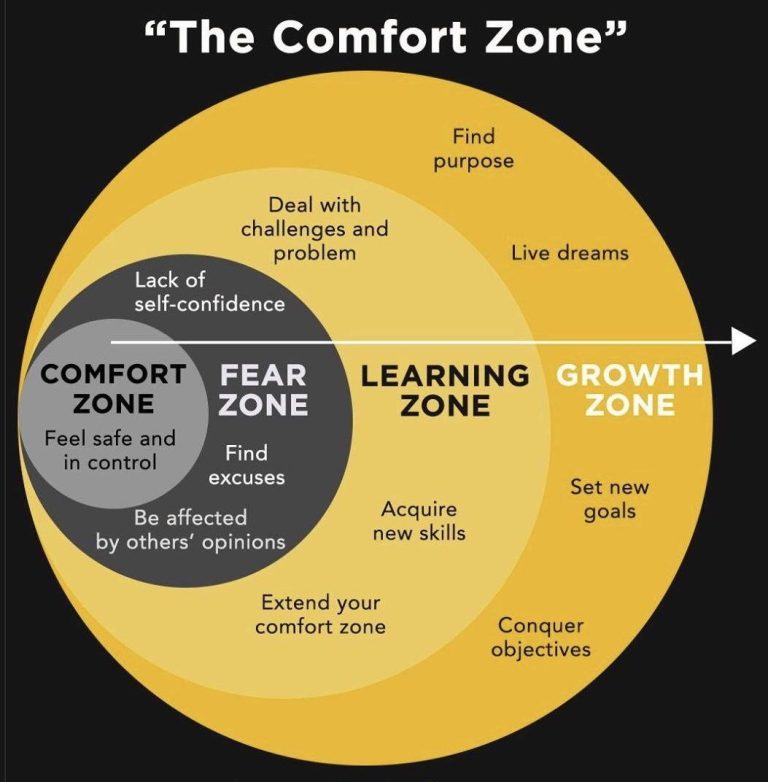
It’s essential that sometimes you feel uncomfortable. Those feelings dont have to be negative.
Remember, badminton sparring should be designed to prepare you for match play, by replicating these situations and feelings, you should feel emotional.
Reasons and your reactions
The rules (conditions) favour your opponent and not you … make them work extra hard to win the game; relax, wait for games that favour your style and mindset.
You can still get something from this match.
The tactics asked for do not suit your preferred style of play … I’d hope that you already have a range of styles that you can play. Decide if this game could become something you could adapt against certain opponents, in certain situations and conditions.
You must have more than 1 style 🙂
It’s something new that you have not tried before: … Why complain until you have experienced it? Then complain or get angry by yourself if you want.
It probably won’t help you, but if you enjoy getting angry at yourself, go for it 🙂
You think that it’s a ‘stupid rule’ (your words not mine!) … talk with the coach and ask them to explain why the rules (conditions) are important and how they will help players in a real competition.
Be aware that not every game can be justified!
If the sparring is just before an important event, be aware of your feelings
The style of matches (the conditions) may not suit you, however you can still control your mindset
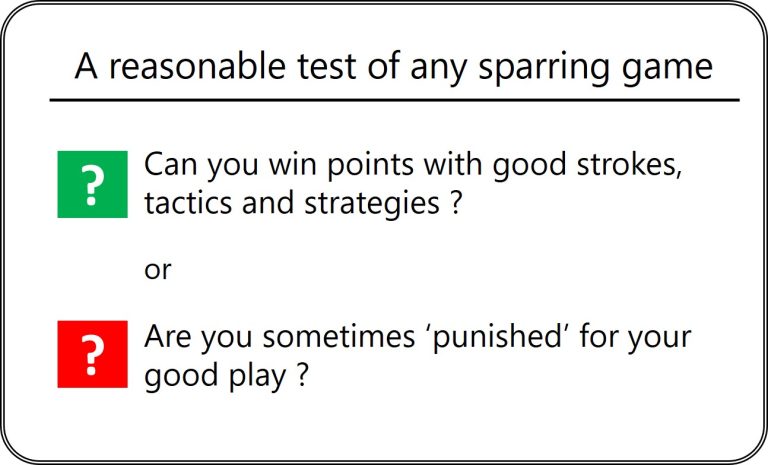
You must be able to win points
You must feel like you are in a competition and be able to win points
This may sound obvious but it doesn’t always happen!
Sometimes coaches and organisers ‘over-condition’ sparring matches.
Games become too complex or have ridiculous rules that prevent you from winning points when you’ve played well.
Consider the rules below and decide if, like me, you believe that they do not allow for games where competition is game-like.

Understand that there will be rules to help everyone
Expect the coach or the organiser to set out some rules at the start
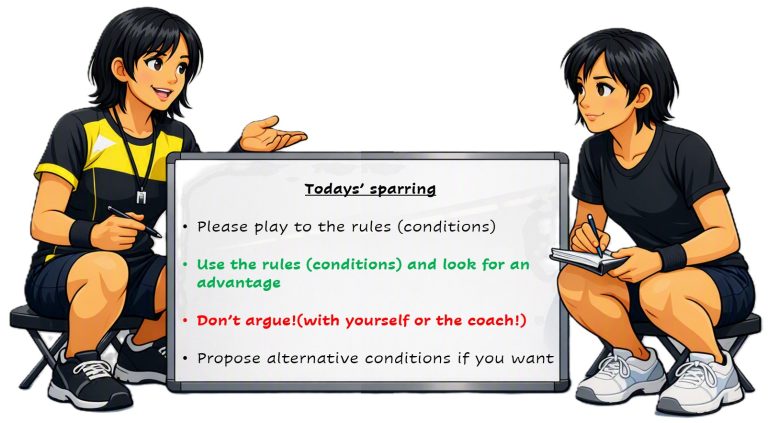
Listen to them, understand the format, and decide on a strategy for each game.
Is it one that immediately favours your style, or is it one that you will have to work hard just to stay competitive?
Please, please play to the rules!
I’m sure that within the most reasonable rules (conditions) there are opportunities for everyone to learn and develop. You may have to work hard to find them, but it’s an enjoyable challenge.
If you find that there is a rule that you have never heard before, don’t panic. Just because it’s new to you doesn’t mean that it will not favour you.
Relax, consider the opportunities and only then ask a question if you need to.
The rules should allow you to experience and play as if in a competition
If not ask why 
Be prepared for disagreement & challenges
Be respectful but still challenge
In any collaboration, there will be times wh
Great collaborations will involve both parties exploring what happens on the court in game-like scenarios that require ga
Unfortunately, in my early years, I couldn’t listen with an open mind
What type of games to expect
There are many games to experience in a sparring session
The games can vary from free play all the way through to heavily conditioned games that may not make sense to everybody.
You will be surprised by how many subtle variations coaches use when creating games.
Be prepared for different games, but really it’s all about how you can manipulate your tactics, create stress in your opponents, manage your own stresses, and if they are there, win the bonus points.
Then within every game, there are the ‘hidden’ thoughts of each player. How you react to a game and the thoughts you have can easily create even more games within each.

I’ve known players to condition/restrict themselves in ‘Free Play’ games
No one knew except them, and they did it for their own positive reasons
Send me a question
I’m always grateful if you have read this far.
I’d really like to know what you think are the components that make a great badminton sparring session.
Are they similar to the ones above, if not, please send me some thoughts and ideas?
It would be great to hear from you contact@badmintonandy.com


![Early Preparation always - Duplicate - [#38141]](https://badmintonandy.com/wp-content/uploads/2026/09/early-preparation-always-scaled.webp)
![Keep your racket up - Duplicate - [#38056]](https://badmintonandy.com/wp-content/uploads/2026/09/keep-your-racket-up-scaled.webp)