
What are the components of great court movements?
Mastering these save you energy
You will get shots faster and you’ll see the game differently
Do you want to explore different types of movements,
plus understand the value of stances and anticipatory skills
They key to movement practice is to move as you would in a match
Consider all movement types
Having good movement skills will make you faster on court.
Good movement skills will also cause less stress on your body in the long-term and be more efficient, therefore saving energy in matches.
Ensure that you practice all different types of movements and are able to combine them together. It’s very unlikely that one type of movement will always apply in a given situation.
No matter what you hear from coaches or players you will need to be able to combine all or some of these movements when playing the same strike.
Be flexible in your thinking and look to include all these in your practices
-
Chasse
-
Running
-
Lunging
-
Stopping
-
Starting
-
Stances (all 3 of them)
Don’t just practice one style and presume that it will be applicable to all court movements.
For example : Some people believe that you should always chasse in the forecourt going to the net.
Take a look at different World Class players and you will see both chasse and running steps.
Running is faster than a chasse technique, especially over a longer distance.
However, a chasse movement maintains a sideways approach which is important.
A chasse is also great for shorter distances and is desirable when combined with a strong ‘foot out’ in approach.
Be careful that you don’t set up your practices to prove your theories
As you grow stronger and your body changes shape, your movements will change. Be prepared to adapt and use these changes to help yourself.
It may mean a change in your thinking or questioning your coach.
The key is to be aware that as you change physically and mentally, plus technically and tactically, you need to adapt your movement.
Therefore, not all the things you did 3 years ago need to apply right now. I’m recommending that you have an open mind before reading the rest of this post.
Be parepared to test your convictions and take into account
maturity, technical skill level, tactical desire, and physical condition
Recovery is important
The recovery part of badminton movements is often forgotten in practice.
However, it plays a vital part when changing from one movement to another.
An efficient, well-timed recovery will speed up how quickly a player can use their early preparation for the opponents next shot. In practice, allow for recovery as part of the stroke practice so it’s an early preparation for the next.
For example : net shot lunges do not just finish when the shuttle goes over the net
Recover by moving slightly backwards and pre-loading your legs in preparation for the next movement. This is really only effective if the same shuttle is returned.
Practice recovery for all strokes: good or not so good
It is important to practice recovering from all your strokes, good or poor.
Why should it matter?
Because they both happen in a match.
Again, this is difficult if the same shuttle is not returned by the feeder/coach/opponent.
Understanding what to do when your shot is not ‘perfect’ (and how little is it ever perfect) is very important.
For Example : The recovery after playing a Round-the-head straight slow drop depends on the outcome and what your opponent may or may not do. (so there will be different types of a recovery)
Remember, you start your recovery well before the opponent strikes the shuttle.
Can you feel and anticipate what may happen next as soon as you strike the shuttle,
it’s important that you anticipate, prepare early for the most likely stroke
Early to the shuttle
As a basic, players should, if tactically applicable,
try to take the shuttle as early as possible
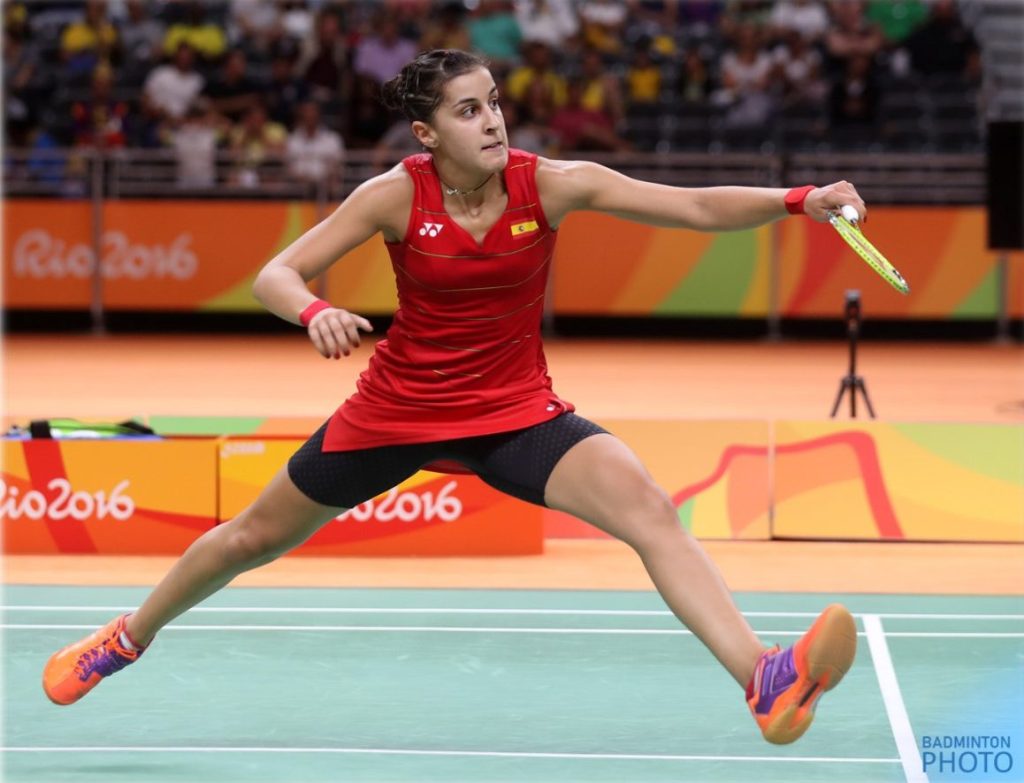
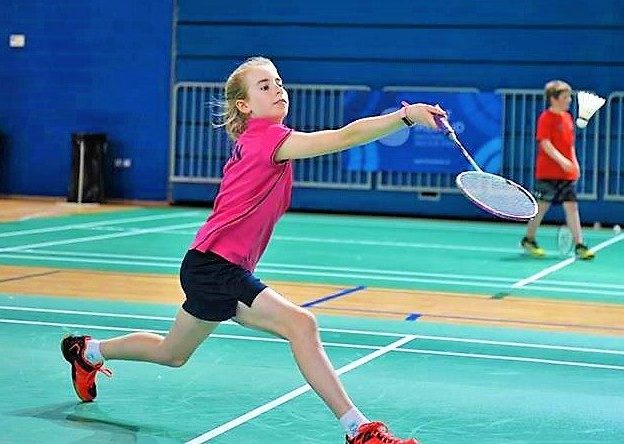
It’s important to instil this concept in developing players.
The movements and techniques are important, but it’s more about a mindset. Using this will help players to …
- strike the shuttle early, reducing the time for the opponent to react and move
- start to prepare their racket and body earlier – an 'early preparation' has many advantages
- find that they have more opportunities for deception
- find that they can play different strokes or a variations of the one they intended
- start to move faster (if they can cope with the increased physical demands!)
Doing this often results in one or both feet off the court.
Vertical and sideways jumping are important, but master other movement skills first.
Jump lunging and long stepping will also help players to take the shuttle early, especially below shoulder height.
Have you read this post 6 Ways to coach racket preparation at the net
Stances
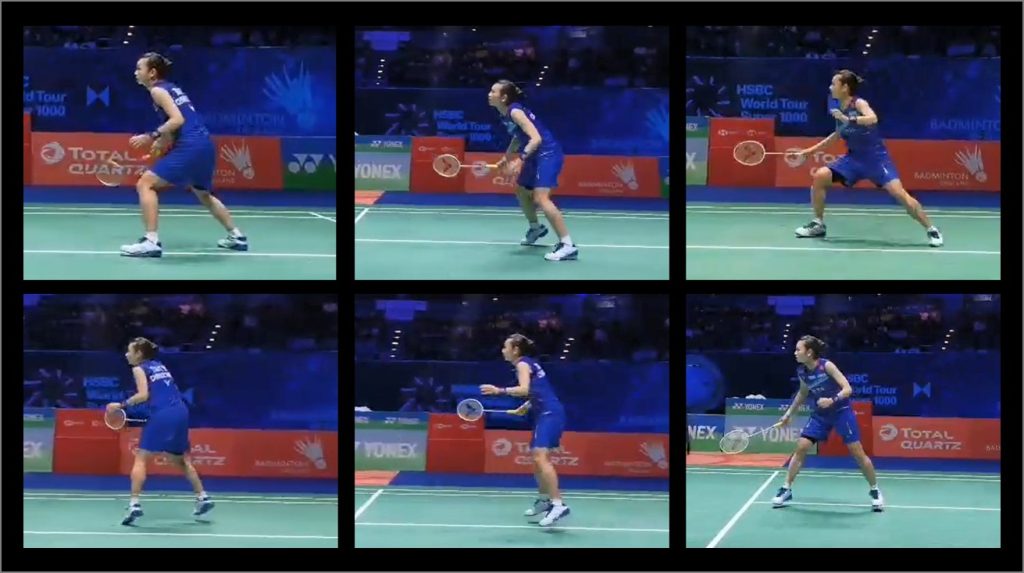
The 3 stances often seen in badminton singles
These stances are
… The Forward attacking stance
… The Square defensive stance
… The Backward attacking stance
click on the image to read more about badminton stances
All these stances are ‘anticipatory’
They are adopted before the shuttle is struck by the opponent.
Either as a timed transition between movements or as ‘early preparation’ at the end of the previous stroke/movement.
However some movements (the transitions between one shot and another), don’t use any preparation stance, eg the smash into a net kill.
Stances will vary depending on the position of the shuttle and the likely replies from the opponent. Consider the statements below.
“When the shuttle is above the net and can be struck downwards by the opponent,
use a square defensive stance”
“When the shuttle is below the tape and cannot be struck downwards,
use either the forward attacking or the backward attacking stance”
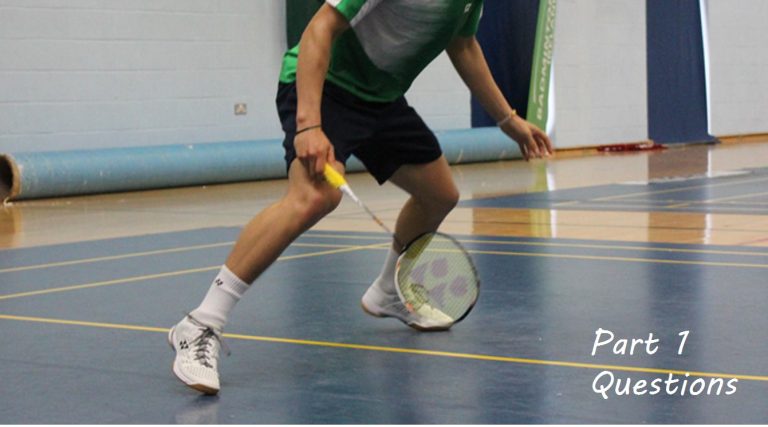
Pretension / Split Step / Preloading
These terms describe the same starting badminton movement.
Nearly all movements will start with a timed loading of the legs. The exceptions are described above.
The loading movement is often combined with adopting a stance
or
in the transition between other movements, such as when the recovery and early preparation are closely linked so as to look like one continuous movement.
Pretension, correctly timed, can increase the speed of the initial movement and will also allow the player to change direction quickly. This movement is ‘anticipatory’, meaning that it is started before the opponent strikes the shuttle.
If you are a player : take a moment and think about what you have been instructed by your coach
If you are a coach: what advice were you given about stances on your coach education courses
Are you encouraged to take up the split-step stance
before or after the opponent strikes the shuttle?

-
There are 2 situations to look out for
- an ‘early preparation’ stance at the end of the last stroke/movement, e.g. after serving or after blocking a smash. Often easy to see when watching a match as there may be a slight pause just before the movement
- or
- a timed transition between movements. This may not be as apparent as the previous one. The pre-loading is often derived from a ‘landing’ or ‘changing direction’ within the rally.
-
Questions for Players and Coaches
- How to incorporate this preparation movement into a practice that use real game-like situations?
- How to incorporate this preparation movement into a practice that use real game-like situations?
- What suggestions or instructions could be used?
- How do you ensure that the movement is anticipatory and not after the shuttle is struck
- How do you start the development of this movement with begginer players? (incorporating all the above)
- it’s not about shouting “split”
Anticipatory Skills
Good anticipatory skills are essential for quick badminton movements.
If you feel confident in your anticipation, you will find that you have ‘extra’ time to prepare.
The development of anticipatory skills is often overlooked in favour of technical or physical development. So, how are you ensuring that your practice develops your anticipatory skills?
Do you agree that a player can develop and improve their ability to anticipate?
It can be tested in situations where the player doesn’t know where the shuttle is going, but has enough information and confidence in their ability (to anticipate) to make an early movement or decisive thought.
The key to increasing faster reactive movements (anticipation and initial movement) in a match is to practice with indecision in training.

-
Do your practices include:
- the shuttle being returned by an ‘opponent’ and that same shuttle being used i a mini-rally
- game speed movements
- the ‘feeder’ / practice partner using a racket, preparing and moving
- opportunities for players to ‘see something over the net’ that allows a decision, an anticipation in preparation for the 'likley' opponents’ reply
- include rallies that end with winners and losers so that players can you can learn and adapt.
Send me a Question
I’m always grateful if you have read this far.
If there is anything that you have read that has helped, or that you disagree with with, then please send me an email.
It would be great to hear from you contact@badmintonandy.com

![Keep your racket up - Duplicate - [#38056]](https://badmintonandy.com/wp-content/uploads/2026/09/keep-your-racket-up-scaled.webp)