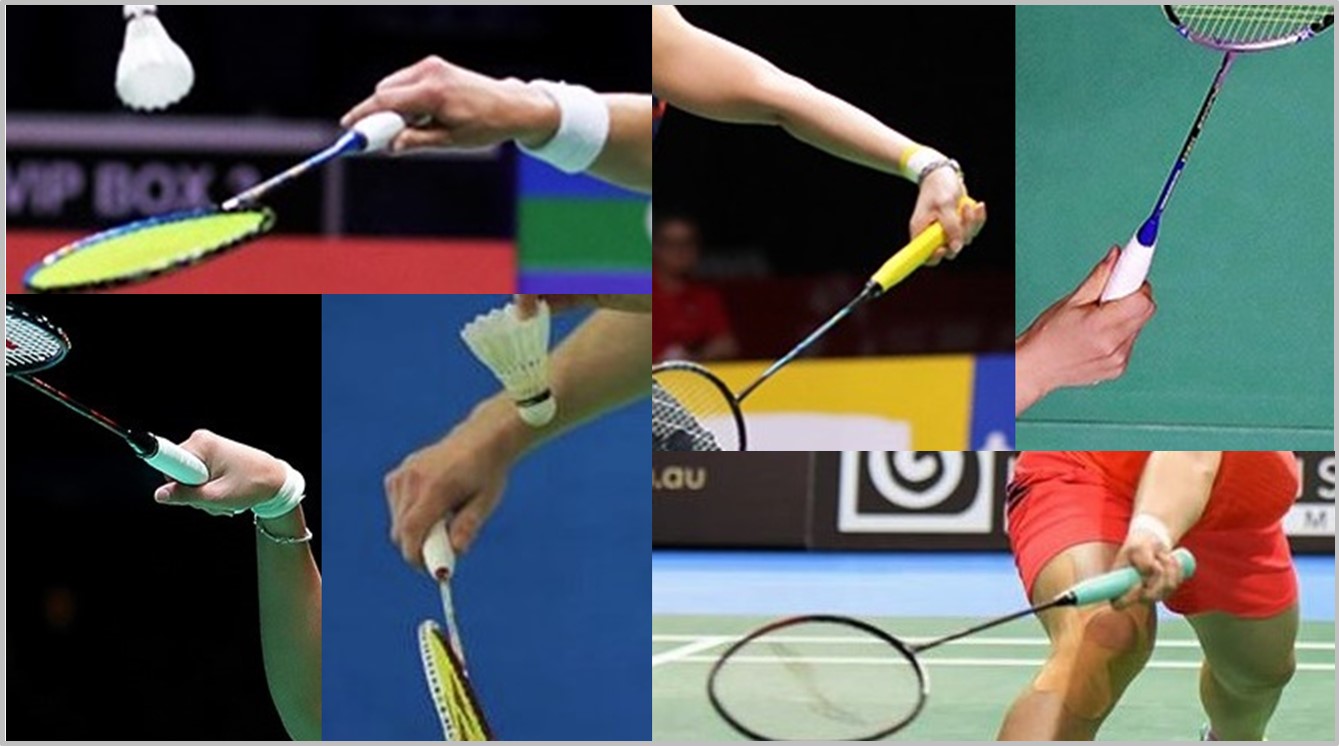
How a player initially starts to hold a racket is fundamental
It will influence their future development and their enjoyment
Some ways of holding will inhibit and prohibit the development
How do you ensure that effective badminton grips are developed by young players?
The way a person first hold or grips a racket can and should be influenced
Wallwork (wall striking practices)
A critical set of practices to encourage and develop a range of badminton grips
It also reduces the development of inappropriate grips such as the forehand ‘pan-handle ‘or the backhand ‘floppy wrist’.
Wallwork will develop an ability to play lots of shots with a similar (same’ ish) grip with only minimal movements of the hand and fingers.
I make extensive and regular use of Wallwork during the first 10-20 sessions when a player first encounters badminton without any previous coaching or instruction.
Wallwork would not be the only practice during a session, and I don’t recommend hitting against the wall constantly for 30 minutes. It can be combined with other tasks and games.

There aren’t many guarantees in coaching
However, using Wallwork practices certainly eradicates some of the classic grips and hitting problems such as –
‘Pan-handle’,
‘Finger Up the shaft’,
and weak ‘Floppy’ backhands.
Wallwork also develops …
- lunging on the racket leg
- early racket preparation
- flicking skills using hand cocking for power
- ready stances
- some elements of split-step/pretension timed moments
- trust in the coach and the tasks/challenges they set
- self-development and player led practices
The aspect of striking against the wall can contain many fun challenges,
Coaches will discover that technical skills can be established and progressed
with limited instructions that are easy to understand, within short practical exercises
Below shoulder strokes
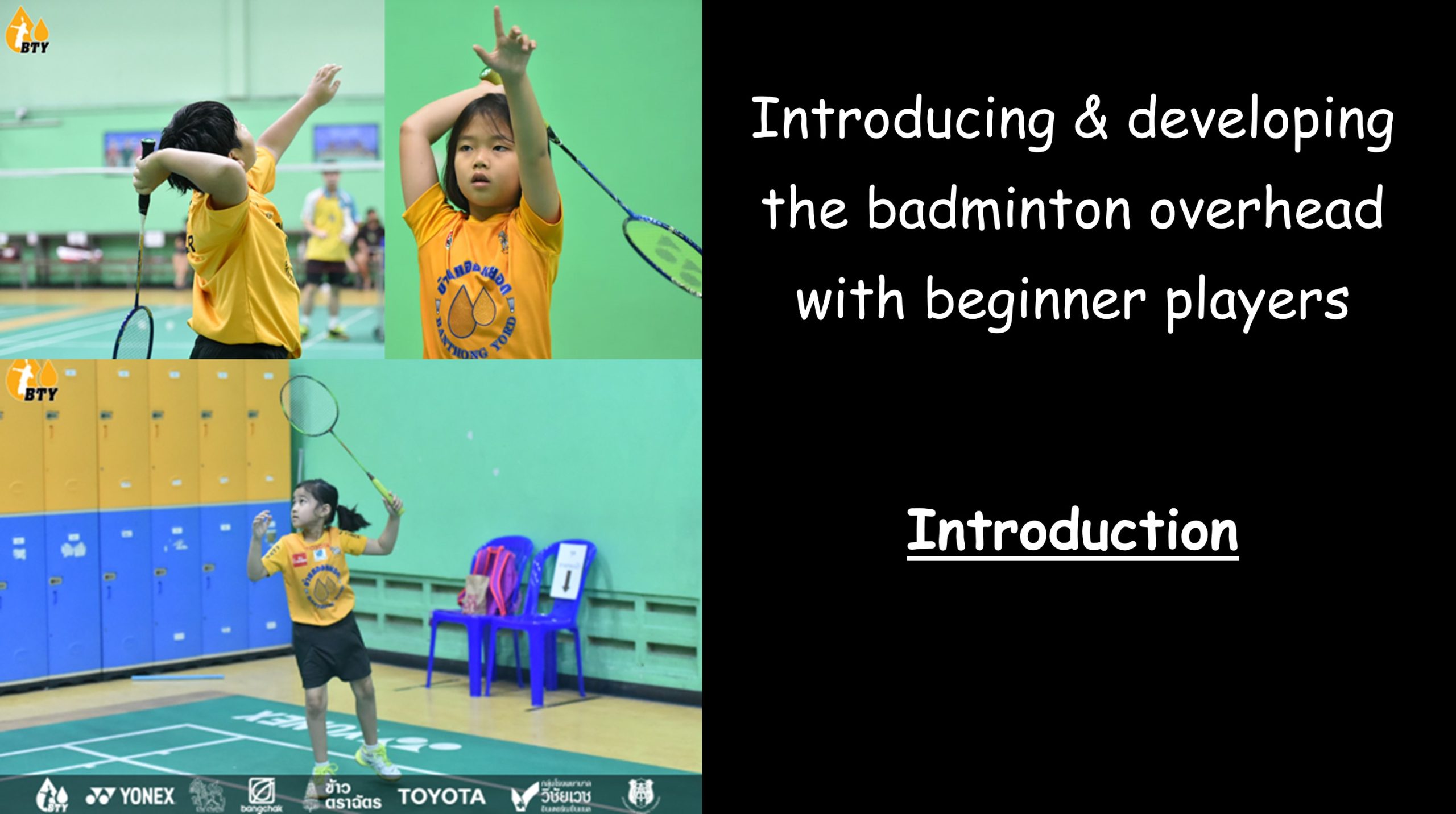
It can be problematic to introduce overhead striking as an early skill
I recommend that coaches initially use practices that focus on the development of below-the-shoulder strokes.
This will benefit the establishment of appropriate grips and limit the opportunity for inappropriate grips.
I do not recommend that striking overhead is introduced as an early skill
The potential for issues (grip/movement/motivation) is too high, so why take the risk?
Lots of possibilities for skill and technique transfer
Many below-shoulder strokes have similar and associated movements plus skill elements (tactical and decision making) that are easily transferable into other strokes.
Often with only small grip/hold adjustments, players will be able to play a range of strokes on the f/h and b/h, straight and cross-court.
Consider how many tasks, challenges, variations and game-like practices could be set up with the following aims in mind, that contain high levels of success, progression and player motivation.
- Flicking actions and decsions to flick or net – using Wallwork and on court forcourt work
- Defensive blocks straight and crosscourt - using Wallwork and on court work
- Net shots in the forceourt at different heights combined with decsions - using Wallwork and on court work
- Deep Forehand straight & crosscourt - some Wallwork, majority on court
- Movement skills of lunging, stepping, chasse, running, combined with decsions about spatial awareness - Wallwork and on court work
- Early preparations for power, and tactical advantages - Wallwork and on court work
What is your opinion?
Do you think that my recommendation of below shoulder strokes before overhead strokes is contradictory to the ‘traditional’ approach used by many coaches: that is the early introduction of the overhead forehand?
I’ve used this approach over the last 20 yrs and it always served me well.
Hardly any grip issues with players and plenty of fun, challenges and success with the many below shoulder strokes. The ease and simple scaffold progressions and skill transfers are huge and identifiable.
The error rate (unsuccessful attempts) associated with the traditional overhead-first or early approach is vastly reduced. The advantages to development, both technically, tactically and coplayer confidence, are numerous when using below shoulder striking when compared to early overhead first development.
Importantly, the player develops through success within tasks, constraints and challenges.
If you believe that overhead strokes should be introduced very early, please tell me why
How you achieve technical development and a great grip all within the first few weeks?
Consider all instructions
Prompt rather than instruct
When working with novice players, I recommend that your practices give the greatest opportunity for success. This is especially true when developing grips and grip changes.
Coaches should strive to give short and clear instructions that, once implemented, allow for almost immediate success or at least partial success. Complex and technical (especially lengthily theoretical) explanations should be avoided.
Consider describing how the strings “look”, rather than talking about grips?
Where are your strings pointing?
I recommend that coaches focus on the ‘shape’ of the racket head (strings) and the ‘direction the strings will send the shuttle’ as initial cues.
For example, a block from low on the backhand side will require a different grip than one at mid-height, instruct the player to turn the racket strings so that the shuttle is hit upwards’ ie the strings point up.
This can work equally well with cross blocks from low on the forehand midcourt, or with a crosscourt backhand flat pull/drag
Coaches may think that they know the exact grip and position of the fingers on the racket handle.
However, I recommend that you first try to encourage and make reference to the ‘shape of the strings’ and questions surrounding the flight of the shuttle – “send it up; crosscourt; long”.
Encourage players through trial and error.
Allow them to attempt the stroke with limited technical information.
Especially if they have initially started with Wallwork practices. Ask them to consider how they can make the shuttle fly to achieve the outcome they want. Ensure that together you have set an outcome!

Consider not telling players how to hold the racket, where to put their fingers, etc.
You may find this a challenge
Create practices that encourage the technical development through constraints, cues and tasks.
Try to say the minimum, rather allow the practices to constrain and develop the skills. It may not be easy for you, but the reward will be great so give it a go.
Coach (by setting practices) rather than technical “do this” instruction.
The phrase “the way coaches communicate with coaches is NOT the way coaches should communicate with players” is very appropriate.
Outcomes are important
Coach by focusing on outcomes
The most successful methods use a constraint plus outcomes approach. I like to set tasks that seem simple with easily understandable instructions.
Encourage players to look or think about “what happens to the shuttle?”
Can they describe how they would like it to fly, how it will affect the opponent?
The technical aspects, such as finger placements, grip strength, hand orientation, etc., are important, and some players may wish to receive lengthy and full explanations.
However, it is the outcome and the effect on the shuttle and the immediate influence on the rally that is most important.
Outcomes should be measured on game-related effects, not technical expertise
Try to initially refer to the flight of the shuttle, the shape of how it moves after striking, the outcome.
Ask the players to imagine and then try to make this shape.
You may be surprised that after a few attempts, they start to change things for themselves without any instruction from you. (How is this possible without Coach instruction?)
Think about how you would change your grip for the following outcomes
The same shot with a different grip and hitting action can completely change the outcome.
Slight variations in both can result in different flight shapes in the air and the shuttles landing position, even when played from the same striking position.
That’s why I like to coach outcomes rather than individual strokes.
You may need to describe or talk with players to agree on how these ‘shapes or flights’ differ from stroke to stroke. The grip they will use to change the power or slice, or to help with the deception.
How would you change the way you hold the racket, and how would you change your hitting action with that grip for these strokes and their variations?
Consider grip for these strokes and the variation
How would you change the way you hold the racket, and how would you change your hitting action with that grip for these strokes and their variations?
- Defensive Blocks: “Up and Over”, or “Flat and Fast”, or “Crosscourt whip fast over opponent”
- Deep Forehands: “Fast and Flat”, or “Fast then Float”, or “Straight or Crosscourt with or without slice"”
- Crosscourt forecourt shots from low(knee height): “Cross net", or “Fast and Flat & Crosscourt”
- Smashes: “Maximum Power”, or “Travel Steeply with slice”
- Deep Backhands: “Fast, Flat and into court”, or “Fast Crosscourt but die in the forecourt”
Establishment of technical aspects within practices
must be in relation to the rally situation or the effect upon the opponent
Practices, tasks & challenges
These Practices and Challenges will, in some instances, introduce grips; others will encourage grip changes.
There will also be some that ‘force’ players to change from the way they currently grip/hold the racket.
I don’t know what reaction your players will have to each of them.
They may successfully move from one practice to another, or they may feel uncomfortable throughout the practice. In some instances, they may resist the work or try to change it.
It often depends on what previous experiences they have when faced with ‘tough’ challenges.
If they have developed (in full or part) inappropriate ways of holding the racket and in striking, they may find the challenge and task overwhelming.
Coaches need to carefully select both the practice and the level of difficulty.
The skill is in selecting these elements and in how they are introduced to the player. It’s the balance of these two elements, plus how they are introduced to the player, that I believe Coaches should strive to master.
Create practices with numerous variations, targets and intents,
then ‘sell’ them to your players as if it’s the most exciting or challenging task that day
Practices & Challenges examples
Can you identify the challenge in each of the following practices?
Especially if someone had an ‘inappropriate grip’ 🙁
- Wallwork: Strike from the fh, racket leg forward and catch the shuttle 5 times in a row
- Bouncing: Alternate fh & bh hits with various heights and combinations
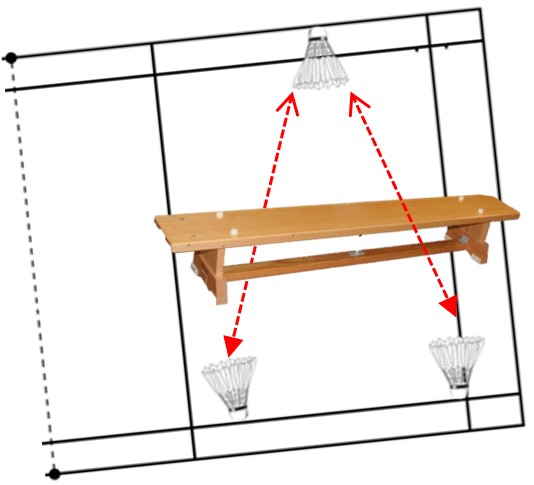
- Hitting across the court: playing a mini co-operative match over a bench, "fast tramline singles"
Do these and avoid these
Do these
- Once the stroke is partly mastered, reduce all previous technical information to a minimum.
- Talk about the flight of the shuttle, the outcome they want.
- Lots of hitting with an emphasise the shuttle flight outcomes ie up and high, flat, spin, fast, then slow,
- Lots of demonstrations with great and obvious outcomes
Avoid doing these
- Keep reminding players about their hand or fingers
- Give verbal descriptions on how to grip the racket
- Practice in isolation ie one grip at a time

The goal is NOT that players know the exact grip to use, or where to place their fingers
The aim is that they know the outcome they want
Through a series of tasks, develop an understanding of how to achieve it
The very early developmental stages
During this initial ‘learning to play’ stage, be intentional in your coaching and try to ….
- set up practices that constrain and create situations that develop effective ways to hold the racket
- show great demonstrations: coach by your actions rather than your words
- offer effective and imaginary cues that reduce the need for lengthy explanations
- set simple tasks that create player confidence, initial success is vital
Players need to perform as Players (and not coaches)
If a player was asked “how do you hold your racket to play that shot”
would they reply
“like this”
or show and demonstrate the movement and reply
“hmm, I’m not sure, I just hit it”
It’s far more important that in a competition a player strikes the shuttle with an intention of doing something that affects their opponent, rather than thinking “I need to place my thumb here on the handle”
Send me a question
I’m always grateful if you have read this far.
If there is anything that you have read that has helped or that you disagree with, then please send me an email.
I promise to read all your comments
It would be great to hear from you contact@badmintonandy.com