
Advice to help you coach a backhand
Compare these tips to all the other advice you've received
Everyone seems to want a better badminton backhand, maybe with good reason
It’s an important stroke, especially if you want to play singles
When I was younger I was taught a technique that at the time seemed correct, however, it was fundamentally flawed.
The technique worked in practice but fell apart in competition.
Then, as a coach, I discovered some of these fundamental truths.
These backhand suggestions apply to all the variations of backhands, not just one shot.
Technique tips
I could write an individual post for you about each of these tips, and will try to do so in the future.
But for now, I want to share some of the most powerful and effective phrases and tips that I use.
These aren’t my words, but ones that I’ve seen in action or heard and tried out for myself.
Each has its own place in the coaching process, and some may be emphasised for a while, then never spoken about again.
Individually, these specific technical elements will assist in the development or act to prevent an inappropriate technique (critical bio-mechanical element) from forming.
Some will have a greater impact at different stages of learning, whilst others may only act to reinforce a movement and be briefly required in the coaching process.
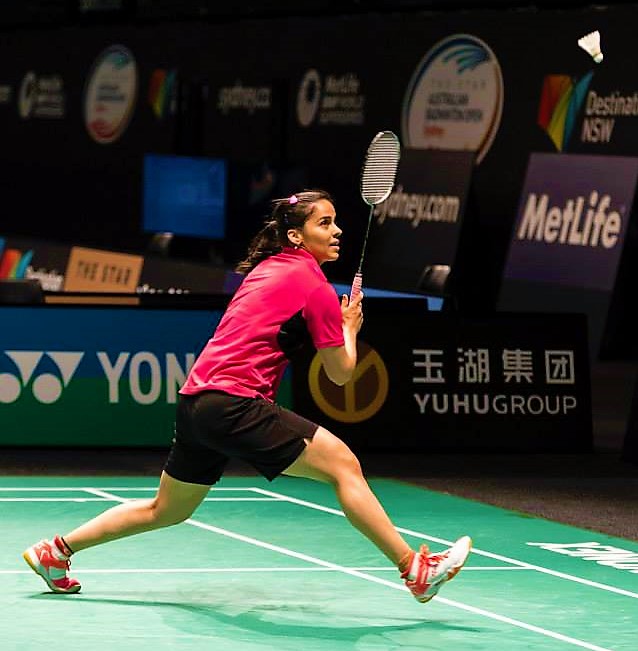
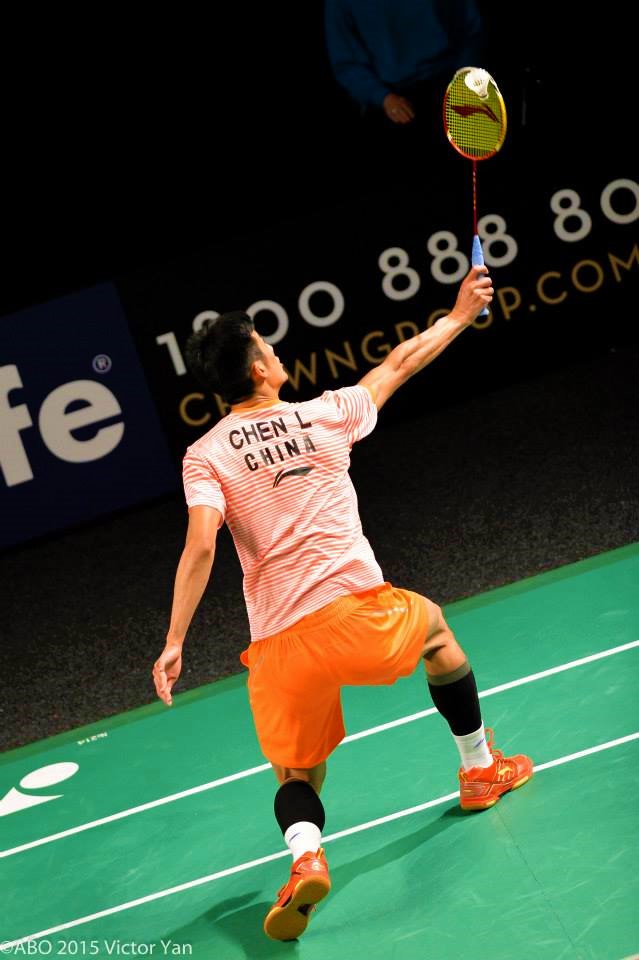
- 'Elbow low' in preparation, 'racket head points up'
- 'Hit - Land' and 'Step Up' for clears
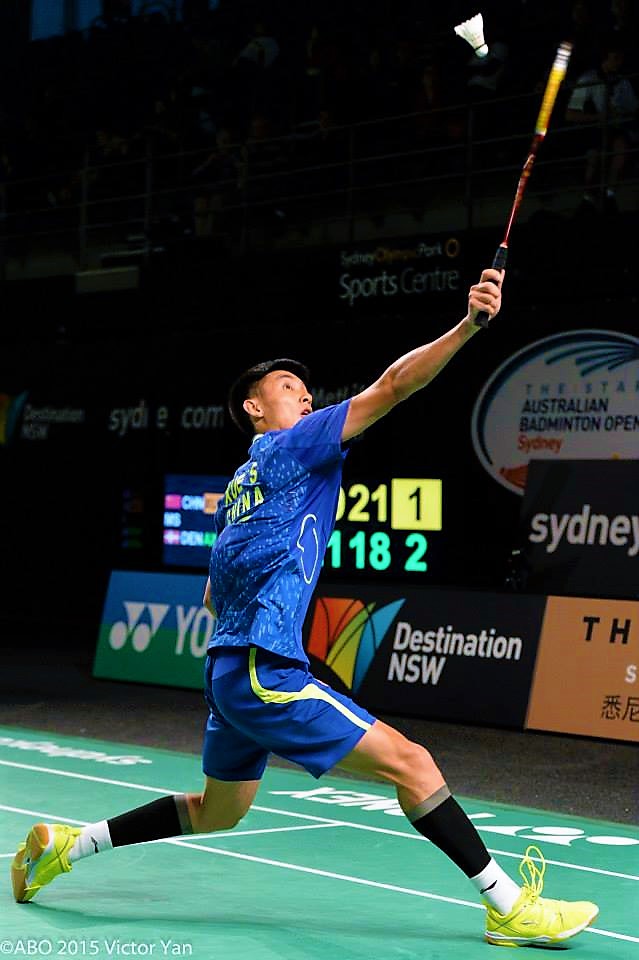
- ‘Tough’ deep backhands struck well behind you will often end in a lunge
- "It's backhand time", i.e. look at the back of the hand (@M.Adams)
- "Look at the creases" in the back of your wrist (@R.Mills)
- "Hit at 45ø up and out to the side".... its not always low and behind!
- Grip changes the further the point of impact is behind, the position of your thumb makes a big difference
- Different hitting actions depending on the stroke; push, slice, rebound etc, it's not the same for all backhands
Footwork
Most backhands are played with either foot landing as or just after striking the shuttle.
This is a great coaching cue and image for players to use. Striking with this timing will aid power and consistency.
It can be demonstrated or questioned with the use of photographs and practice situations that in many occasions the foot will land before impact. However, when coaching the ‘clear’, not the drop, I have found that instilling a ‘land before impact’ thought with the player is vastly preferable to a ‘land then hit’.
When coaching novice (beginner) players
a different emphasis is placed on when the foot lands for Clears and Drops (pulls)
The Clear
For a clear, it is vital that the player is able to play ‘as if’ to strike and then land. These will be the most testing situations and a robust (strong) technique is required.
You may know players who feel that they can play backhand clears with the foot firmly planted on the court well before impact. In practice with more time and critically less (or none) game-like decisions it may work.
However, once in a real game with indecision and recovery to the same shuttle the technique will be tested to the full and exposed. It will also be a stronger technique when faced with an opponent (rather than a feeder) who is pushing you hard and trying to outwit you.
The Long Drop (Pull)
When playing the ‘long flat drop’ the foot is often landing before the shuttle is stuck.
Even though it’s a backhand, the timing is different to that of the clear. They are both backhands, but different.
Watch this video from Badminton Insight and compare their advice to what you are reading here.
Most of it is the same or similar, but there are some differences: you will have to decide what’s best for that player in front of you.
Critical Footwork Elements
For Clears: ‘Stepping up’ with the racket foot
This action required the racket foot to be lifted off the court as part of the hitting action. Especially for beginner players developing clears and smashes.
More expereinced players can and often adapt their techiques and the foot is less often off teh court.
I have found huge improvements for overhead clears when coaching using this ‘suggestion’.
Please try it out and see if you find an increase in power. For some players using the cue of ‘walking up the 1st step of your stairs’ can produce an unexpected positive effect.
When Lunging
Deep strokes played from behind the player around shoulder height will use a lunge footwork similar to that used in the forecourt.
Players must be encouraged to remain confident if the shuttle travels quickly behind them.
Ask them to remember how they lunge into the low forecourt and are still able to hold the lunge and be stable. It is important not to try and intercept every shuttle that flys quickly into the backhand court.
To hit with power and consistency may require the player to ‘allow’ the shuttle to travel just past them and ‘wait’ for that hitting position that they feel confident in.

Intercepting
You need to also practice intercepting shuttles that travel quickly into the backhand court.
Be prepared to use lots of variability in shuttle heights and feeds. The more variability and player indecision (at the start) the better. Encourage cross court fast down shots, straight ‘stop’ drops and quick rebound clears over the opponent. These 3 strokes can all be played from similar positions but it is the player who should decide. Encourage ‘fast Early Preparation’ and a positive attitude at whatever the result is.
Hitting Action
In simple terms and without reference to grip variations ….
The Clear is a rebound action
Be aware that it may look like a pull action, especially when demonstrated by good players on Instagram. There is a ‘rebound’ type action within that ‘pull’
If you aren’t sure what to coach with beginner players, try both: a pull action or a rebound action. Then decide which helps produce the results you are seeking.
Also, its best initially developed by imagining that it’s struck from above the shoulder and often with a slight upward step (recommended for junior players)
The “long” drop is a pull action
The contact point again should be imagined: 45 degrees up and out to the side.
With beginner players, having the foot down just before impact will assist development. So will imagining that the racket head is pointing ‘up’.
Development should be thought of as a journey with lots of exploration.
However, ‘constrained’ both through practice design and ‘cues’ given to the player
Young Players
Build confidence and establish a backhand that works (tactically)
It’s not just about developing one that goes over the net 8 times out of 10.
I recommend that players work on the long drop/pull before the clear. As soon as the straight long drop is partly established, then encourage a cross-court effort.
Try changing the grip before the start of the stroke and then just hit the shuttle. It can be exciting to see the result.
Make new learning FUN. It doesn’t have to be perfect, far from it. In fact, slight miss-hits often result in great cross-court slices with the shuttle dying as it travels over the net.
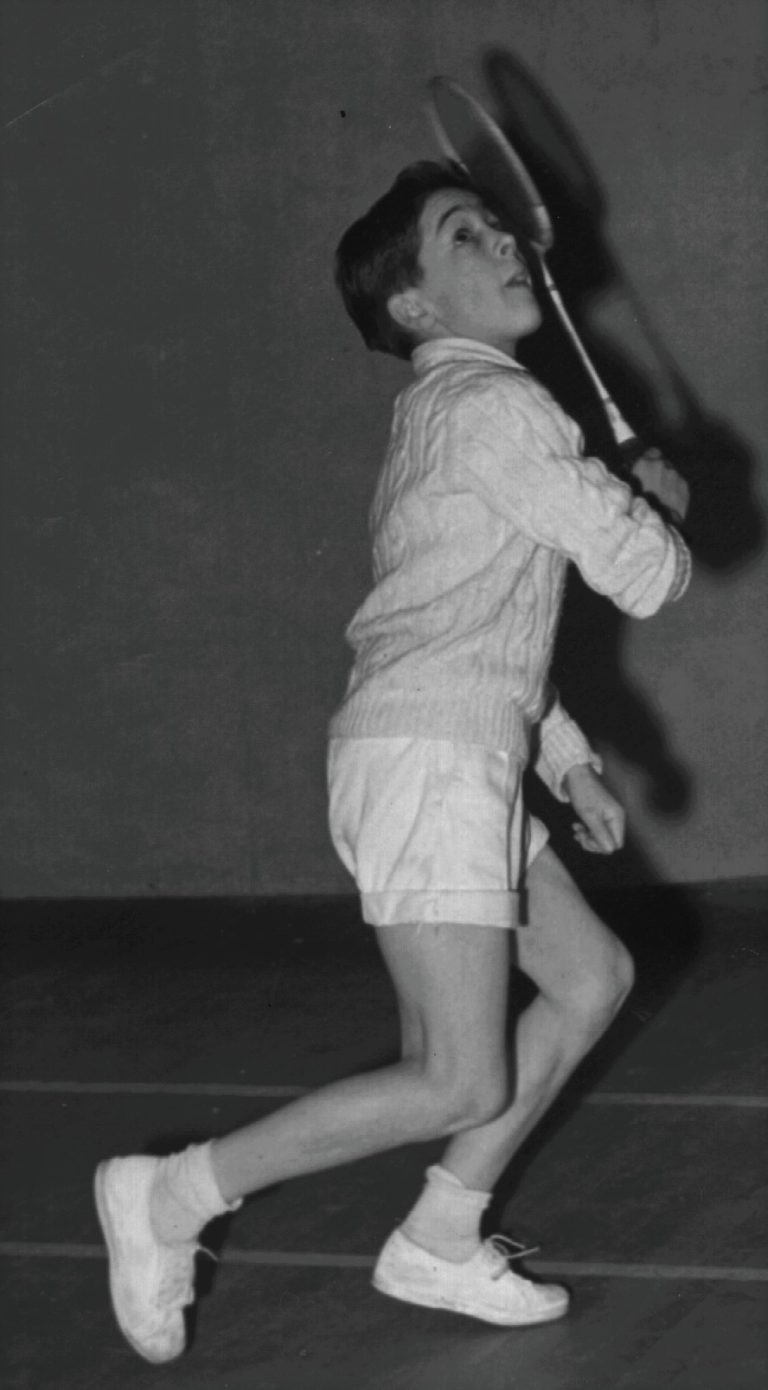
The classic limiting techniques
These are often seen in young beginner players. If left to develop future power, reliability and development can be problematic.
‘floppy wrist’
‘elbow high”
“lack of Early Preparation”
Coaches should design early practices/tasks/challenges to constrain the opportunity or these to develop

Practice
Would you introduce the ‘ long drop’ before the overhead clear?
It took me a few years and the opportunity to start with a young 10-year-old player to realise the effectiveness of the long ‘push’ ‘flat’ drop.
It was only after starting with a young player that I realised that the flat long drop has so much to offer
There are technical elements to master, but this is quickly surpassed by the opportunities for tactical and mental development in just one stroke.
Then there was the surprise at the rate of development by using skill transfer from other areas of the court.
If you would rather coach an overhead backhand at the same time or before the long drop, I would really like to know your thoughts on the progressions.
Especially how it transfers into a competition match.
It makes me smile 🙂
Even to this day with my most recent pupil I continue to smile at the ease with which they develop once the initial learning ‘hump’ is partly conquered.
As I have said in other posts, I am not a sports scientist, so find it hard to find the words to describe this effect perfectly.
All I know is that if I work patiently through early essential practices and then increase the variability and demands, then the rate of development can explode.
What looks like slow, often stodgy, progress turns into ‘fist pump’ and ‘Wow !” moments with what seems very little coaching input.
If you coach an overhead backhand before or at the same time as the long drop
I would like to know the progressions, especially how it transfers into a competition match
Its an essential Stroke
Players will not be able to hide a weak backhand
A good ‘round the head’ does not compensate for a poor backhand!
I wish I had realised that 40 years ago. It would have placed less stress on my knees, back and Achilles. We practised many hours on our round the head but very few on our backhand overhead and even less on our backhand long drop (especially the flat crosscourt).
As your level of play increases so the flaws in your game, however minor, become more apparent.
You will not be able to hide your backhand
Opponents will play shuttles into your backhand area, and they must be dealt with.
If you need help, I am willing to share all the knowledge and tips I’ve picked up from some great coaches and players.
Send me a question
I’m always grateful if you have read this far.
If there is anything that you have read that has helped or that you disagree with, then please send me an email.
I promise to read all your comments
It would be great to hear from you contact@badmintonandy.com