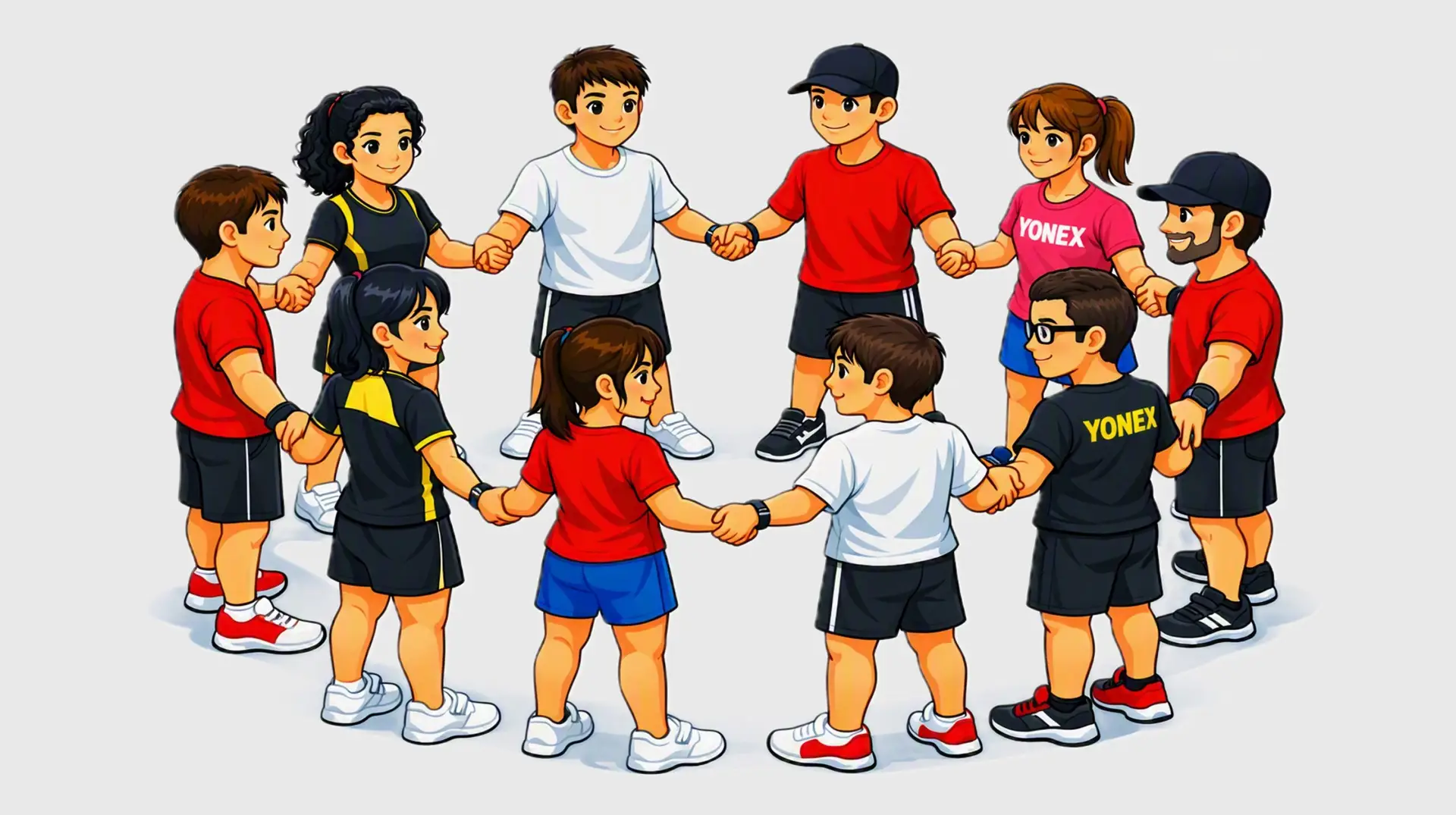
How do you maintain a cohesive productive training group?
The challenge : how to keep it competitve and happy
A guest post from Ben Caldwell

Ben Caldwell is a professional badminton coach who has worked across Europe in Spain, Germany, Austria and England.
He is expereinced in coaching juniors to international level and has previouilsy been a project leaders for German U19 players.
I’ve known Ben for many years and always valued his opinion.
How do you maintain a cohesive, productive training group?
The simple answer to this question is that it can be really difficult to maintain a productive training environment with a group of players who play singles (especially) and who regularly compete against one another on the circuit.
This is often a big challenge if, for example, you have the number 1 and 2 in a country in the same group and one will get selected for the major events ahead of the other.
Here are some suggestions about how to try and manage this type of situation.
Possibly using the competitive individual spirit to push the group as a whole to greater heights and belief.
I have searched for many years to find solutions (and there are many) that ensure the group feeling stays positive and productive, even though there is always an undercurrent of individual competitiveness.
I used to ask myself:
“How do I get my players to help each other develop, but at the same time want to beat each other in competition?
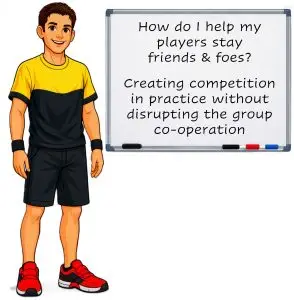
You have to create a group identity but also encourage
the individuals to be strong, independent and self-supportive
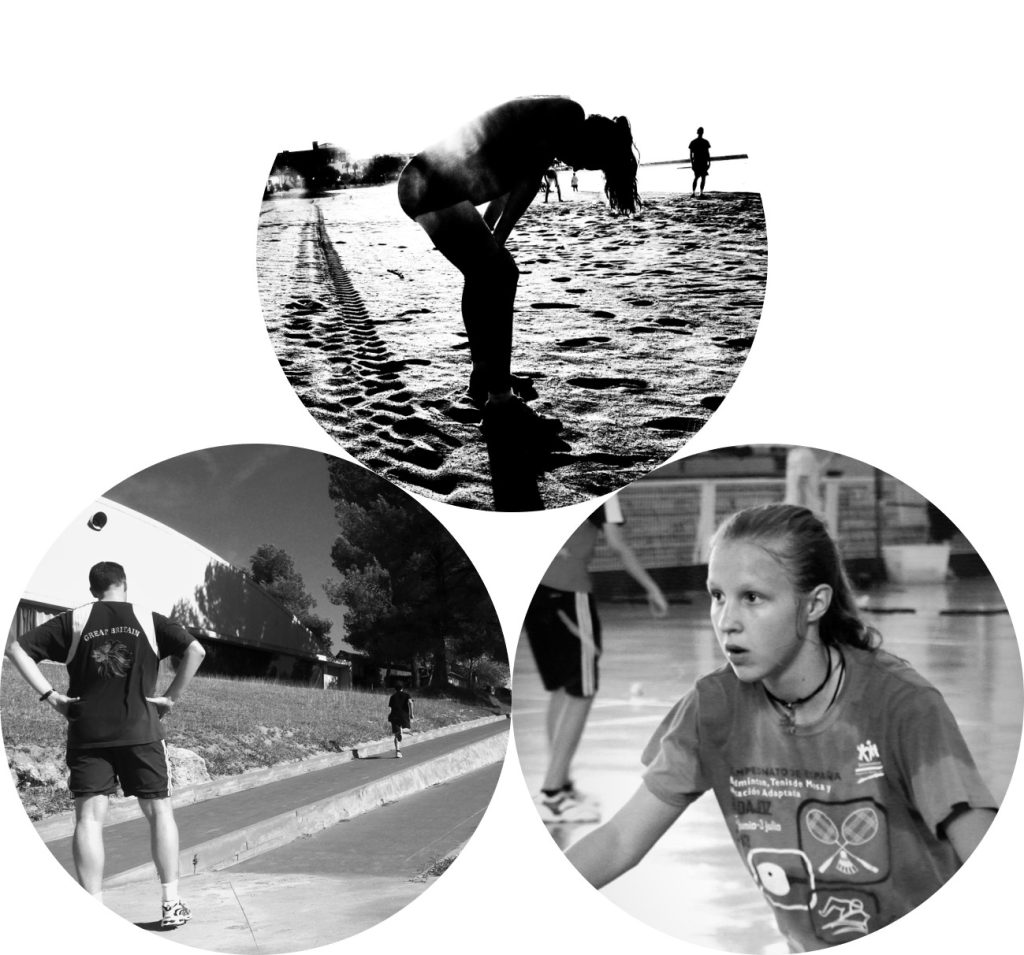
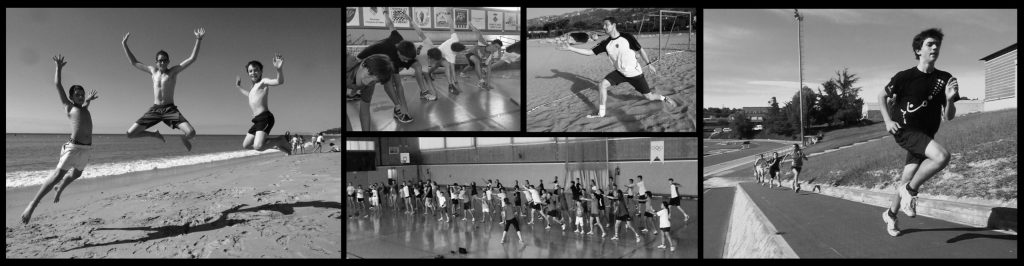
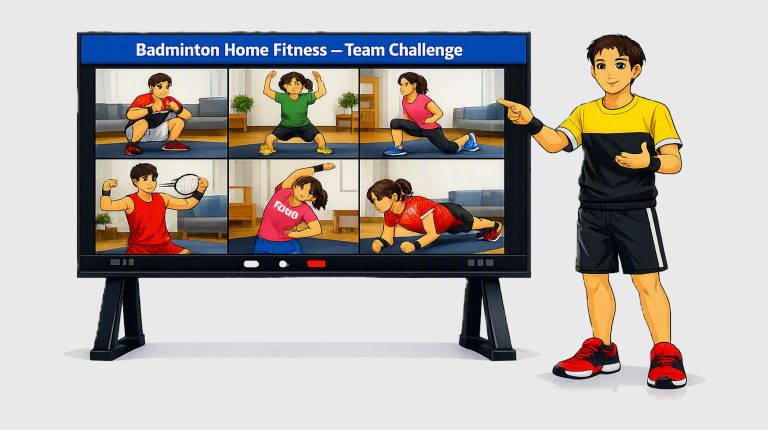
Team physical training
Bonding through hard physical work can form a strong group feeling
I’ve found that using activities that require teamwork or teams competing against each other work well.
Those players who are often playing against one another find themselves supporting each other. This ‘teammate’ experience can be powerfully positive and yet still allow the individual to perform to the maximum.
I’ve found that this often pushes both to greater efforts. They can still enjoy the feelings of elitism if their team wins and celebrate being ‘top dog’ if they want.
During stability and stretching sessions, try asking each player to demonstrate and lead. Create a safe environment where the group will accept someone other than the Coach leading the session.
Ok, people may make mistakes and receive fun feedback from the group. Having the group help the individual with ideas is a great way of resolving the feeling of isolation that may be felt by the player.
My advice in these situations is to praise the group rather than the individual.
If you can and are physically able, join in with the group
This will show the players how much you care and that you share a love of the game.
Of course, this doesn’t mean that you forget you are a coach and take on the role of a player. Rather, you model the behaviour which you want from them 
“Inspiring leaders establish rituals to connect their team to its core narrative, using them to reflect, remind, reinforce and reignite their collective identity and purpose.” James Kerr, Legacy
Fun team games on court
Create a mixture of games in your ‘Coaching bag’
Many of the best coaches I have worked with have used these games in moderation at the start or the end of a training session to raise the motivation and team spirit of the players.
By ‘in moderation’ I mean 10-15 minutes as an alternative warm-up. I like to extend this during summer training or at camp, as it creates more time for making friends.
Create a mixture of games in your ‘Coaching bag’. I think that it’s important to have games that sometimes require badminton skills, sometimes celebrate physicality, or draw on other skills/ experiences the players may have.
Examples
3 vs 3 and 4 vs 4
Singles ladder style games (full or half-court) with fun rules such as football badminton or playing with the wrong hand
Note: it is important to manage these games well and pick suitable teams. I have observed these types of game creating a negative training environment when the coach allows or encourages the wrong approach, for example teaming up on one player or bullying type behaviour.
I’d still recommend a type of structured warm-up before any of these fun games as you may alienate the ‘elite’ players who want to prepare before they do any training or fun game
“Enlightened leadership promotes a structured system for the development of the team, combined with a tailored map for the development of the individual.” (James Kerr, Legacy
Create ‘learning environments’ not always ‘training environments’
Encourage players to give feedback to each other
An example of this is players feeding each other in multi-shuttle and single-shuttle exercises
Many times it is the coaches who are always feeding the players, but by feeding each other, they learn to help one another and also learn about the game. The process of feeding one another and correcting one another can raise the level of empathy amongst the group.
Encourage players to give feedback to each other. Feeders suggest how the player can improve.
The player requests the feeders to “do this or that” to enhance their experience.
In one or two vs one exercises, players should also be given opportunities to set their own exercises and to communicate the details with their training partners. By doing this they create an open, intelligent learning environment where they are responsible. If the objective of the session is learning new skills, then this is really important.
It allows all players (whatever ranking they are) to hear the ideas of others and to see how they train.
I think it was Fernando Rivas with whom I discussed this, that sometimes we need a ‘training environment’ and other times a ‘learning environment’.
” Excellence is a process of evolution, of cumulative learning, of incremental improvement.” James Kerr, Legacy
You must not assume that the best players know how to create their optimum training environments
Make this part of your Coaching to help them decide what to practice
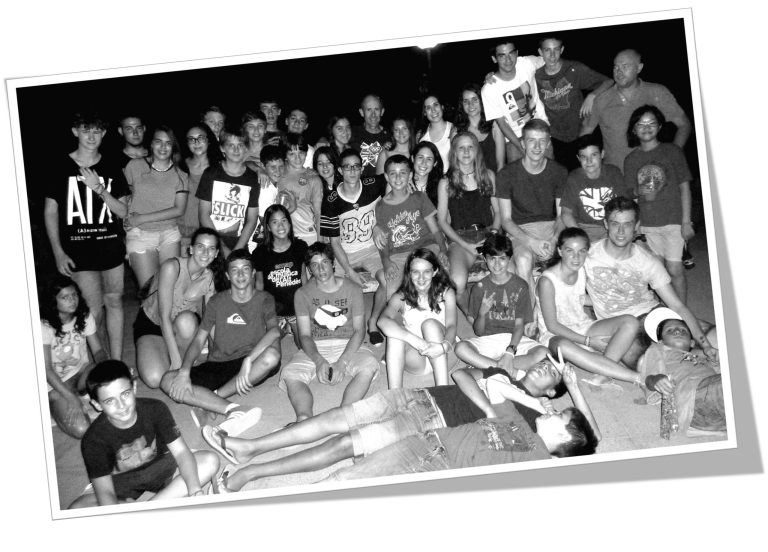
Social time together
Sometimes chatting is important!
Training camps, travelling to events, summer BBQ’s, Christmas meals, or end of season get-togethers.
These are key opportunities to build positivity and group feeling. These rituals are not to be underestimated. They provided key opportunities for players to see each other and not just as opponents to beat.
They allow players to learn where to draw the line between ‘game time’ and real life.
We encourage the use of a Whatsapp group where they can share things to motivate one another and feel a sense of belonging when they are not together.
It needs to be managed with a few guidelines; of course, the Coach needs to be a member of the group.
Social opportunities are also available in training, for example, encourage them to work together to set up and take down nets, distribute and collect shuttles together at the end of a session. These are chances to relax mentally in the training environment and enhance the positive atmosphe
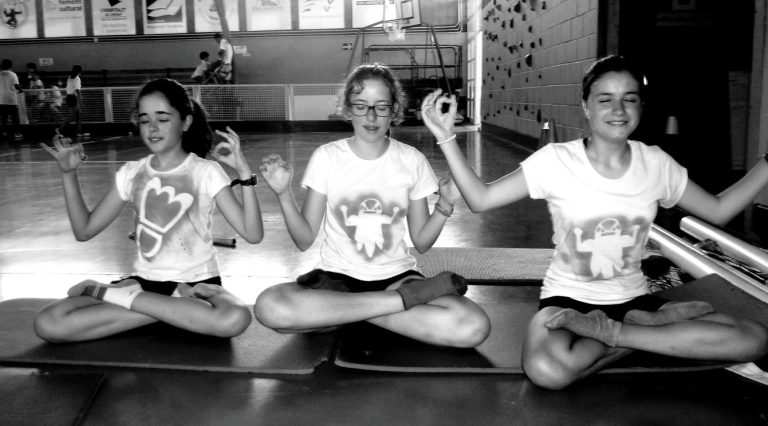
Encourage (allow) social talking in the sessions,
it is important that players can talk amongst themselves
Team tournaments
Team tournaments are a fantastic way of creating team spirit
For example, when working in Spain I was lucky to experience the extremely competitive environment of the regional team championships.
When we (Cataluña) played against Andalucía there was such a competitive atmosphere that sticks in my memory! One side shouting ‘I am Catalan’ and the other side shouting ‘I am Spanish’.
The players on our team formed such strong bonds through these tournaments, which kept a positive training environment for many months after (until the competition the following year).
Ensure that you capture and enhance any positives as soon as you are able
Team events create opportunities
As a player in the UK University system captaining the University of Bath BUCS team, I experienced the same powerful bonding experience and some of the best team experiences I have had in an individual sport (I still wear the t-shirts to this day)!
It always surprised me that these team events often create new doubles pairings from the singles ‘elite’ players, something that we found hard to do it normal training.
Many of the elite singles players in training don’t want to practice doubles.
However, in competition, I think they realised that they needed to step up performance and commitment to win for the team by showing that they are a complete player.
My top singles players just love to win so they often stepped up when the team need it!
Team events also create opportunities for mid-order players in your squad. Those players who don’t stand out within the group. Players who don’t demand for your attention and are not the loudest in the group. Often during Team events, I was surprised how these players became the “hero’s” of the event.
Final thoughts
There are of course multiple benefits of increasing group cohesion in training groups which include maintaining involvement i.e. less drop out, enhanced learning, increased motivation to name just a few.
Spread your focus evenly among the group, this can be a big challenge, but it is vital for the full group to feel valued and stay motivated. Look at your coaching diary to ensure that you are actually doing what you aspire to.
I’ve learned many things from observing and reading about team sports such as rugby. I recommend reading Legacy by James Kerr and applying the concepts discussed to your own training environment.
Adapting team sport ideas to an individual sporting environment can be challenging but rewarding.
In my experience, the individual nature of the sport of badminton and the lack of highly professional systems can mean that the sporting culture can be very amateur and old school. In the last 10 years though the sport has become increasingly professional and coaches need to evolve quickly to catch up with other sports.
From a European perspective, this can be challenging because of a lack of funding amongst other things, but this can be made up for with smart well educated coaches who parents are happy to entrust their children’s sporting and social development to.
Maintaining a cohesive training environment is an ongoing challenging task,
requiring a lot of Coach energy, be ready for this
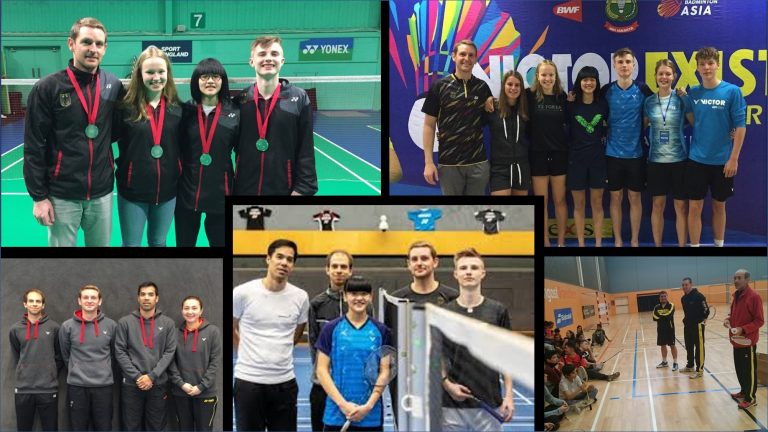
Who is Ben Caldwell
Ben is an English Coach currently working in Europe.
He has worked in Hamburg, Germany, as an assistant Coach to the German U19 Squad and Project Leader for the German U19 Players
Ben worked for Badminton Ireland and the Catalan Badminton Federation
More posts from Ben
Remote Coaching – Ben Caldwell
It’s always been my core belief that we need to assist players so that they can manage themselves, make decisions (they don’t have to all be correct), create plans and strategies. All this will initially be managed by you in a subtle strategic way.
Send me a question
I’m always grateful if you have read this far.
If there is anything that you have read that has helped or that you disagree with, then please send me an email.
I promise to read all your comments
It would be great to hear from you contact@badmintonandy.com


![Keep your racket up - Duplicate - [#38056]](https://badmintonandy.com/wp-content/uploads/2026/09/keep-your-racket-up-scaled.webp)