
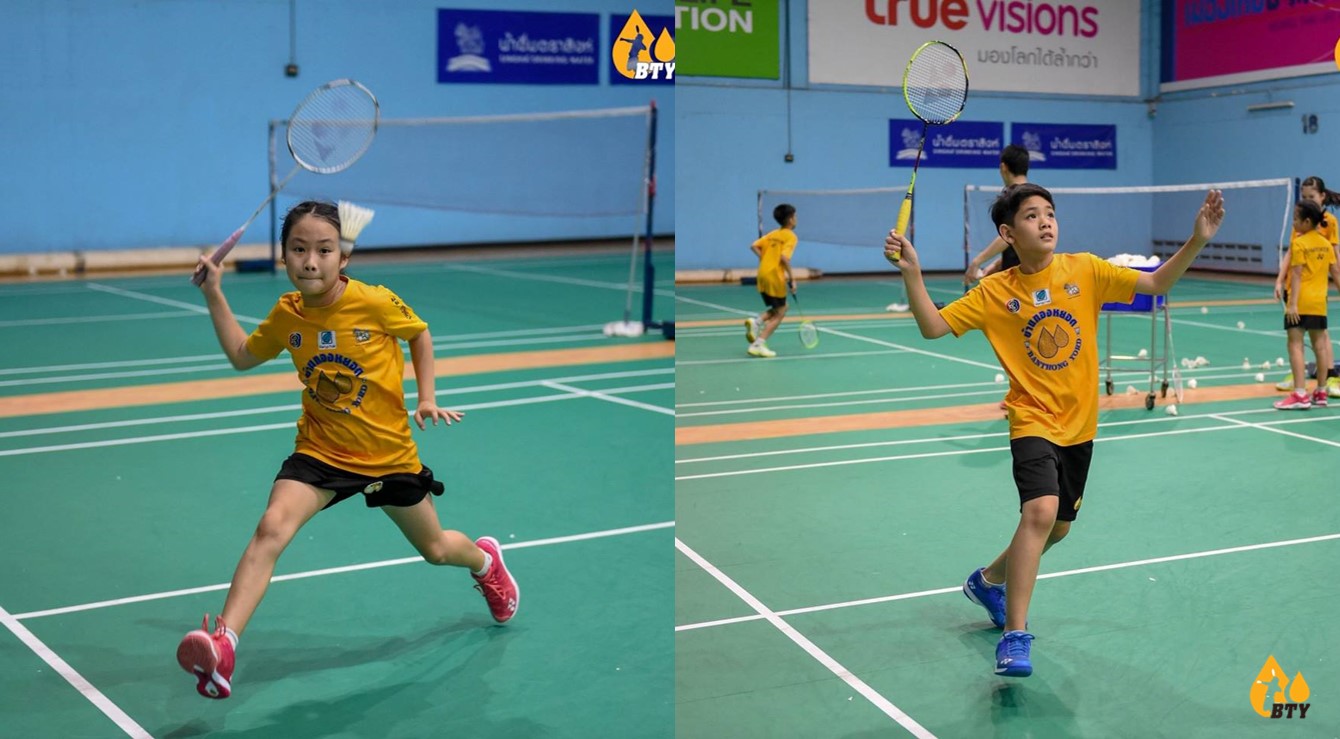
How and when do you introduce this stroke
What steps could you follow
What are the key components and practices
Do you agree that it’s one of the most important early strokes to learn
The different names
This shot is called different things all over the World so you may know it by another name. Here are a few I’ve heard
• Forehand Pull • Forehand Drag • Deep Forehand
This post is aimed at Coaches and will be full of background information, reasons, why, what, when and how.
Warning
I hope that you are interested not only in the key technical aspects, but when to introduce each one and how to move quickly towards tactical ideas. Please don’t be stuck and obsessed with Technical aspects
Your task is how to place these technical aspects within the learning environment and to make the environment full of game-like challenges and responses
Would you consider almost deliberately working to ensure that the players ‘forget’ that they ever heard some of the technical advice you give them?
Do you agree that the true test is in a game or
a practice that has game-like conditions, not just perfecting technical elements?
The key elements & coaching cues
I’ve listed some tips and advice for you to consider and try when developing this stroke.
They are not in an order of importance, as each could be critical at different times during the development; it’s up to you as the coach to decide when to use each one. It will depend on many factors; all I can do is provide the list and suggest you try them out.
Players don’t need to know the coaching reasons behind why they work.
If you use them in early coaching, you may deliberately work to ensure that the players ‘forget that they ever heard them.
Become a master at saying less and achieving more
How many of these coaching cues do you use?
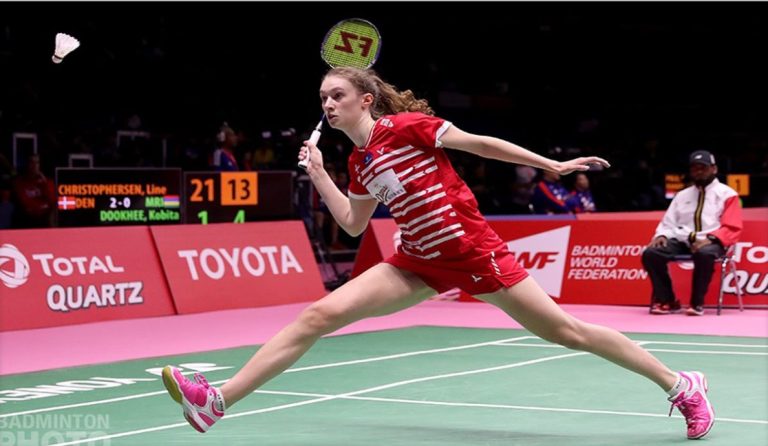
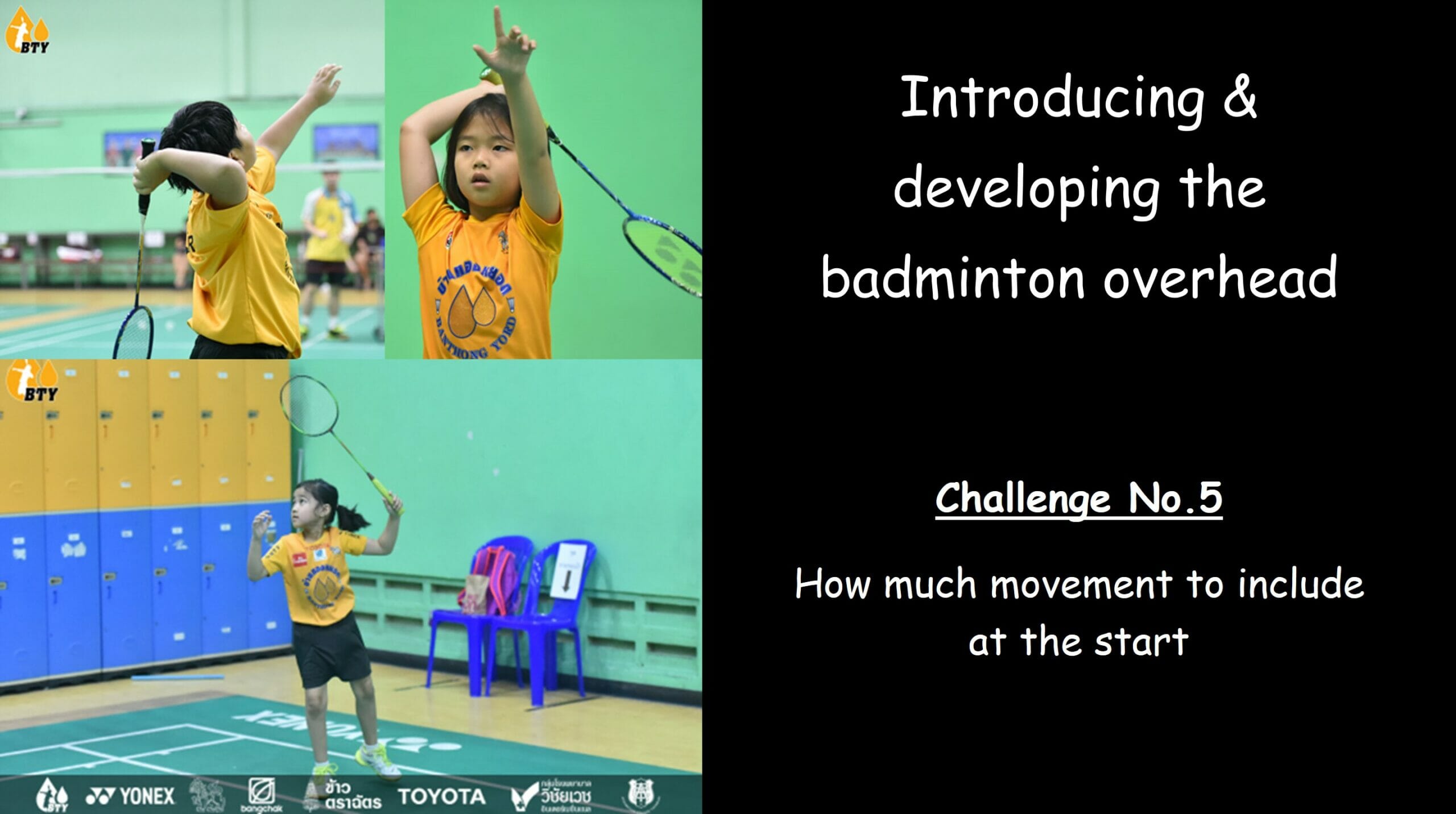
“Make a bicep”
This is a simple instruction that creates a great racket preparation position, just look at all the images in this post, can you see ‘make a bicep”‘
As part of Early Preparation and Preparation for Power
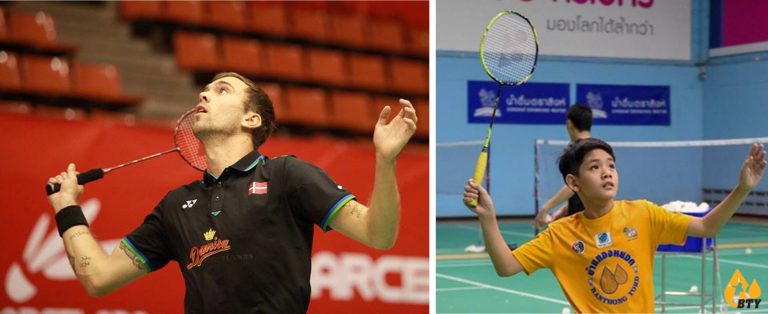
“EP” – Early Preparation
Throughout my coaching and within this website, EP stands out as an excellent concept.
Use it here, and I guarantee that you’ll see a difference.

“Foot out”
Towards the end of the movement, inspire all your players to get their foot ‘out’. I know some coaches who like to suggest that it’s a step ‘up-and-out’.
You decide if you want to use that.
It a playing basic and also used when approaching the net area.
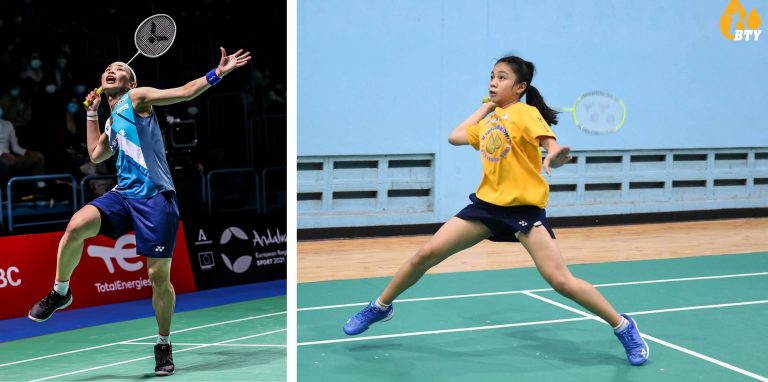
“Hit around the shuttle”
Encourage your players to get their foot outside of the shuttle.
It’s not required to play this stroke in every situation, but the desire to try this is!
Using this concept/idea in early coaching will not only help with the desire to move quickly at the start, but it will also help later when you introduce cross-court skills.
Plus it tends to keep the shuttle inside the court!
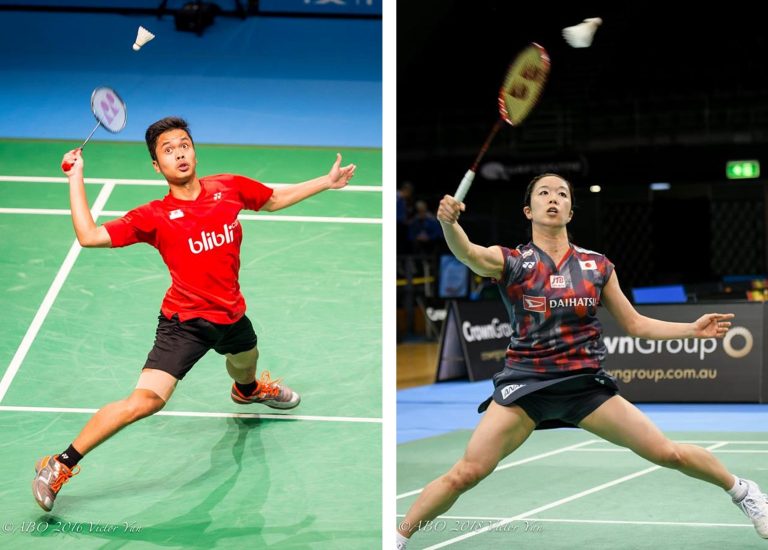
“Hit-Land”
This is a ‘mind-thought’ as shuttles can be struck with land-hitting at the same time, or striking just after anding.
Encourage a slight pause/wait (if required) so that the hit comes before the land.
This is to be encouraged for all approaches to the net and works even more effectively in the deep forehand.
“Cillit Bang”
Probably the strangest phrase I’ve heard and used successfully.
This is the idea that using all the ideas above, the player ‘prepares as for power’ and then waits a small amount of time to unleash a huge amount of power, hence the Cilit-BANG!!
Some players like to say it inside their head as an aid (in timing) to help the power to be transferred from the preparation to the hit.

Starting with Wallwork
Striking deep forehands against the wall has many advantages
It is a simple progression to add onto the previous Wallwork practices you have been doing with players.
Some of the concepts will be partly estabilshed can can provide a starting platform. Specifically, ‘EP – Early Preparation’ is vital to both initial Wallwork and this practice.
The concepts of challenge, part mastery, progression, re-trial, and goal setting are all beneficial.
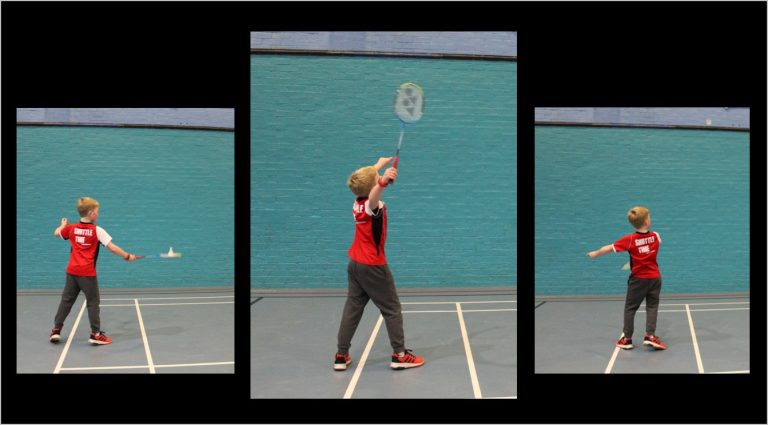
Consider using these suggestions
- Starting in a sideways stance with an eraly preparation of 'make a bicep'
- Watching the shuttle go up and down whilst waiting in the ‘prepare for power’ stance position
- Self-feeding by starting with the shuttle on the racket in a wide, sideways stance. Or, Coach feeding from teh side
- Stepping out onto the racket leg with a ‘hit-land’ or having to chasse sideways if the lift is further away
- Hearing the ‘Bang’ sound of the strike, repeated as it hits the wall 🙂
- Practice can be amanded to suit the players’ indivvudual development rate. Progressed or regressed when required and and all individualsied.
- When 'its time to try on court', many of the essential concepts will have been expereinced or partly mastered.
Starting with Wallwork (striking against the wall)
is an underutilised practice for novice players
Practice Progressions
Developing the deep forehand in game-like scenarios

Prior Learning & Transfer
I recommend that before you start in this area of the court, you have already spent time working on forecourt strokes & skills.
This includes developing forehand defensive ‘clock/pushes that have been combined with forecourt strokes. This is essential.
Using this approach, coaches may find that many of the elements that go into developing a deep forehand (with novice players) have already been introduced and hopefully partly established.
Importantly, the style of practice you use will already be known to the player.
Coaching Methodologies
Probably the most important part of this blog
The methods you use and the selections you make can enhance the practice to give a greater opportunity for development, or not.
It’s your job to increase player motivation, enjoyment and to provide a learning environment that is full of opportunities to develop. NB, not all attempts will be successful for you or the player.
Which ones you select will DEPEND on what you see and feel while you are coaching.
It will DEPEND on how the player feels at that time.
It DEPENDS on your knowledge (how many do you know and use?)
Every change in the practice, every word you use, every effect on the player you see will give you something to think about.
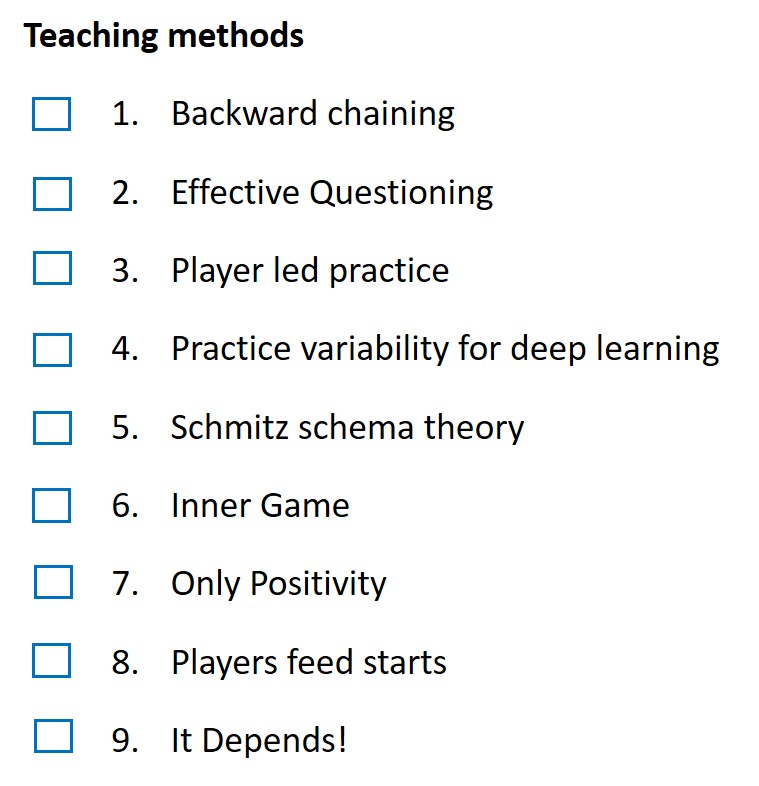
I can’t tell you exactly how to coach or play this stroke, it depends on so much.
How could anyone advise you what to do unless they were there with you and the player?
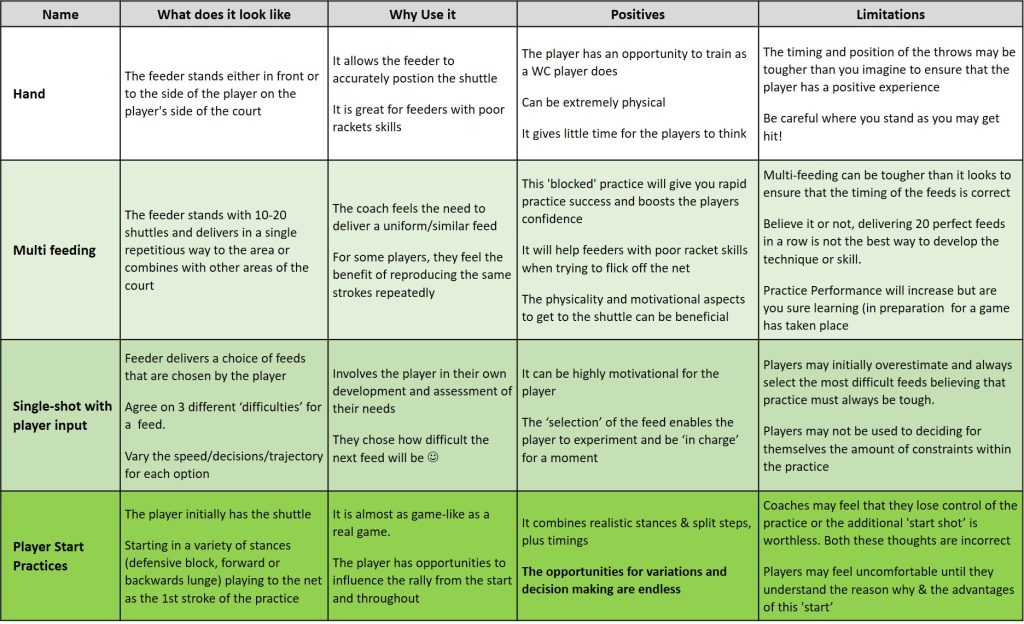
Feeding
Feeding doesn’t just mean standing still and delivering a shuttle
It’s important that you assess which feeding style you are going to use and when you will change to another, plus identify the positives and limitations of each.
Feeding should replicate (as closely as possible) the game situations.
It could also enhance the learning opportunities (i.e. it may not look like a game) but serve another temporary purpose.
Both situations could target tactical, emotional, physical, and technical aspects or a combination of any or all.
- The thought’s in a great feeder’s head
- What do I want the player to experience?
- What should the player see before they start their movement?
- Shall I return the shuttle or feed another?
- How can I maximise the player experience?
- Feeding types used to help develop this stroke
- Hand Feeding
- Multi feeding
- Single-shot with player input
- Player Start Practices
What is a great Deep Fh and Tactical Practice
Ensure that tactical aspects are introduced early and then continued to be developed
The coaching aim when developing this stroke and possibly all strokes is to enhance the tactical use within a game as soon as there is some part of the skill/stroke established.
Certainly, don’t wait until the player can hit 8/10 into a target with near-perfect technique, especially if you’ve been using single shuttle work.
However, some technical competence (partly established) will be required before tactical concepts can be introduced effectively i.e. they enhance the practice when introduced, and the challenge point is applicable to the players’ development to that moment.
What makes a great deep forehand
- Early preparation is essential: there are so many advantages to preparing early
- The ability to hit the shuttle flat to land just behind the service line. Think about frustrating your opponent by giving them something that’s neither a net or a block
- The ability to hit fast and recover quickly: hitting around and getting your foot out will certainly help with both
- The ability to hit crosscourt: either fast with or without slice
- The ability to ‘hold’ the shuttle: so that the stroke appears hard but changes to a soft push
What makes a great Tactical deep forehand practice
- Feeders working as opponents: this only works with a single shuttle
- 'Player starts' and mini rallies: options (decisions) are then there from teh start for both players
- The mixing up of the starting stances: it doesn't always have to be a forward attacking stance (racket leg forward), if the opponent likes to play fast flicks into this area, why not change the stance (before they strike) into a backward attacking (receive of serve) stance.
- Play Conditioned Games where bonus points (+2) if the shuttle lands in the rear tramlines or frontcourt: This creates lots of incentives and opportunities for flat flicks and clears.
How do you design a practice to enhance all the tactical ideas for this stroke
Tips to move from Technical to Tactical
Nearly all practices should (as soon as possible) include elements that go beyond just technical practice
- Let the players start the practices themselves. They will need the shuttle to start. Ask them to use block or racket foot forwards feeds
- Accept that they will intentionally try to influence the practice rallies and allow them to do that. The result may be a messy seemingly unorganised rally (but that a game!)
- Accept that sometimes they will feel uncomfortable and may not make the right decision. You need to ensure that the shuttle is returned.

- Have a goal which is more than just ‘how many came over’ or ‘technically based’. Looking good is no longer the aim, winning the rally is! (or not losing it)
- Incorporate decisions and importantly, keep playing to see the outcome of their decision. Reward and punish by your next stroke (kill opportunities or more struggles)
- Ask feeders to try and beat the player. Include lots of ‘desirable difficulties’
Send me a question
I’m always grateful if you have read this far.
If there is anything that you have read that has helped or that you disagree with, then please send me an email.
I promise to read all your comments
It would be great to hear from you contact@badmintonandy.com


![Early Preparation always - Duplicate - [#38141]](https://badmintonandy.com/wp-content/uploads/2026/09/early-preparation-always-scaled.webp)