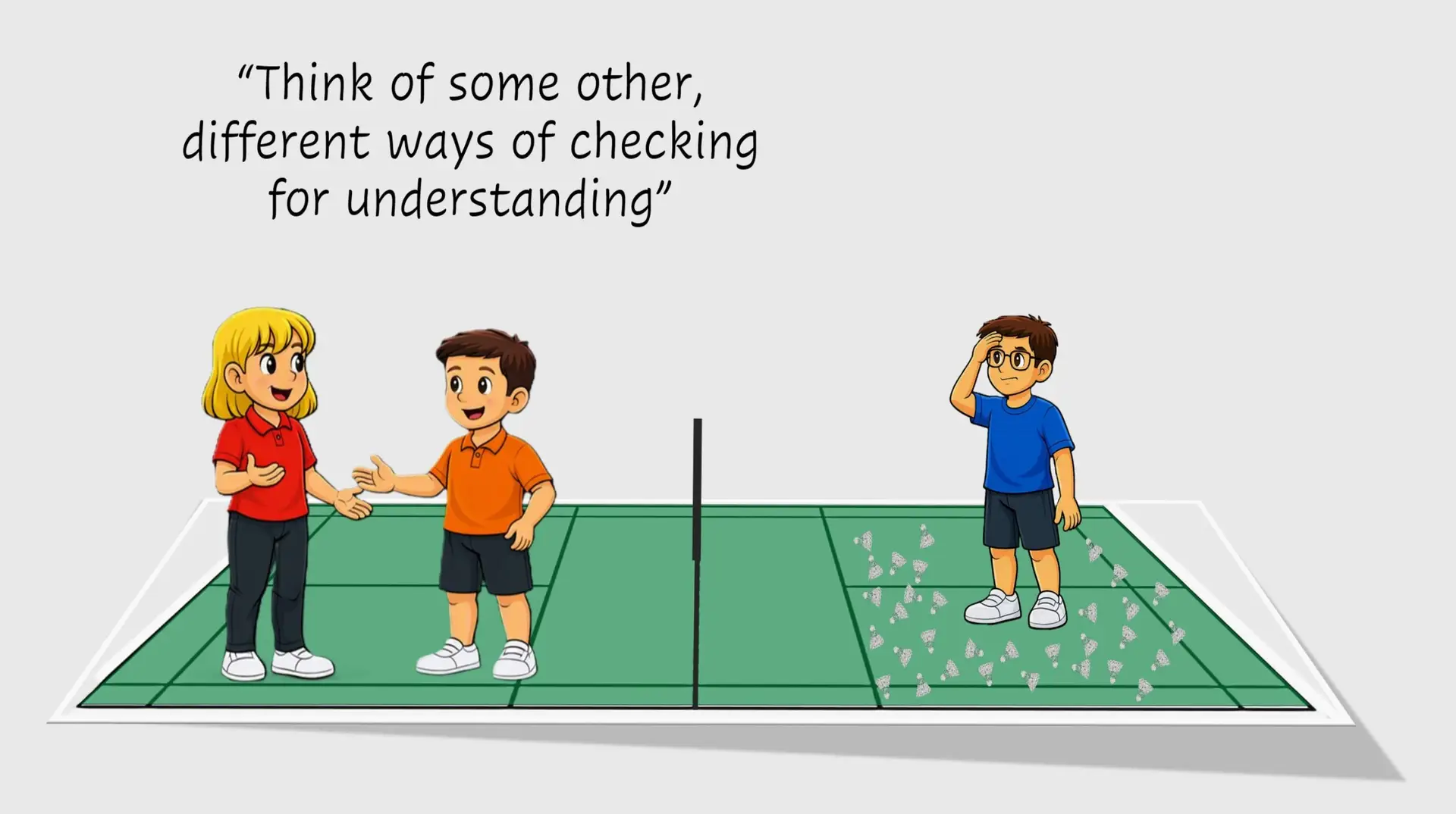
How do you establish that your players understand
What type of ‘understanding’ do you check for
What methods do you use to check
Asking lots of questions to establish learning & understanding in sports
may not be the best way to go about it
Background context
Understanding is more than answering questions
I’m concerned that coaches and coach education could be developing strategies that are ineffective when checking for understanding. At worse causing players to focus and pay attention to aspects that may not help their sports performance.
I’m not a sports scientist or researcher, I’m just a coach. There is a high probability that I’ll get my terms mixed up, or use incorrect definitions.
My concern came when listening to coaches checking for understanding, primarily through simple direct questions and asking performers to list off what seemed like checklists.
These thoughts are based on my own experiences and those of others. I’ve reflected on examples from my own coaching, times when I thought it worked and plenty of examples that it didn’t.
A late-night chat sparked my interest
I asked a friend if the questions they asked the players produced the performance improvements they were seeking.
Their reply may surprise you
“I’ve always asked questions, and no, they don’t really seem to improve the performance.
“In fact, the players tell me they understand, but I don’t see improvements”.
“Maybe I’m just not asking the right questions. But, how else do I know that they’ve listened and understood?”
Using questions is complex, full of subtleties & maybe
not the best method when checking for understanding in a sports, physical environment
How effective are these questions
Are they are good enough to establish understanding or identify that learning has happened
- “do you understand?” – is rarely replied with a “no” as players may fear the coach’s response
- “what did you see?” (asked after the coach demonstration) – this often results in a ‘guessing’ game of multiple player responses whilst the coach ‘waits’ for the preferred reply
- “tell me what is important here” – if applied in a technique context it can result in another 'whats the right answer guessing game"

Could you change the questions or apply them in a different context
eg tactical instead of technical, competition play rather than drill practice
Why check for understanding
When working with Players
Ensuring that learning has taken place is essential.
How else can you maximise the development of your players and assist them in progressing further or to break through a limitation?
Practice and task progression/emphasis require a judgement on the stage/level (insert your word) that the player has achieved to that point.
The action of checking for understanding is only a gateway to allow for coaching decisions. Don’t assume that you are seeking an absolute understanding from performers.
Not all skills/techniques / tactics/thoughts/behaviours need to be fully actionable by the performer before the practice/task can be amended.
Partially established learning is often sufficient for a change or increase in a practice challenge point. How to determine (maybe estimate) a party established, now that is a coaching challenge!

How often do you check for understanding (of the performers)
to validate your coaching methods?
What could a coach check for
Technical (in practice and in action ) understanding
I contacted a coaching friend who I knew would have some contributions. We put together this list of ‘understandings’ that coaches regularly check for.
Not all were positive and advantageous to performance.
Some may have a function at one stage of learning/development, but less so (or not at all) at another stage, it was a complex and wandering discussion.
I’m not sure if that is the best description of our conversation, but it’s the best I could come up with.
We decided that coaches may seek to check for understanding in these aspects –
- Technical knowledge (the inherent dangers)
- Technical knowledge (useful)
- Demonstrating by intent in action
- Demonstration without conscious intent
Technical knowledge (the inherent dangers)
Checking for understanding of ‘technical’ factors is fraught with nuance and context.
In most examples (and especially when working with novices) it should not be the aim of the coach to ensure that players have explicit knowledge of technical elements that happen within complex movements, especially powerful movements.
Doing that is not effective for development and can absorb time that is better used by the coach and player.
The danger is that it is certainly easy to do, as manuals and coach education systems lay out all the component parts and often provide a detailed breakdown.
However, I believe that this information is critical for coaches to understand and then to find ways to communicate it that best help their players. Coaches need the detail, beginneers need ….. well thats the challenge for you to decide!

How players benefit (especially beginners) from receiving
detailed technical knowledge is rarely discussed by coaches
Examples that aren’t productive to learning are knowledge of …
- specific biomechanical movements and position of body parts within the powerful complex movement (shoulder/elbow/forearm)
- the names given to the action of biomechanical movements (supination/pronation), however, the action itself is important – but developed through tasks, not ‘named’ knowledge
- how component body parts link together to form an action, often called chaining. Does it help players and how controllable are these chains?
Technical knowledge (that maybe is helpful)
There are certainly some technical aspects that are important to understand for players.
This may sound like a contradiction to the points above, but I’ll let you decide.
The subtlety is deciding what technical information is required, and when to introduce it and then critically if it should be reinforced once established.
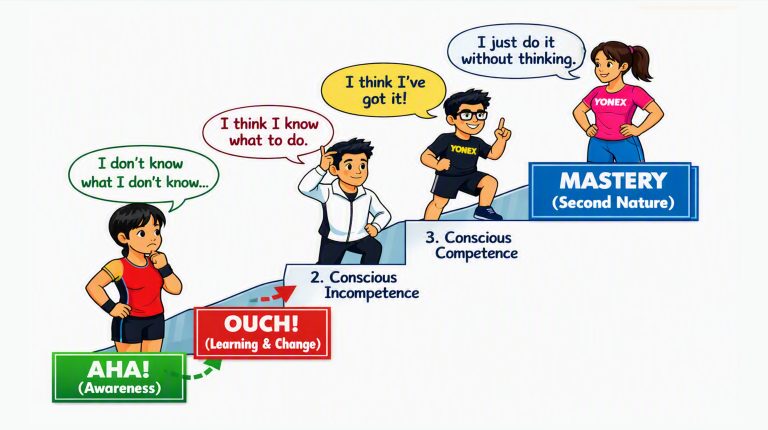
This approach is to complete the first 2 steps (the what, & when), but when partly established, to work hard not to reinforce or remind players as they progress. Click on this link or the image to read more
Many of these examples occur at the very start or end of a movement or stroke. The preparation or end positions.
This is especially true when coaching novice players in say years 1 – 3 of their development. Once these aspects are observed, reduce the verbal checking for understanding. Relace with visual using your coaches-eye.
Examples that are productive to learning could be knowledge about …
- The end racket position after a powerful high serve – over the left shoulder and pointing upwards?
- Arms & Legs wide to improve balance
- Understanding that ‘Landing with wide legs’ after striking a Round The Head jump aids with recovery
- Lunging by believing that contact is before striking or at the same time (the belief supersedes the reality in some situations)
- Using cues and imagery (that contain technical information) as a means to success
The transfer of critical technical information is ‘wrapped up’ or ‘hidden’ within
cues and suggestions, but nevertheless has an impact
Observe a players deliberate action
Create situations that will (hopefully) include those players’ actions you wish to observe.
Avoid verbalising why you are setting that task, condition, or practice.
Allow players to perform with and without self-determined intent. Observe, but do not prompt or intervene.
The coach’s intent is to create learning and then understanding through players having ‘deliberate’ intent prior to the action itself.
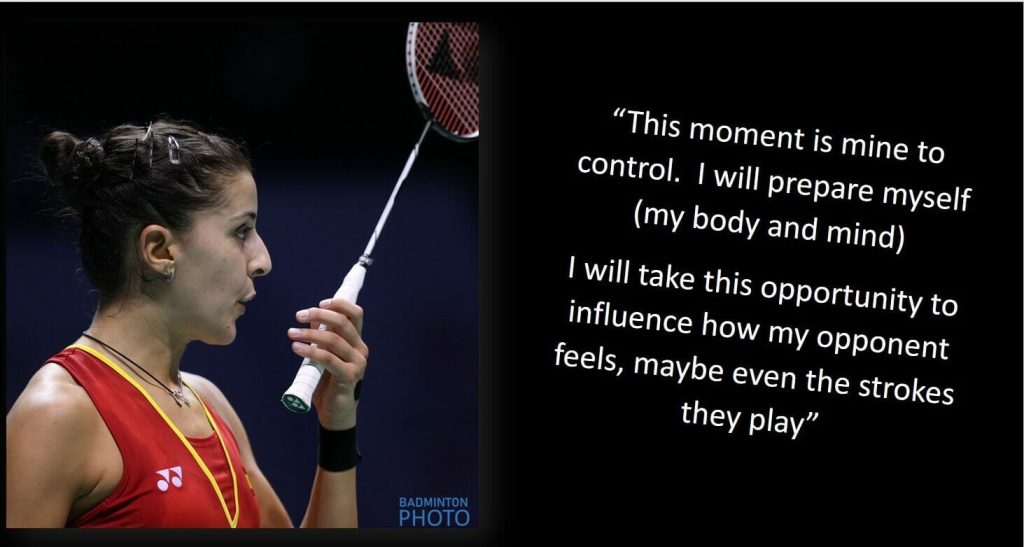
Examples that are can be observed (but include new leraning)
- Players start to use a ritual (not seen previously) when preparing to high serve
- Showing the same deliberate preparation when preparing to receive and return a low singles serve.
- How players behave when preparing for "Big Points", especially after previous encouragement (by the coach) concerning the advantages of using the rally-break time between points.
- During rallies, players demonstrate an intent to use ‘early preparation’ and a ‘desire to take a shuttle early (technical/tactical). Outcome and success may vary, but the intent is paramount.
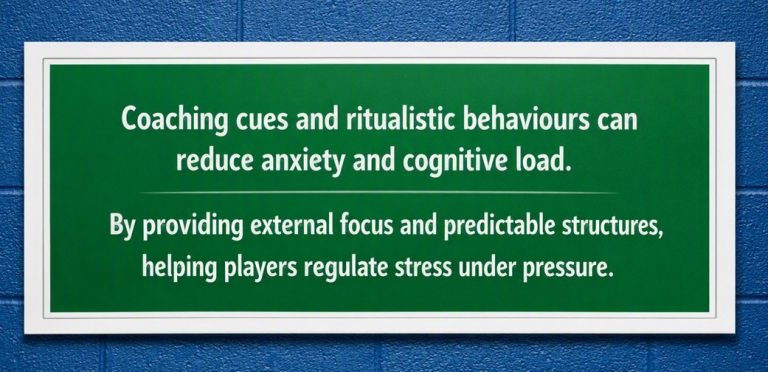
Look for ritualistic behaviour that can be seen without the coach prompting it
(although it was ‘coached’ in previous sessions)
Observe without players knowing
The learning would show’ itself’ in warm-ups, practice situations and most importantly in competition. Observed by the coach.
Similar to the other types, the action may not always be successful. However, the likelihood would increase over time.
I’m not sure how to describe this type of understanding or to advise on how to check for it.
At times, the players’ actions and thoughts may seem to be without conscious intent, but often they are driven/prepared by conscious thoughts. Either before the match (ie pre-prepared tactics) or within the match, prepared during rally breaks, game breaks, partner prompts (double) or by coaching prompts off the court.
The method for checking this understanding requires the coach to observe
without the player realising that they are being observed
Tactical understanding
Establishing the degree of learning and understanding in tactical situations can be a complex experience for the coach
Observation is the initially recommended method. If required, verbal questioning (carefully crafted) can be used.
In a practice environment
Practice situations that are either games or conditioned games are preferred.
Rally-based limited choice practices can be used; however, the amount of decision-making open to the player must be sufficient to allow for flexible tactical thoughts. Having just 2 options/choices may not be enough.
The players on the court could both act as if in competition, with both having choices (decisions), or one could have more free will than the other.
In practice, coaches should be sensitive to including sufficient decision-making
opportunities that are based on gamelike stimulus
In a competition environment
The competition environment should be used most often for checking and identifying the development of tactical understanding.
Coaches need to take into account the emotional stresses of competition. Decision-making and recall of recently developed tactics (in practice) may appear to be of a lesser than anticipated.
Initially, seek to find glimpses of development, followed by deeper learning and understanding over time.
Competition can also present challenges resulting from different playing levels. If the player being observed is far more skilled or the opposite, they are playing someone much better than they are then observations may be difficult to make.
The opportunities presented to utilise tactical ideas in competition will vary due to
the stresses, emotional responses and differences in playing levels
Effective methods for you to try
Questions, Observations, Conversations, Testing, Written
Questions
This is the most complex as the type and content of the question can elicit many different responses from the players.
Unfortunately, this is the strongest (or only) method encouraged in badminton coach education courses.
Coaches are encouraged to deliver a practice with new information and then ask a question to ‘check for understanding’.
In this example, it’s nearly a verbal exchange rather than a physical demonstration of a reply.
The belief is that if players can provide feedback (verbally) on the ‘required’ information, then understanding has taken place. Do you agree that this is proven?
Experience suggests that coaches keep asking questions until the ‘right’ answer is given.
Using questions can seem the easiest and most effective way but
can have unseen problems
Observations
Observe when the player is unaware of the observation; that’s the best time.
Do this in warm-ups, practice situations and most importantly in competition
Coaches should ask others for their observations. Assistant coaches, practice partners or even opponents can all provide information when ‘checking for understanding’.
I’ve always liked and used the idea of asking an ‘expert’ coach to come and watch your player.
This is especially useful if it is done with a spacing of say 6-12 weeks. Ask them what they see, does this confirm that changes have taken place and the player now ‘understands’.

Checking for understanding using unseen ‘casual’ observations
will always provide a robust confirmation
Conversations
If you like to ask questions, then I recommend that you have a conversation. However, ensure that it is a conversation and not just a coach asking questions. The difference is huge.
Develop a skill where the conversation flows (maybe directed by you at times) and the player responds openly.
Don’t necessarily seek the answers you want, be open to hearing how the player describes their understanding of the subject.
The conversation doesn’t need to feel like an interview it could be very short and ‘casual’ in feeling. Create opportunities to hear what the player thinks about the recent work you’ve been doing.

There are often moments at tournaments, between matches, in rest periods during training, and certainly after training. Plus create opportunities either formally through player meetings or group conversations.
You may feel challenged to work this way after years of direct questions, instant feedback and feeling satisfied that the players understand as they’ve given you the information you wanted to hear.
Have conversations to gain insight, feelings, concerns, and joys
– not a list of coaching points
Testing
Why not see if the players can apply the recent work in novel situations that are different to those used in the original practice used to introduce the ‘learning’.
Change the practice, play conditioned games with constraints/rewards, or motivate the players to distract them from the recent learning.
These differences and stimuli will provide you with something slightly different to observe.
Testing for understanding should include real game stimuli, movements, and desires
Do not test using verbal questions seeking replies you want!
Writing
Ask players to write in their own words replies to these coach questions.
I recommend that they aren’t used too frequently and are most effective if spaced between periods of positive development (in the eyes of the coach).
The questions can broad and allow the player to focus on aspects they choose (as shown below) or could be funnelled towards specific aspects, i.e., areas of the court, certain strokes/movements/tactics/recent competition performance
- “What has made the biggest difference?” – my favourite
- “What has stood out for you?”
- “What have you learnt?” – my least favourite
Final thoughts
- If players demonstrate understanding through their actions (physical, self-talk, verbal) without prompting, check if you need to ask any questions at all
- Requiring players to ‘guess’ your list of critical aspects/features/technical points is not …… ? (please insert your own thoughts here)
- Asking questions maybe needs more thought than it first appears – can you achieve the result you want by other means?
- Your observations may provide more information than you think.
- Be aware that highlighting understanding to players may be counterproductive – it’s a tough coaching balance to strike
- Performers need to know something, but what do they need to know? … maybe that’s the skill in checking for understanding
- Verbally checking for understanding is not a supplement for the fact that your practices and tasks are not developing the understanding you are hoping for!
- Coaches get easily become obsessed with checking, be comfortable with ‘casual’ soft’ checks – you need to work out what these look like for you
- Players understanding the mechanics and rationale behind something is not always required.
- Develop players with an understanding of playing, performing and winning matches. It is not to develop players (mini coaches) who could pass a coaching qualification.
Send me a question
I’m always grateful if you have read this far.
If there is anything that you have read that has helped or that you disagree with, then please send me an email.
I promise to read all your comments
It would be great to hear from you contact@badmintonandy.com