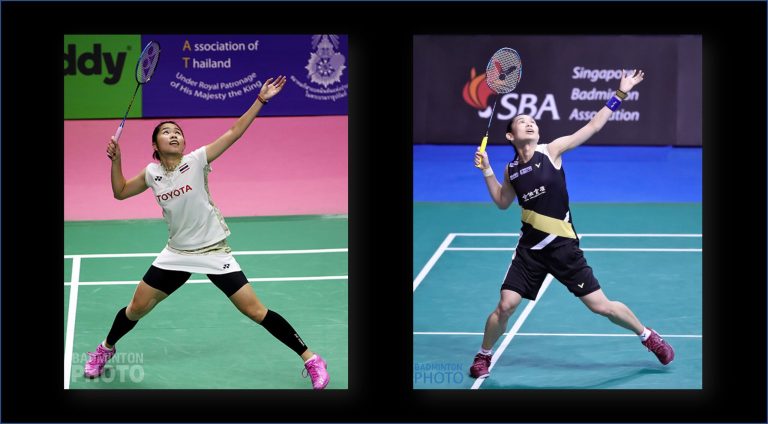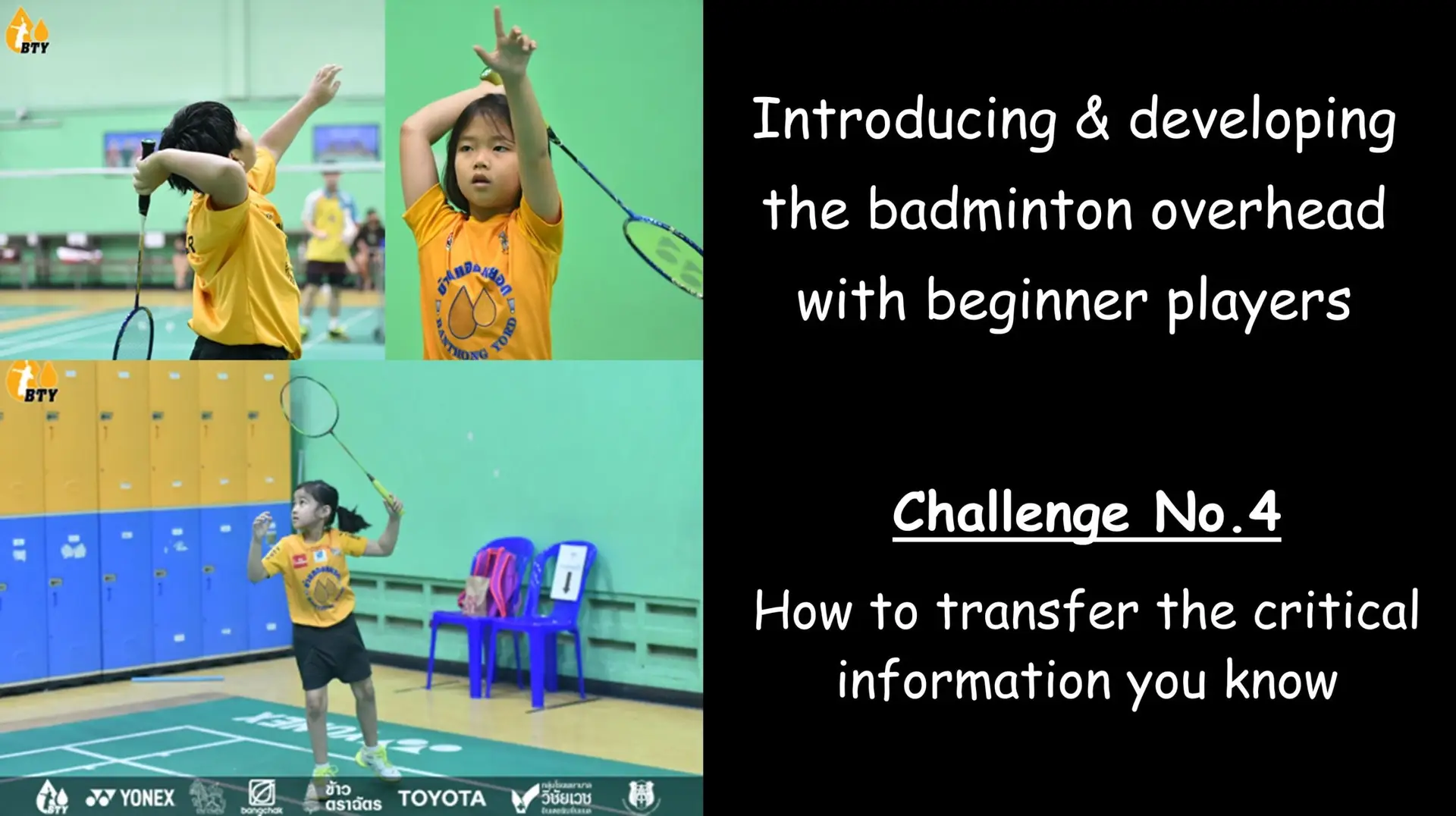
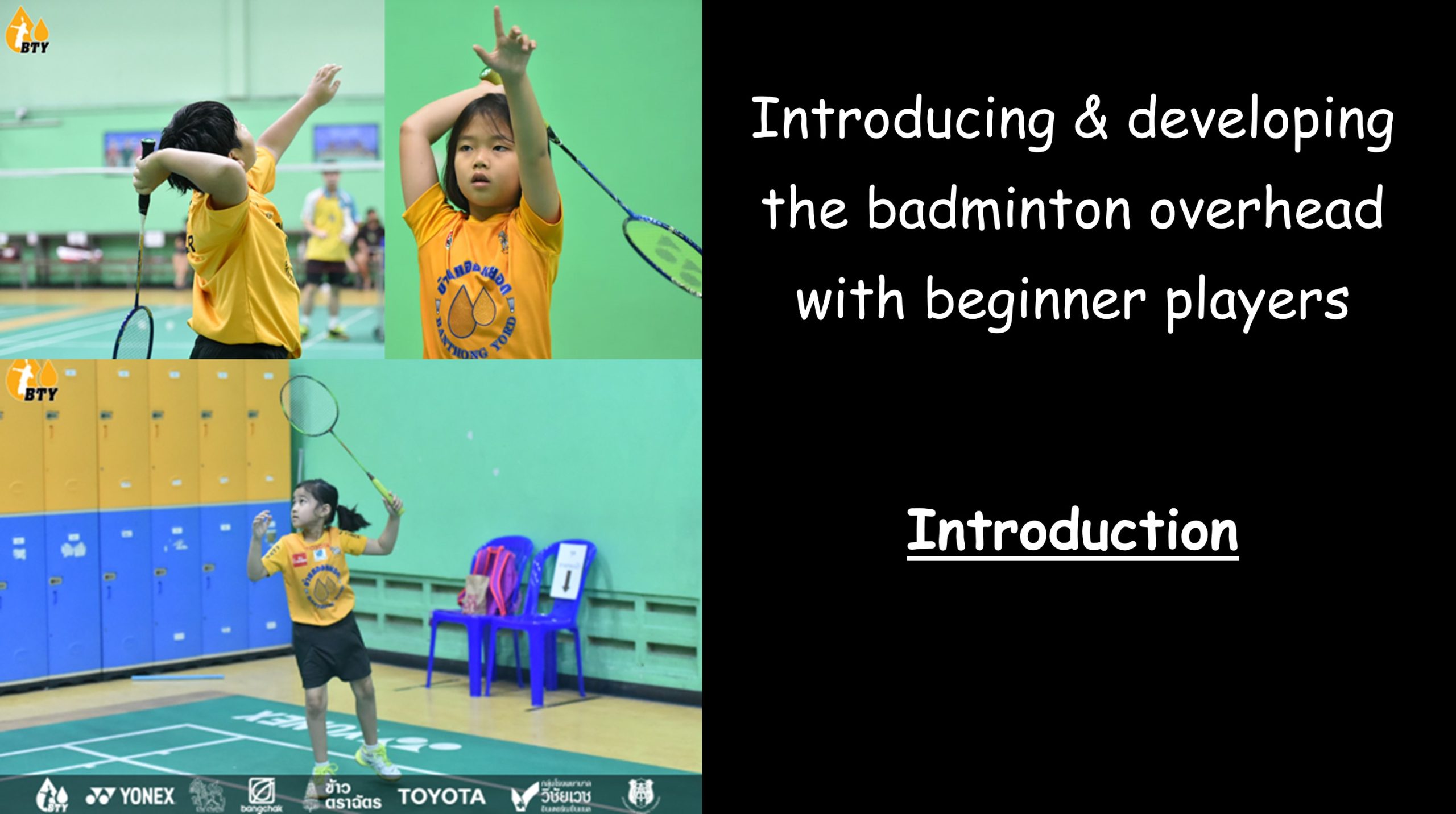
Developing the overhead forehand is a critical task
Especially with young beginner players in the first few months
It’s very easy for players to discover inappropriate techniques 🙁
The challenge for coaches is how to provide the best start
and how to prevent those future limiting techniques
Your 5 challenges
These challenges apply specifically during the first few months when working with young novice players.
The badminton overhead is critical and full of potential issues, so let’s explore them 🙂
Maybe you will have already encountered some or have information to share about how you’ve mastered them! If you have, I’d really like to hear your thoughts 🙂
What 'discovered' overhead techniques do you see
Is it something that will provide a platform for future development?
If you work with beginner players to develop a badminton overhead forehand and have experienced challenges, this information is for you.
These apply specifically during the first few months when working with young novice players.
The badminton overhead is critical and full of potential issues, let’s explore them
Over the next few posts, I’ll provide information for each of the 5 challenges that most coaches will face. Each will give you some detail about the challenge and plenty to think about, plus ideas to try.
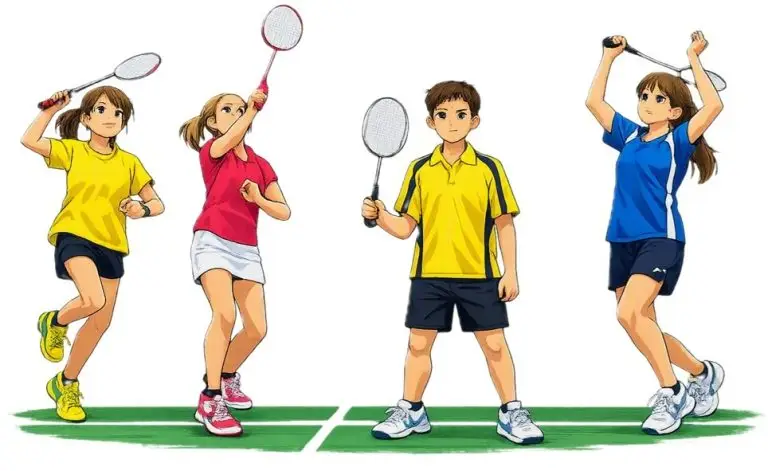
What can we agree on?
When would you start to introduce the overhead?
Do you agree that the badminton overhead forehand is one of the most important strokes?
Overhead strokes produce rally-ending shots, either with outright winners or by forcing your opponent to make an error. Players need the best start or introduction to this complex movement.
However, this movement also attracts the most coaching problems or challenges (in my opinion), maybe even more than an overhead backhand.
These challenges are varied, and the reasons for each can be very different.
Some result from the practice design, others from the players’ motivation to be ‘successful’, and some from the way young people develop and learn.
Coaches can influence these factors, and if deliberate practice choices are made, development may avoid many of the ‘traditional’ and expected issues.
Do you start to practice overheads within the first few lessons
How early in a player’s journey would you set up practices to develop the overhead forehand?
How much, if any, ‘preparation’ practice do you consider, or do you jump straight in and feed for overheads?
If you do, do you expect problems to occur?
Problems of coordination, problems with inappropriate techniques and limited eraly sucess.
Or, are you comfortable with the self-discovery techniques that often emerge. Comfortable in the knowledge that you have the remedies to ‘correct these errors’
Over the next few posts, I’ll provide information for some of the challenges that most coaches will face. Each will give you some detail about the challenge and plenty to think about, plus ideas to try.
How many of these issues do you recognise?
The challenges coaches face when working with beginners
- Ineffective and future-limiting techniques – there are many of these, but what’s a good plan to reduce the chance of them developing?
-
How to increase the level of immediate success – missing or miss hitting can be the majority of attempts in novice players
- The problems with Self-discovery (organisation) – when left alone players often revert to ineffective techniques as a means to be ‘successful’
- Varying levels of player & coach motivation – the expectation and reality of developing an overhead can be challenging
- Ineffective use of practice time – progression can be slow. Could other practice types and situations be more productive while still helping overheads?
The challenges
Click on each to read more or continue below and read about what happened when I spoke to some coaching friends
Coaches with different opinions
I spoke with coaching friends
After talking with two coaching friends, it was apparent that we had different approaches to how an overhead forehand technique could be developed.
Not the technical content but the methods that we would use in those first critical 5 – 12 months when working with novice (beginner) players.
When we discussed the individual technical elements, the differences were not that great, we agreed on the vast majority. Our list of the core must’ haves was very similar’
We even agreed on many of the different practices we’d use.
However, alternative viewpoints did start to appear
The differences grew bigger as we discussed when to introduce these technical aspects.
When we decided to use certain practices and why, that was certainly a discussion point. So was the importance of certain technique elements and how they varied at various stages of development
The more we talked about what we agreed on (or thought we did), the more differences we found.
One of us used lots of varied methods (practices), the others preferred to stay with a small set of repeatable practices
It was a strange conversation
We differed less about ‘what’ to practice
BUT
We significantly differed over the ‘when & how’ to practice
The 2 biggest differences
Difference No.1 : what to start with
- One of us had the opinion that themes/practices/coaching should focus on ‘below and around shoulder’ strokes, before concentrating on overhead work.
- They seemed certain that some essential skills could be partly developed before overhead work, and that would help the development of overhead striking.
- The other coaches disagreed and believed that overhead work could start early alongside all other strokes.
- As it was an important stroke, they believed it should be started early, even if there were lots of mistakes that they knew would happen – see challenge No.2
Difference No.2 : developing trust in the coach and the practice
- One of us felt strongly that a ‘trust in coach & process’ should be developed from the early stages. They explained that it was their term for the confidence that players had in the coaching they received and experienced.
- It allowed them to face challenges and experience failure knowing that the practice (challenge level) that was set by the coach would lead towards success (in its various forms)
- The other coaches understood the point being made but didn’t see the value in deliberately changing and adjusting the practice (challenge level). They were confident that the standard ‘classic’ practices they used would lead to success.
- They also felt that it was important that players understood that some things were difficult before they became easy. They felt that ‘constantly’ changing the practice and challenge level was a form of ‘over-coaching’
How to use this information
Deciding when to implement a particular practice
or when to emphases certain aspects is critical
I hope to prickle your thoughts and beliefs 🙂
My desire is that you will consider the discussion points and challenges; I hope you have time to do that.
The ideas and suggestions listed here are my best advice at this time. It’s up to you to decide what to take, use, and maybe reject.
Please do not assume that every statement or bullet point listed is essential or has an equal weighting. Some are ‘could haves’ and others are essential ‘must haves’
You will acquire lots of information about the badminton overhead forehand as there certainly isn’t a shortage of people stating the technical elements they believe need to be included – me included 🙂
However, there isn’t as much information about when or how to practice in a long-term, structured way starting from the first few months
The timing of the coach’s action is dependent on what the player is doing
This is the ‘hidden’ coaching skill
Send me a question
I’m always grateful if you have read this far.
If there is anything that you have read that has helped or that you disagree with, then please send me an email.
I promise to read all your comments
It would be great to hear from you contact@badmintonandy.com

![Introducing the badminton overhead – Challenge No.3 - Duplicate - [#36874]](https://badmintonandy.com/wp-content/uploads/2023/05/Badminton-Forehand-Overhead-3-scaled-1.jpg)
![Introducing the badminton overhead – Challenge No.2 - Duplicate - [#36821]](https://badmintonandy.com/wp-content/uploads/2023/05/Badminton-Forehand-Overhead-2-scaled-1.jpg)