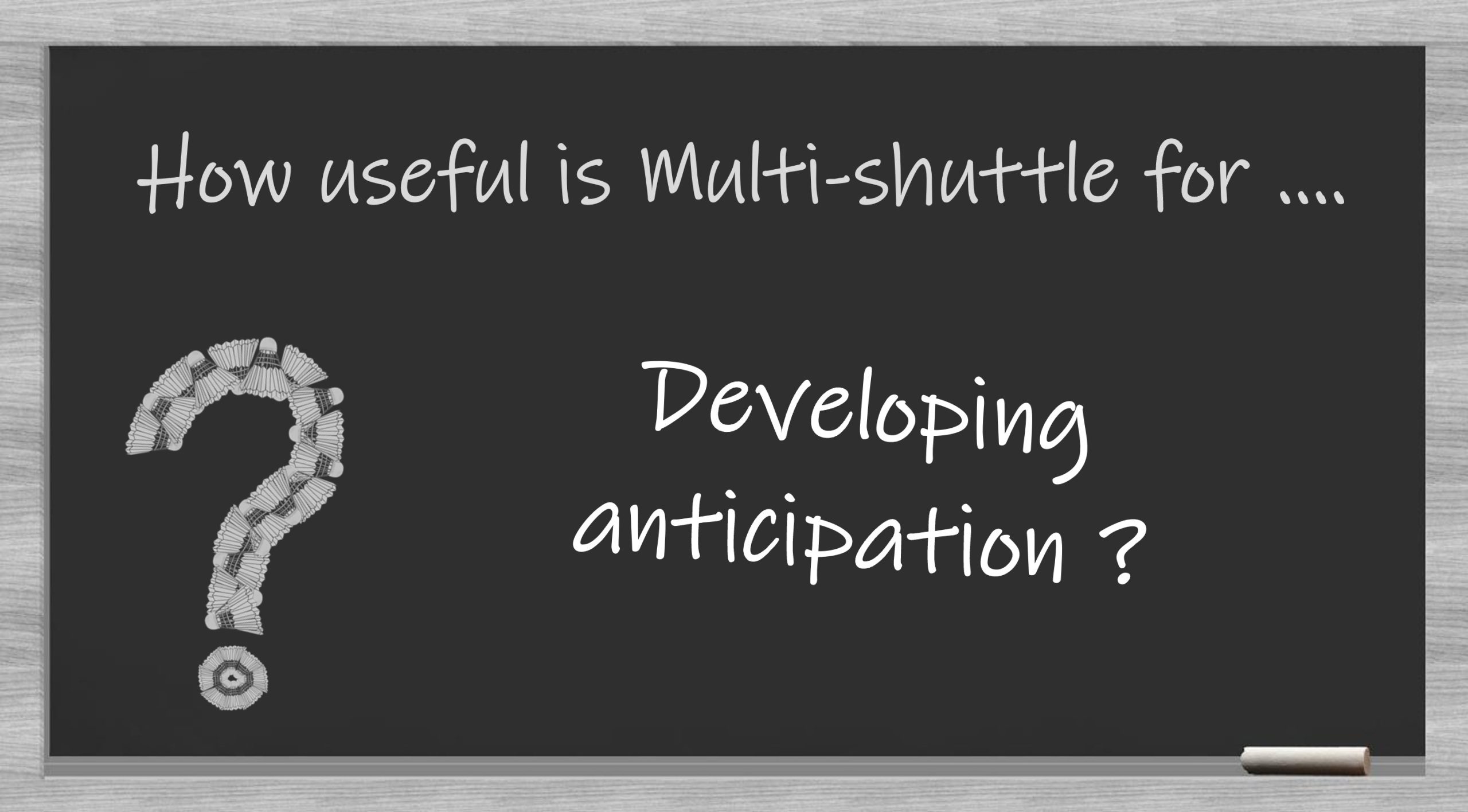
Does multi-shuttle have an impact on anticipation
Maybe it depends on your definition of ‘anticipation’
Is it the same a 'speed of reaction' ?
I don’t believe that multi-shuttle can be used to develop anticipation skills
Multi has several advantages, but this isn’t one of them 🙁
Multi-shuttle practice has many uses : some more effcetive than others
This post is part of a mini-series looking at the uses of multi-shuttle.
In sport & exercise psychology, anticipation refers to the ability to quickly and
accurately predict the outcome of an opponent’s action before that action is completed
My initial thoughts
How many do you agree with?
I’ve heard coaches state that anticipation can be developed and improved, and I agree with that statement.
However, I do not believe that using a multi-shuttle practice is an effective coaching methodology to do that.
I believe that if coaches and players set out to ‘work on anticipation’ in multi-shuttle, they will create a practice environment that is either too easy (the feeding).
Or, decide that there is ‘more work to be done’ as the player fails time after time to anticipate as they would in a game.
What is anticipation, and when does it happen, that question has stayed in my head for many years.
I do believe that reaction-type skills should be thought of as different to anticipation skills. I wonder what you believe.
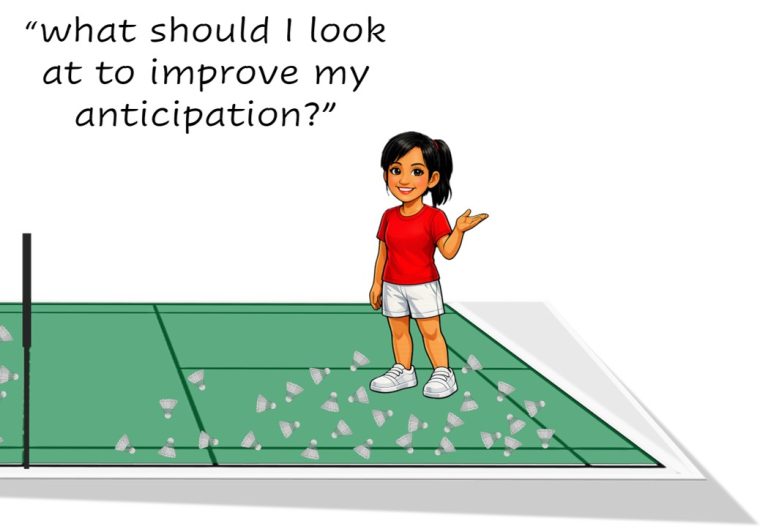
Would you agree that anticipation is ….
- What happens in the player’s mind just after they play their stroke, based on what they believe the opponent may do with the shuttle flying towards them.
- It is also based on what the player observes from the opponent: how they move towards the shuttle, their body position, their racket, even their eyes.
I’m uncertain how much, if any, of the two statements above exist in multi shuttle practices.
Especially if the shuttle is not returned, and the feeder (the opponent) isn’t moving and preparing to play that same shuttle.
How can there be any anticipatory cues to observe or consider?
In a multi practice the player will react to the next shuttle from the feeder,
is that anticipation as in a game?
Games and competitive rallies
If developing anticipatory skills is your aim, then play games or parts of a game.
Create practices that have plenty of cues (information) available to players at the level or just above that they play at.
- Practice with a single shuttle. Importantly, use an opponent who has at least two options available to them.
- Ensure that the feeder is moving towards the shuttle and not standing still
- Encourage players to ‘guess’ what may happen next. Expert guessing could be just another term for anticipation. It’s just that the better the expert, the more often their guesses turn out to be correct or near correct.
- Ensure that players are motivated to play and not just return shuttle. Could you incentivise players to work out/guess/feel what may happen next?
You may disagree with me in the belief that anticipation is based on the players immediate reaction to what the feeder does next.
Consider that in multi-shutle a different shuttle is being delivered (fed) from often a different position on the court, how is that anticipation as in a match?
What are these skills that are needed to enhance anticipation ?
Do they exist in multi-type feeding?
Using multi shuttle for improving player confidence
Positives and advantages – do you have any?
- … Please email me and send me your thoughts on why you believe multi-shuttle can develop anticipatory skills.
- ..
- ..
- ..
It’s important to develop players who love to compete,
part of that enjoyment is trying to anticipate what the opponent is about to do next
Negatives and disadvantages – do you agree?
- Anticipation requires cues (i.e. an opponent and a shuttle that is returned or is trying to be returned) – what is there to look at in multi practices?
- It’s questionable if practicing part or ‘chunks’ of play in a multi-shuttle environment does anything to improve anticipation. How can all these separate parts of a rally help players understand what actually happens in a match rally?
- Part of a player’s anticipatory skills comes from understanding what is likely to happen based on what they have just played and what the opponents is likely to do. Shuttles need to be returned in order for this to happen.
- What is wrong with playing more games, or practices that feel like games?
Multi is great for developing other aspects, but not anticipation
If you agree, then what do you do to improve your anticipation?
What do you think?
Now that you have read all the positive/advantages and the counterpoints, what are your thoughts?
Do you believe that multi-shuttle can be directly used to develop anticipation?
You may still believe that muti-shuttle has other more effective uses (of the 7 mentioned)
How you coach the practices you create will always be your choice
All I ask is that you consider why you do what you do and how effective it is
Send me a question
I’m always grateful if you have read this far.
If there is anything that you have read that has helped or that you disagree with, then please send me an email.
I promise to read all your comments
It would be great to hear from you contact@badmintonandy.com


![Keep your racket up - Duplicate - [#38056]](https://badmintonandy.com/wp-content/uploads/2026/09/keep-your-racket-up-scaled.webp)