

Have you ever fallen out of love with Badminton
It’s happened to me at least 4 or 5 times
The first few times I didn’t know what to do 🙁
Nearly every coach at one time or another experiences early signs of burnout
Recognising them can help prevent burnout
That feeling of disillusionment with the sport you thought you loved
Feeling let down by the system, your players, other coaches
Recognising that the Coach Education system can only take you so far
Left wondering how to solve your coaching problems but with no one to ask
Having no enthusiasm to get onto court 🙁
Sometimes a coach just feels they “have had enough!”
Recognising the signs and symptoms can help prevent burnout
“I’m totally drained”
“I’m wasting my time. The kids today aren’t dedicated to the sport”
“Nobody cares. Whenever I ask for something, I get no response”
Disenchantment and Disillusionment
In other words, the thrill is gone
A coach loses the urge to get onto the court, they struggle with motivation, but often don’t know why. They just know that the feeling that they had previously has gone.
Disenchantment happens when you start to not believe in something that previously gave you energy, enjoyment or support.
Be aware of these, have you ever believed that :
Have you ever believed that …
- your players do not value your input, even though you believe that you give 100%, you seem certain that they offer very little in return
- you are undersupported by fellow coaches even after you reach out for help
- your role is to produce “winners” but you can’t find that magic ingredient and your dream is disappearing
- if your players are winning, your contribution is not being valued when you believed that you made a difference
- as your players get older, they listen less. The feeling of “why should I bother” and “they can do what they like” starts to pervade

What can you do?
- Write a list of the reasons why you enjoyed coaching and see if any still apply. You may be surprised at how many still do.
- Set yourself a mini-coaching challenge to be completed over the next week. Has it been a while since you challenged yourself?
- Talk with another coach and ask them to tell you what currently inspires them.
- List some recent mistakes, recognise them, and put a plan together to change and learn from them.
- Find another coach and try some joint coaching. Watch, listen and study what they do. I promise it will inspire you.

Take action
Fatigue
Great coaching can demand a large amount of your time, energy and patience.
Be careful, your dedication can sap and reduce your energy without you knowing. You can be tested both physically and mentally. You may think that you have high levels of endurance but I promise over time you will be tested by your own dedication!
It can be super tough for you mentally with all your endless work, if you are always thinking about Badminton. Even tougher if you feel that you aren’t getting the thanks or appreciation from those you coach.
Allocate time each day, week
Do something physical. Don’t play badminton, do something that uses other muscles and movements. Running, Yoga, walking outside, gym work etc. Do something you enjoy and to a level that you enjoy, remember it’s NOT training.
Create your own time
When you stop work, try to really stop! It’s very important to give your mind a rest and to fill it with other things.
This could still be sport-related if you want, but you may wish to read, listen to podcasts, or watch films. But don’t spend all night talking on Whatsapp with players and coaches.
How about trying meditation? 🙂
You don’t have to sit with your eyes closed, although that could help. Find something that takes your mind to another place for 5 -10 mins. Research how to create a ‘quiet’ and ’empty’ mind. I go for a walk alone or with someone, outside and to talk about anything but badminton. What methods would you use?
Apathy and reduced Motivation
Be careful of your ‘inner voice’
Have you had a moment when you start talking with yourself, and it’s not all positive?
You may start to find that you are becoming more and more disillusioned and believe that “you don’t care as much as you did”. The thoughts of “doing something completely different” start to get louder.
It can be a tough phase to manage, you feel ok physically
but it’s very difficult to create motivation
Be careful of phrases such as….
- Why bother, no one appreciates me. I can’t remember the last time someone thanked me
- It’s time to do something completely different, then I’d feel better
- I give 100%, they give me 50%, why should I bother putting in so much effort
- I’m having the same problem over and over, when will things change. I’m doing my best!
- Nothing I do brings me enjoyment – why? 🙁
What can you do?
- Contact a coaching friend who you haven’t spoken to recently and ask what is exciting them in their work. You’ll find that during the conversation it sparks your thoughts and hopefully you also start to get excited.
- Listen to a podcast, my favourite way to get new ideas outside of Badminton. The Sport Psych Show is a great listen.
- Read a book or scan it as I do 🙂 I’m not the best student in the world so find it difficult to read from front to back. However, I can recommend these books. I’m always surprised by how many notes I write that help me later.

- Watching Badminton videos, this can be both good 🙂 and bad 🙁 It depends upon what mood I’m in and what information they are giving me. I really like Badminton Family as it makes sense (most of the time), I recommend you take a look. There are many others that I wouldn’t watch!
Anxiety
Have you ever felt pressure building up inside you coach?
You started to feel differently about walking out the door, you get a strange feeling when driving to the hall. The buzz has been replaced with concern, but you don’t know why.
It’s a disturbing feeling caused by anxiety that could be triggered by a number of things.
Then there are times when others notice how the little things irritate you. Things that previously went unnoticed eg players talking, players constantly wanting a new shuttle in practice, players stopping for drinks, asking questions, not listening.
As these build, the coach either explodes without warning or starts to shy away and not communicate.
Do you …
- find yourself pushing players harder (too hard) as you don’t believe they are improving fast enough … you want them to improve but are unsure if you are pushing too hard or not hard enough
- realise that you are starting to irritate players, parents, other coaches with your “professional” attitude … you are unsure if you have the correct mix of professionalism, realism and friendship
- want questions from your players but realise that they are scared to ask in case you get annoyed … you feel that they have great questions but are scared to ask
Consider trying
- Being aware that the voice in your head needs to be shared with other people. Talk with a close friend, a sports psychologist and explain that you don’t like the thoughts you are having.
- Anticipating when you may lose emotional control and and identiying the trigger. Is it a reocurring theme?
- Looking at the rest of your life, is the .Is the anxiety from badminton or elsewhere. What else is happening in your life. Work to separate your different emotions.
- Create a written list of the things that irritate you when coaching. Are they really worth getting upset about?
Supersaturation
A hidden stress that can easily overload or burn you out
Be careful of accepting every offer and question. The more you agree to, the more stress you will face.
If you always try to do your best and add value, then problems can occur.
The temptation is to make everything as good as it could be. To try to help everyone you meet. To carry out detailed, extensive planning. Spending hours on things that are sometimes valuable, but combined together take time away from you.
Saying “Yes” to everyone and everything can be rewarding and dangerous
Some danger signs of Supersaturation
- The quality of your sessions reduces due to your lack of preparation, skipping details, or simply going through the motions.
- You are aware of an icreased cynicism, developing a negative attitude towards athletes, parents, or the sport itself.
- Mood swings lead to irritability, anger over minor issues, such as players arriving late, perception of effort from players or unorganised managers of your facility.
- Coaching on autopilot, working without passion, players complaining about monotonous training sessions.
- Away from the court, you have sleep issues, disturbances or insomnia. Waking with feelings of fatigue. Also, your body changes with signs of weight loss or gain.
What can you do?
- Learn to say no. Even to friends. Consider uisng “send me an email and I’ll ….”, “I would love to help but I can’t make time until….”, “I can talk with you for 15 mins ".
- Develop relationships where others ask to help. In fact, they demand tasks during practices that take some of the workload off you.
- Work out where your 70% limit is and give everything inside that limit. However, contribute 100% of your effort
- Listen to trusted friends when they suggest that maybe you are doing too much.
The sport that once brought you joy was once enjoyable,
now feels like a heavy burden or a a ngative expereince.
Conflict
Coaching battles are easy to create but difficult to win
Of course, there are many sorts of battles: those inside and outside the sport and those in your head.
I’ve found that many of the battles just can’t be won without compromise.
Look out for the signs
You are constantly saying that “no one supports me”, you demand support and argue with others for it, however, it never comes.
Another coach challenges your views, so you retaliate with emails. They respond again and so the conflict begins.
Players argue with you and your methods. However, you believe that your training will turn them into World Class players in 10 years’ time, so they should listen!
What can you do?
- Reducing conflict with others by creating a close circle of friends 4-8 people is ideal.
- Create a “Sphere of Agreement” within which you are allowed to have different viewpoints but you all agree on what is outside the sphere.
- Be respectful of other peoples viewpoints. You don’t have to agree with them but accept that they have an opinion.
- Don’t try to “convince” everyone that your viewpoint is correct. Yes, offer information but don’t pressure them to look for an agreement.
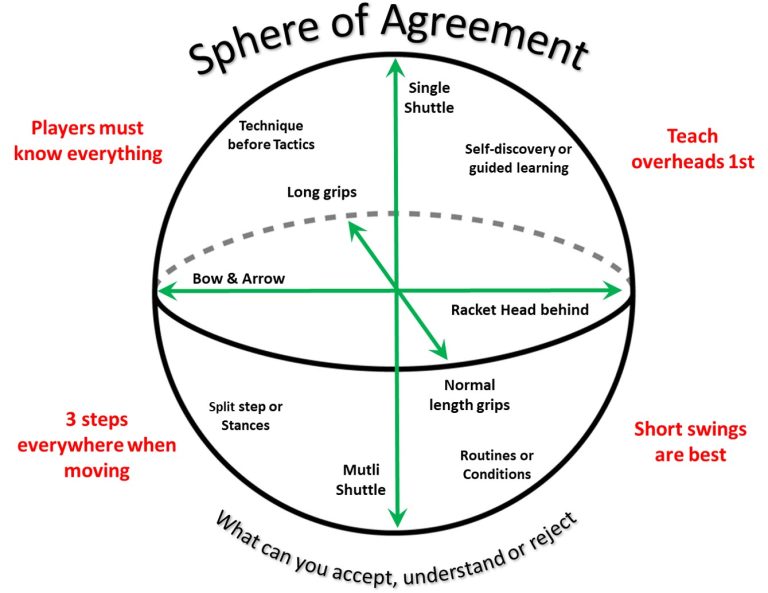
Only by sharing advice and viewpoints can we help other Coaches
Mike Davenport discusses the 7 reasons why good coaches fail,
and why you should care about “WHY”
Send me a question
I’m always grateful if you have read this far.
If there is anything that you have read that has helped or that you disagree with, then please send me an email.
I promise to read all your comments
It would be great to hear from you contact@badmintonandy.com


![Early Preparation always - Duplicate - [#38141]](https://badmintonandy.com/wp-content/uploads/2026/09/early-preparation-always-scaled.webp)