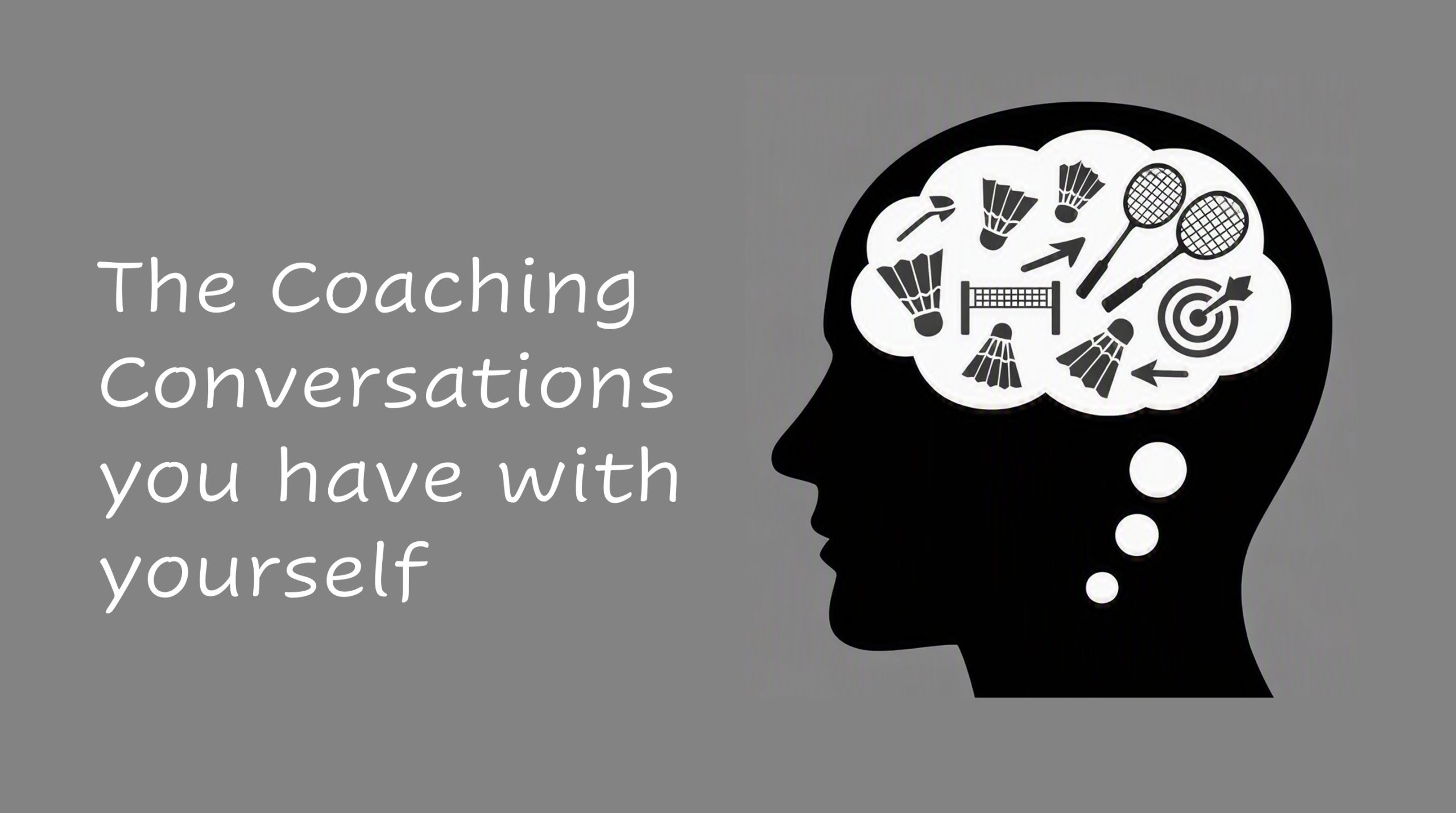
How do you mange all the conversations with yourself
Where you given any advice in your Coach Education
Those 'in-the-moment' coaching decsions that you could make
You will always have to leave some choices unused in your mind
Are you skilled at deciding which is the best of your ‘uncertain choices’ ?
This is part 2 of the conversations that started me thinking
Coaching is a series of uncertain choices
If you haven’t, go and read this post first: click on the image
It gives you an insight into a conversation that I had with a coach friend where we discussed how we often made best ’ a guess’ choices in our coaching.
Often based on a thought or voice in your head.
It is a skill that every coach needs
Can the inner ‘Coaches voice’ be taught to a coach
The art of comparing one coaching option to another in our minds before acting.
We wanted this skill to be taught in coaching courses. The skill to plan and also to adapt with a ‘guess’, all because of a coaching ‘feeling’.
Who was helping coaches explore what concepts, strategies and thought processes to use?
What are the observations, triggers and player needs that cause coaches to make these choices and changes?
Neither of us had ever been taught or introduced to this concept on an official Coach education qualification. But, we wished we had!
You will always have to leave some choices unused in your mind
Are you skilled at deciding which is the best of your ‘uncertain cchoices’ ?
We wanted this skill to be taught in coaching courses
The skill to plan and also to adapt with a ‘guess’, all because of a coaching ‘feeling’.
Who was helping coaches explore what concepts, strategies and thought processes to use?
What are the observations, triggers and player needs that cause coaches to make these choices and changes?
The sad thing was that neither of us had ever been taught or introduced to this concept on an official Coach education qualification. We both agreed that we were always comparing one coaching option or another in our minds before acting.
So why was it not part of a qualification?
Where did those instant’ unplanned coaching actions come from –
that is a tough question!
We disscused these thoughts - what would you contribute
- How many times in a session did we move away from the original plan – but how we still always ‘planned’
- How often do we make the ‘correct’ coaching decision – or were we ‘guessing’, then reflecting, then adapting?
- What caused us to make that change – the triggers, the observations, the guesses, and many more
- The inner coach’s voice in our heads – what was it saying, how loud was it, how it developed, and did we trust it?
- Did we fear the compromises and changes we made – who policed our actions and checked how valid they were (did they work?)
- How we felt when we made an uncertain choice – what we immediately looked for as reassurance (that’s me!)
- What we’d been taught and encouraged to do on coach education courses - how we act very differently nowadays. Could that original advice be amended?
The agreement we reached
After an hour of coffee and cake, we decided that we had to agree on something.
Surely all coaching isn’t just a series of guesses, compromises and uncertain choices.
These statements were the best we could come up with.
If you have others or disagree strongly, let me know. I’d welcome your thoughts
Our underlying thoughts were that the flexibility (of thought & actions) required by coaches needed to be recognised in Coach Education, and it’s currently NOT, in our opinion.
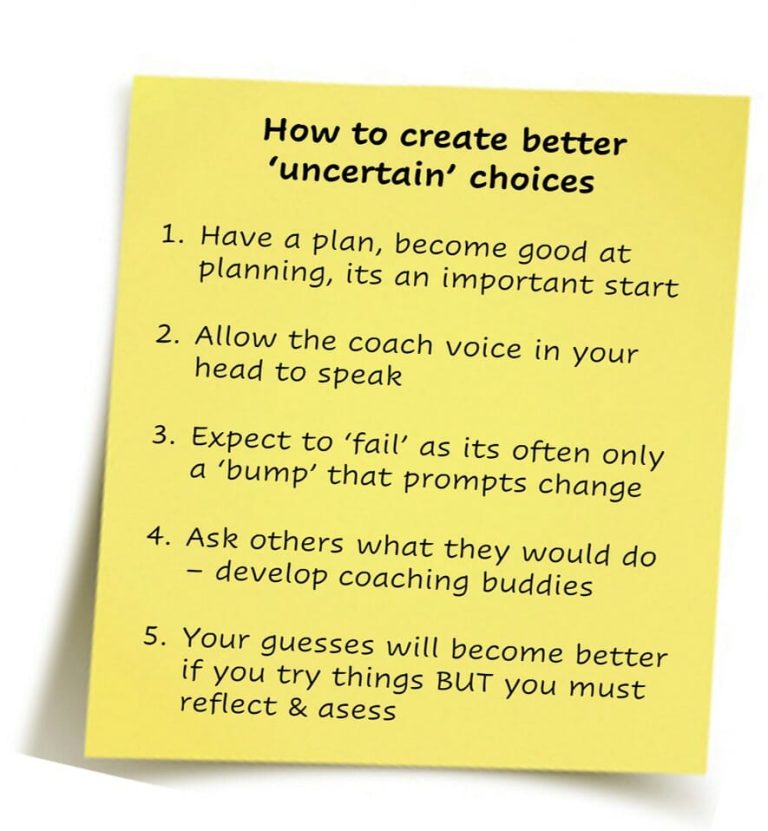
- You need a blueprint, an overall plan to follow, to act as a guide – but there must be many mini-variations within the plan (how many different choices can you be comfortable with?)
- The requirements of the player in front of us were paramount – wasn’t the reason that we were there to help develop that person. Their needs in that moment always trumped our plan.
- There are many things you could change in the practice – but how do you develop the skills to decide and to feel comfortable with uncertain choices, or ‘educated guesses’ as we call them
- Be prepared to make the wrong choice – Don’t worry, expect to adapt and to ‘fail’, although often it’s only you that knows you are failing!!

- It’s ok to change your mind during a lesson – it’s your next decision that counts, whatever it is, why not trust it?
- Ask someone to stand next to you – develop a network and work with a ‘critical friend’. Ask them to observe and to see if they could spot your in-the-moment changes/decisions.
- You can’t always coach what you want – sometimes you have to hold back and improve something else before addressing the aspects you wanted to initially coach. Remember, the needs of the player in front of you is more important than your plan.
Do you see compromises in the statements above?
How many are part of any coach education systems?
Questions for you and a coaching friend – how do they make you feel?
Ask a friend how many times they make an uncertain choice in their badminton coaching sessions.
Do they have a voice in their head constantly suggesting options and variations, and if they do, can they trust it?
Do you see your coaching decisions as a series of informed compromises or best guesses?
Do you want a conversation?
I’d like to hear from you if you have a viewpoint on anything that you’ve read
We don’t need to agree, but explore viewpoints.
It would be great to hear from you, send me an email : contact@badmintonandy.com
This is part of a series of conversation starters.
Although not in detail, the posts are written to get you thinking and talking with others.