Some people say thats is the to sucess
I’m not sure if that’s completely true
But, if you are not developing your movement
then it will certainly be tough to improve
Question 1
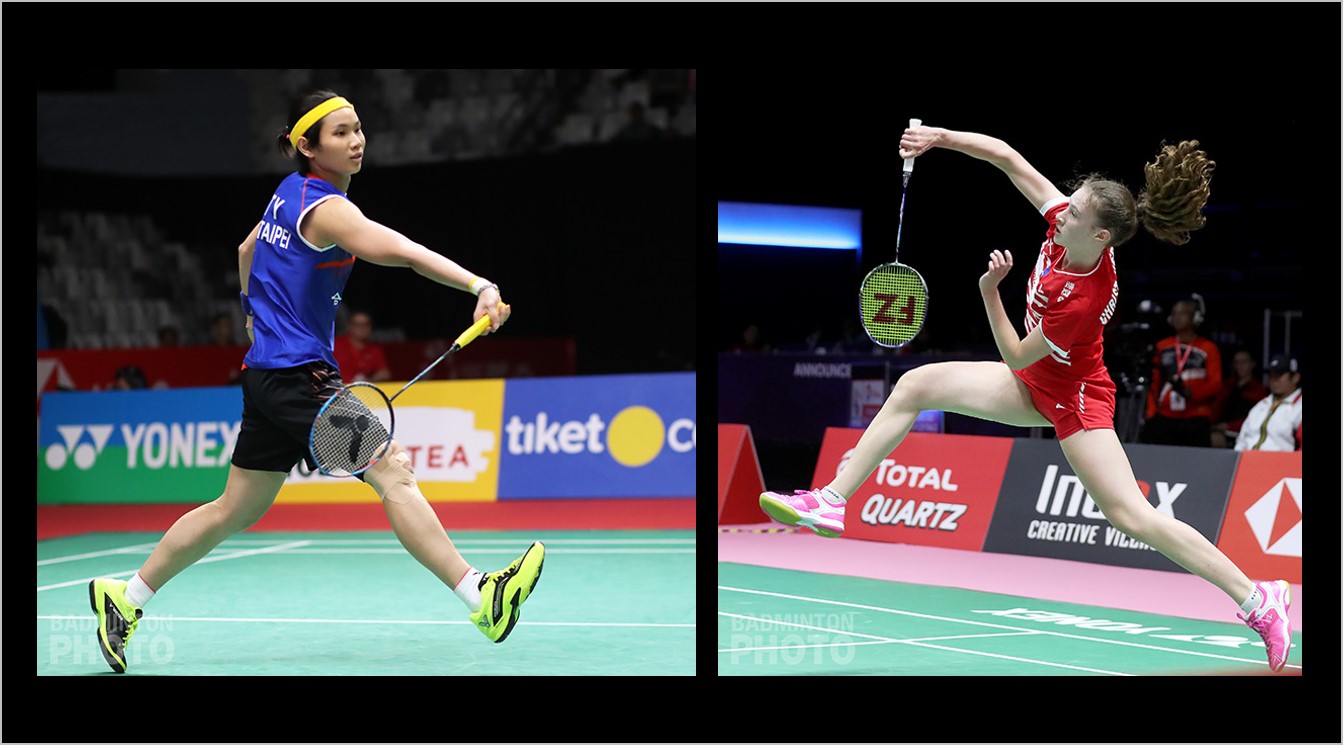
Consider these while you watch the movement skills of Tai Tzu-ying
.. what movements does she use?
.. how many different stances are adopted?
.. how can you set up a practice that includes stances and indecsion?
.. how many stances then suddenly change after the shuttle is struck?
Use all types, don’t limit yourself
Are you biased towards favouring certain movement types?
Ensure that you practice all different types of movements and are able to combine them together. Chasse, running, lunging, jump lunging, stopping, starting, vertical & sideways jumping, and recovering.
Don’t forget to include stances. This could be the most overlooked element in your practice and coaching. If you have not thought about the Stances you take up in a game, they may add that extra you need. There si more to read below.
Even within what seems to be the same court situation, your movement may vary as you play against better opponents or as you improve your physical and anticipatory skills. Are you changing your practice situations to stress and test your movements?
Just knowing all the movement types is not enough
Are you changing your practice situations to stress and test your movements?
Question 2
When to Run, when to Chasse?
Some people believe that you should always chasse in the forecourt going to the net.
Running is certainly faster than a chasse technique, especially over a longer distance.
Consider varying the feeding; in fact, don’t always ‘feed’. Deliver tougher feeds by varying the flight, speed or direction, especially the starting position of both players.
Do you see changes in the movement to these different, varied feeds?
The difference in a feed can cause you to change from a step lunge to a long lunge and then to a jump lunge, just by deliberately changing the ‘feed’.
Question 3
What’s the ‘best’ way to recover from a Round-the-head stroke: chasse/cross over walk, fast/slow?
Can all movement types and combinations be possible.
Does it depend on the stroke that’s played (drop/slice/smash/etc)
Also, how good was that stroke, where will it land, how it did it fly
However, it also depends on the reaction of the opponents to the stroke played – please consider this.
Can you really just practice one type of movement if the situation varies ?
When practising recovery from the Round The Head court ask your partner (feeder) to return (defensive block) in different ways. It makes a huge difference to your recovery footwork if they hit the replt straight or cross, long or up and over, quick or loopy.
Think about all the different recovery movements you would do in these scenarios.
Hopefully, they may ‘accidentally’ block high at the net for you to think about killing.
Recovery is important
The recovery part of a movement practice is often forgotten
The recovery I’m suggesting you consider is one that takes into account the stroke you have played, its a meaningful recovery.
Recovery isn’t just trying to get to the next shuttle (especially in a multi-shuttle) as fast as you can.
I recommend that you think about recovery as a movement that helps you take up an Early Preparation for the opponent’s most likely next shot
Question 4
How to practice ‘meaningful’ recovery?
In practice, include for recovery in relation to the shot you have just struck.
If it’s tight or loose, will the recovery change?
This may mean in order to improve your recovery movement, you may have to stop doing single-shot practices or using multi-feeding sessions.
Practice recovering in relation to the shuttle being returned. And, of course, ask the feeder to return that shuttle!
Example
When you practice your recovery from the Round The Head drop shot, ask someone to return it in a variety of game-like replies. Each reply can help develop a different or improved recovery movement.

Early to the shuttle
As a basic, players should, if tactically applicable,
try to take the shuttle as early as possible
How do you encourage ‘Early to the Shuttle’?
Think about movements in practice, how many times do you consider trying to take the shuttle early?
It’s a mindset as much as a physical movement.
It’s a tough thing to achieve!
The physical and mental aspects should not be underestimated
This often results in one or both feet off the court, not necessarily in a vertical jump, but this is the most common observation. Jump-lunging and long stepping should also be employed to shuttles below shoulder height.

Warning
The desire to “take the shuttle early” should not be at the expense of an unbalanced movement or poor recovery.
If your desire is stronger than the moving, stopping and recovering technique, then think again.
However, if it’s a kill opportunity, does this change your view?
It’s essential to practice with different situations where you have time to choose how early to take the shuttle.
Time to decide if it’s appropriate to ‘take it early’ or to ‘wait’ a little.
I guess waiting may not be the best description to describe this small pause and consideration. Do you have a better description?

Question 5
Which areas of the court would you start to encourage an ‘Early to the shuttle’ mindset?
I belive its more of a mindset question, rather than a physical movement.
Yes, actually striking the shuttle early is important BUT that is secondary to the intention to prepare to take it early.
The challenge for the coach is to instil the desire and then see what physical developments are required.
Which of these areas would provide a young player with opportunities to explore what it would look and feel like to take the shuttle early?

Stances
The correct starting stance is vital for quick, efficient movement
all stances are ‘anticipatory’
Stances will vary depending on the position of the shuttle and the likely replies from the opponent.
They are adopted before the shuttle is struck by the opponent. Either as a timed transition between movements or as ‘early preparation’ movement/postion.
Generally, a stance should be taken that allows quick movement to the opponent’s stroke that would strike your side of the court first
If this is new to you, take a moment to go back and read the text again.

Question 6
How familiar are you with using and coaching Badminton Stances ( all 3 of them)?
What have you read or what video have you watched that explains the purpose and practices to use in development?
If you are a player, when were you first introduced to using these 3 Stances?
If you are a coach, then do you introduce stances via other practices or explain in detail when they could be used?


Pretension / Split Step / Preloading
This point could be a post all of its own
There are so many different views on how to practice the ‘Split Step I get very confused.
Nearly all over movements should start with a pre-tensioning action of the legs. This is often combined with the action of taking up a stance or in the transition between other movements, such as recovery and early preparation.
It’s Anticipatory, not Reflective
This means that you (the player) will start the movement ‘before’ the opponent strikes the shuttle.
Before you know where its going!
It’s this ‘timed loading’ of the legs to coincide with the opponent’s striking of the shuttle that creates the fast initial movement.
Try incorporate this ‘starting’ movement in your practices and feel the increase in faster initial movements.
The action when correctly timed increases the speed of the next movement
and will also allow the player to change direction quickly if required

Question 7 (in 4 parts)
7.1 Do you agree that this movement happens in a rally?
7.2 If so, when do you see it, and when do you not?
7.3 Do players really ‘split’ in the direction they move? (do they always guess correctly)
7.4 How can this be practised on court with rackets and shuttles, without shouting “Split”
Anticipatory Skills
Good anticipatory skills are essential for quick badminton movements.
If you feel confident in your anticipation, you will find that you have ‘extra’ time to prepare.
Check how much of your weekly training includes real game-like decisions, and use practices or matches that include.
The key is to practice with indecision in training
The target of the practice should be to anticipate the opponent’s reply and prepare for that by the use of early preparation from the previous stroke and the correct stance.
Make the practices gamelike by using one shuttle, game speeds, include decision-making, including some free will, and ensuring that there are winners and losers.
Question 8
Do you believe that anticipation can be developed?
If so, what do you do, include and consider in your practices to become better at anticaption?
If you don’t believe that anticipation can be improved, why not?
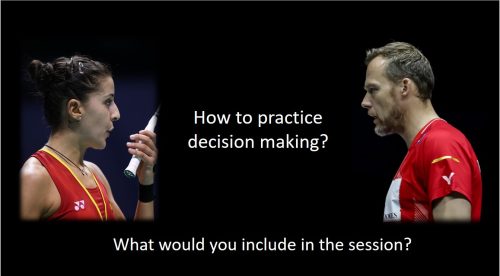
Send me a Question
I’m always grateful if you have read this far.
If there is anything that you have read that has helped or that you disagree with, then please send me an email.
It would be great to hear from you contact@badmintonandy.com

![6 Ways to develop effective Badminton grips base info for edit - Duplicate - [#28008]](https://badmintonandy.com/wp-content/uploads/2019/12/Badminton-grips-landscape-1.jpg)