
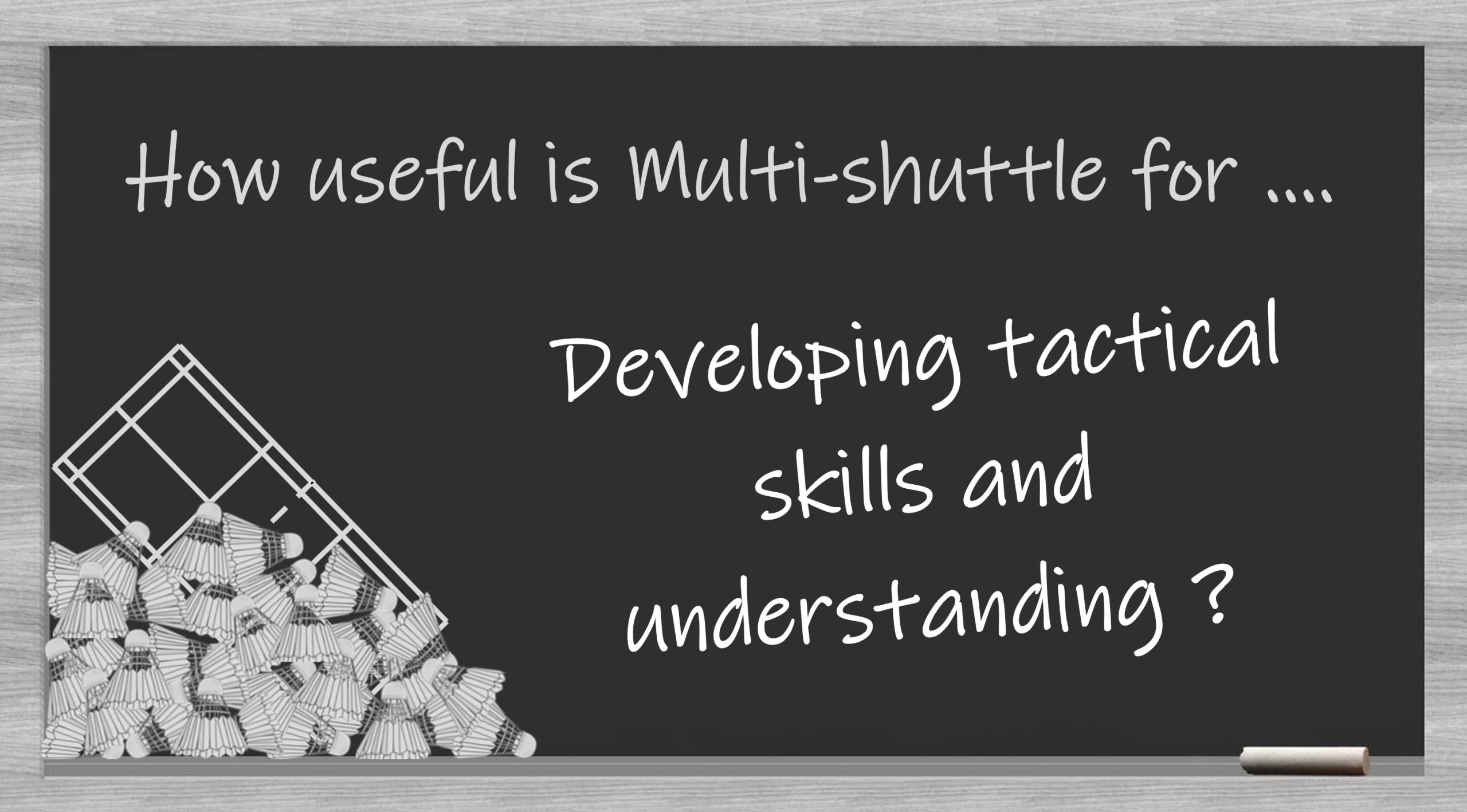
Can tactics be developed using multi-shuttle
To stimulate and develop tactical thoughts
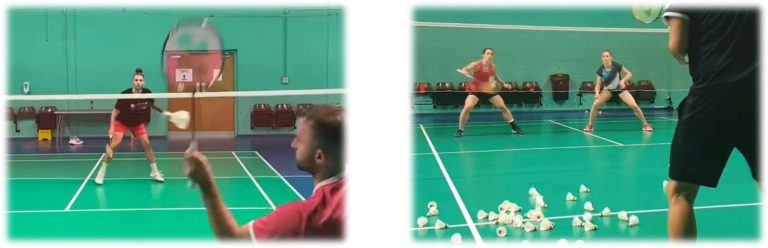
When feeders don't return the shuttle or move much (or at all)
I guess it depends on how you define ‘Tactical’ skills
If you believe that using multi single shuttle (unopposed) practices leads to gains in tactical thinking in competition, it would be great to hear from you
This post is part of a mini-series looking at the uses of multi-shuttle.
I don’t belive that repeating patterns of play
using multi shuttle feeding can develop the tactical skills
My initial thoughts
How many do you agree with?
I don’t believe that using multi-feeding will improve a player’s tactical understanding. Multi-feeding situations will certainly allow players to experience movements and strokes that they use in a match.
However …..
- Tactical thoughts are made up of anticipation, perception, what-ifs, plans or ideas to try, all based on what an opponent could and is likely to do to the shuttle they have just played.
- What is the information that a player requires to make a tactical decision, and does it exist in a multi-shuttle practice? Especially if the shuttle is not always returned.
- Where are the 'clues', the cues that a player sees, anticipates as there would be in a match (because there is a feeder rather than an opponent)
- If the shuttle isn’t returned, the effect of your stroke on the opponent will never be known.
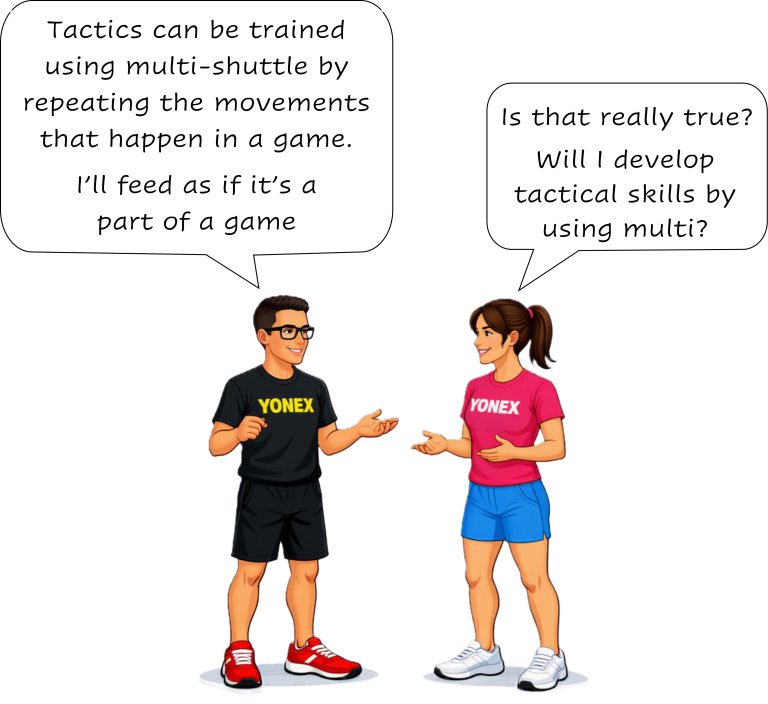
- Players don’t respond to the shot they’ve played; they respond to the next shuttle that is being delivered by the feeder. How does that fit with tactical thinking?
You may disagree with me in the belief that if certain patterns are repeated by using multi-feeding, taht then will automatically transfer into a real competitive match.
Is this a proven fact, is it supported by both sports science and experienced coaches?
What role do games and especially sparring sessions with player-to-player feedback play?
What are these skills that are needed to enhance tactical thoughts?
Do they exist in multi-type feeding?
Using multi shuttle for developing tactical skills and understanding
Positives and advantages – do you agree?
(I don’t necessarily agree with the points below; they are made for your consideration only)
- The coach can feed patterns of play, allowing the player to experience and work out strategies in response
- The stress of uncertainty caused by the opponent’s options (in a real match) can be removed to allow a simpler picture when first experiencing discussing tactical situations
- Some aspects (such as doubles rotation) are just too complex and need to be broken down into single shuttle multi routines/drills
- Many tactical ideas are too complex to introduce in gameplay so there has to be a place for other practices: coach feeding multis are the answer due to the controllable nature of the practice
What are the signs to look for to determine that a positive transfer of tactical thinking
has happened between practice and competition?
Negatives and disadvantages – do you agree?
(I don’t necessarily agree with the points below; they are made for your consideration only)
- Tactical improvements require anticipatory cues i.e. an opponent (who acts to gain an advantage or negate something), and a shuttle that is returned or is trying to be returned. What and where are the gamelike anticipatory cues in a multi-practice, do they exist?
- It’s questionable if practicing part or ‘chucks’ of tactical moves, then putting them back together, transfers into real game tactical thinking. Certainly, players can move in patterns, but can they react and adapt tactically in a real game that is full of uncertainty
- Hpow can players gain developements in identifying opponent cues as they would in a real match if the feeder just feeds anddoesnt move in anticipation, preapre, strike and move again.
- Uncertainty of feeder delivery is NOT the same as game-like uncertainty. Relying on the feeder to act like any opponent is unsound and very problematic
- Tactically, in a multi-single-shot (isolated)practice, the effect of the last stroke is never experienced as the feeder strikes a new/different shuttle. This therefore then removes any opportunity for a tactical move/thought as they would in a real game.
- Can players make anticipatory moments before the next shuttle is struck? In a real game, this is required, in multi (unreturned shuttles), they have no cues/stimulus to base their anticipation upon
To develop tactical thinking players need to experience
real game situations in a real game environment
What do you think?
Now that you have read all the positive/advantages and the counterpoints, what are your thoughts?
Do you believe that multi-shuttle can be directly used to create and devlope tactcical think and understanding?
Would it be your go-to, No.1 practice, or would you be wary of believing that tactical development comes from multi-shuttle?
You may still believe that muti-shuttle has other uses (of the 7 mentioned) and that is your choice.
How you coach the practices you create will always be your choice
All I ask is that you consider why you do what you do and how effective it is
Send me a question
I’m always grateful if you have read this far.
If there is anything that you have read that has helped or that you disagree with, then please send me an email.
I promise to read all your comments
It would be great to hear from you contact@badmintonandy.com

![Introducing the badminton overhead – Challenge No.3 - Duplicate - [#36874]](https://badmintonandy.com/wp-content/uploads/2023/05/Badminton-Forehand-Overhead-3-scaled-1.jpg)
![Introducing the badminton overhead – Challenge No.2 - Duplicate - [#36821]](https://badmintonandy.com/wp-content/uploads/2023/05/Badminton-Forehand-Overhead-2-scaled-1.jpg)
