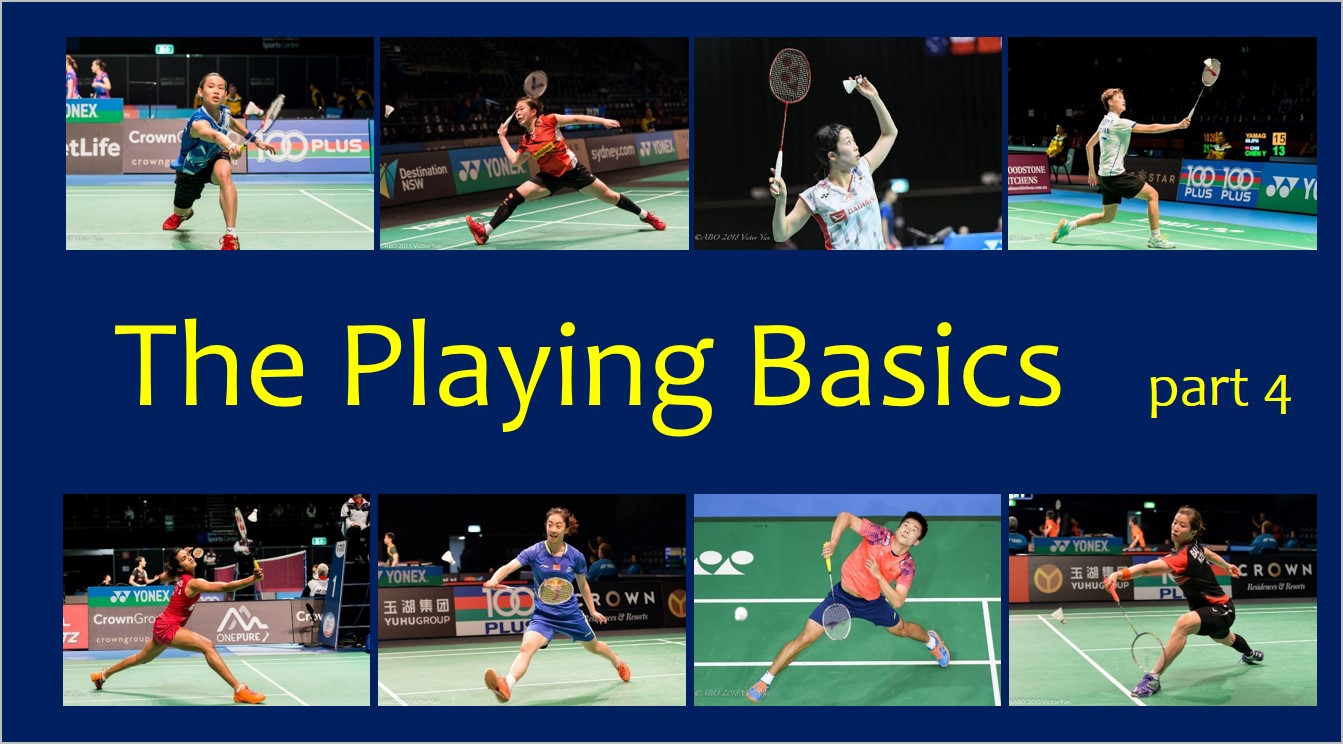
Technical Badminton Playing Basics
Part 4 and the final post
The components underpin all strokes and movements
Lunging, Turning Sideways and Taking it Early
A quick reminder
if you haven’t read the previous Parts, then please don’t expect a list of strokes.
The Playing Badminton Basics aren’t names strokes such as High Serve, Smash, etc. They try to state the components of hitting and moving skill, the parts of strokes and movements.
I would recommend that you focus on these components as they certainly affect the larger more complex strokes and movements.
Technical Basics 8 -10
- Lunging timing principles
- Sideways turning just prior to contact with the shuttle
- Contact at the highest point
Lunging Timing Principles
Most shuttles taken wide or in front of the body require a lunging movement onto the racket foot.
In order to maintain balance for strokes taken very wide with a lunging action, the foot lands as or just after contact with the shuttle.
This will also have a large contributory factor to aspects such as power production, recovery, deception and net spins.
Especially with novice players, the aspect of encouraging landing before contact is a great coaching point. You may find that net shots ‘jump’ off the racket strings and go over much easier than if the foot was placed down before striking.
A mindset of “Hit-Land” is essential for developing players as it encapsulates the desire to “get there early.”
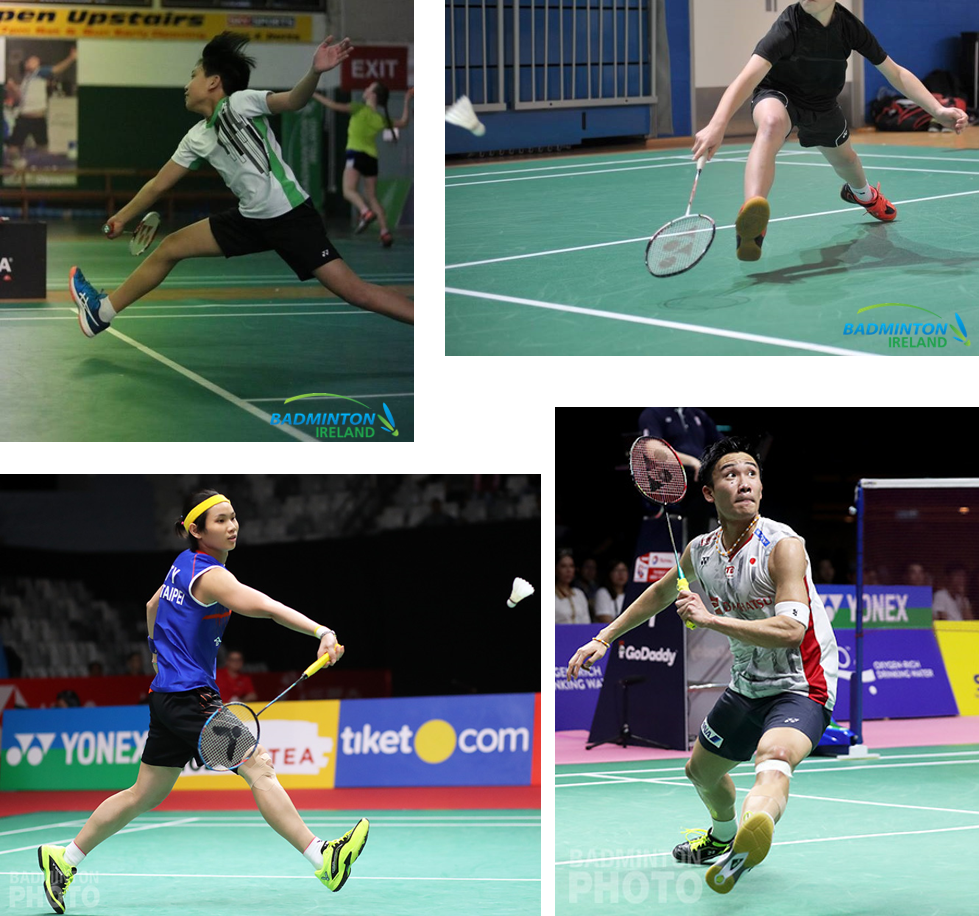
Competitive Badminton requires shuttles to be below shoulder height,
resulting in ‘the shuttle being struck before or just as the foot lands’
Do you agree with these:
(Explore the possible contradictions)
- Is it essential that contact is always before the foot lands ? … NO
- Should you encourage landing then hitting ? … NO
- Should you feed to encourage “Hit – Land” ? … YES
- Does “Hit – Land” increase power ? …. YES
- Will “Hit – Land” aid recovery ? …. YES
- Is it essential that contact is always before the foot lands ? … NO
Encourage a ‘Foot Out’ movement in lunges
Sideways turning just prior to contact
Most travelling movements in the preparation for hitting finish in a sideways turn of the body before striking. This can easily be seen in the preparation for forehand overhead strokes and lunges in the forecourt.
It is very easy to see when players perform with incorrect technique and play overheads with a square to net position and when lunging, place the non-racket leg forwards.
Use this Playing Basic to encourage a sideways turn or early preparation position just prior to contact. Have you thought about creating fun games to encourage this movement?
For running movements, forwards or backwards (especially forwards),
Encourage players with a rhythmic phrase, “Run and Turn“
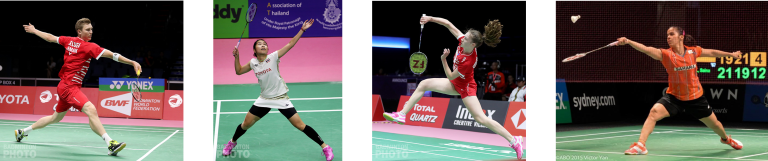
Contact at the highest point
Taken as ‘Tactically’ early as possible
Reduce the time your opponent has to respond, the shuttle should be taken as early as possible.
Therefore, movements should always be performed in order to strike the shuttle at the highest point, if required tactically.
The tactical element is very important.
Yes, encourage players to have a desire to jump, stretch, reach and move quickly. But, not if this results in them being placed at a disadvantage tactically.

Players need to practice trying to strike the shuttle at the highest point
Then they should be encouraged to determine if the result was worth the desire
What do you think?
I hope that these 10 Badminton Basics have stimulated you to think about what underpins strokes and movements.
I would really like to hear what you have to say.
Send me a question
I’m always grateful if you have read this far.
If there is anything that you have read that has helped or that you disagree with, then please send me an email.
I promise to read all your comments
It would be great to hear from you contact@badmintonandy.com


![Keep your racket up - Duplicate - [#38056]](https://badmintonandy.com/wp-content/uploads/2026/09/keep-your-racket-up-scaled.webp)