
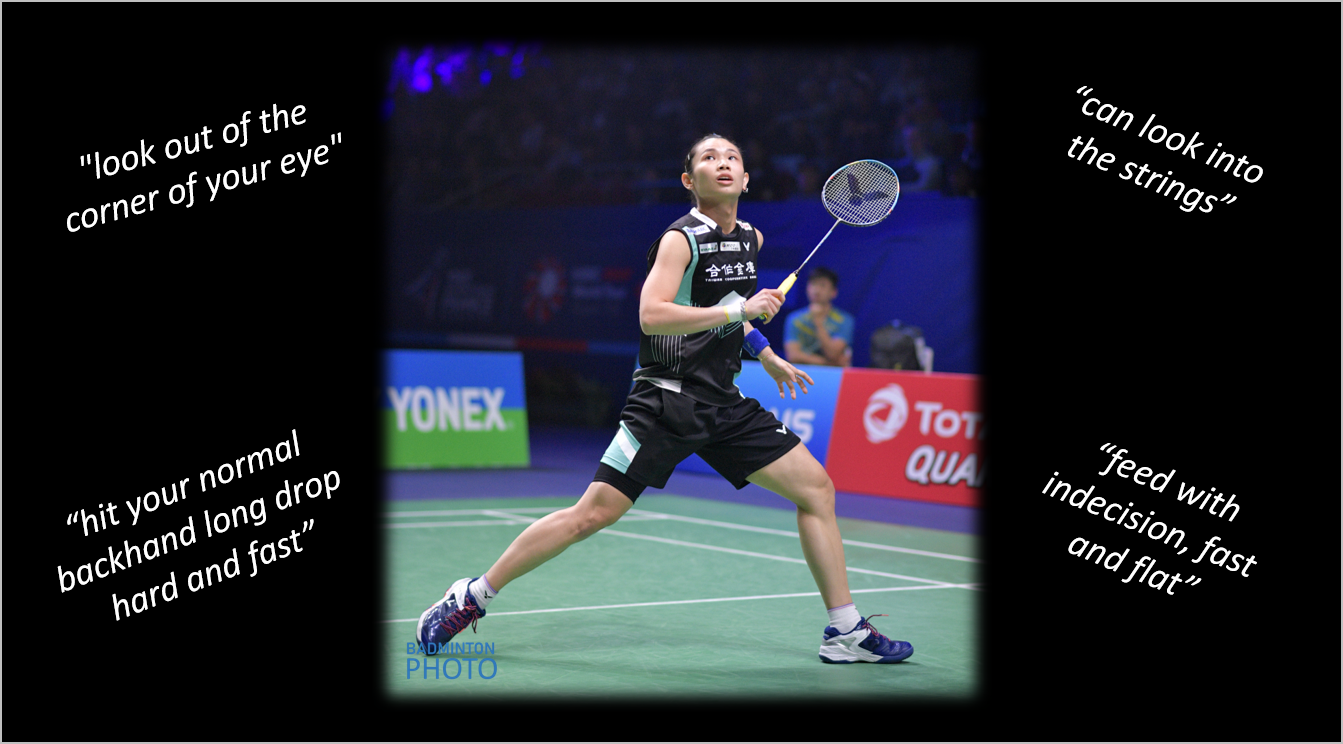
It sounds so simple
But why what wasn’t I taught this on my first Coach Education course?
and what was that "little more" secret
I never realised that saying so little could cause such big changes
Where is started
I was at Wimbledon Squash & Badminton Club
It was 25 years ago that I found myself in the new hall at Wimbledon Squash & Badminton Club watching my mentor. He was working with a young junior England player on their backhand drop, the crosscourt one.
The information I heard, observed and considered gave me an insight into Coaching and coaching backhand drops shots and other variations, especially with young players.
Standing behind the court I could hear that he was encouraging her to place her thumb on the side of the grip before she even started to move towards the shuttle.
Oh, and he also asked her to start to in a “part preparation” with her elbow close to her stomach and the racket head upwards, just like picture no. 2 below.
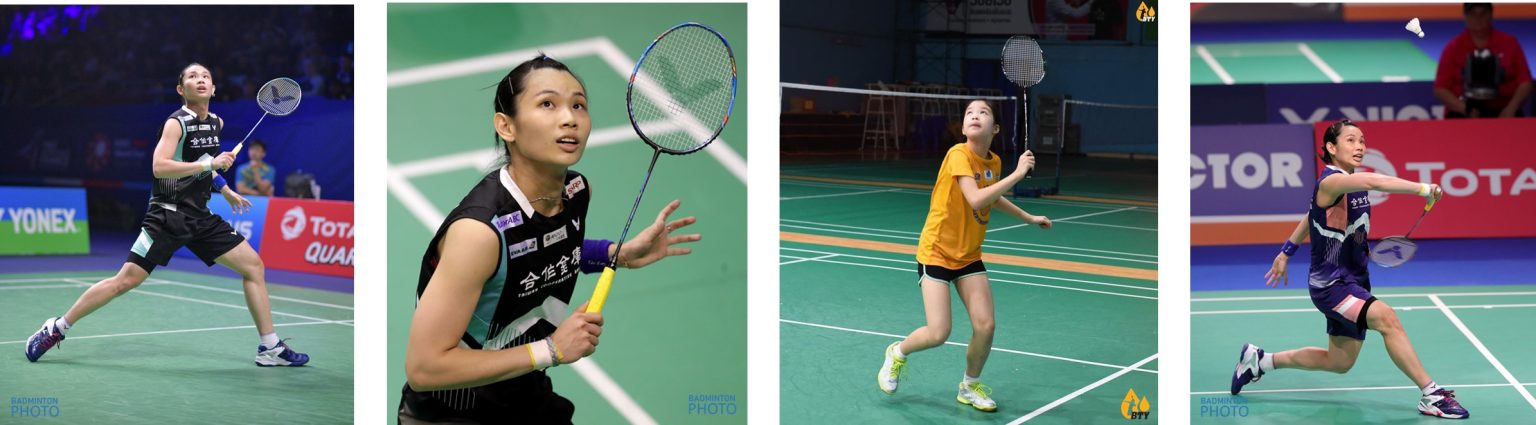
Starting in this court will ‘constrain’ the player in their choice of movements
I moved closer to the back of the court to listen
- “can you look into the strings?… Good”
- “I want you to hit your normal backhand long drop hard and fast”, “But this time, as it goes crosscourt, look out of the corner of your eye as it travels over there”
- “Ok, let’s go, just hit it!"
What did I see
- The feed was much flatter than I expected and flicked behind the player
- The rcaket was prepared very early: elbow low, racket pointing upwards.
- She moved and lunged backwards. The shuttle travelled crosscourt and she turned their head as suggested.
- There was no big swing or rush with either the stroke or her movements
- All attempts travelled cross court and flatfish, with varying degrees of success.
- Some shots flew faster than others and some landed just before or after the opponent’s service line.
I was mesmerised at how easily the crosscourt was developed from the straight long drop that I’d seen earlier in the lesson
Hardly any new advice had been given, or so I thought
I later realised that the coaching (instructions) about the racket part preparation and the initial thumb position meant that it was a good chance that the shuttle would fly fast and flat back over the net.
The request to “look out of the corner of your eye”,
would encourage a head turn and therefore a slight shoulder turn
The feeding was a critical element
The shuttle was struck quickly and flat’ish.
At times, I felt it was almost unfair and that the player would not be able to move fast enough.
Certainly, there was no chance of them moving to play a forehand ‘Round The Head’.
The flick was the type an opponent that would play in a match when trying to expose your deep backhand.
Then I realised that I’d missed a crucial feeding element
The player was now starting the practice, not the coach.
Only 1 shuttle was being used and had the player was holding that at the start of the practice.
The player stood in a racket-foot-forward position, striking a sort of backhand ‘block’ from midcourt.
The coach then mostly flicked fast and upwards into her deep backhand.
However, if she moved too early, he ‘held’ the feed and played to the net: straight and sometimes even crosscourt!
To my surprise, she didn’t stop or complain; instead, she moved quickly to play a great net drop or even a quicker net kill.
The number of game-like decisions, variations, and therefore anticipations increased far beyond anything possible in multi-shuttle practice.
This was because it looked like a mini game: in fact, it was a sort of game, with both trying to outwit each other
I realised that this type of player start “feed” allowed the coach
to flick or net, depending on what he thought the situation required
You could use and try these
- Coach the crosscourt “long drop” as soon as the straight one is part mastered, don’t wait
- Talk to the players as if it just a simple grip change so that the racket strings will now hit the shuttle “over there”
- Ask them to “look out of the corner of their (right) eye” as they hot th shuttle
- If needed, ask then to “turn or pull” the shoulder around
- Work in full court. There are hidden dangers of using too much half-court practice work
- Introduce ‘player starts’ into the practice to allow for decision making by both the feeder and player …. Very Important
-
Ask for the feeder to return all the shots!


Send me a question
I’m always grateful if you have read this far.
If there is anything that you have read that has helped or that you disagree with, then please send me an email.
I promise to read all your comments
It would be great to hear from you contact@badmintonandy.com
![Introducing the badminton overhead – Challenge No.3 - Duplicate - [#36874]](https://badmintonandy.com/wp-content/uploads/2023/05/Badminton-Forehand-Overhead-3-scaled-1.jpg)
![Introducing the badminton overhead – Challenge No.2 - Duplicate - [#36821]](https://badmintonandy.com/wp-content/uploads/2023/05/Badminton-Forehand-Overhead-2-scaled-1.jpg)
