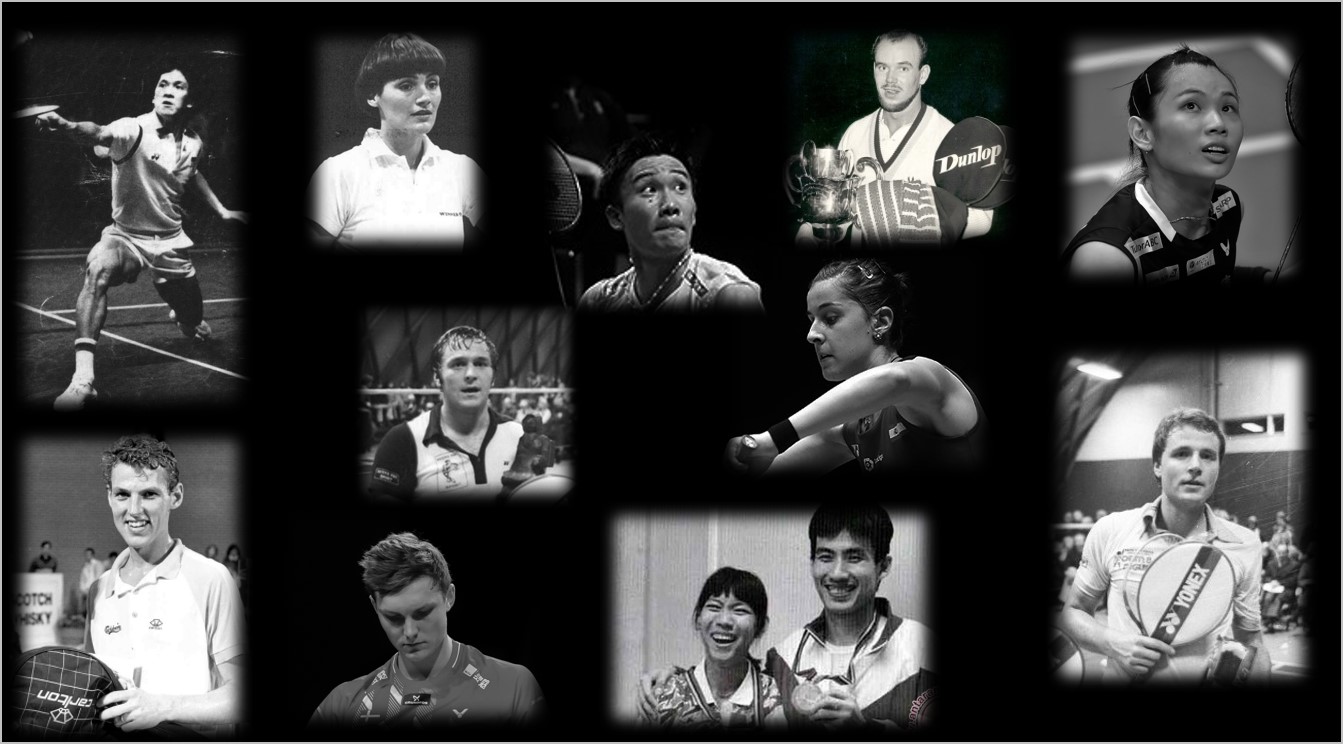
Could you use some of their thinking
Do you wonder what it would be like to have the same mindset
In the same situation,
would you and a Champion make the same decision or have the same mindset
How you think and what you think about is completely within your control,
well most of the time
Simple ideas to consider
Champions don’t perceive themselves as making sacrifices, only choices
– a very important distinction
Yes, they know that on reflection it may be a sacrifice but they won’t see it that way. They’ve made a choice and they follow it until they decide to change again. They are comfortable making decisions and knowing how to “kill the alternative”. This means that they don’t dwell over the choices they could have made.
A sacrifice can often feel like a negative, instead view all your choices with a ‘positive intent’. Believe that in the moment you hold that choice it’s what you want to do.
Think about the choices you make and how you view them –
Do you feel like you are making sacrifices, or do your choices have a positive outlook?
Champions don’t perceive themselves as making sacrifices, only choices
– a very important distinction
Yes, they know that on reflection it may be a sacrifice but they won’t see it that way. They’ve made a choice and they follow it until they decide to change again. They are comfortable making decisions and knowing how to “kill the alternative”. This means that they don’t dwell over the choices they could have made.
A sacrifice can often feel like a negative, instead view all your choices with a ‘positive intent’. Believe that in the moment you hold that choice it’s what you want to do.
Think about the choices you make and how you view them –
Do you feel like you are making sacrifices, or do your choices have a positive outlook?
Champions create great support structures around them
Most talk about their close relationships and support with ‘significant others’ (family, coaches, friends, mentors, etc.) and how they provide them with a balanced perspective on life.
The size of their close group is often only 4 or 5 people. Any more, and the messages and information can become confusing
Write a list of the 3 or 4 people who are close to you and who provide the support you need
Champions use role models who have, and are, inspiring them
Role models can provide standards to aim for, allow you to motivate yourself, plus many Champions try to emulate (copy) some of the traits of their role models. Champions use stimulus from many sources and people.
Can you easily name those people who are, or have, been a role model for you?
Champions know that being able to switch off is important
Most champions have the ability to switch off from those factors that are absorbing their time and energy. They don’t forget about them, they just know the importance of how to take a break. The energy gained from taking a break should not be underestimated.
Do you find it easy to ‘escape’ from your thoughts?
What do you do?
Self Belief
Belief and confidence are an important part of a champions psychological makeup
Having done their training and analysis of their own capabilities they are then ready for competition. No matter what their condition (great or indifferent) they are ready to perform.
Of course, they have negative thoughts and emotions. However, they are skilled when negative thoughts do creep in, they are very good at reappraising, reframing and changing them to positive ones.
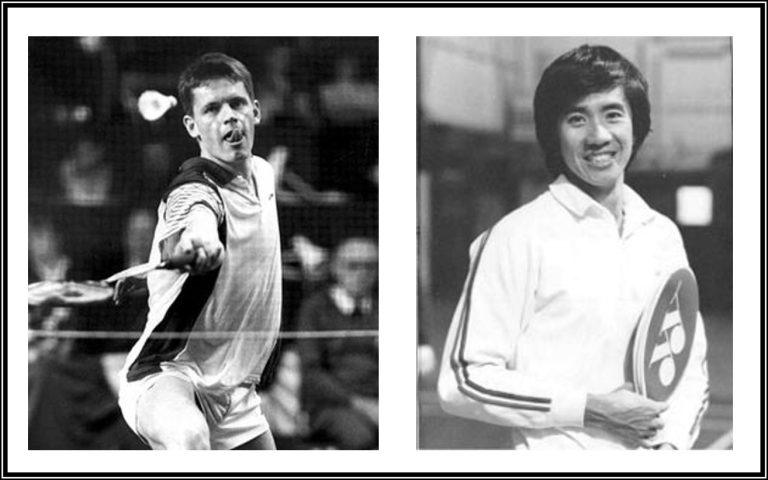
When you talk to a Champion, you may be surprised how hard they have worked to develop this Self-Belief, its not a ‘natural as you may think. Many work with other people to create and explore this inner belief. They practice it just as they would with any stroke or tactic.
They love the big occasions, as it’s a chance to perform. Others crumble under the pressure of big events – they don’t.
How strong is your self-belief, especially when you are
not in ‘top condition’ and being stressed by internal or external factors?
Champion Goals
A Champion loves having goals
They could easily have multiple goals at any one time, 5, 6, even more. Having multiple goals is important for champions, not just because they provide a focus or a plan, but are also an important source of confidence, motivation, control, reward, etc.
To an outsider, some of a Champions’ goals may sometimes seem contradictory or far too ambitious.
They think BIG and don’t see any reason not to. Of course, they have dreams but generally their goals are backed up with plans and mini-goals, steps, and targets
“The curse of melodicity”, being good at most things is not something that attracts them. They realise, like you should that strengths must be made into super-strengths.
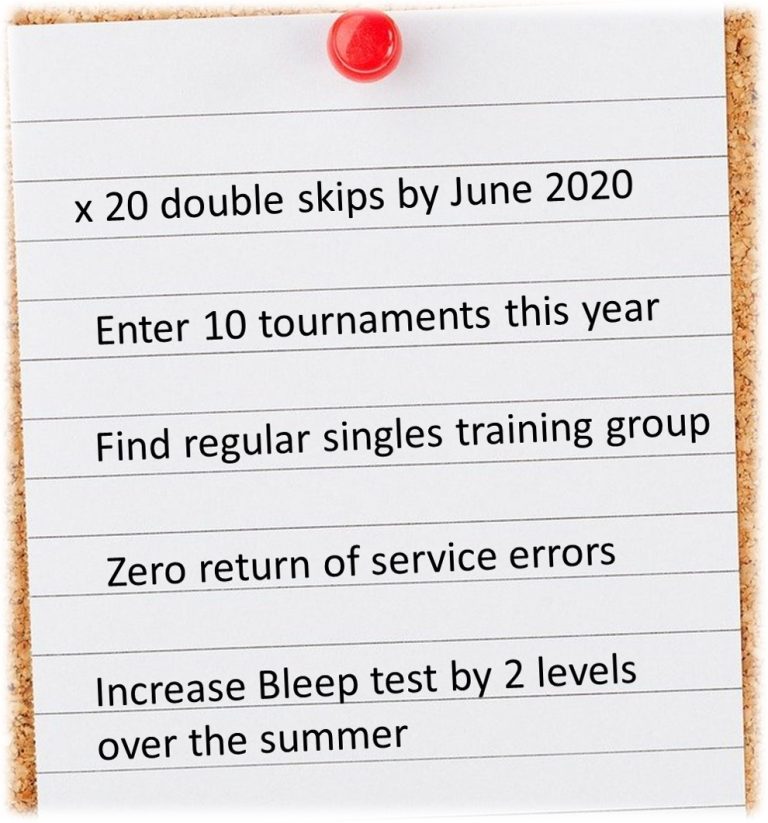
Focusing on only improving your weakness will not provide you with that Campion feeling. You may be happy, but thinking you could strive for far more
When was the last time you wrote down your top 3 goals, do it now
What 3 things do you want to achieve in the next 12 – 18 months
What 3 things do you know you could achieve in the next 3 – 6 months
A.T. D
Attention To Detail is a common trait amongst all champions
You may call it preparation, planning, visualisation, programming, there are so many terms. A Champion is willing to address all of these and more. They understand that without getting the details sorted many things will not be achieved.
You may not be aware of how much detail they are prepared to consider.
They consider the obvious things but also consider the ‘what ifs, they are prepared to think about what could happen.
They use self-talk, they repeatedly rehearse scenarios.
Next time you are lucky enough to chat with champions ask them how important the little details are 🙂
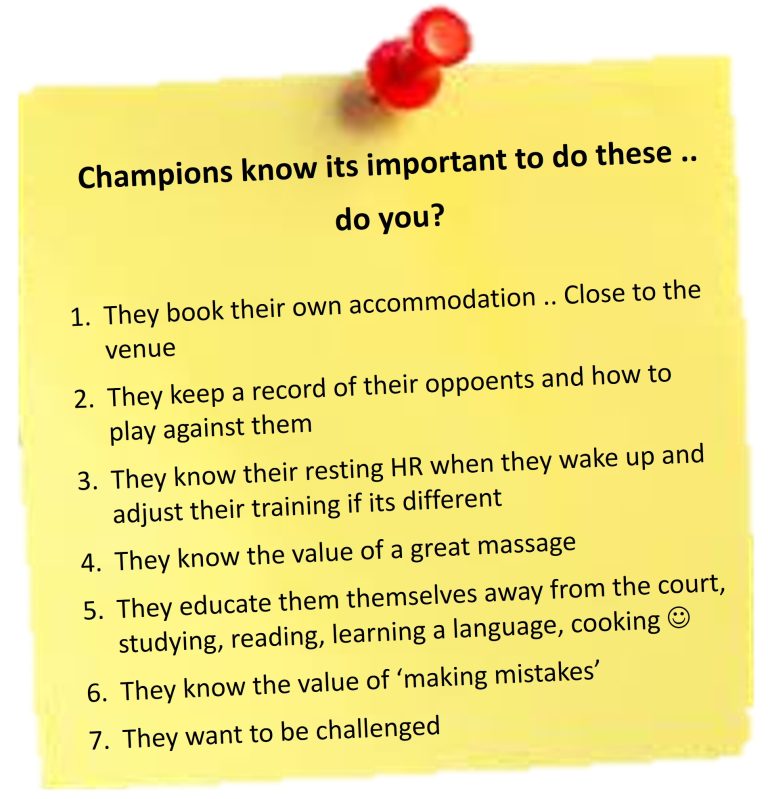
Do you consider the details?
How they view their practice
It’s a cliché but Champions do practice with a competitive mindset
They certainly approach practice with a reason, a challenge, a goal, why else would they practice
Champions understand that there are many different aspects of training. They certainly don’t aim for perfect training, mistakes or losses are not feared. Finding a balance that creates development is often a goal of theirs.
They also don’t always work to the maximum and are careful about always pushing too hard, beyond their limits. Being great at assessing and feeling how their body reacts is a skill that separates Champions from the rest of us.
Champions engage in all types of practice but crucially, understand how to ensure that the majority of their work relates to the competition environment. They don’t just do things to fill time or because it’s the latest Instagram buzz.
Do you assess your practice to determine if you are developing skills that actually
work in competition: be aware of mediocre practice
How they work with Coaches
Elite players may not be best friends with their coach
However, they do have to have mutual respect as well as trust and belief in one another, that is essential.
Your coach must be one of the 4-5 most influential people around you. Otherwise, change the coach. You must understand their gaols for you and be able to share yours with them.
Next time you are lucky enough to chat with champions ask them how important the little details are 🙂

Champions seek out coaches who have a shared vision
Often they look for someone who is challenging, supportive and knowledgeable
Send me a question
I’m always grateful if you have read this far.
If there is anything that you have read that has helped or that you disagree with, then please send me an email.
I promise to read all your comments
It would be great to hear from you contact@badmintonandy.com